
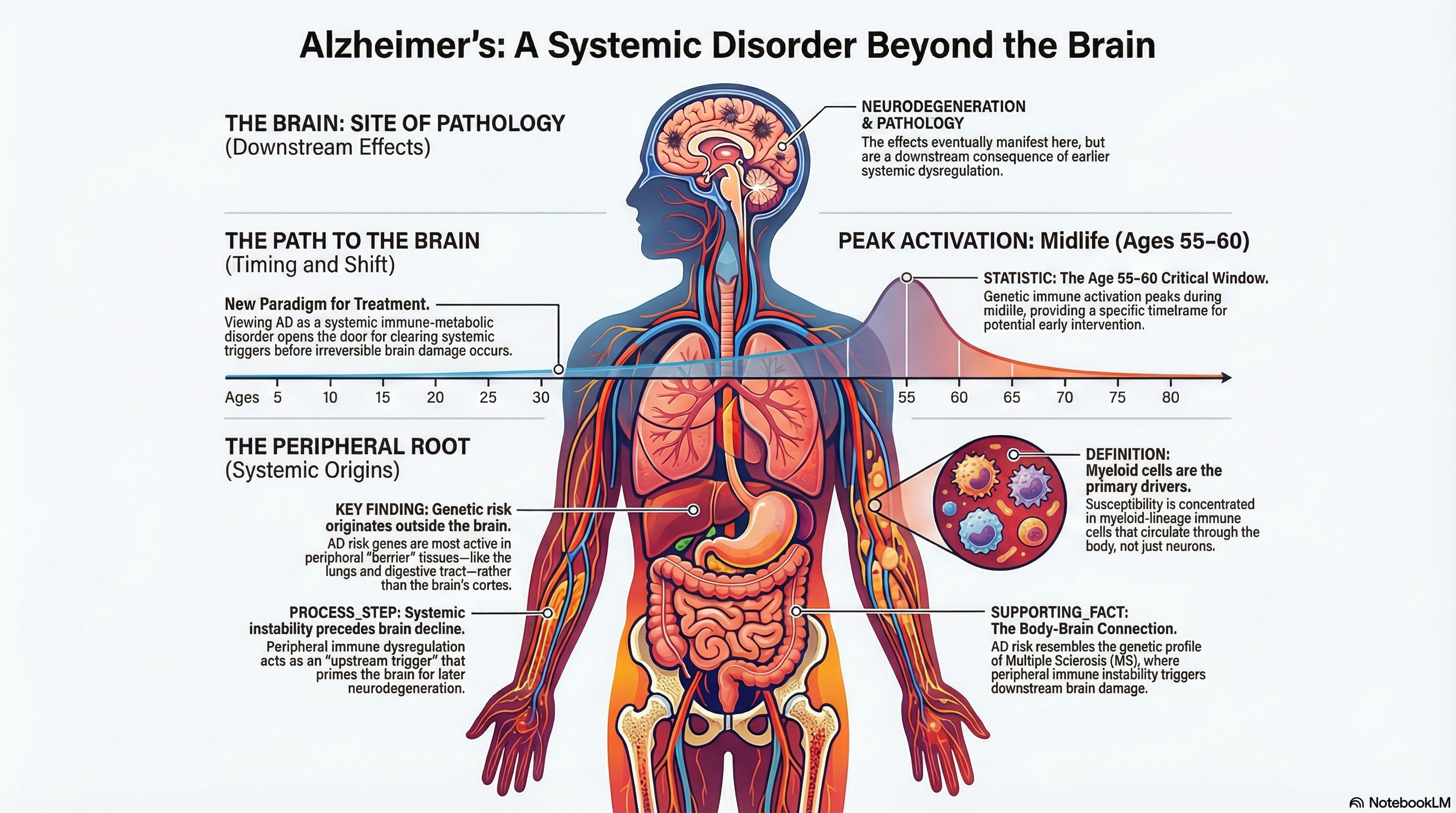
Does Alzheimer’s actually originate outside of the brain? New research identifies the cells that are potential drivers and which organs are most likely to be involved. The latest genetic data analysis supports a growing body of research suggesting inflammation plays a role in Alzheimer’s development.
I’ve covered the inflammation theory before on this blog. With the success of GLP-1s for weight loss and management, the drugs show promise to treat other chronic inflammatory conditions, such as diabetes. While the early trials for those with early Alzheimer’s failed to slow disease progression, the medications may still hold promise for treating inflammation-related diseases before an Alzheimer’s diagnosis is made. I’ve also written about the connection between heart disease and dementia.
As earth.com explains, the research team at Novo Nordisk Foundation Center for Basic Metabolic Research in Denmark wanted to detect “where in the body are the genes associated with Alzheimer’s risk actually active.” The surprising discovery is that Alzheimer’s risk genes showed higher activity in organs outside the brain, such as the “skin, lungs, digestive system, spleen and in immune cells circulating in the blood.” What this could mean is that someone at greater genetic risk for Alzheimer’s could experience an inflammatory condition that create damage that later leads to cognitive decline.
While these preliminary findings are supported by earlier research into the inflammatory link to dementia, more research needs to be done to confirm these findings and understand the underlying mechanism. As the earth.com article notes, we may have focused too much on treatments targeting the brain, which may be why most current treatments only show minimal benefits.
Ages 55–60 were identified by researchers as a “critical window for immune activation tied to Alzheimer’s risk.” It’s important for those in their fifties, like myself, to focus on addressing any inflammatory conditions and consider preventative options as warranted.
While a cure or effective treatment for Alzheimer’s remains elusive, expanding focus beyond the brain is a promising research path.
![Pageflex Persona [document: PRS0000038_00069]](https://memoriesproject.files.wordpress.com/2014/02/reluctant-caregiver-cover.jpg)






 The Memories Project