
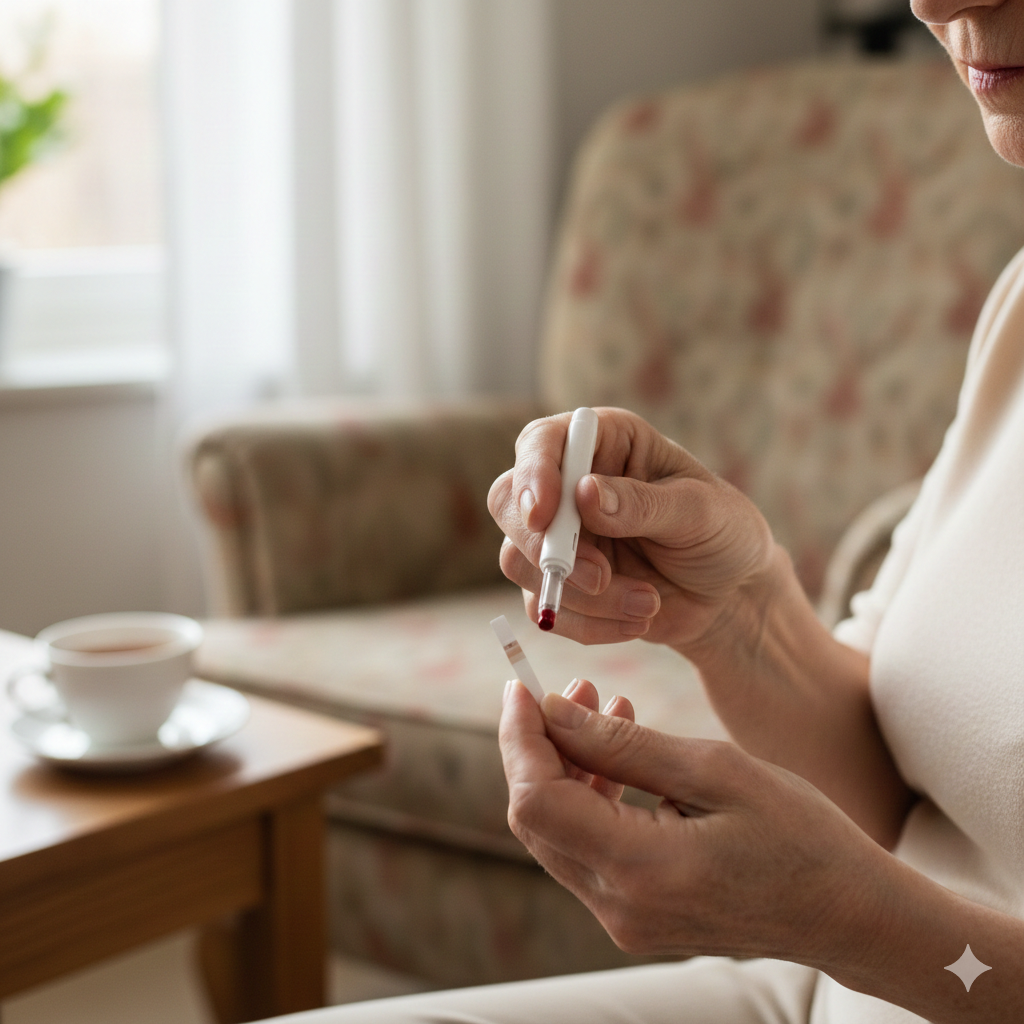
Over 10 years ago, I wrote about an experimental blood test being tested that could help predict a person’s risk of developing dementia over the course of the next few years. There have been a lot of developments in the blood test space since then. This month, the Alzheimer’s Prevention Registry wrote about new research exploring a promising, low-cost option for large-scale Alzheimer’s screening: dried blood spots.
Not that long ago, the idea that Alzheimer’s could be diagnosed with a blood test seemed like a major breakthrough, since prior to that, diagnosis either came post-mortem or an invasive spinal tap procedure. There are cognitive-based tests that doctors use to screen for dementia, such as the clock test, but those are not as definitive in nature as a blood test for Alzheimer’s biomarkers, which was approved by the FDA in 2025.
But blood tests still present challenges, requiring a medical professional to draw the sample, and then proper handling to ensure the same remains viable until it reaches the testing laboratory. Researchers in Europe brainstormed on how to simplify the procedure and are now actively testing a process that uses dried blood spots. A person takes the blood sample themselves at home, using a finger prick method. The sample is collected on a card, allowed to dry, and then mailed into a laboratory. Early results are promising, with high accuracy rates, but more work needs to be done to perfect the process.
One interesting point that researchers noted was that people in the study didn’t like the finger puncture, so a different collection method involving the upper arm is being explored. The issue with finger punctures may have led to more sample failures than desired. I know when I used a finger prick test at home (to check my cholesterol level), the first time it worked fine, but the second time, I struggled to get a proper sample and I received notice from the lab that my sample couldn’t be used. It was a frustrating experience and I ended up going to a medical clinic for a traditional blood draw.
Still, if the process becomes reliable and affordable, I strongly prefer at-home tests. Such a test would open up dementia screening for underserved populations and help people access treatment options earlier.
Image generated by Google Gemini.
![Pageflex Persona [document: PRS0000038_00069]](https://memoriesproject.files.wordpress.com/2014/02/reluctant-caregiver-cover.jpg)







 The Memories Project