Monthly Archives: June 2014

Guest post: Diagnosing Alzheimer’s Disease: How Can Loved Ones Help?

A new case of Alzheimer’s disease is developed every 67 seconds. Meanwhile, the number of Alzheimer’s patients is on the rise, with the numbers expected to double or even triple by the year 2030. This degenerative brain disease affects millions of people around the world…and has no known cure. Over time, it impacts your memory function, mood, and even your independence. With so many life-altering symptoms related to the disease, early detection is key. Unfortunately, obtaining an Alzheimer’s diagnosis can be difficult.

Dr. David Tal of the Age Matters Clinic in Toronto.

Dr. David Tal of the Age Matters Clinic in Toronto.

Despite the fact that Alzheimer’s affects the lives of men and women across the country, diagnosis can take months or even years. Why is this the case? Early symptoms may appear to be signs of other diseases or may be dismissed as issues related to aging. This can prolong proper diagnosis, which in turn causes patients and loved ones to feel frustrated and powerless. Are you wondering what you can do to speed things up? Then you’ll need to understand how Alzheimer’s disease is diagnosed – and what to be on the lookout for.

Early diagnosis is important. For starters, it allows families to look at treatment options for symptoms related to the disease, like depression. It also gives patients and their loved ones the opportunity to focus on a healthy diet and lifestyle. This has been found to slow down the progression of the disease. In addition, early diagnosis gives family members more time to find appropriate care plans for the patient as the disease progresses. However, the reality is that Alzheimer’s disease cannot be diagnosed completely accurately until after death. That is why a proper diagnosis can be drawn out. Doctors use a process of elimination that has an accuracy of about 90%.

It starts by finding out more about the patients’ medical history. This allows doctors to determine whether there are other medical issues at play and how to come up with the best treatment plan for their needs. Some of the questions your loved one will be asked include: Are you taking any medications? Do you have a family history of dementia or Alzheimer’s disease? Are you dealing with any current illnesses? What type of issues or symptoms have you been experiencing? and so on. The answers to these questions will help the medical professional get a better understanding of the situation.

From there, the doctor will give a mental state exam to test the patients ability to problem solve, their memory skills, and attention span. This can reveal whether or not there has been a decrease in memory function. Next is the physical exam. This will let the doctor know more about their overall health and physical condition. It can also signal whether the patient has another medical problems that has similar symptoms to Alzheimer’s disease. X-Rays, blood tests, and brain imaging will likely be done as well to rule out any other potential health problems. The results of the questions, exams, and tests will help to pin point a diagnosis.

So, what can you do to help during this process? Show your support, take note of any changes in memory, mood, or behaviour, and ensure your loved one gets the proper medical attention they need. It is important to act quickly. The sooner your loved one is diagnosed, the better. If you feel unsure or overwhelmed, seek the help or advice of a professional.

Have you noticed a friend or family member showing signs of Alzheimer’s disease? Then help them take that first step towards diagnosis. It may seem scary at first – but receiving a medical assessment will lead to a plan of action. Whatever the outcome, remember: your love and support can make all the difference.

About the author: Dr. David Tal has more than twenty years of clinical experience. He manages the Age Matters Clinic in Toronto, Canada. He strongly believes that medical treatment can improve the life of Alzheimer’s and memory loss patients.
2 Comments

Filed under Memories

Free Alzheimer’s books in honor of The Longest Day

UPDATE: Thank you to all who requested a book. Your copy will be mailed soon. And a big thanks to all of you who participated in The Longest Day.

Today the Alzheimer’s Association sponsors The Longest Day, where from sunrise to sunset everyone is encouraged to participate in Alzheimer’s awareness activism.

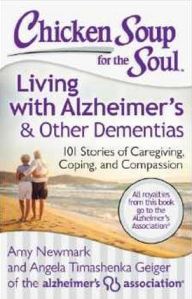
Chicken Soup For the Soul: Living With Alzheimer's and Other Dementias

My way of participating this year is to offer a free copy of “Chicken Soup for the Soul: Living with Alzheimer’s and Other Dementias” to anyone who is interested. I have a limited supply, but I can fulfill several requests. They will be handled on a first come, first serve basis. If you would like me to send to a friend, relative, organization, etc. I am happy to do that as well. I just want these inspirational and moving stories to find a good home where they will be appreciated by others who are on a similar journey.

Rest assured I will never share any contact information with anyone else.

I will cover all shipping costs. Simply email me at joyjohnston.writer@gmail.com or leave the mailing info in the comment section below. I will update this post when I have received the maximum number of requests that I can fulfill.

What are you doing for The Longest Day?

8 Comments

Filed under Awareness & Activism

Sharing a loving memory on Father’s Day

A recent survey found that dads often get the short end of the stick when it comes to gift-giving on Father’s Day. It seems most of us spend more on our mothers than our fathers. Many people say mothers are easier to shop for, and seem to appreciate gifts more than fathers.

joy-dad-2002

But for those of us who have lost our fathers, or are losing them slowly due to dementia, it is too late to worry about something as trivial as gift-giving. The best we can do is share a loving memory of our fathers, to offer to the world a glimpse of what this special person meant in our lives.

Two loving memories come to my mind this Father’s Day. The first is the lengths my dad went to in confronting the family of the bully who pushed me down at a preschool Halloween party. Dad wasn’t going to let anyone hurt his little girl! The second was just a year or so before Dad began his battle with dementia. He had filled out a prayer card for me, relating my struggles with Celiac disease. I had no idea he was paying attention when I discussed my condition.

After all of those years, Dad was still looking out for his little girl.

What are your favorite memories of your father? How do you honor him on this day?

6 Comments

Filed under Memories

Let’s talk about guns and dementia

Here’s an important topic for family members to discuss: gun ownership and seniors, especially those who have been diagnosed with dementia. While there is quite a bit of awareness of the need to take the car keys away from those with dementia when their driving skills become impaired, there is little discussion about another deadly weapon found in many households. As part of the “caring for our aging parents” #Blog4Care blog carnival, please spread awareness about this topic so that families can have discussions about the proper precautions needed in their homes. Perhaps we can help prevent injuries and save lives.

If you’ve been following the news in America recently, there has been a slew of tragic shootings that have once again ignited the gun debate. The issues surrounding gun ownership and gun violence are being passionately debated right now. But one angle of this issue I never thought about before involves seniors and guns.

gun

An intriguing post on Alzheimer’s and Dementia Weekly made the point that more seniors own guns than any other age group. With the increased risk of dementia as one ages, this could create a dangerous situation. The article quotes Dr. Ellen Pinholt, who wrote in the Journal of the American Geriatrics Society that as family members, we should think about seniors and guns the same we do about seniors and driving. While there is no maximum age limit for owning a gun or driving, mental health status should be taken into consideration for both situations.

Dr. Pinholt recommends asking “the 5 L’s” when it comes to gun ownership and seniors. The questions include if the gun is locked, if it is loaded, if there are children present where the gun is located, whether the senior is depressed, and whether the senior has been diagnosed with dementia.

Sounds like simple and sane advice for an issue that is so complex and controversial. Still, I think it is just as important to consider the issue of having a gun in the house as it is allowing a person to drive once they’ve been diagnosed with dementia. It is yet another question to add to the all-important discussion with your elderly parents and the rest of your family.

While stereotypically, these random mass shootings tend to be perpetuated by young men, anyone who has a condition that impairs the brain and impacts judgement and emotions should probably have their access to a gun restricted, to protect themselves and others. I’m not a fan of legislative restrictions on personal liberties, but when someone’s safety and society’s safety is at risk, smart and limited restrictions may be appropriate.

While there is not a good substitute to driving a car, seniors with dementia may be able to handle a replica gun that either shoots a safe-type pellet or even better, a replica gun without ammunition. Of course, immediate supervision would be necessary. As caregivers, we should try to allow our loved ones with dementia to enjoy their hobbies as long as possible, if safety measures can be taken.

What do you think about the issue of gun ownership and seniors, especially those with dementia? Should guns be immediately removed from the household upon a diagnosis of dementia or are there alternative and less drastic solutions to consider?

1 Comment

Filed under Awareness & Activism

Read This Book If You Have Older Parents

Wanted to share this. I can’t wait to read this book and hope it helps others as well as we make our way through this family caregiving journey.

2 Comments

Filed under Memories

How should we deal with the unfiltered versions of our loved ones?

I wrote previously about the rumors that the least favorite man in professional sports, Clippers owner Donald Sterling, had Alzheimer’s. It appears that those rumors have been confirmed. USA Today reports that Sterling exhibited symptoms consistent with Alzheimer’s disease after undergoing an extensive neurological examination.

man speaking outline

On the one hand, this development places Alzheimer’s disease in the national spotlight, where it belongs. Unfortunately, because the disease is now associated with a man that so many find morally reprehensible, there is bound to be some backlash.

As I followed the news on Twitter, I found many people who found the Alzheimer’s diagnosis all too convenient, a way to look for sympathy from a public that was left aghast by his vehemently racist remarks that were secretly recorded by his much younger girlfriend. Others simply equated Alzheimer’s with crazy, saying “duh” of course Sterling is a crazy old man.

I hope in the days and weeks to come, as this dirty sports saga plays out in the American media, we can have an honest conversation about Alzheimer’s and behavior. This case raises many interesting questions for me. First of all, I think many of have experienced how those with Alzheimer’s lose their conversational filters, saying whatever comes to mind, whether it is offensive or just strange. Some begin to use profanity when they never did before. Generally I think those of us in the Alzheimer’s and dementia communities understand that this is the disease talking, and those afflicted should not be held responsible for their harsh words. For physically abusive actions, we can try behavior modification techniques and medications.

But the Sterling case is a bit different. There are numerous reports that Sterling had been a virulent racist his entire life, despite winning awards from the NAACP. Has the disease just erased his filter? Should the Sterling family be forced to sell the team for what a mentally ill man said, when he was allowed to be an NBA owner all of this time, even with his racist views?

I’m not raising these questions to defend Sterling; certainly he is a very wealthy man who can afford the best of lawyers and doctors to serve his best interest. But it is interesting to debate how much we should hold those with Alzheimer’s and dementia accountable for their words and actions.

Leave a comment

Filed under Awareness & Activism