Tag Archives: Alzheimer’s

Dad’s love affair with Costa Rica

Dad threatened many times when I was a kid to move the family to Costa Rica. His love for the Central American country was based upon secondhand knowledge and photos and stories from books and magazines. One of his co-workers had traveled to Costa Rica and enthralled Dad with tales of a cheap cost of living and the locals’ love of Americans (and their American dollars I’m sure, this was when the dollar was still pretty strong.) He told Dad that most of the locals spoke English and you could get a huge house on the beach for cheaper than renting in California.

Most are all of this may have been true. But Mom and I were not too worried about having to pack up and leave the country. My dad’s dreams of Costa Rica were more a way for him to battle his frustration at the high cost of living and unemployment woes facing him in California in the mid-1980’s. I also think part of him cherished a romantic ideal of living the life of some bohemian writer or artist in a tropical paradise. Maybe his Costa Rica dreams helped him survive all of those years living in boring suburbia!

Many kids would have thought a move to a foreign land would be exciting, but I was not the type of kid with an adventurous spirit. I always backed my mom up when she would shoot down Dad’s occasional “let’s move to Costa Rica” campaigns.

How different our lives would have been if we had made a move like that!

I hope he was able to escape to the sunny beaches of Costa Rica at least in his mind as his mental and physical health declined.

2 Comments

Filed under Memories

Trying to see past the Alzheimer’s

I was reading a fascinating article today about a program at Harvard that connects college students with those suffering from Alzheimer’s in nursing homes. The students visit their “buddy” each week, and the unique part of the program is that it tries to connect resident and student by interest. So one student spends time talking about science with a resident who loves the same subject. It sounds like a neat program. The student that founded the program said, “When you have a family member with dementia, you know who they were, so you really see the decline and what’s not there. That’s one of the cool things about this program. We get to see what is still there.”

This is one image of my father I like to envision when I think of him now, instead of how he looked when he was dying.

This is so true. It’s so difficult as a family caregiver to ignore the pieces of your loved one that become lost to Alzheimer’s, instead of focusing on the core of the person who still remains. I remember different nurses at different hospitals commenting on my dad, “I’d love to see photos of your dad when he was younger. You can tell he was a handsome guy.” When I first heard this, I was shocked. All I could see was the pitiful, emaciated, confused man curled up in the hospital bed. But the nurses had the wisdom to see beyond the present, and imagine the past of a stranger they were not familiar with. They could peel off that layer of dementia and sickness and see who was really underneath. It’s a gift that often eludes those of us that are family members.

Of course, it’s unlikely that a family member can ever be as objective as a stranger can be in this situation. We should not feel guilty for acknowledging the loss and the damage that this disease causes. But it is worth taking a moment to step back and try to see our afflicted loved ones through the eyes of a kind stranger, instead of through the warped lens of dementia.

Leave a comment

Filed under Memories

Currency that can’t be cashed

I’ve been all over Atlanta trying to cash in these pieces of foreign currency that Dad had stashed away in one of his many wallets. The bills came in holiday cards from his family in Ireland, who always told him to “have a wee drink on them.” It was a family tradition. When I was a girl, they would include money in my birthday cards. (No, they didn’t tell me to have a wee drink, ha.) Before Dad had dementia, he was prompt about getting the foreign currency cashed.

But once the dementia took over, he would forget to even open the cards his family sent him. His sisters revealed how concerned they had been when my mom called his family to tell them he was in the hospital. They had not been receiving responses back from Dad. In addition to writing, Dad had lost interest in calling them on the phone as the dementia progressed.

My mom asked for me to help out with these last few bills that her local bank could not convert for her. So I went to the branch of my bank in my neighborhood, and they told me I needed to go to another location. I went to a branch in what is known as the “financial center” of town where I work, and they directed me to an American Express office that handled currency conversions. So on my lunch break, I walked down there with this envelope that I’ve been carrying around for months.

The clerk only had to take a momentary glance. “Sorry, those are too old to cash here. If you ever go to Europe, you might be able to get them converted there.”

Well, that’s not happening any time soon, so back the envelope comes with me. I don’t care whether I ever get them cashed or not, it’s just another sad reminder of how dementia robs one of completing simple tasks and simple pleasures, like enjoying a token of love from your family. It’s especially ironic since Dad, like many Alzheimer’s patients, became obsessed with money, always asking about his $20, yet he had a stack of foreign currency long forgotten in his nightstand drawer.

Leave a comment

Filed under Memories

Having a case of the caregiver’s guilt

I’m reading a great book right now, a collection of essays about the dying process called, “At the End of Life: True Stories About How We Die.” Yes, it’s depressing but there’s also so much in there I can relate to. One particular essay that is haunting me is by a young resident who wrote about the night she lost three patients. One of them was an old man with dementia, who was listed as “full code” despite being in advanced renal failure and suffering from dementia. He had not had any family members visit him. He died with only the hospital staff around him, after they embarked upon an all-out assault on his body to save him in what they knew was a futile but legally necessary procedure.

It seems like there are many elderly patients that die in hospitals without family or friends by their bedside. Sadly, my dad joined this statistic when he passed away.

Certainly this is tragic, though just like when people judge families that put their loved one in a nursing home, there’s more to it beneath the surface.

I remember the first time Dad was near death, and being insulted when the doctor asked if I knew my father was in the hospital. He had been there about 4-5 days by then. My mom had been calling daily, if not twice a day, to get his status, while she was preparing to make the long, difficult trek to the hospital. My mom doesn’t drive and my parents’ car was taken to the junkyard when Dad stopped driving. Mom doesn’t have any nearby relatives or close friends and transportation options are very limited. It would have taken my mom almost 12 hours to get to Albuquerque on the Greyhound bus! So from Ruidoso, NM, she had to find a shuttle service that would take her to Albuquerque, which is over three hours away. My mom had to make sure the bills were paid and everything was in order before leaving home, because she had no idea how long she was going to be in Albuquerque. So understandably, it took a few days for her to get to the hospital.

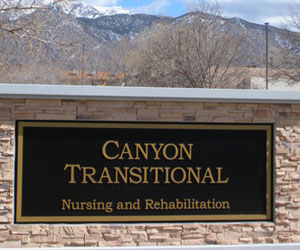
Dad’s final home, but I have never stepped foot in it.

I had been calling daily, but I was all the way in Atlanta, and was knee-deep in a big work project. Obviously, my dad was much more important than work, but I also knew by then that there could be ups-and-downs in his health. I had been preparing myself for his death over the past year, but it was so hard to know if this was the moment that I needed to be by his bedside. There was also the $1000 last-minute flight price tag to contend with.

I ended up flying out there and it ended up being a false alarm. Still, it was the last time I had the opportunity to see my Dad alive, so I’m glad I made the trip.

But it’s the last month of my dad’s life that’s been gnawing away at me. For all of December 2011, he had not a single visitor at the skilled nursing facility that became his final home. My mom was preparing to visit him over Christmas when he passed away. His dementia was advanced at this point, and he didn’t speak much, but still, I wonder if some part of him yearned for company. By that point, I had already filed for FMLA (though eventually my application was denied.) But I wish now I had taken that time off to go visit Dad. What did I miss out on by not being by my father’s side during the last days of his life? I let finances and work responsibilities rule my decision-making instead of my heart. For once, I should have gone with my heart.

It is a deep regret, knowing that Dad died around strangers, though by that point, I was a stranger to him as well. These are moments and decisions you can never alter. You try to do your best, but ultimately, you have to live with the consequences.

2 Comments

Filed under Memories

Personal signs on the nursing home door

I’m sure many nursing homes have signs of some sort to identify which resident lives in which room. This was true of the nursing home my Dad lived at the last year of his life. I thought I had taken a photo at some point but I can’t find it. I was struck by the child-like quality the signs had. They identified where the resident was born, then their favorite color, their favorite food, etc. I think it included family information, like how many kids/grandkids they had and I don’t remember what else. The signs reminded me of being in kindergarten, and going through various exercises to get to know your classmates.

I’ve been thinking about those signs lately, as I’m writing a a brief autobiographical blurb for a writing project I’m working on. Trying to figure out the important details to include, and what to kick out, is exhausting.

At some point in our lives, it seems there are so many details that seem crucial for others to know, but at the beginning and the end, it seems to come down to colors and food and family.

Maybe those are the important things after all.

(The thing that bothered me about my dad’s sign is that a lot of the information was incorrect. They got his hometown of Belfast correct, but his favorite color wasn’t blue and spaghetti wasn’t his favorite food, it was fish.)

It was just another way Alzheimer’s chipped away at my Dad’s identity.

Leave a comment

Filed under Memories

Nursing home musings

If you haven’t read Ted Sutton’s heartbreaking, beautiful story about his mother on Huffington Post, entitled “Final Curtain: A Mother’s Day Love Story”, you should, but make sure to have the tissues handy.

There are several points in his piece that I’m sure most of us that have dealt with Alzheimer’s or dementia in our family can relate to. For example, I related to the difficulty of finding your loved one at the nursing home. So often, residents end up being dressed in clothes that are not their own, and so often many are heavily medicated and slumped over in chairs. On my visits, I could usually find Dad because he was ambling about instead of just sitting down like most of the residents. This of course was good and bad, because while it was good he was ambulatory his unsteady gait led to several falls. Sutton’s piece touches upon this sad reality as well.

The last photograph of dad and I together, July 2011, just before he attempted to sing "Happy Birthday" to me.

The difficult of phone communication with Alzheimer’s patients also struck a chord with me. This was so true with my father. I hated calling the nursing home and trying to talk to him because it seemed like a difficult task for him and that he didn’t enjoy it. My mom insisted on calling him almost every night, which was more for her well-being than his, though I do hope the sound of a familiar voice gave him some comfort. But my mom would often comment that she would “lose connection” with Dad, as he would drop the phone and wander off, or just forget that he was supposed to talk into the receiver.

And the touching part where Sutton sings with his mother is absolutely beautiful. It makes me think of my father’s last pitiful attempt at singing “Happy Birthday” to me, and how he was barely awake as he moved his lips along with my mom, who tried to fill in for him. My parents would always make a big production out of singing “Happy Birthday” to me over the phone, since as an adult, I never had the chance to spend my birthday with them.

So thanks to Ted Sutton for sharing such an amazing, heart-wrenching, and beautifully-written piece with the world. I’m sure it will resonate loudly with many caregivers throughout the world. Sutton is also working on a book about his mother. I can’t wait to read it.

Leave a comment

Filed under Memories

Missing my chance to connect with Dad through music

I was viewing this poignant photo gallery of people with Alzheimer’s around the world. I was struck by the photos of those finding joy in music, with one woman playing the xylophone even in the final days of her life. Then there was the video that I saw posted on the Hot Dogs and Marmalade blog about the magic of music.

One big regret I have about my dad’s care during the last month of his life, other than not being there in person for those final weeks was that I didn’t bring music back into his life. The palliative care doctor asked what kind of music Dad liked, which caught Mom and I by surprise a bit, as we had spent most of the time answering routine questions as the doctor filled out a long form. She asked us if he liked Irish music, as she had some CD’s at home that she could bring in and play for him. I don’t know if she ever did, because I left for home and Dad was transferred out of the hospital a few days later.

The last photograph of dad and I together, July 2011.

I’ve written many posts about how my dad loved to sing, especially the classics by Frank Sinatra and Bing Crosby. There is a cassette tape recording of my dad singing to me when I was a baby, and the recording is in remarkably good shape. Before my father passed, I remembered the tape and was eager to get my hands on it. Luckily, it was in a very convenient spot, in a shoebox on the top shelf of the closet in the guest bedroom of my parent’s home. Being the modern gadget gal that I am, I no longer owned a cassette recorder so I ordered one from Amazon which could create an mp3 file on my computer.

I couldn’t wait to get home and start the process. I had to fiddle with the program a bit and only got a fuzzy but listenable file the first time around. Then Dad took another turn for the worse and I had to rush back to New Mexico and abandon the project for awhile. But I did have the first recording on my tablet and I thought about playing it for him, especially when he had the private room on the CCU floor at Presbyterian Hospital in Albuquerque. Of course, most of the time there he was sedated, but some experts believe there is some level of consciousness that remains in that state. I felt awkward playing it with so many staff members coming in and out, and of course my mom, who bless her soul, probably would have talked over the entire thing. By the time he was becoming a bit more aware, he was moved to a semi-private room where the TV was blaring.

There’s no guarantee that music would have made a difference, but it’s an opportunity forever lost. One last chance to connect, to bring back a happy memory, to maybe even make a smile appear on his haggard face. A moment that was never to be, because I was worried about things that didn’t matter.

Leave a comment

Filed under Memories

The personal side of the Alzheimer’s awareness movement

The Alzheimer’s Association Advocacy Forum is taking place this week in Washington, D.C. For those attending and promoting Alzheimer’s awareness, a big thank you. Alzheimer’s is quickly becoming a national health crisis, and we must come together as a nation to address it.

For most of us, the battle against Alzheimer’s is very personal. For me, it’s the reason why I started The Memories Project. My dad was not a celebrity or a hometown hero. He was just an average guy.

But he was my father, and he did not deserve to suffer from Alzheimer’s. No one deserves to suffer from this terrible disease.

I can’t be in the nation’s capital to be a part of the forum, but if I had the opportunity to share a personal memory of how our family was touched by Alzheimer’s, I would share this snapshot in time, my last visit home when my father still lived there:

My dad was restless and paced the living room, while trying to get the zipper on his jacket to work. Suddenly, he turned around and looked straight at my mom, who was sitting on the couch next to me. He asked with a tone of distress, “Where’s Jane?”

My mom is Jane. My parents were married for 40 years.

My mom’s face crumpled internally, the words striking her skin as painfully as physical blows. She answered in an even tone, “I’m right here.”

There were many other painful memories that Alzheimer’s created for our family, but this one stands out starkly in my mind and makes my heart hurt. It was difficult to know who to have more sympathy for, my dad suffering from advanced memory loss or my mom forced to deal with the fact that her partner of 40 years could no longer remember who she was.

This is why I am an advocate for Alzheimer’s Awareness.

Leave a comment

Filed under Memories

Dementia a robber

The news that coach Pat Summitt was stepping down as head coach of the Lady Volunteers was not surprising news, but it is a sobering reminder of how dementia can rob the most vital people of their precious gifts.

My dad was not a high-profile college basketball coach, but the impact of Alzheimer’s was still devastating. I can’t imagine what would have happened if Dad had still been working when his dementia symptoms started. Fortunately, he was retired. He often mused on getting a part-time job in Ruidoso, but he never did. Then it became too late.

Tennessee Lady Volunteers coach Pat Summitt. File photo.

But even for those that are retired, there are chores, those daily jobs that we execute with barely a thought. But once my dad’s dementia progressed, completing the smallest jobs, like going to the post office to mail letters, or paying for an item at a store became difficult, then impossible. It was painful to watch my dad be robbed of performing the simplest of adult tasks. He was being forced back into childhood, with no hope of growing up again.

Summitt is such a strong woman and she already is a great advocate in the fight against Alzheimer’s. Maybe when people see vibrant, ultra-successful people like Pat Summitt battle this disease, they will take notice that this is an epidemic that we must focus on as a nation and world. The disease is claiming too many minds, too many lives, both known and unknown, but all loved by someone.

Learn more about the Pat Summitt Foundation.

2 Comments

Filed under Memories

Dad losing the meaning of ‘home’

One thing that my mom still talks about almost every time I have a conversation with her is that in the last year of his life, when Dad was far from home, he never asked to leave the care center or hospital he was in and return home.

It’s not uncommon for Alzheimer’s patients to forget what and where home is, and to accept, at least outwardly, their current location. There are some with Alzheimer’s that do beg and plead their families to return home, and I think this puts an even heavier burden on the family. It was almost a relief to me that Dad accepted the care center that he was in without a fight, but it also made me realize how far the disease had progressed.

Dad was a homebody. Oh, he had his “hitting the bar after work” days when I was youung, but for the most part, he worked, came home and enjoyed the comforts of domestic life. He mainly read books and newspapers, watched TV news or documentaries or could be found on our patio taking a cigarette break. Simple pleasures but he was always easy to please.

I’m much the same way. I feel like I would be devastated if I had to give up my creature comforts from home and go live with a bunch of strangers. But Alzheimer’s tricks the mind into believing you are a stranger in your own home, an imposter in your own skin.

1 Comment

Filed under Memories