
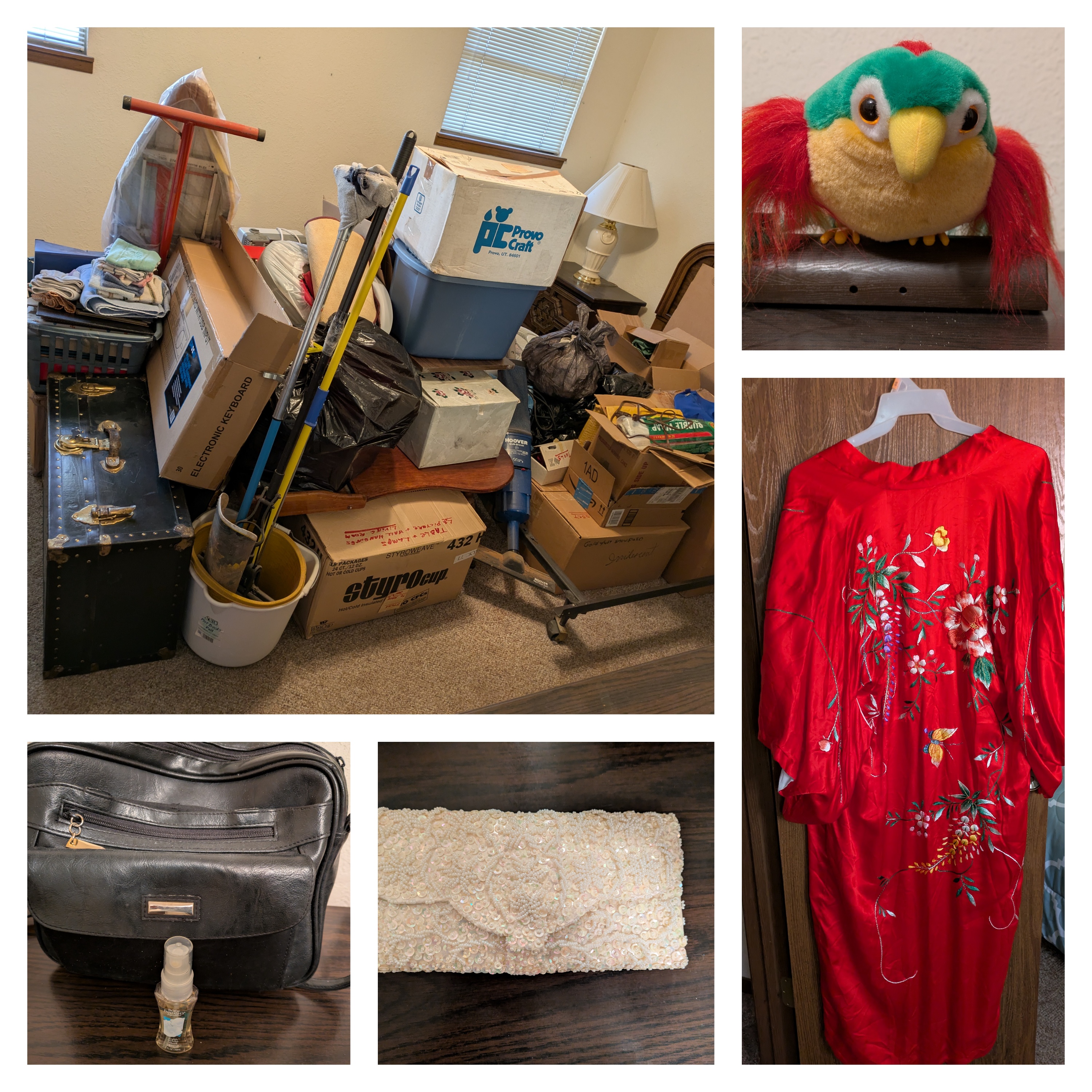
This past week, I cleaned out my parents’ condo to prepare it for sale. It was a bittersweet experience. My parents enjoyed several happy, peaceful years there in retirement, but as their health declined, my memories of the place become more painful and complicated. That’s a reason why Thanksgiving and Christmas are tough holidays for me.
Even though I had spent time cleaning out upon each visit since my parents died, I was overwhelmed by the amount of stuff that remained. My parents weren’t hoarders; it was just an accumulation of two lifetimes, along with some of my stuff. I’m trying to downsize my own material possessions, so I had to be very disciplined on what I would bring with me. I consolidated down to two small boxes and a duffel bag. The rest would be donated.
It seemed like a lot of stuff to me as I sorted through it, but the donated items fit in one room.
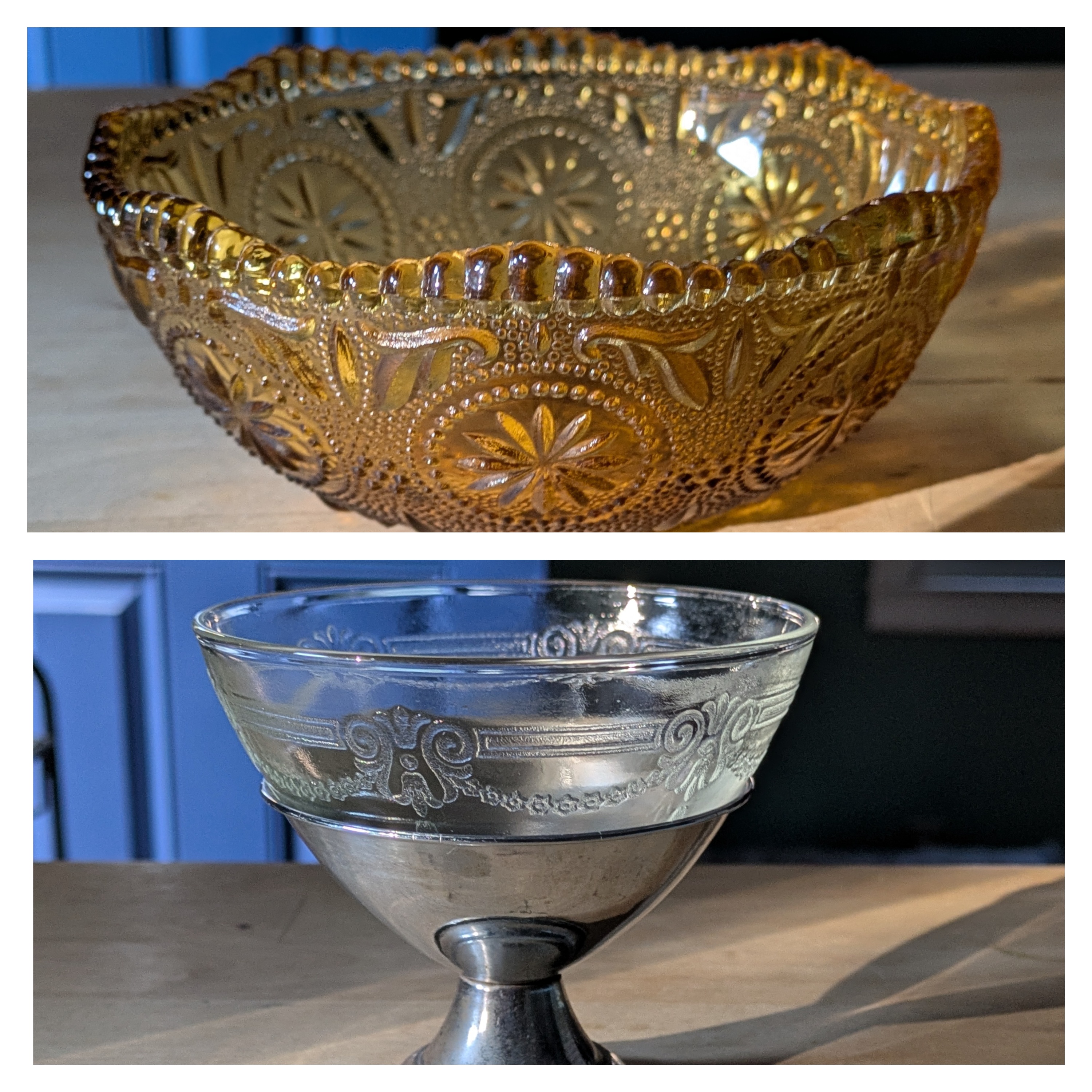
It’s interesting what one chooses to keep and what one lets go in these situations. For example, I kept Polly the parrot, which brought much needed joy to my parents after my father developed dementia. I donated the beautiful kimono that my mother had received from a Navy mate. I kept my grandmother’s ice cream dishes (only 1 survived in shipping, alas) but let go my mother’s Navy footlocker. I would have loved to have kept it, but shipping it would have been too costly. I kept my mother’s makeup bag, but let go of my mother’s purse.
Heavy things like yearbooks I chose to scan selected pages instead of keep. Many yearbooks are available online now, if I should ever wish to wander down nostalgia lane. I spent a lot of time doing just that on this trip, so I think I will be good for awhile.
It was an overwhelming and exhausting experience. A myriad of emotions arose from some of these objects I hadn’t seen since my childhood. Choosing what to keep and what to let go was a challenge. Here are some tips to keep in mind if you find yourself faced with this daunting task.
- It may be easier to start with the true junk, the items that no longer have any useful life. Consider this a warm-up task.
- To stay organized and focused, create a plan. Maybe go room by room, or divide by type of items such as clothing, kitchenware, photos, etc.
- Take breaks if possible. I was on a time limit but even stepping outside to get a breath of fresh air can help one reset.
- Keep one, let the other go: When I had to sort multiples of items, I tried only to keep one. This can make it easier to make progress while maintaining items that have true meaning to you.
- Remember, whatever you take with you, there will come a day when those items will have to be dealt with again. If you have children, be aware of the burden it can place on them to have to inherit so many items that may have limited meaning to them. Focus on the memories and heirlooms that help tell your family’s story.
- Don’t feel like you are throwing your family’s mementos away. Many donated items can have a second life in someone else’s home or be repurposed and upcycled.
- Finally, and this may be the most important takeaway from my experience: Don’t hide treasures away for special occasions! There were many items in my parents’ condo that had been sitting in boxes that were never used, like dishes. Don’t leave these items to collect dust in a closet. Go ahead and use the good china, wear the fancy clothing item, or display the creative project you are proud to have made. Your family treasures are meant to be enjoyed in the present.
![Pageflex Persona [document: PRS0000038_00069]](https://memoriesproject.files.wordpress.com/2014/02/reluctant-caregiver-cover.jpg)







 The Memories Project