Tag Archives: seniors

Uber adds ‘senior accounts’ to support rides for older people

I’ve written many times on this blog about the importance of helping older people maintain their independence as long as possible. Transportation is one of the most critical elements for independence. Uber is adding a service that will allow families to coordinate rideshare services with their older family members. Previously, Uber launched Uber Caregiver as part of its Uber Health initiatives.

My parents were fortunate that even though they lived in a small mountain town, there was a county shuttle service that served low-income and older people. It was door to door service, meaning my parents could get to doctor’s appointments and the grocery store as well as go to the movie theatre and dine at a restaurant. However, the shuttle service was always on the county government chopping block, because of the cost and lack of profitability along with ignorance of some of the county officials. “Why can’t we just buy them all a car,” one particularly dense councilmember said during a meeting.

There are many reasons why older people stop driving. In my mother’s case, she never learned to drive, which is not uncommon for older women. In my father’s case, his dementia made driving dangerous. Other common medical conditions like vision issues can also lead to a loss of driving ability.

One of the main issues when people no longer have access to reliable transportation is isolation. Older people may be cut off from opportunities to socialize on a regular basis. Their ability to access healthy food may be limited. And those with a lack of transportation options may delay doctor’s appointments.

The Uber senior accounts have the following features:

  • A simplified app interface.
  • Family members can track trips and call drivers, as well as ride safety features.
  • The ability to add Medicare Advantage cards to pay for eligible medical trips.

There are other community-based programs that offer similar transportation services, but Uber’s service area has a much wider reach, meaning those who are not served by those smaller companies may be able to take advantage of this new feature.

Image created by Google Gemini.

Leave a comment

Filed under Awareness & Activism

AI-powered phone call service offers virtual wellness checks for seniors

I came across a new service for seniors and their family caregivers that is getting ready to launch. I’ll admit it caught my eye because it has my name! Joy Calls is an AI-powered call service that performs virtual wellness checks.

A smart feature of the service is that even though Joy is an AI-powered persona, the high-tech is contained in a familiar package: a telephone call. No special equipment or training is required to use the service. Joy calls your loved one, checking in on things like medication, hydration, diet, and mood. Your loved one’s responses are summarized and provided to the caregiver.

The concept is designed not to replace family caregivers but virtually augment the monitoring of their loved ones, potentially extending their ability to age in place safely. A price hasn’t been set yet, but according to Onscreen, the company producing Joy Calls, the service is expected to cost in the range of $10-40 per month.

It’s an intriguing concept, and I will be interested in how well the service works and if it can meet the needs of seniors and family caregivers. I’m curious to see how the service handles sensitive information and if it can reduce the risk of AI hallucinations, otherwise the calls could go off the rails. And thinking of my mother, how will Joy handle a senior who is, to put it politely, verbose? Will she interrupt and try to get the call back on track? I felt helpless at times trying to keep my mother focused on the topic at hand, so I hope Joy Calls is up to the challenge.

Image created by ChatGPT.

Leave a comment

Filed under Awareness & Activism

2022 National Strategy to Support Family Caregivers

Graphic courtesy of Administration for Community Living

In late September, the U.S. Department of Health and Human Services released its 2022 National Strategy to Support Family Caregivers. It’s the first time such a national strategy has been proposed. While it’s long overdue, addressing the needs of family caregivers in a coordinated national effort is a positive development.

“Supporting family caregivers is commonsense, since most people will at some point in their lives be a family caregiver, need a family caregiver, or both. Caregivers are sacrificing for their loved ones and often are standing in the health care gap by providing that care,” said Centers for Medicare & Medicaid Services (CMS) Administrator Chiquita Brooks-LaSure.

The strategy focuses on five main goals:

  • Increasing awareness and outreach
  • Build partnerships and engagement with family caregivers
  • Strengthen services and supports
  • Ensure financial and workplace security
  • Expand data, research, and evidence-based practices

Read the strategy | Federal actions | State actions

Your feedback is critical to the success of the strategy. The commenting period opened Oct. 1 and will be accepting comments for a 60-day period. The strategy will be updated every two years as required by law.

Leave a comment

Filed under Awareness & Activism

Being less active during pandemic may have health consequences

The pandemic’s impact on health goes beyond those who contracted the coronavirus. Even those who managed to avoid the infection may have suffered consequences to their health, and in an area that many take for granted.

In December, I fell while walking my dog. I slipped going down a moderate slope in the park and landed straight on my rump. The fall knocked the wind out of me for a minute, but I was fortunate not to break or sprain anything. My back was very sore and remained so for about a week. I treated it using over-the-counter pain medication and homeopathic balms. My mobility was limited and I was forced to slow down and take it easy, but fortunately I fully recovered and don’t have any lingering issues.

I’m in my late 40s and in decent health. This was a minor fall, but it reminds me that as I get older, recovery from such incidents takes longer. We often take our mobility for granted, but the pandemic may have a lingering impact on our physical conditioning, making us more prone to falls. Studies suggest that some older adults have experienced a decrease in mobility during the pandemic, The New York Times reported.

Those who now work from home full-time may be moving less than when they went into the office, even if they drove to work. Pandemic restrictions may have shut parks, gyms, malls, and other outlets that older people used to exercise. Depression and anxiety can dampen the desire to exercise. Those who did contract COVID-19 may have battled lingering symptoms that made exercise difficult. And those who received benefits from physical and occupational therapy may have not been able to receive those services during the pandemic.

What geriatric health experts are concerned about is that decreased activity levels may result in worse physical functioning, which is key to older adults’ ability to live independently. A fall can lead to a lengthy recovery and trigger a fear of falling again, creating a vicious cycle with significant health consequences. The good news is that we can engage in simple activities that will help us reverse the impacts of our sedentary lifestyle and regain our mobility. Walking, yoga, and tai chi are all great ways to get moving and improve physical functioning.

Take inventory of your mobility and your elder loved ones and make an action plan if you desire to increase your mobility. Taking small steps now can make all the difference in keeping ourselves and our elder loved ones living independently.

2 Comments

Filed under Awareness & Activism

Gifting with a purpose this holiday season

Photo by Rob Laughter/Unsplash

I hope that you are having a wonderful holiday weekend with loved ones and appreciating the simple joys of being together, something that many had to sacrifice over the last two years.

Black Friday has earned a sordid reputation as displaying the worst of consumerism, but there is another notable day happening soon that may be worthy of participation: Giving Tuesday. If you have nonprofits and charities that you donate to or volunteer with, you probably are aware of the upcoming Nov. 30th event.

Giving Tuesday is a relatively new movement, beginning in 2012 as a way to simply designate a day to encourage people to do good. The movement has now spread globally. It’s easy to participate, and giving support to our elder community is one of the movement’s areas of focus. It can be as simple as checking in on a neighbor, writing a letter to an elder in a nursing home, supporting a local fundraiser, or donating your time and skills virtually or in-person.

Whether it’s Tuesday or any other day this holiday season, let’s find our own unique way to support the elders in our families and communities.

Leave a comment

Filed under Awareness & Activism

George Romero’s ‘The Amusement Park’ an unsettling, revealing look at ageism

A “lost” film from the late, great horror film director George Romero was released this month and has people talking about its contributions to ageism and how society treats its elders.

Romero is perhaps best known for the zombie classic, “Night of the Living Dead.” In the early 1970s he was commissioned by the Lutheran Society to create a PSA of sorts that would deal with ageism and society’s poor treatment of older people. The organization was displeased with Romero’s surreal yet gritty take on the subject matter, so the film was shelved until recently, where it is now streaming on Shudder.

I found the film to offer a more accurate take on what it feels like to grow old in this country than one might think at first glance. The film follows the main character as he navigates his way through a bureaucratic nightmare of an amusement park, where elders find themselves charged exorbitant prices, banned from certain rides and harassed as nuisances. There is a speech by the main character at the beginning of the film that offers this ominous line: “Remember as you watch the film, one day you will be old.”

It’s sad to say that in the decades since this film was made, we haven’t progressed that far in the way we care for our elder population. The release of this film now as we grapple with the fallout from the pandemic only reinforces the importance of elder care and how it reflects upon a society.

Leave a comment

Filed under Awareness & Activism

Looting the elderly via CRAIN’S COMMENTS

In my line of work I read about so many cases involving criminals preying upon the elder population. Those with dementia are particularly vulnerable. As family caregivers, be vigilant upon checking bills, bank statements, etc. There’s a fine line between allowing your elder loved one to maintain their independence and protecting them from criminals, but it’s important to be aware.


IN 2017, financial institutions filed 63,500 inquiries regarding suspected fraudulent activities involving senior clients. That’s up 400% over 2013, and may still represent 2% or less of actual crimes. Traditionally, the elderly have been victims of their own family and care-givers. Now there are concerns that they are being victimized by financial professionals they trust, […]

via Looting the elderly — CRAIN’S COMMENTS

Leave a comment

November 9, 2019 · 10:15 am

Bipartisan effort to provide families with vital data on struggling nursing homes

care-4083343_640_edited

Pixabay

Any kind of bipartisan effort in today’s toxic political climate is reason to cheer. When it involves uncovering nursing homes offering substandard care, it’s all the more reason for caregivers to be grateful.

Pennsylvania senators Bob Casey (D) and Pat Toomey (R) joined forces to release a report titled, “Families’ and Residents’ Right to Know: Uncovering Poor Care in America’s Nursing Homes.”

An investigation into reports of abuse and neglect at nursing homes in the senators’ home state prompted the report. It focuses on struggling nursing homes that have been designated a Special Focus Facility. There are 88 nursing homes that are participants in the program. Approximately 400 nursing homes are identified as candidates. Participants receive more frequent inspections and are identified to the public; candidates are not.

What the senators wanted family caregivers like you and I to know are the names of the hundreds of SFF candidate facilities, so that we can make the most informed decision possible when it comes to our loved one’s care.

You can review a list of SFF participant and candidate facilities that’s included in the report. You can also read disturbing reports of neglect and abuse that has been reported at these facilities, which includes allowing residents to escape, providing inadequate medical care and sexual assault.

I discovered a facility that my father stayed at briefly post-surgery. At the time, the facility admitted they did not have the resources to care for my father, who was in the mid-stages of dementia and often wandered.

Much more needs to be done to ensure that our nation’s nursing homes are providing proper care to our loved ones, but providing this bit of information helps families make more informed choices.


Leave a comment

Filed under Awareness & Activism

Protect your loved one with dementia from becoming a victim of a scam

road-sign-464653_640_edited

It’s heartbreaking to hear stories where elder loved ones are scammed out of thousands of dollars. These criminals can be found all over the world, only needing a list of phone numbers or email addresses to find their next victim.

A new study has found that those who are more prone to becoming scam victims may be at greater risk of dementia. In today’s world, it’s not just phone scams that one has to worry about, but online scams as well.

My father was not a phone person, but he did send money to a variety of religious organizations. They were supposed to be representing Catholic churches or charities, and he would get a small token or prayer request in exchange for whatever he sent. It may have been totally legitimate, but after he was gone, I found hundreds of pieces of correspondence from these groups. I wonder if he gave more as his dementia progressed.

My mother was the phone person in our family. She didn’t have dementia but she did have a quality that made her potentially susceptible to scammers: loneliness. She loved to talk on the phone to people, whether she knew them or not! They would be her friend by the end of the conversation. I remember getting upset with my mother when she told a telemarketer that she had won the lottery. Why would you share personal financial information with a stranger? My mom’s response was that the telemarketer had said she was a “nice lady.” Sigh. Fortunately, nothing came of the incident, and to be fair to my mother, she was aware of the scams that were going around targeting seniors.

Credit.com has a nice resource which breaks down the  most common online scams and offers tips to help seniors avoid becoming a victim. Monitoring your elder loved one’s financial statements is key. If your older relatives enjoy going online, there are a set of simple steps you can take to provide them a secure experience. Staying vigilant is the best way to combat such criminal activity.

3 Comments

Filed under Awareness & Activism

Top slip and fall risks for seniors

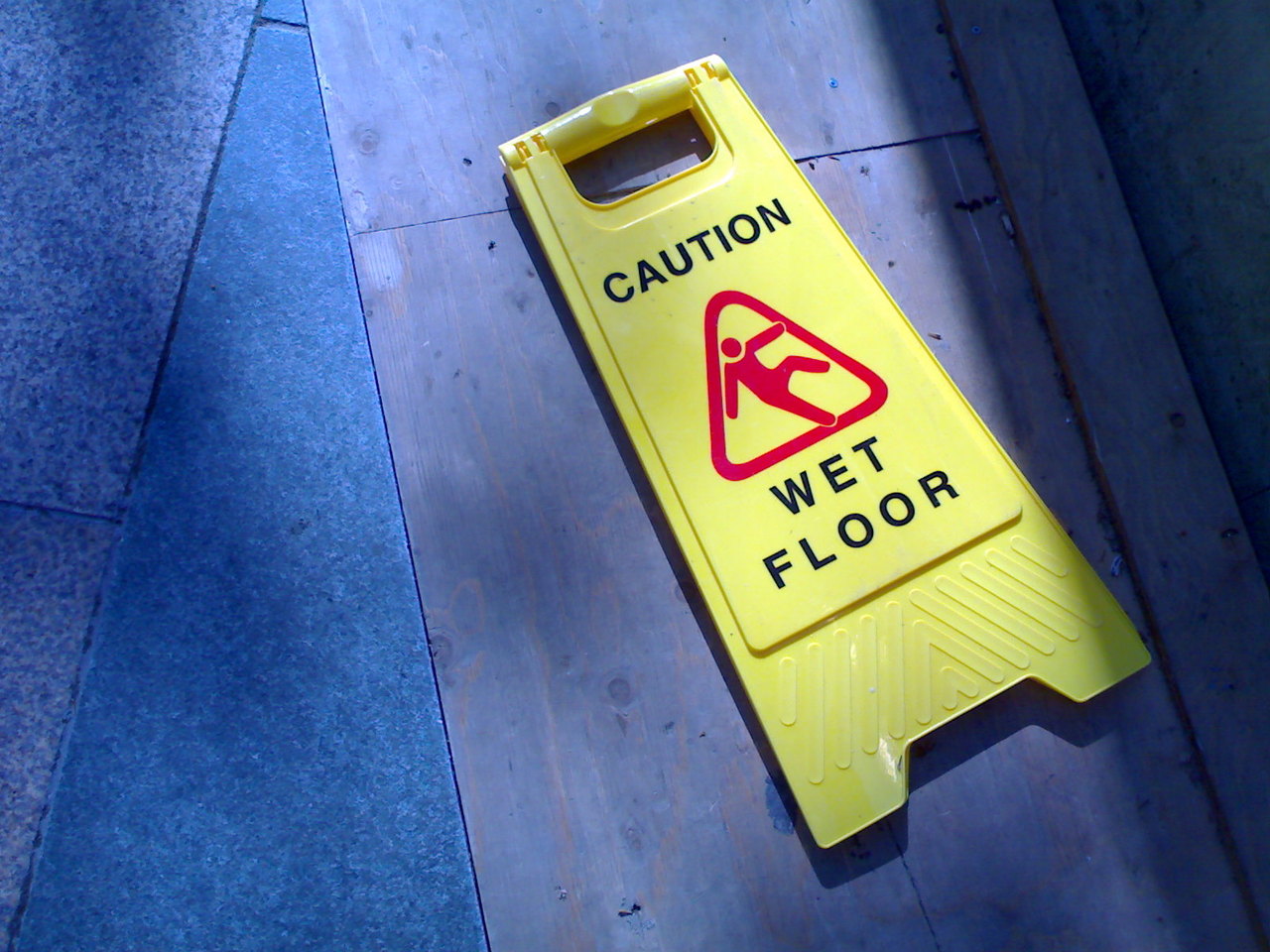
caution-wet-floor-sign-1-1444538-1280x960

Laurens Meurs/Freeimages

This past week, I stumbled on a stair and fell in my own home, where I’ve been living for over 10 years. I wasn’t rushing, nothing has changed recently as regards to the stairs or my health, and I am an active 40-something woman. Fortunately, I injured nothing but my pride.

To follow up on last week’s post, Bruce Millar of Millar & Mixon law firm put together this list of top slip and fall risks. A lot of it is common sense, but check your home (and the homes of your aging loved ones) to see if any modifications need to be made. –Joy

According to the Centers for Disease Control and Prevention (CDC), every year millions of older people (those who are 65 and older) fall. Sight and balance problems, along with weakened limbs can make walking a challenge for some elderly people. Fortunately, after identifying the risks, simple measures can be implemented to ensure that their health is protected.

The slip and falls risks that the elderly face are many, according to AtlantaAdvocate.com. However, some are caused by the negligence of the government or business owners, who are expected to keep premises in a reasonably safe condition. If you or a loved one suffers a fall due to negligence, don’t be afraid to speak out, obtain legal advice and if appropriate, seek compensation. Seniors are more likely to be seriously hurt or even killed due to falling accidents. Let us examine the most common risk factors that may cause these slips and falls.

Slip and Fall Risks

  1. Inadequate Lighting

Inadequate lighting may occur in areas such as alleys footpaths or house corridors. Elderly people are likely to slip and fall in areas with inadequate lighting as they have problems with their sight. Lighting in public zones should be adequate to ensure that the they can see well whether they are in public or private areas. Report non-functioning streetlights to the appropriate city officials and make sure your own yard and home have adequate lighting.

  1. Cluttered Walkways

Some sidewalks, especially in big cities, may be cluttered with rubbish and other debris and and this poses a fall risk. Creating a narrow, tricky path for someone who may have sight and mobility problems may result in a fall with serious injuries.

  1. Slippery Floors

Wet floors are one of the leading causes of falls and slips among the elderly. Areas such as malls and supermarkets often have slick floors. Recently mopped and waxed floors are a major cause of falls and slips. Older adults are often the most affected because their balance may be impaired, thus increasing their risk of a fall in these situations.

  1. Appliance Cords in Walking Paths

These hazards mainly occur in homes or some stores where device cords pass through walking paths. A poorly-placed cord can trip up the elderly which can result in a potentially fatal fall. In a business, such cases should be reported because the appliance cords are not meant to be in areas where people are walking in the first place.

  1. Cracks On Sidewalks or Driveways

Cracks and uneven sidewalks and driveways are a major reason for falls, not just for the elderly but other individuals as well. Major cracks should be repaired promptly, or reported to authorities if on city property. A trip on cement can lead to serious injuries, especially for those who have osteoporosis or other conditions which weaken bone strength.

  1. Slick Bathroom Floors

Many fall accidents that occur in a home have reportedly happened in the bathroom. These injuries are often caused by wet floors, a slippery tub and lack of grab bars to hold onto and avoid falls. When renovating a bathroom with aging-in-place in mind, especially in nursing homes for the elderly or in-home care, measures should be taken to reduce the risk of bathroom falls. Safety measures can include non-slip rugs, non-slip bathtub treads and handrails.

  1. Changes in Surface Types or Levels

Changes in surface types or levels that are not well defined may cause falls and pose a significant risk to the elderly. Contractors should try to identify changes in such instances to ensure the safety of the elderly. Areas with such changes should have grab bars or a railing. That way, if an older person trips, they can support themselves and avoid falling.

Injuries Due To Falls

The following are injuries that can occur following a fall:

  • Brain injury
  • Broken bones
  • Hip fractures
  • Spinal cord injuries
  • Cuts and bruises
  • Pain
  • Psychological trauma
  • Medical expenses
  • In some cases death


Author Bio:

Bruce Millar of Millar & Mixon law firm serves the victims of personal injury accidents all over the state of Georgia. Millar and the other attorneys at Millar & Mixon have over 20 years of experience of helping clients get their life back on track after a serious accident has occurred.

Photo credit: Laurens Meurs/Freeimages


Leave a comment

Filed under Awareness & Activism