Category Archives: Awareness & Activism

Walking for Dad on The Longest Day

This year I actually have the opportunity to participate in the Alzheimer’s Association campaign, The Longest Day. Since this is the day it stays light the longest, today is the perfect opportunity to shine a light on Alzheimer’s awareness from dawn to dusk. Last year I was at work so I couldn’t fully participate, but I had no excuses this year!

Walking the Beltline in Atlanta for Dad on The Longest Day 2013.

Walking the Beltline in Atlanta for Dad on The Longest Day 2013.


People do all sorts of things to honor their loved ones for The Longest Day campaign. People hike, run, swim, ride a bike, just anything to get out there and spread awareness. I chose to walk because Dad loved to take long walks and I do too! I decided to walk the Beltline, which is an exciting project here in Atlanta that is repurposing the long abandoned railroad tracks that still exist around the city and converting them into a walk/run/cycling trail that links up many intown neighborhoods. I was skeptical about the project at first I have to admit, but now that I have experienced one of the first phases of the project, I feel like it’s coming along nicely.

Piper the Beltline Kitty came out to greet me on my walk for Dad!

Piper the Beltline Kitty came out to greet me on my walk for Dad!

Today I walked the Eastside Trail from Piedmont Park in Midtown to Inman Park. Driving that route is almost a five mile trek. But thanks to the Beltline, you can walk there in half that distance. I made it to my destination in about an hour and am writing up this blog post at a neighborhood coffee shop. I’m going to keep spreading Alzheimer’s awareness throughout the day by staying active on social media and doing more walking!

I would love to hear how others are honoring their loved ones and spreading Alzheimer’s Awareness on The Longest Day. To follow the action on Twitter, use the hashtag #thelongestday.

Leave a comment

Filed under Awareness & Activism

Dementia patients may try to mirror emotions

I read about an interesting study today that found those in the early stages of Alzheimer’s may try to mimic the emotions of those around them. The results suggest that it is in the best interest of caregivers and family members to try to maintain a calm and positive demeanor in the presence of those with dementia. I know, easier said than done, right! Still, it is interesting to wonder if the emotional disturbances and changes are a result of Alzheimer’s patients becoming more sensitive to the emotions of those around them. And anyone who has dealt with someone with Alzheimer’s knows that there is a great deal of anxiety, frustration and sadness, especially early on before proper coping mechanisms are developed. The condition has a name: emotional contagion.

A new study finds that dementia patients may mirror the emotions of those around them.

A new study finds that dementia patients may mirror the emotions of those around them.

I’m not sure I witnessed my dad mimic other’s behavior but I did notice his excessive attempts at “fitting in” or being part of a conversation or situation. He would try to make a relevant comment but I could tell by his eyes that he had no clue what Mom and I were discussing. As I’ve mentioned in previous posts, this stage of the disease is actually more heartbreaking to me than later on, when many patients “disappear” emotionally. Once Dad entered the nursing home, he was heavily medicated as most dementia patients are, which tends to turn one into a zombie. I struggled more with Dad trying to be upbeat and tell jokes even while he was clearly losing his mind than the sullen, withdrawn shell of a person he became in the nursing home.

Whether the person with dementia mirrors the emotions of others are not, it of course is best for everyone if a calm and stable atmosphere is maintained. That’s not to say you should beat yourself up if you show exasperation in front of your loved one with dementia. It happens, we’re human. But even while dementia strips away abilities and memories, it may magnify sensitivity in other areas that before we have ignored.

Leave a comment

Filed under Awareness & Activism

Caring for Yourself When Caring for Someone with Alzheimer’s

Today I’m featuring a guest post by freelance writer Katie Elizabeth. She offers up helpful advice and positive lessons for Alzheimer’s caregivers. If you would like to write a guest post for The Memories Project, feel free to contact me at joyjohnston.writer@gmail.com.

When someone you love, such as a parent, is diagnosed with Alzheimer’s, it’s a scary and overwhelming experience. You have a lot of questions, you start preparing for the worst and you start to see Mom or Dad in an entirely different light. Suddenly, time seems exceptionally precious and you begin hoping for good days. That’s completely normal.

Unfortunately, what’s also normal is that you begin to forget to care about yourself. You start counting regrets, things you wish you would have done and early signs of the disease that seem so obvious now. While it’s natural to want to squeeze in as much quality time as possible or, sometimes, try to distance yourself, slow down. Don’t forget about how you fit in this equation.

Sometimes it seems impossible, but as caregivers we must find alone time.

Sometimes it seems impossible, but as caregivers we must find alone time.

Stop the Flagellation

There are no current, proven ways to stop Alzheimer’s from happening. While this is a simple fact, it’s often hard to process when you’re going through it. It’s often wise to seek counseling for yourself when a loved one is diagnosed to help you process the new information.

There will surely be days when you beat yourself up, such as remembering the eye roll you gave when Dad couldn’t remember something he did every day. Acknowledge it, move on and focus on the present. While that’s easier said than done, it’s a good goal to keep in mind. Noticing and accepting when you cling to the past is the only way to move forward.

Get Your Breaks

Whether you’re moving a parent in with you or finding the perfect care facility for them, it’s important to still carve out time just for you. No one can be a caretaker 24/7, and it’s certainly not a good idea to worry that much. It’s not selfish to create a relaxing time of the day just for you. Whether it’s shopping, a spa day or a good run, let go of the guilt and enjoy your special time.

By giving yourself breaks from caregiving, you’re ensuring that you’re at your best. Nobody wants an overworked, tired, cranky person caring for them. Your empathy, compassion and overall mood will improve with frequent breaks. It can be frustrating dealing with Alzheimer’s, even when the person is a loved one.

Is it Going to Happen to You?

Don’t feel bad if one of your immediate thoughts is “will this happen to me?” While scientists don’t know exactly what causes Alzheimer’s, there’s evidence that genetics is at least somewhat involved. Read up on the theories, but don’t drown in them. If you’re really concerned, consider adding supplements that show evidence of delaying dementia, such as a daily cup of green tea.

There’s no telling if Alzheimer’s will happen to someone close to you. However, worrying guarantees detrimental effects. Enjoy the time you have, focus on the good days and don’t lose yourself in the process.

Leave a comment

Filed under Awareness & Activism

Dementia does not discriminate

The big news today was the passing of former British Prime Minister Margaret Thatcher. A polarizing political figure, my father was definitely never a fan of hers. However, my father ended up having something in common with her when her daughter revealed in 2008 that Thatcher suffered from dementia. A powerful woman who was known for her sharp and keen intellect, her memory was destroyed by disease over the last several years of her life. It’s a cruel twist of fate for sure, regardless of how you feel about her political career.

Dementia does not discriminate between rich and poor. Political allies and world leaders Margaret Thatcher and Ronald Reagan battled dementia at the end of their lives. While it’s true that the economic burden of the disease is lifted for the rich and famous, it doesn’t take away the fact that all of the money and power in the world can’t cure dementia.

Alzheimer’s and dementia awareness advocates know the horrors of this disease and the damage it does to families. High-profile cases bring greater awareness, not that I ever want another person diagnosed with this dreaded disease. But in our society, the rich and famous do have power to highlight the various injustices of the world, from disease to poverty to racism. Maybe other world leaders will take note and reconsider better research funding for Alzheimer’s and related dementias.

1 Comment

Filed under Awareness & Activism

Dementia an expensive disease

I’ve written about this before, but it is worth beating the drum again. Dementia care is expensive. If we think the past few years in the U.S. were bad with the housing crisis and the rising unemployment rate, just wait until dementia meets the baby boomers in a terrible perfect storm.

What this most recent study reveals is something that family caregivers of dementia sufferers have known for quite awhile. It’s not medical care that most dementia patients need, but the necessity of institutional or professional home care that drives up costs astronomically. The per-person cost was estimated to be between $40,000-$60,000 per year. My father only required a year of institutional care, but my aunt that recently passed away who had Alzheimer’s spent the last several years of her life in a facility. You do the math, it’s depressing. The average family will go bankrupt very quickly if something is not done to remedy this situation.

As I’ve said before, I don’t know what the answers are. If there were more support, financially and otherwise for family caregivers, some families would choose to keep their loved ones with dementia at home for longer. I’m not a fan of more taxes or government programs, but it does seem as a government and as a society we are letting down the elderly generation. We pay property taxes so children can get a free public education. Fine. But what happens after you grow up, you work all of your life, pay taxes while saving up as much as you can, and then your mind gets sick? You lose everything and it becomes a family problem.

Really though, Alzheimer’s is a world dilemma. Whether or not it touches everyone’s family directly, this disease has a lasting impact on society.

Leave a comment

Filed under Awareness & Activism

A good night’s rest the key to preventing Alzheimer’s?

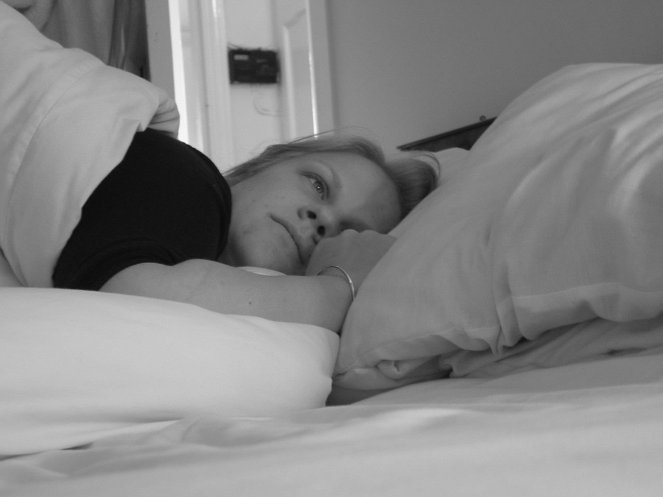
An interesting study has been in the news this week, suggesting a possible link between sleep quality and Alzheimer’s. While the study doesn’t suggest that everyone with insomnia will develop dementia, the study did find an interesting correlation between poor sleep quality and an increase in amyloid protein production, the latter which is associated with the brain plaque found in Alzheimer’s patients.

insomnia

My father had no trouble sleeping most of his life. In fact, sometimes I felt like he slept too much, especially when I was a kid. He worked the swing shift so he was on a different schedule from the rest of us. He would go to bed about 2 a.m. after winding down with a couple of beers and watching late night TV. So even if he just slept the recommended eight hours a night, that would mean he wouldn’t rise until mid-morning. I was an early riser for school and I don’t know if Mom ever slept at all, haha.

Other than Dad’s occasional nightmares, I don’t remember Dad having any sleep issues. As Dad’s dementia progressed, his sleep patterns shifted. He would stay up all night, just sitting in his chair in the living room, fully dressed in his day clothes. He would spend the day nodding off, falling asleep wherever he was.

What came first? The sleep issues or the dementia? We will never know, but getting a good night’s sleep offers many health benefits. I’ve never been one prone to insomnia, but in the past couple of years, I’ve been awakened by my senior pets in the middle of night needing food or other care. So my sleep pattern has been consistently broken. I will be following further sleep and dementia studies very closely.

3 Comments

Filed under Awareness & Activism

Connection between hearing loss and dementia?

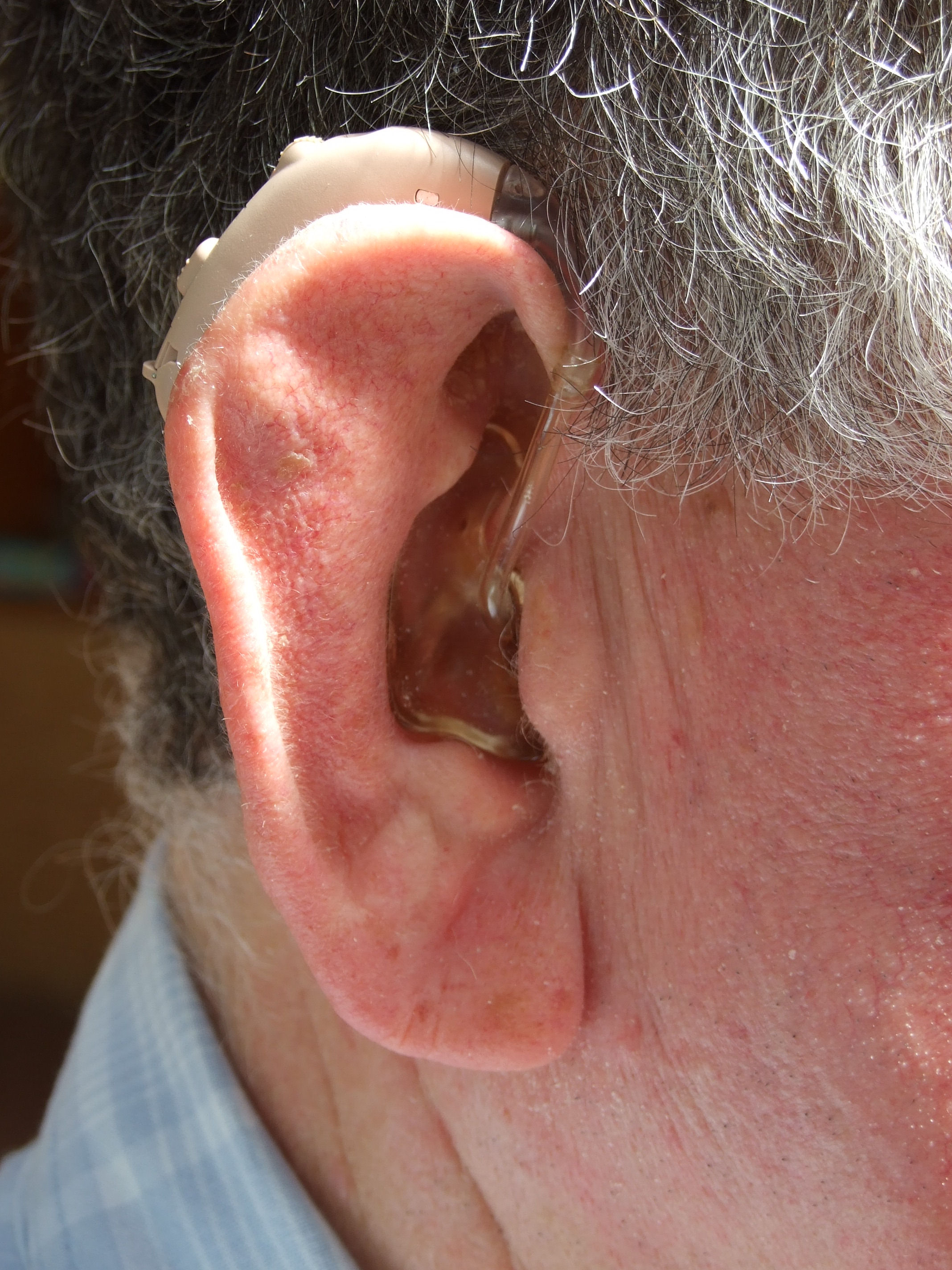
One topic I’ve seen latelyin the world of dementia news is that hearing loss could be a symptom of dementia. There is growing evidence suggesting that hearing loss speeds up cognitive decline in the elderly. Doctors think there may be a mental and physical component. Physically, the brain has to direct extra resources to help with hearing problems and emotionally, people become more socially isolated as their hearing loss becomes more profound.

hearing aid

Dad did experience fairly significant hearing loss in the years before his dementia symptoms appeared. Mom suspected Dad was just using hearing loss as a way to tune her out, and I could see that as being a real possibility! But now I wonder if Dad’s hearing loss was the first sign of a much more serious health issue.

I think it would be a good idea if dementia screening became routine for elderly patients that complain of hearing loss. Many of the dementia screening tests are non-invasive, painless and quick to perform. Early diagnosis usually means more treatment options.

1 Comment

Filed under Awareness & Activism

Dementia’s toll on the workforce

I read this USA Today article about how family caregivers of dementia patients are having a negative impact on the workforce. It is very true and yet another consequence of Alzheimer’s, one that is often overlooked. According to the article, 1 in 7 Americans have been or are currently caregivers for family members. Almost 70 percent of those people had to modify their work schedule in some way. This is a big loss of productivity for companies, if you want to look at it from a cold, hard statistical perspective.

Of course, as any caregiver knows, caregiving goes beyond just the physical tasks. Caregivers often become depressed, anxious and suffer from exhaustion. This can lead to accidents on the job or poor working relations with co-workers.

While I was not a direct caregiver to my dad, I was for my mom for the last half of 2012. My mom didn’t have dementia, she had cancer, but her need for a family caregiver was just as necessary. And I did the only thing I felt like I could do in that situation, which was quit my job. It was not a decision I made lightly, but my mom’s recovery depended upon having a family advocate by her side for several months. I’m an only child, and Dad passed the year before.

Right now, I’m back home but I’m still only working part-time. I’m hesitant to apply for full-time work again because I fear my mom may need me again. Financially, part-time income will not be sustainable in the long-term.

There are no easy answers, but caregivers and their ill loved ones need better community support. While there are some family members who want to be full-time caregivers, I think many caregivers benefit from keeping to as normal as a routine as possible. Caregivers shouldn’t have to choose between providing loving care for their loved ones and being able to support themselves and their families.

1 Comment

Filed under Awareness & Activism

A devastating look at caregiving

I’ve always been a big fan of film director Michael Haneke’s work. He makes films that are emotionally brutal and can make the viewer uncomfortable, because even in the darkest moments, we may catch a glimpse of ourselves in his films. Haneke’s movies are not everyone’s cup of tea, but for those who are involved with caregiving of an ill family member, “Amour” is essential viewing.

Copyright: Sony Pictures Classic

Copyright: Sony Pictures Classic

The movie has earned many awards and accolades, and is nominated for best film at the Oscars. Both of the lead actors are in their mid-80’s and offer amazing performances. The story is deceptively simple. A long-married couple faces upheaval when one of them becomes ill. For any of us who have been family caregivers, the roller coaster of emotions is displayed quite realistically in this film.

As the film progresses, the side effects of the wife’s illness begins to take greater hold over their lives, making both of them more desperate as they valiantly attempt to preserve their loving relationship. I won’t spoil the ending, but bring some tissues.

While the film is certainly a stark, sobering and heartbreaking look at family caregiving, there are some beautiful and tender moments of love displayed throughout the movie. I think anyone who has ever been a family caregiver will be able to relate to the new world that is formed when a loved one becomes ill.

1 Comment

Filed under Awareness & Activism

Trial participation so important in Alzheimer’s battle

I spoke this week to a representative of the Alzheimer’s Prevention Initiative. I’ve mentioned them before. They are one of many organizations waging battle against Alzheimer’s, with an emphasis on research. The Alzheimer’s Prevention Registry is focused on building up a database of willing participants for clinical trials they hope to begin in 2014.They hope to grow their database to 250,000 participants.

Why such a large number? As I learned the other day, it can be so difficult to fill a trial with people when such specific criteria is required. The bigger the pool of participants to choose from, the better chance these trials have of being filled with the best matches and seeing completion.

It is simple to sign up online. You are under no obligation whatsoever to participate in any trials or any of the organization’s activities. You will not be bombarded by emails, but you can receive updates on how current research is going in the area of prevention and treating Alzheimer’s. If you are willing to share your personal story, there is an option for that, which is why I was sharing my story with the representative the other day.

1 Comment

Filed under Awareness & Activism