Tag Archives: loneliness

AI-powered phone call service offers virtual wellness checks for seniors

I came across a new service for seniors and their family caregivers that is getting ready to launch. I’ll admit it caught my eye because it has my name! Joy Calls is an AI-powered call service that performs virtual wellness checks.

A smart feature of the service is that even though Joy is an AI-powered persona, the high-tech is contained in a familiar package: a telephone call. No special equipment or training is required to use the service. Joy calls your loved one, checking in on things like medication, hydration, diet, and mood. Your loved one’s responses are summarized and provided to the caregiver.

The concept is designed not to replace family caregivers but virtually augment the monitoring of their loved ones, potentially extending their ability to age in place safely. A price hasn’t been set yet, but according to Onscreen, the company producing Joy Calls, the service is expected to cost in the range of $10-40 per month.

It’s an intriguing concept, and I will be interested in how well the service works and if it can meet the needs of seniors and family caregivers. I’m curious to see how the service handles sensitive information and if it can reduce the risk of AI hallucinations, otherwise the calls could go off the rails. And thinking of my mother, how will Joy handle a senior who is, to put it politely, verbose? Will she interrupt and try to get the call back on track? I felt helpless at times trying to keep my mother focused on the topic at hand, so I hope Joy Calls is up to the challenge.

Image created by ChatGPT.
Leave a comment

Filed under Awareness & Activism

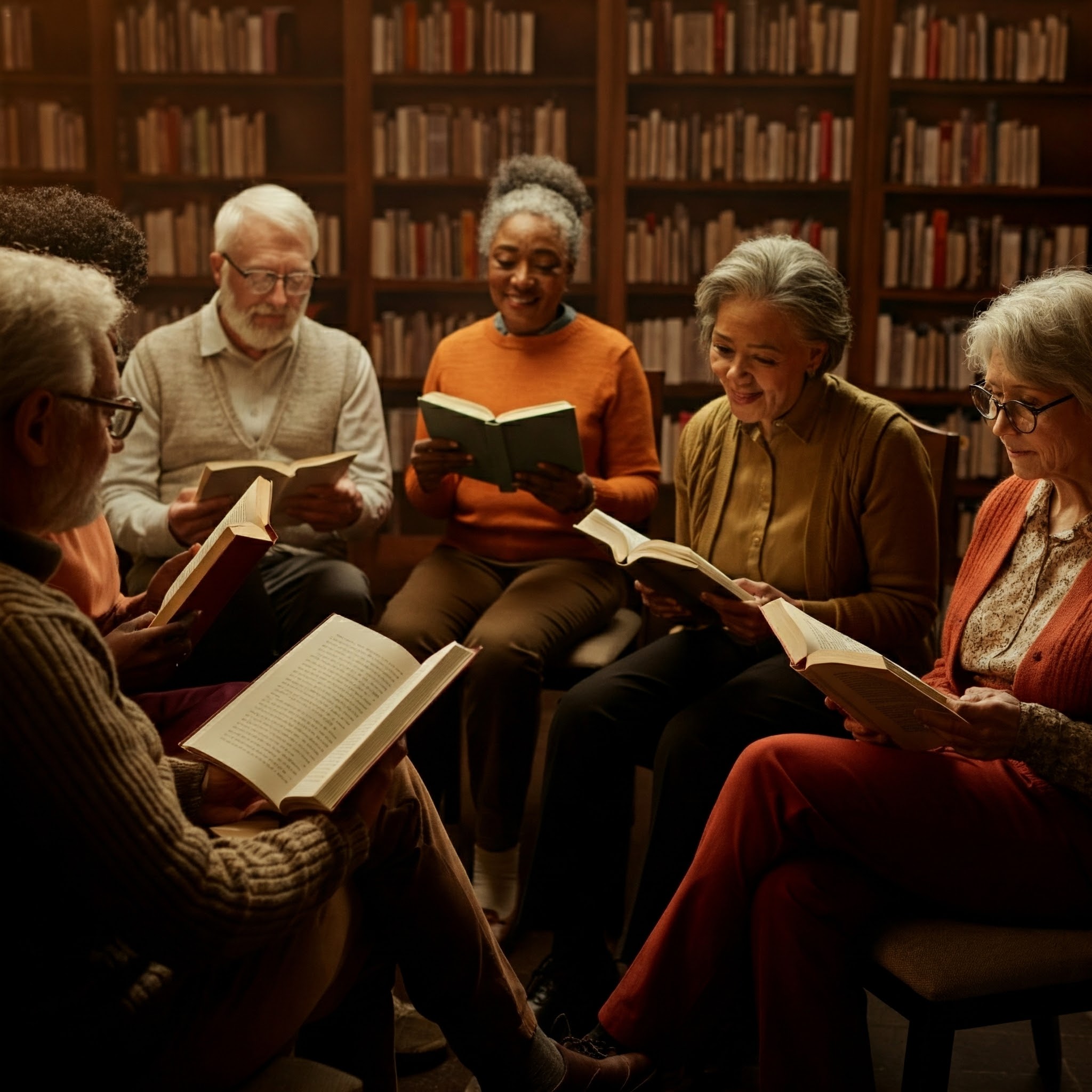
Helping elders build community connections

Happy New Year. I hope you were able to enjoy time with family over the holiday season.

Once the holidays are over, our elder loved ones may miss the social interaction and companionship. I know my mother deeply missed the daily companionship of my father after he moved into the memory care center and then died a year later. There was an active senior community center where she lived, but my mother refused to go, saying she didn’t want to be around “old people.”

Home Care Matters had good tips on helping elders connect with community in their newsletter. They also offered additional tips about keeping elders engaged during the winter months when it may be difficult to leave the house for socializing. Some churches offer transportation service for those who need assistance to and from services. Volunteer work is another great way to connect with the community. How one socializes and stays engaged with their community may take some creativity on the part of family, but the mental, emotional, and health benefits are well worth it. You’ve likely seen the reports about the health consequences of the loneliness epidemic, including an increased risk of dementia.

What about our elder loved ones who are introverted or don’t enjoy the typical senior community center activities? As an introvert myself, I’m not a big fan of in-person group activities, but I found that I do enjoy online activities like virtual book clubs. An online women’s healing circle has been beneficial in supporting my emotional wellbeing during the pandemic. I also enjoyed an in-person knitting group I attended last year a couple of times and may return to that in the future. For me, the key is to use my hobbies and interests to find communities where we share a common interest.

What about those who are resistant like my mom? Sometimes, you have to let your loved ones follow their own way. For example, my mother used errands to socialize with everyone from the bank manager to the Mexican restaurant server to the shuttle driver. I appreciate those people who took extra time to interact with my mother. They probably don’t realize how much of a positive difference they made in my mother’s life.

Image created by Google Gemini.

Leave a comment

Filed under Awareness & Activism

Connection between loneliness and Alzheimer’s?

I read an interesting study today that suggested there may be a connection between loneliness and Alzheimer’s. What was most interesting was that it was those who felt lonely versus those who lived alone but didn’t express feelings of loneliness that had a higher incidence of Alzheimer’s.

It was a surprising result to the researchers. I’ve read numerous studies about social isolation leading to everything from dementia to depression. I wonder if these studies have some inbuilt bias towards extroverted people. There are some people who need constant company or they feel lonely; others can interact socially with people once or twice a week and be perfectly happy.

I’m not sure if Dad felt lonely before Alzheimer’s set in. Dad certainly had a passion for “alone time” activities like reading. He also had a solitary job as a security guard for many years. So like me, he was comfortable being alone and entertaining himself. Did he yearn for more socializing? That I will never know.

But what is clear to me is that once Alzheimer’s took hold of my father, he was whisked away into an isolating world, where we really could no longer connect with him in a meaningful way. And I saw that same isolation play out on the faces of every patient in the dementia ward of the residential facility where my dad spent the last year of his life. I remember so many residents reaching out, touching my arm, trying to communicate with me, hoping to make some kind of human connection. I often felt like I let them down when they shuffled away after an awkward, confusing exchange.

I hope there are more studies investigating social isolation and dementia, and I hope they take into account that both introverts and extroverts exist, and that the definition of loneliness is different for every human being.

Leave a comment

Filed under Memories

A loyal companion gone

Mom has been missing Dad a lot lately. Now that she’s back home, she misses his presence even more than before. 40 years of daily contact is not easy to replace with something or someone new.

Over the past year, when Dad was in the nursing home, she learned to craft a new life for herself. It wasn’t easy or ideal, but she had her health then. Now that her health is in jeopardy, I think she is relying more on the good memories, before Dad’s dementia, when they had their boring yet comforting life together.

Of course, Mom had to live with a different version of Dad, the one with Alzheimer’s, for a few years. Even though that was very difficult, she had someone to take care of and protect, which made her feel needed.

Even though Mom and Dad were opposites in many ways, it is clear to me now how they fit together like puzzle pieces. Now that Dad is gone, Mom is finding it difficult to feel complete and whole again.

Leave a comment

Filed under Memories