Monthly Archives: April 2025

Join AlzAuthors for a poetry reading

I hope you can join AlzAuthors for Poetry for the Dementia Journey, a moving and inspirational poetry reading on Tues. April 29 at 2 p.m. EDT. I’m honored to be one of the participating poets. I’ll be reading a poem inspired by my father’s experience with dementia. The event will be held virtually via Zoom.

While I’ll always consider the essay format to be most suitable for my writing style, I’ve always had a love of poetry. There’s something unique and impactful that comes from writing poetry vs. long-form writing. Distilling emotions and events down to their essence can help one see things in a different light. With poetry, I can’t hide my feelings behind paragraphs of text; I’m motivated to release the raw feelings, which is so cathartic when it comes to the caregiving experience.

If writing poetry feels intimidating, try writing a prose poem. I was thrilled to have Her Lists, a poem about my mother’s colorful and wild shopping lists, included in The Prose Poem journal in 2024. Though I’d written about the same subject that I included in my award-winning essay collection, The Reluctant Caregiver, the prose poem format allowed me the freedom to play with language and rhythm.

AlzAuthors is the global community of authors writing about Alzheimer’s and dementia from personal experience to light the way for others. The wonderful organization is celebrating 10 years, which is hard for me to believe. I’m amazed at its growth and what it has done for the Alzheimer’s community.

If you are unable to attend live, the poetry reading will be recorded and shared on the AlzAuthor’s YouTube channel and podcast. There’s also a free guide that will provide you with links to poetry books written by members of the AlzAuthors community. In honor of National Poetry Month, you can purchase a copy of Poetry for the Dementia Journey: An AlzAuthors Anthology at a deep discount.

Hope to see you at the poetry reading!
Leave a comment

Filed under Awareness & Activism

Tips on starting a dementia support group

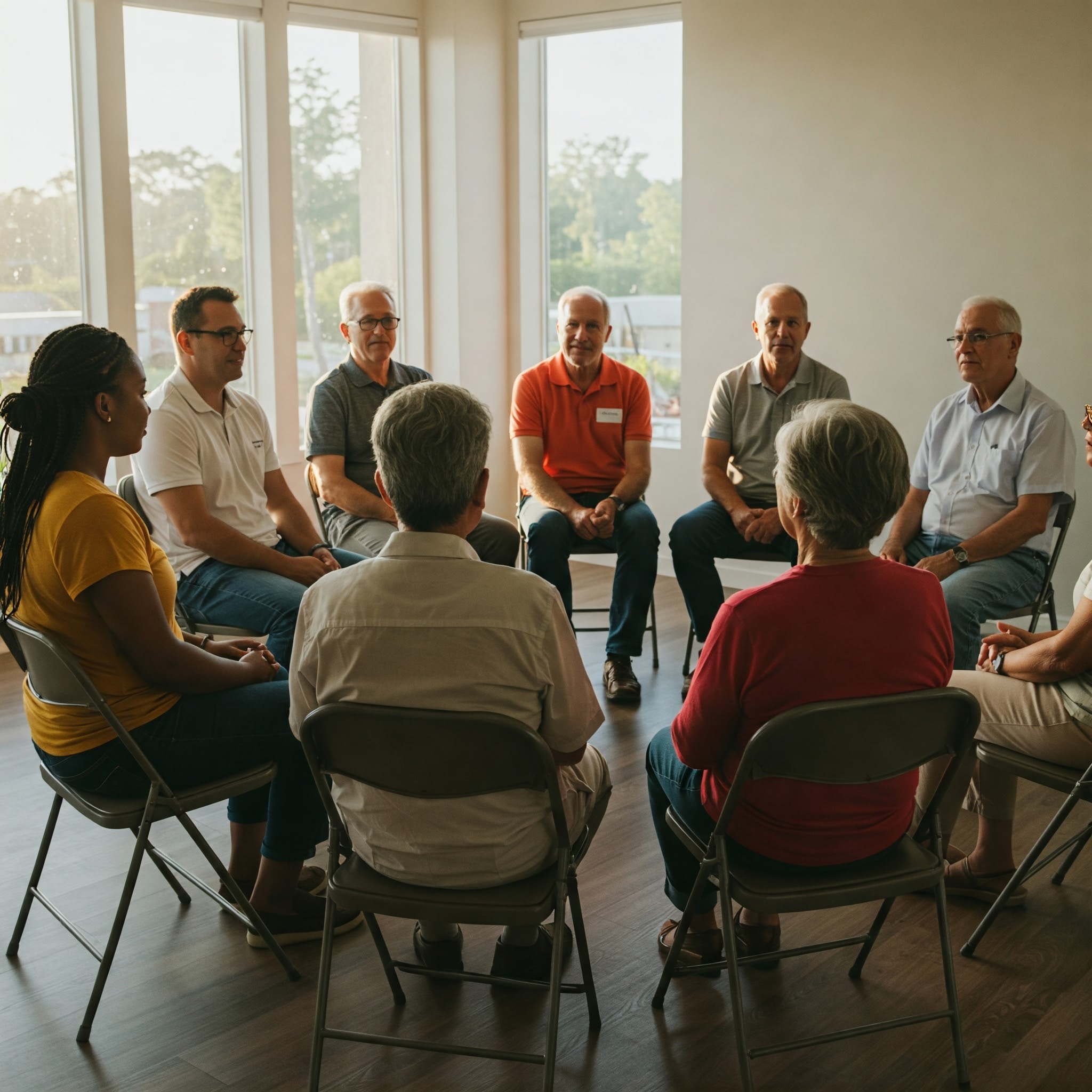
As government funding vanishes for community-based health programs, it’s becoming increasingly clear that caregivers will need to build their own support networks. If you are considering starting a support group in your community, there are plenty of helpful resources online to help guide you to success.

Today’s Caregiver offers an excellent resource about starting a caregiver support group. The article does a good job addressing the key questions and tasks one must consider, from meeting location to group leader requirements and suggestions on how to set up the first meeting.

I’ve mostly attended online groups but I appreciate the benefits of in-person meetings. There is something special about sharing physical space with others that is difficult to replicate online. But Zoom meetings can offer critical connections to those who might not otherwise be able to attend support groups, such as those in rural locations and those who don’t have transportation options. In this day and age, both options are important to have available to support as many caregivers and care recipients as possible.

There are some unique considerations when it comes to creating a support group for those with dementia. The Toolkit Project offers a variety of dementia-specific resources to help those interested in creating a support group in their community. The Alzheimer’s Society also has tips for facilitating dementia-friendly discussions, including the use of cards to better understand an individual’s communication needs. Keeping things simple and clear, being flexible when it comes to the unexpected, and remaining respectful and compassionate are key factors to facilitating a dementia care support group.

Speaking of community, AlzAuthors is one of my favorite dementia-focused organizations and it is celebrating its 10th anniversary. Join us for a poetry reading on April 29 at 2 p.m. ET. I’m honored to be one of the participating poets.

Image generated by Google Gemini.

1 Comment

Filed under Awareness & Activism

Managing stress as a dementia caregiver

April is National Stress Awareness Month so it’s a good time to discuss healthy ways caregivers of those with dementia and Alzheimer’s can manage stress levels.

The first thing I recommend is to set realistic expectations. The dementia care journey is unique and unpredictable. The more flexible and adaptable you are, the more resilient you will be when facing those tough days when everything seems to go wrong.

Stress can manifest itself in a wide variety of mental and physical symptoms. While people may recognize common symptoms like irritability, anxiety, headaches, and digestive issues, stress can also impair decision-making skills. The longer someone endures a stressful situation, the more difficult it may be to recognize the signs of stress, as the situation begins to feel like the new normal. It’s important to recognize how your body reacts to stressful situations so you can find a stress-relieving method that will work best for you.

There are no shortage of stress reduction techniques that dementia caregivers may find helpful. For me, walks in nature and listening to music were my go-to methods for relieving stress. Anything that helped me reset my brain and my emotional state was effective when I was facing a stressful caregiving situation.

Don’t overlook the ways stress may impact your loved one with dementia. While they may not be able to express their feelings of stress clearly anymore, there are signs that caregivers should aware of as well as the triggers that may cause stress in their loved ones. A caregiver’s mood and stress level may impact a person with dementia.

Being a dementia caregiver can be a lonely and isolating experience. Finding practical ways to relieve your stress, creative outlets to express your feelings, and connecting with others going through a similar situation can be beneficial.

Speaking of creative outlets, I’d like to invite you to a poetry reading taking place at the end of April. Poetry for the Dementia Journey is being hosted by AlzAuthors on April 29 at 2 p.m. ET. The live poetry reading will feature 20 poets, including myself. You can RSVP via this form. I hope you can join us.

Image by ChatGPT.

Leave a comment

Filed under Awareness & Activism

Generative ghosts and the potential impact on the grieving process

AI technology has seemingly immersed itself in every part of our lives, so why not in our afterlives as well?

The concept of “generative ghosts” is outlined in a research paper released in 2024 that includes a Google DeepMind scientist as a contributor. Since then, thanks to a grant from Google, the research continues while at the same time, enterprising AI companies are swooping in to offer products and services. I’ve been following the trend over the last year.

In the paper, the researchers defined generative ghosts as “AI agents that represent a deceased person.” According to the researchers, this differs from a static “griefbot” program where you could have chats with your deceased grandmother about her life based upon data you provide, such as letters, journals and audio and video files to create the information source that the AI chatbot would rely on to provide responses. With generative ghosts, the program is able to create novel content and evolve over time. An example would be a grandmother offering advice on her granddaughter’s wedding day, years after the grandmother’s death.

While some may find such a concept creepy, I can see its benefits especially for younger generations, who have been raised solely in a digital world and who may not have the same emotional connection that older generations have to low-tech sources of family history such as photo albums and scrapbooks. A griefbot that’s a phone app or an avatar of grandma in a short web video sharing her beloved recipe for chocolate chip cookies might be more impactful for younger relatives. Generative ghosts could be tailored to interact with relatives of a variety of ages, serving as a generational bridge to ancestors.

Of course there are many ethical and practical considerations to ponder when it comes to such a concept, which the research paper outlines. One question is whether the generative ghost would speak in first person, as if they were actually the deceased loved one, or in third person, representing the loved one. The form in which the generative ghost assumes is also a question to consider: does it remain in a digital format, exist in a virtual reality world, or does it take on a physical form like a robot? Does the generative ghost remain in its own time period or does it grow in its understanding of current events is another interesting question. One of the most intriguing questions that I found in the research paper was whether the generative ghosts should be allowed to earn income, if say, your relative was a successful author.

The impact of generative ghosts to society could present a host of benefits and consequences. While it could help some through the painful grieving process, it could also interfere with a person’s ability to move on with their lives after the death of a loved one. As with any digital tool, there is the risk of cybercriminals to hack and hijack personal data.

If you could create a generative ghost of a deceased loved one, who would you choose?

Image created by Google Gemini.

1 Comment

Filed under Awareness & Activism