Category Archives: Awareness & Activism

Would you take a blood test that can predict Alzheimer’s?

This past week, researchers revealed they had developed a blood test that can accurately predict whether a senior will develop dementia in the next few years. The test has been performed on a small pool of subjects, with promising results. The test focuses on a particular set of lipids that are present in those who end up developing Alzheimer’s disease and other variations of cognitive decline. In the studies conducted so far, the blood test has had an impressive 90 percent accuracy rate.

The blood test is still years from being made available to the public as a diagnostic tool for dementia. Still, the fact that a simple blood test now exists raises the question: would you take the test?

blood test

I definitely would want to know, so I would take the test. Something to keep in mind with this particular blood test is that it only can predict the development of cognitive decline two or three years prior to onset. When it comes to genetic testing, some people fear of living with the knowledge of increased disease risk for decades, like a black cloud over their lives. I can understand that, though I have undergone commercial genetic testing that indicates I have the ApoE4 gene variant that increases my risk for Alzheimer’s. But with this new blood test, that window of time is a more reasonable one, allowing you enough time to get your affairs in order and spend quality time with your family. Not everyone would accept this information in a positive manner and it could trigger depression or destructive behavior; obviously the test should never be forced upon a patient.

That being said, I’m not saying that getting those test results indicating you have a 90 percent chance of developing dementia in a few years would be easy to digest. You might well react differently than you think you would.

Would you take a blood test that could accurately predict the onset of dementia?

1 Comment

Filed under Awareness & Activism

Building community to prevent dementia-related tragedies

This story out of Alabama is tragic on so many levels. Neighbors called police to perform a wellness check on an elderly couple, one who has dementia. The neighbors reported not seeing the couple for months. When the police arrived, they saw the woman who has dementia moving about the home. Through a window they could see her husband, clearly deceased, on a bed. When the police gained access to the home, they found the woman with dementia in poor health, and two dogs that they believed starved to death. Authorities believe the woman lived with her dead husband in that home for at least a month.

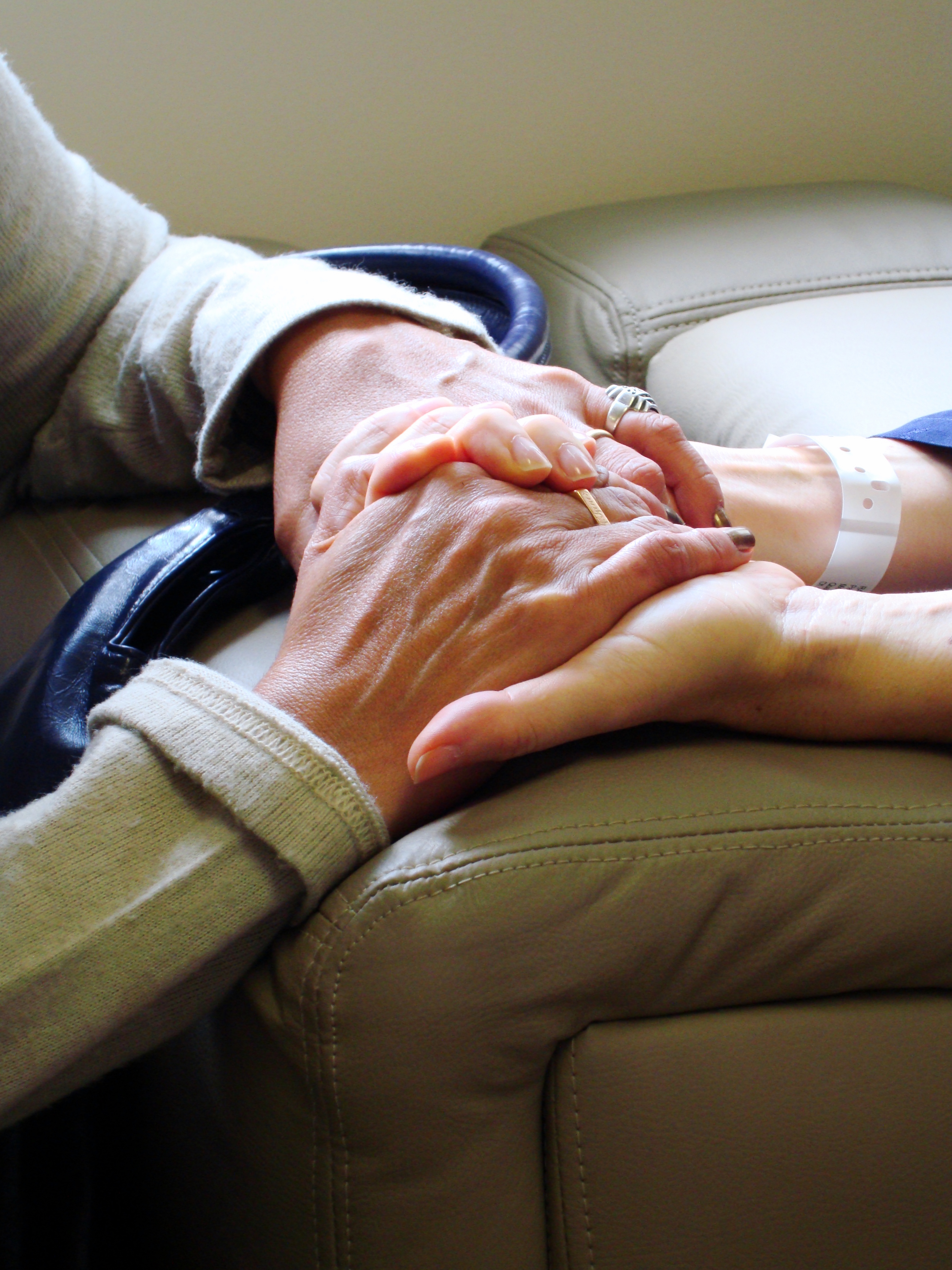
holding hands

We must strengthen our communities to prevent heartbreaking tragedies like these from happening. In our modern society, it seems we have discarded a true sense of community. I keep to myself and do not socialize with neighbors; I live in a big city and while the neighbors seem harmless enough and I speak to them in passing, urban life tends not to encourage close neighborly relations. I did spend an hour tracking down my neighbors across the street to let them know they had left the trunk of their car wide open, so I’m not completely cold-hearted. I work from home so I naturally observe the routines of my neighbors. If I knew I had a neighbor with dementia, I think I would pay more attention. Of course, people have a right to privacy so communities can’t advertise who has dementia even if it is to provide assistance.

I’m not sure what the answer is but there does need to be more safety nets for our elderly population. Not everyone has children or a group of close friends or family members to check up on them. We shouldn’t let these people fall through the cracks, and end up in tragic situations like what occurred in Alabama.

Does your community offer any programs that check-in on seniors to make sure they are safe?

3 Comments

Filed under Awareness & Activism

The dreaded conversation

UsAgainstAlzheimer’s recently sent out an email about planning for your parents’ future, if/when they become incapacitated in body or mind and are unable to care for themselves anymore. The message stressed how important it is to have “the conversation” where you discuss these difficult topics with your family and develop a plan just in case it is ever needed. Of course, I think this is the smart and right thing to do and would encourage all families to do this.

But from my personal experience, easier said than done. As I’ve mentioned before on this blog, my dad had a fear of death so he never wanted to broach the subjects of becoming ill and dying. My mom, ever the chipper one, would respond to my encouragement to fill out the will paperwork by saying, “Well, you already act like we have one foot in the grave. We’re not dead yet!”

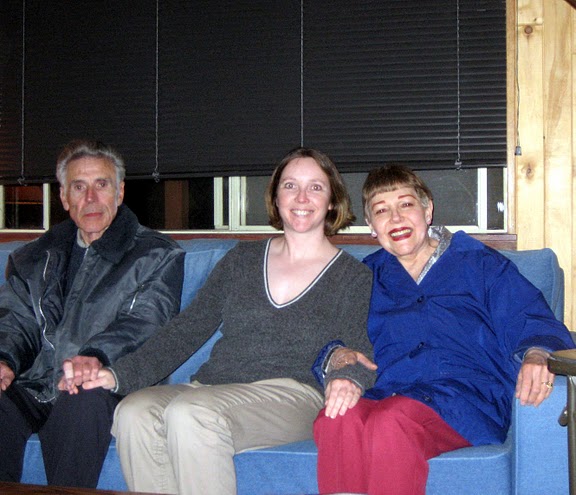
momdadme0308-2

I’m hoping that with the baby boomers, such discussions won’t be viewed in such a taboo fashion. And as long as Generation X and younger can fill out a form online, they’ll probably be willing to do it. While the younger generations certainly have earned some fair criticism about their navel-gazing tendencies, in this case, it is a good thing to sit down and spell out exactly how you want these aspects of your life to be. The more introspective, the better!

For those of us who have family members with dementia who did not plan ahead, you often feel like you are stumbling through the dark, hoping you are doing the right thing, but the uncertainty can haunt you in the middle of the night. My dad was afraid of dying, but if he could have understood what his sad reality was going to be with Alzheimer’s, would he have been more inclined to be a DNR? I’m not sure, but I am plagued by what the doctor on duty at the nursing home said the day Dad died. The DNR instructions from the hospital did not make it to the new facility, and the doctor said he thinks the EMS worker broke Dad’s ribs when performing CPR on him. That should not have happened. We as a family should have triple-checked about the DNR order. That’s why it is so vital to discuss these things before an emergency arises, because no one is in a proper frame of mind at that point.

What tactics have worked in your family to discuss these sensitive end-of-life topics?

5 Comments

Filed under Awareness & Activism

My story will appear in “Chicken Soup for the Soul Living with Alzheimer’s & Other Dementias”

I am very excited to announce that a story that I wrote about my father, called “French Toast,” will appear in a special edition of the popular “Chicken Soup for the Soul” series. This edition features stories about living with Alzheimer’s and other dementias and is a joint project with the Alzheimer’s Association. All royalties from this special edition will go directly to the Alzheimer’s Association. The book will be released on April 22, 2014.

CSS Living with Alzheimer's & Other Dementias

I am thrilled to be a part of this upcoming book, especially for a publisher as popular and well-respected as the “Chicken Soup for the Soul” folks. From thousands of submissions, 101 stories were chosen to appear in the book. I look forward to reading all of the inspirational stories.

If you’re wondering how I came about submitting my story, it was really just by chance. I was doing my daily “looking for paid writing gigs” web search and was on the Work-at-Home Moms website. Now I’m not a mom (unless you count the pets) but I find that their website sometimes posts opportunities I don’t see elsewhere. It was on their website that I saw the “Chicken Soup for the Soul” callout for Alzheimer’s and dementia stories. I said to myself, “Why not?” I submitted two stories: a depressing one and a funny one. The funny one was accepted. 🙂

One of the main goals I had in mind when starting The Memories Project blog was to raise awareness, not just for Alzheimer’s but for family caregivers as well. I’ve virtually met so many wonderful people through my modest but loyal following. The dialogue we have has educated and inspired me and lifted my spirits. Yet I know so many others are struggling silently and I hope by being able to get out the word on a larger platform, more people can get the support they need.

To prepare for the upcoming release of the book, I’ve added a couple of pages to my blog: media appearances and publishing credits. If you or someone you know would be interested in a copy of the book, an interview or a guest blog post, feel free to contact me directly at joyjohnston.writer@gmail.com.

9 Comments

Filed under Awareness & Activism

Caregiving like a labyrinth

I was reading an interview with Gail Sheehy in Today’s Caregiver magazine. In it, she talks about the caregiving journey being akin to navigating a labyrinth. When you make your way through a labyrinth, you must follow the path as it is presented to you, even it takes you forward and then suddenly reverses, taking you back several paces before veering off again. Sheehy talks about requiring patience and faith to reach the center. This can be spiritual faith or faith in nature, yourself, etc. Once you reach the center, think about the physical state of your loved one. Are they on the mend or are they declining? If it is the latter, Sheehy states that you need to accept that you and the loved one you are caring for are on two separate journeys. Their journey through the labyrinth will result in their departing this world soon, where as you must find the path back to your life. Sheehy warns of not sacrificing two lives for one, as she has seen many caregivers do who fail to take care of themselves during their caregiving period.

labyrinth

To me, the concept of a labyrinth perfectly describes the caregiving journey. We move forward, then a setback moves us backwards. We learn more the more time we spend on the caregiving journey. There are frustrations along with successful moves. Eventually, we all reach the same path that includes our exit from this world, but as caregivers we have to recognize that we can only go so far down that path with our loved ones.

Sheehy also discusses the crisis points that caregivers experience and how they can better manage these stages. Sheehy stresses that caregiving should never be a solitary journey; to protect your own health you need to form a circle of care to support you. Easier said than done for many of us, but I think Sheehy’s ideas should receive widespread adoption and community resources should be directed towards these concepts.

3 Comments

Filed under Awareness & Activism

A lesson on perception

I will return to this month’s theme of exploring the memories of others found in my favorite memoirs in my next post. I just have to share an experience that I had this week, because I think it can be useful to all of us in a caregiver role. Most family caregivers have no formal training before they jump right in as a hands-on caregiver. We can’t expect perfection, but I think we tend to beat ourselves up when we shouldn’t. Because caregiving is such an emotionally sensitive role, it is easy to let one small failure ruin one’s day or trigger a major guilt trip.

Stop beating yourself up!

Stop beating yourself up!

As I mentioned in an earlier post, I had a job interview this week. Despite my confidence in my work abilities, my introverted personality shudders at the thought of talking about myself for an hour in a room full of strangers. No matter how many tips I read and how much I practice and prepare, a good old-fashioned case of the nerves usually attacks me during interviews. It never causes a full-blown disaster, and obviously I’ve managed to stay employed in some form or another since I was 16, but still, I hate this weakness on my part.

So this week, after going over my interview notes I head to the interview. Unfortunately, it was also the coldest morning in Atlanta ever recorded, bottoming out at about 6 degrees F. The area where the interview was to take place was a disaster, due to construction and weather-related snafus. The building had suffered issues due to the weather as well, so I had to enter through an unmarked entrance. All of this left me unsettled to say the least.

There were three interviewers, one who I have worked with a bit previously. I brought a water bottle with me because I get dry mouth in interviews but don’t want to have to navigate a cup in case my hands shake. Well, silly of me to worry about spilling water. I opened the bottle just as the first question was asked and it appeared the bottle was overfilled because it sprayed all over my sweater and pants. Internally I cringed but outwardly I kept that smile pasted on my face and tried to arrange my arms to cover the wet spot.

Afterwards, I definitely felt like it was not my strongest interview. I would have given myself a B-. I felt like I talked too fast and rambled too much, earning the familiar “deer in the headlights” look from the interviewers. I went home feeling depressed, because this was the best job opportunity to come along in awhile. I spent the rest of the day doing a “should have said this” routine in my head.

I sent out thank you emails to all of the interviewers. The guy who I’ve worked with previously replied back and his response blew me away. He said, “You did great in the interview. I wish I could interview like that.”

What???!!!

So that’s my lesson to all of you. How you perceive yourself may be quite different than how others see you. You probably judge yourself much harsher than others do. Be confident that you are doing the best you can and don’t create a failure before the results are even recorded.

For the record, I did get offered one of the positions!

1 Comment

Filed under Awareness & Activism, Memories

Two years since Dad died

It’s hard to believe that today marks the second anniversary of my father’s death. My grief is still pretty raw, yet the person I was back then seems like such a distant memory. So much has happened, both good and bad in the two years since his death that it almost seems like another lifetime.

view-122013

The weather is dreary, much like the day he died, though at least there’s not a cold rain. In fact, it’s unseasonably mild, making it ideal walking weather. So I took a long walk on my neighborhood’s walking trail, something Dad would have enjoyed. Then I stopped for coffee, another of Dad’s favorite things. I made a donation to the tribute fund for Dad through the Alzheimer’s Association. I’m dedicating the day to writing about Dad and promoting Alzheimer’s awareness. I’m listening to the Bing Crosby channel on Pandora while I write. They are playing so many of Dad’s favorite songs.

One of my favorite photos.

One of my favorite photos.

I’ve also started a Tumblr to vent about the rocky road of caregiving. Feel free to check it out, it’s called The Caregiver Vent. Warning, because it is a vent, it is uncensored so occasionally profanity is used. If you’re on Tumblr, let me know.

What I’ve learned over the last couple of years is that it is the effort we make in taking care of our loved ones that matters more than the results. Even the most skilled caregiver in the world cannot clear the confusion of a dementia patient. Those with dementia may not recognize their family caregivers. What it comes down to is you being able to live comfortably with the actions you take as a caregiver. You will make mistakes, we all do. Just try to avoid making poor decisions that will haunt you. And above all, be forgiving. Of others, and of yourself. I’m still working on that last one …

2 Comments

Filed under Awareness & Activism, Memories

Wandering man with Alzheimer’s mistaken for intruder and killed

In my local newspaper there was a sad story about a man with Alzheimer’s who wandered away in the middle of the night and walked a few miles from his home. He ended up at the front door of someone’s house at around 4 a.m., where he proceeded to ring the doorbell multiple times and turned the doorknob. The residents, who had just moved into the home recently, were understandably freaked out and did the right thing by calling 911. But then the male in the house did exactly the wrong thing. He stepped outside with a gun and when he saw the approaching figure, who was now in the yard, he told the person to stop. The person did not obey his orders and kept coming towards him. The resident shot the man in the yard and killed him.

crime tape

Once the resident discovered that the intruder was actually an elderly man with advanced Alzheimer’s, he felt great remorse. Of course, the family of the man with Alzheimer’s also have to live with the violent and senseless way their loved one died. The police have not charged the man with gun yet, saying while it was foolish to go outside, he did not break any laws.

It’s a sad case all around but one that I unfortunately can see happening more in the future. It is easy for those who have never cared for a loved one with Alzheimer’s to criticize the family for allowing him to escape into the cold night, but we know how difficult it is to keep watch over someone with dementia 24/7. And those with Alzheimer’s may not be cooperative and act odd, even violent, scaring a stranger into taking drastic measures in order to protect themselves. Anti-gun advocates will want to blame weapons in the home, but it still goes back to the person and how they react in a situation.

I think about the several times my dad wandered off and how he could have ended up like this gentleman. It’s a sobering lesson for all of us.

2 Comments

Filed under Awareness & Activism

Reduce antipsychotic drug use in dementia patients by using another drug?

The rampant and dangerous use of antipsychotic drugs to treat dementia symptoms in elderly patients has been in the spotlight recently due to Johnson & Johnson being hit with a $2 billion fine for the false marketing of Risperdal. Could the answer to this disturbing trend be yet another medication?

pills
A drug called Pimavaserin is undergoing a trial right now to examine its safety in treating Alzheimer’s disease psychosis. Currently there is no medication on the market that specifically treats this condition, and we’ve seen the consequences of the off-label use of other antipsychotic drugs. I saw what Risperdal did to my father and readers of this blog were vocal about their concerns in properly medicating those with dementia.

One would hope that a medication can be created to ease the mental and emotional suffering of dementia patients without turning them into walking zombies.

Leave a comment

Filed under Awareness & Activism

Risperdal lawsuit exposes ugly truths about elderly care

This past week, Johnson & Johnson was fined over $2 billion for false marketing and providing kickbacks to doctors and medical care providers regarding the off-label use of the drug Risperdal. I’ve written before how much my father’s mental and physical health declined after being prescribed Risperdal in the nursing home. Omnicare, which supplied my father’s medications, also paid a major fine of $98 million.

I remember the indifferent attitude the doctor at the local hospital had when I questioned the use of Risperdal, which was already controversial even while my dad was still alive. The doctor just shrugged his shoulders and said they had to continue prescribing what the doctor from the nursing home had ordered. He asked me if I knew what it was for and I responded “to make patients like zombies so they’re easier for the nursing home staff to deal with” and the doctor agreed with a laugh. I did not find it funny at all.

Image credit: Schmidt  & Clark, LLP

Image credit: Schmidt & Clark, LLP

Fines don’t bring back our loved ones who were harmed by this drug, but perhaps it will make pharmaceutical giants, doctors and nursing homes think twice before prescribing medications that can cause great harm to their patients. It’s difficult for caregivers to keep track of all of the medications being provided to a loved one when they are in a nursing home. I only discovered the extensive medication list for my dad when I examined the invoices that had been mailed to my mother from Omnicare. They wanted their money, over several thousand dollars worth racked up in less than a year, when in fact they were pushing a drug that was hazardous for elderly patients with dementia like my dad.

I’m not one for overzealous lawsuits and I’m not necessarily anti-corporate, but I’m glad that the whistleblowers exposed these companies for the malicious practices they were engaged in that impacted those with mental health issues who could not defend themselves. Better late than never when it comes to justice.

12 Comments

Filed under Awareness & Activism