Missing my mom to celebrate a piece of history

On Saturday evening, history was made, as American Pharoah won the Belmont and the coveted Triple Crown.

I know there is a great deal of controversy about horse racing as a sport, but for me, it reminds me of family.

After all, my parents met over horse racing results at a Los Angeles diner.

As a family, some of our best outings were to Hollywood Park (now closed) and Del Mar race tracks. My parents were relaxed, the weather was usually nice and yes, watching the horses run is quite an adrenaline rush.

Over the years, there have been many horses that have won the first two legs of the Triple Crown, only to disappoint fans by being unable to clinch that final victory at the Belmont. Last year, the same thing happened. My mom was so disappointed.

This year, the hype was the same or even greater. This was the year, this was the horse, the Triple Crown was going to happen.

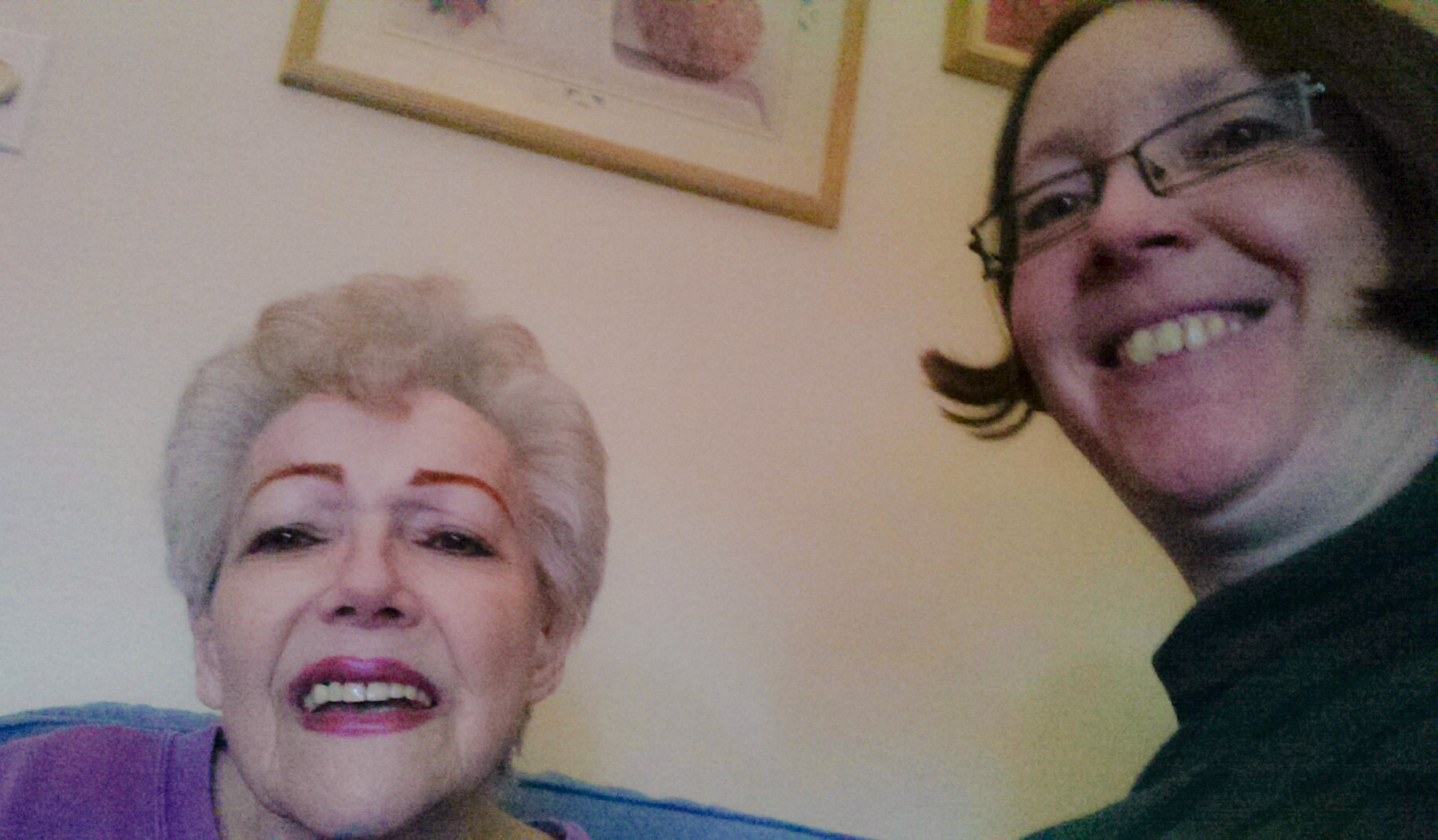
My mom and I were able to watch the first race together, as she was in pain but lucid for the Kentucky Derby. She didn’t feel like getting out of bed so I streamed the race on my laptop and we watched it from her bed.

She loved American Pharoah.

By the time the Preakness came, Mom was pretty bad off. She was sleeping most of the time and not very aware when she was awake. I didn’t even watch the race, as I forgot to tune in while busy with caregiver duties.

So you can imagine my mixed emotions when the Belmont ran Saturday. I cheered loudly for American Pharoah, who made what other horses couldn’t do for 37 years look easy.

Embed from Getty Images

But there was also a deep pang in my heart that Mom just missed this glorious moment. She would have been thrilled. I watched my phone as it remained silent. She would have definitely called and talked my ear off about the race.

I hope somewhere, somehow, she was aware of the historic win, though honestly, these things probably do not matter in another life. Still, I like to believe that if she was given a bit of luck as she crossed over, she sprinkled some on American Pharoah.

1 Comment

Filed under Memories

Grief, relief and regret

As anyone knows who has lost a loved one, your grief doesn’t always progress through the designated stages like it’s described in books. Many of these self-help manuals make it clear that there is no one correct path, but it’s still something you have to experience for yourself to understand.

To all of you who left lovely comments, thank you so much. It does help to know you are not alone.

The first few days after my mother’s death were fueled by an adrenaline rush, to power through and focus on completing the necessary tasks. My goal was to get home as soon as possible.

Mom was a jokester, and would want to be remembered with smiles and laughter, not tears.

Mom was a jokester, and would want to be remembered with smiles and laughter, not tears.

I returned home and took a few days off from work to get settled in and recharge my batteries. I spent a lot of time receiving “purr therapy” from the cats. I went on walks. I got a massage.

Then I returned to work and the fast pace of my daily duties left me little time for reflection.

So here I am, 10 days after my mom’s death, and more than grief or sadness, I’ve experienced moments of relief and regret.

There is a sense of relief at how quiet my phone is now. Over the last year or so, I had talked to Mom daily on the phone, and over the last few months, she was calling me multiple times per day sometimes, usually to remark about her pain or lack of effective medication. I began to dread seeing her face when it would pop up on my phone, signaling a call from her.

Mom was about the only person to call me on the phone. (I prefer written communication whenever possible.) My battery has dipped low a couple of times, but I wasn’t frantic about making sure I was available by phone because at this moment, for the first time in several years, I am not managing the care of an ailing parent. There is relief in not feeling like I’m on call 24/7.

The regrets pop up in scenes played out from the last month, when I was taking care of Mom. I think what I can take away from these flashbacks is to not get so lost in the necessary caregiving tasks that you forget the simple things, like trying to make it possible for a loved one to enjoy a moment basking in the sunlight, or having a spoon of ice cream. There may be risks involved in trying to make a dying person happy, but looking back, they are risks I wish I had taken.

What lessons have you learned from grieving for a loved one?

2 Comments

Filed under Memories

My mother can finally rest in peace

My mother died Thursday morning.

It was a tough last few weeks, and the last hours were frankly brutal.

I can only hope she wasn’t in as much discomfort as she seemed, despite being given copious medications for pain and anxiety.

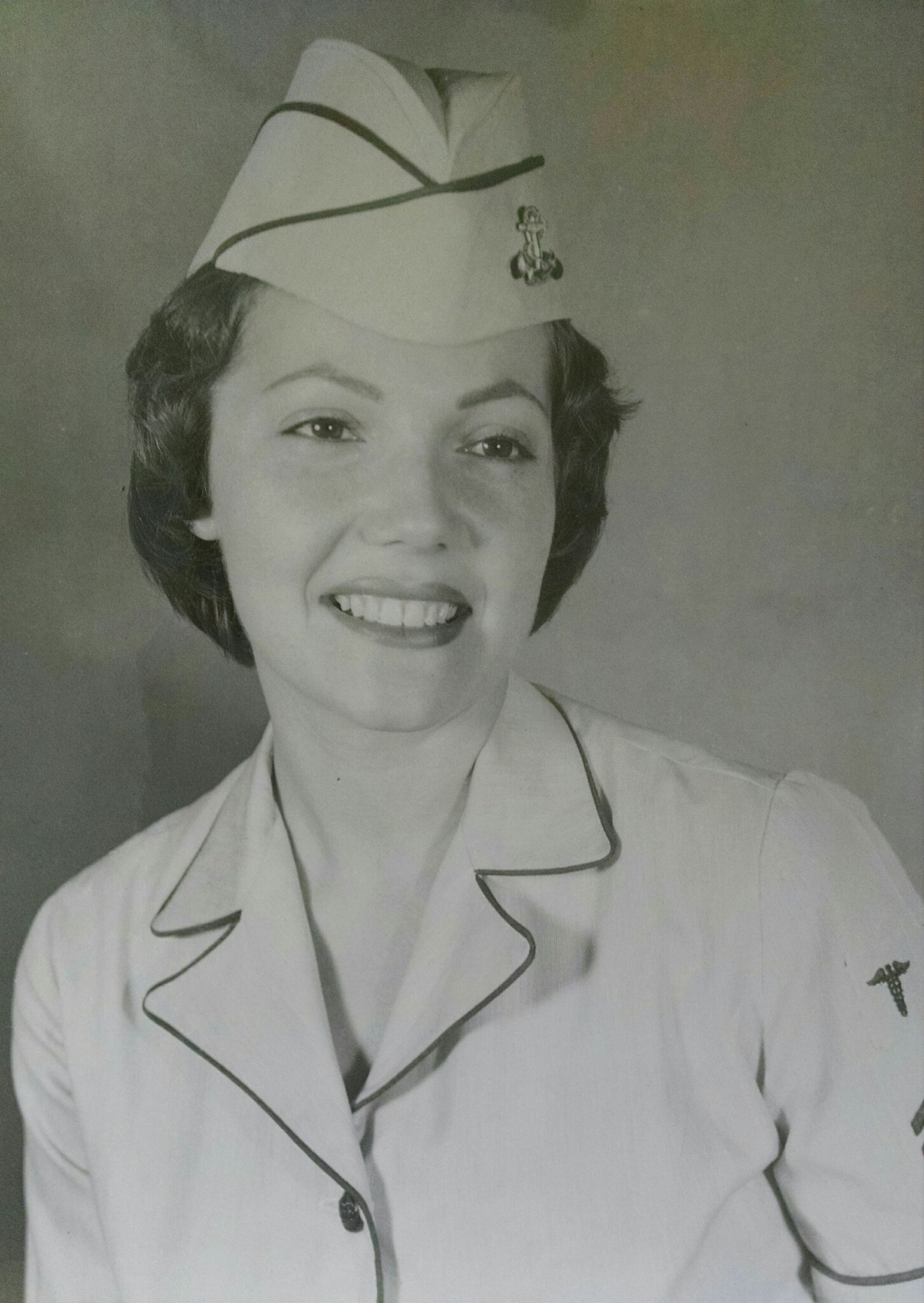
Mom loved her time in the Navy.

Mom loved her time in the Navy.

The hospice nurses and myself kept assuring Mom that it was ok to let go when she was ready. I felt like there was some internal struggle going on in there, despite the fact that she told me repeatedly that she was ready to go and was not afraid of death. She certainly did not want to linger in the state she did, non-responsive, devoid of her lively and happy personality, unable to eat or drink, and completely dependent upon me and the nurses for every task of living.

Maybe Mom’s spirit was just fighting with her stubborn body, and that determined heart of hers. The hospice nurses were quite surprised that Mom continued to live, considering the state of the rest of her body, but her heart and vital signs continued to be good. I was afraid, for her sake and mine, that it would continue to beat strong for much longer than it did. I was at her bedside when she drew her last breath, and I felt her heart beat slow, weaken and then come to a complete stop.

As you loyal followers know, this blog exists in part over guilt I had about my dad’s death, and how I wasn’t present when he died. I know being here to take care of my mom, and being present for her passing was the right thing to do.

But of course, there is a high price to pay on a psychic level by experiencing something so intense as a loved one dying. There are things I wish I hadn’t seen, tasks I wish I didn’t have to do. Time will no doubt provide a different perspective on the experience.

The important thing for now is that Mom was well-taken care of and she did not die alone.

As for what was beyond this life, Mom often said that, “It’s a good place and it’s a right place.”

I hope she’s right.

11 Comments

Filed under Memories

Playing the waiting game with Death

My mother’s health took a big turn for the worse this week.

The hospice nurse expects her to pass in days, maybe a week, though her heart is very strong, so she could last longer.

Mother's Day

Mother’s Day

For her sake, and mine, I hope that the suffering is not prolonged.

She is now totally bedridden, somewhat delirious and a new pain complaint has popped up the last two days. She now complains of severe head and neck pain. The nurse cannot figure out what may be causing it. It is unlikely that the colon cancer, if it has returned, spread to her brain, though it is a possibility.

But the morphine is not really touching the head pain, even when dosed hourly. She is so “zonked out” by the pain meds yet still is pointing to her head and grimacing. That is tough to watch.

Mom’s face has been taken over by that ghoulish death mask. Her eyes are starting to look beyond.

But her heart continues to beat hard and strong in her emaciated chest.

In one of her lucid moments, my mother asked what had happened to her. And to that, I had no good answer.

2 Comments

Filed under Memories

A medicated Mother’s Day

So far, the hospice-provided “comfort kit” has not brought my mother as much comfort as she had hoped.

pills

My mom had a false impression about morphine, after experiencing the temporary euphoria of the IV morphine given sometimes during emergency medical situations. I think Mom was hanging on to the idea that morphine was going to be this miracle drug that was going to magically remove her pain and let her get things done and bring back her appetite.

Well, we all know what morphine does, especially to an elderly, frail person like my mother. It knocked her on her butt, once we adjusted her dosage to effectively relieve the pain. Then she ended up getting a bit too much (even though she was still self-reporting pain as a 7) and ended up getting sick twice.

That was Saturday night. She did manage to sleep through the night, a rarity.

Today the hospice nurse visited and recommended we try Haldol. I had read some things about it (often used for mental health conditions like schizophrenia) but also read that it is a proven anti-nausea medication.

So I tried Mom on the lowest dose and that really knocked her for a loop! I am a naturally cautious person around medications, but it is still surprising to see the effects they can have on an individual. Mom was hardly able to walk and she was very groggy, but still in pain so she couldn’t really sleep.

Figuring out the correct dosage and cocktail of drugs is really trial and error, and when done in the home environment, is quite stressful.

I just put her to bed, giving her a small dose of morphine along with an Ativan, the latter which she has taken for years and tolerates well. This worked for her overnight, so I’m hoping we have found the right combination to relieve her pain and help her sleep without making her sick.

I hope for another quiet overnight period. Ironically, I still slept poorly last night, because I kept waking up to make sure Mom was okay.

If you have any medication tips or experiences to share, please do so below in the comments section.

4 Comments

Filed under Memories

Being the ‘angry advocate’ is sometimes necessary

I don’t like conflict. I like things to run smoothly and everyone to do their job. This is especially true during a crisis.

Of course, it is in these tough situations that conflicts and issues often arise.

Ironic door sign

I found out yesterday that after waiting over a week for hospice to begin, with my mom reporting an 8 out of 10 on the pain scale during every home health visit, that the hospice transition process had not even started! The home health agency told me I needed to talk to my mother’s primary care physician. But last week, when I was at the doctor’s office, I asked about starting hospice and the doctor’s staff told me the home health agency needed to fax them paperwork.

I was beyond frustrated. I don’t get angry very often but I was really furious. My mom had suffered needlessly for over a week because these two entities that work with each other all the time can’t get their acts together?

Since the local home health agency is now part of a larger corporation, I filed a complaint at the corporate level. I don’t generally like to throw people under the bus but I wanted action.

And it worked. Tomorrow a staff member is coming to transition Mom to home hospice.

I just wish I had been the angry advocate sooner.

2 Comments

Filed under Awareness & Activism

Dying with dignity shouldn’t be so difficult

The last week my mom’s health has taken a steep decline. Barring some miraculous turnaround, it is fair to say she is actively dying.

Hard to believe this photo was taken just a little over a month ago.

Hard to believe this photo was taken just a little over a month ago.

While I have prepared myself for this moment, and have seen it coming for awhile, what I didn’t necessarily expect was how difficult it would be to just allow someone to die in peace and comfort.

I literally had to run all over town just to get prescription paid medicine for my mom. I know new regulations on controlled substances took effect this year, but frankly, if an addict wants narcotic pills they are going to get them no matter what. In the meantime, those who are legitimately in pain have to suffer.

The doctor made me go in person to pick up the prescription. They said they required a family member to pick it up, even the nurses at the home care agency my mom uses were forbidden from picking it up. Guess it’s good I just arrived in town! There is no way my mom could have made it to the doctor’s office.

There are plenty of pain-ridden people who live alone, what do these poor souls do?

And while I don’t necessarily want my mother to waste away in a hospital setting, I am surprised that the doctors keep sending her home from the ER. Uncontrollable pain, emaciated, can barely ambulate … I mean, geez, what does it take to be admitted to the hospital these days? The doctor told her she didn’t qualify for an inpatient stay under the new strict guidelines.

So we are starting hospice, but her overworked doctor has to sign off on it. I’m not too hopeful that it will be done quickly. While her doctor was off last week, my mom had no pain medicine and being cut off cold turkey really sent her health reeling into a death spiral.

So much red tape and regulations are getting in the way of treating people who are suffering with some form of dignity.

Family caregivers shouldn’t be left feeling helpless and devastated as they watch their loved one suffer needlessly.

I hope we can work together to advocate for better end-of-life treatment.

3 Comments

Filed under Awareness & Activism

One of those weeks caregivers dread

Last Monday, I tried to call Mom but her line was busy. This is not that unusual, so I didn’t think too much about it. A few minutes later, I received a call from an unknown number. By the time I Googled it and saw that it was the Lifeline number, the call had gone to voice mail. I immediately called back without waiting for the message.

Mom had slipped off the bed and fallen. She fell on her butt, thankfully, but was still sore and shaken up. Fortunately, she was checked out by EMS and seemed ok, so no ER visit was necessary.

Still, I fear it is the beginning of the “no longer can live at home alone” phase. Mom’s done pretty well this past week, all things considered, but the tricky part for caregivers is knowing when to make these key decisions for a loved one’s care.

Beautiful Elle, RIP.

Beautiful Elle, RIP.

At the same time that was going on, our 16-year-old cat was rapidly declining. A cancerous lesion on the roof of her mouth meant she could no longer eat without discomfort, even with pain medications. Sadly, over the last few years, I’ve become used to the euthanasia process. While thankful that we have that choice for pets, it is still brutally heartbreaking to have to make that decision.

My mom wishes she could be like the cat and just go on. She says she is ready and she is not afraid of what is beyond. She is miserable with being in constant pain, and having a loss of appetite and fatigue. The doctors are no closer to diagnosing her than before. Is the cancer back? She’ll have to have a colonoscopy to determine that, but at barely 100 pounds and weak, she’s in no shape for the preparation.

She also hates to be a burden on others. While certainly I can’t deny the stress the last few years have created, I don’t want my mother to feel guilt over something she cannot control.

With wry humor, I know that we are going to have to get a bigger shelf to hold all of our memorials, for people and pets lost over the years. It’s getting crowded up there.

3 Comments

Filed under Memories

Psychology Today Post

Definitely can relate to this post with the health roller coaster my mom has been on for the last several months. As a caregiver, we can all use a reminder to take care of ourselves!

Barbara G. Matthews's avatarWhat to Do about Mama?

https://www.psychologytoday.com/blog/your-personal-renaissance/201504/ambushed-eldercare-you-re-not-alone

Ambushed by Eldercare? You’re Not Alone

7 strategies to help you cope

Post published by Diane Dreher Ph.D. on Apr 08, 2015 in Your Personal Renaissance

Source: Google Images labeled for reuse
Psychology Today
Late one night the phone rings. Your 80-year-old mother has had a heart attack and your life turns upside down, bringing worry, stress, anxiety, and uncertainty, your days punctuated by one crisis after another.

More than 54 million Americans are unpaid caregivers to their family members, two-thirds of whom are women (Matthews & Blank, 2013). Pulled in multiple directions at once, many are caring for their own children, as well as older relatives, and their numbers are only increasing as the population ages.

“It is a terrible situation to have so many people to care for and yet also have work responsibilities and other commitments—as well as the need to take care of oneself and remain sane,”…

View original post 696 more words

Leave a comment

Filed under Memories

Guest article: The Disease of Forgetfulness

By Jami Hede of Exploring Dementia

Embed from Getty Images
In 1901, German neuropsychiatrist Dr. Alois Alzheimer took up a position at the Institution for the Mentally Ill and for Epileptics, in Frankfurt, Germany. One of the first patients he examined there was a woman named Auguste Deter, who was 51 years old. Just a few years previously, Frau Deter had been a happy wife and mother, living a normal life for the time period. But then she began showing symptoms of memory loss, trouble sleeping, delusions, temporary vegetative states, dragging sheets around the house, and screaming for hours in the middle of the night. Poor Karl Deter had no choice but to admit her to the institution, because he just couldn’t care for her any more, and also continue to work to support their daughter.

In 1996, Frau Deter’s actual medical records were discovered, written in Dr. Alzheimer’s own handwriting (and her own, at times). The neuropsychiatrist made careful and accurate transcriptions of his interviews with his patient, and a short excerpt of them is given here:

“What is your name?”
“Auguste.”
“Family name?”
“Auguste.”
“What is your husband’s name?” – she hesitates, finally answers:
“I believe … Auguste.”
“Your husband?”
“Oh, so!”
“How old are you?”
“Fifty-one.”
“Where do you live?”
“Oh, you have been to our place”
“Are you married?”
“Oh, I am so confused.”
“Where are you right now?”
“Here and everywhere, here and now, you must not think badly of me.”
“Where are you at the moment?”
“We will live there.”
“Where is your bed?”
“Where should it be?”

Dr. Alzheimer asked Frau Deter many questions, including a test of her memory, and also asked her to write her name. She attempted the latter, but repeated, “I have lost myself.” She was then put into an isolation room, and when released ran out screaming, “I do not cut myself. I will not cut myself.”

In subsequent writings, Dr. Alzheimer described his patient as having no sense of time or place, and poor recall for details of her life, made frequent irrelevant and incoherent statements, had rapid and sudden mood changes, and often “accosted” other patients (who would then assault her). He indicated that he had previously seen patients who showed similar behaviors, but they were much older than Frau Deter. He used the term “presenile dementia” to describe her, and stated that she had the “Disease of Forgetfulness.”

In 1902, Dr. Alzheimer took up a position in Munich, where he worked with another neuropsychiatrist named Dr. Emil Kraepelin. (Dr. Kraepelin is quite well-known, in his own right, for work in the area of schizophrenia and other disorders.) He continued to follow Frau Deter’s case, however, and in 1906 was notified of her death, apparently due to sepsis related to an infected bedsore. He requested that her medical records and her brain be sent to him for further study. It was upon examining her brain that he discovered the neurofibrillary tangles and plaques which are now considered characteristic of the disease.

Dr. Alzheimer gave a very significant presentation to the 37 Conference of South-West German Psychiatrists, in November of 1906, in which he discussed the case of one Auguste D. The following year, he published an article in which he described “A serious disease of the cerebral cortex.” However, the person who first coined the term “Alzheimer’s Disease” was Dr. Kraepelin, and not Alzheimer. He first did this in writings published in 1910.

And the rest is history, as they say. Now, the disease which bears Alzheimer’s name is the most common of many different forms of dementia which have been reported since his time.

Source material is from Wikipedia, “The Lancet,” and others. For more informative articles about dementia, visit Exploring Dementia.

3 Comments

Filed under Awareness & Activism