Tag Archives: caregivers

What dementia caregivers need to know about the coronavirus

Embed from Getty Images

Managing the health of our loved ones with dementia is difficult enough even when we are dealing with the annual flu season. This year has ushered in a new coronavirus, which is causing an outbreak of serious respiratory disease that began in China and has now spread across the globe, including in the U.S. While 24/7 news coverage has caused some to panic and others to go into denial, caregivers should be concerned about the coronavirus, as they would with any virus which is highly contagious and has a higher mortality rate in older populations and those with compromised immune systems.

Here are some tips for caregivers of those with dementia as they encounter a world which has been disrupted by the coronavirus. (Disclaimer: I am not a medical professional. If you have any questions surrounding the coronavirus, please consult a physician.)

  • Symptoms: Those with dementia often can’t clearly express how they are feeling. Their caregivers must be vigilant in tracking any changes in their physical health. According to the CDC, there are 3  main symptoms associated with coronavirus: fever, cough, and shortness of breath. Emergency symptoms include difficulty breathing, chest pain, new confusion separate from dementia, and bluish lips or face.
  • How it spreads: The CDC believes that the coronavirus spreads easily, primarily by person-to-person contact. The CDC recommends not touching your face, covering your mouth when sneezing or coughing, frequent hand washing, and frequent disinfecting of commonly used surfaces and objects. Caregivers will want to pay special attention to their own health, and make contingency plans now for who will take care of your loved one if you contract the coronavirus.
  • For those with dementia who are diagnosed with coronavirus: If they have a mild case that does not require hospitalization, you will want to keep them isolated at home, separate from other family members. Those with dementia are often sensitive to any changes in their routine, so you may need to get creative in explaining these changes to your loved one. Use your best judgment, but it may  be best to avoid potentially frightening words like “quarantine.” Try to involve your loved one in tasks they enjoy, such as puzzles, crafts, or listening to music or watching TV. Keep your loved one comfortable and monitor for any spikes in symptoms; unless it’s an emergency, call ahead if you need to visit the doctor.
  • Keep public outings to a minimum: You may want to keep public outings to a minimum until the coronavirus outbreak is under control in your community. It can be a challenge to manage the movements of those with dementia in public settings and they may not comprehend or forget instructions such as hand washing.
  • What about facemasks? The CDC does not recommend facemasks for those who are healthy. For those with coronavirus and their caregivers, facemasks are recommended. It may be a challenge to keep a facemask on a person with dementia, which is why it’s so important for caregivers to wear masks and to isolate those who are ill so they cannot spread the disease.
  • What can caregivers do to prepare? Plan now for a potential outbreak in your community. Stock up on supplies, including food, hygiene, and basic medical supplies. Make sure prescriptions are filled. If your loved one is used to attending activities such as adult day care, create alternative activities at home. Make a contingency plan in case you become sick. Contact your support network and develop a specific coronavirus plan. Reach out to public health agencies in your area for further aid.

It is too early to know how much of an outbreak of coronavirus we will experience in the U.S. I do think it’s going to get worse before it gets better. And if history is any indicator, there may be additional outbreaks that arise in future seasons, so caregivers should remain vigilant even if there is a lull in the summer. Take proper precautions for your loved one with dementia and yourself, and we should be able to weather this storm.

Next week, I’ll discuss the challenges that nursing homes are facing in trying to prevent coronavirus outbreaks in their communities.

2 Comments

Filed under Awareness & Activism

How technology can be an ally to caregivers

artificial-intelligence-3382507_640_edited

Google’s Super Bowl commercial, “Loretta,” touched a nerve. I was very moved by the love story the commercial told, inspired by the grandfather of a Google employee. The ad shows how technology (in this case, Google Assistant) can be put to good use, allowing a man to fondly remember his late wife through images and sound. Many people felt the same way I did about the commercial, but a vocal minority expressed their reservations.

While I can understand people’s concerns about privacy rights and the automation of our lives, we can’t let our fears trump the benefits that technology can offer. For example, in this commercial from Google, a simple tool offered many benefits, especially to older generations and their caregivers.

  • Digital photo album: While those of us of a certain age may treasure our physical photos, we have to understand that for younger generations, digital photographs are the norm. I love looking at old photos in physical form, but I also love having access to those same images online. It also makes sharing from afar so simple. In this day and age, when family members often don’t live near one another, this can be a major benefit.
  • Using reminders to prompt memories: While critics found this feature creepy, those of us who have dealt with dementia in our families know how precious memories can be. I know of a family caregiver who writes out cards with explanations to the daily questions she receives from her mother who has dementia. The cards are a great source of comfort to her mother (and sanity-saving for the family!) A smart assistant could recite the recorded answers.
  • Combatting loneliness: This point is controversial, as I read one commenter who interpreted the Google commercial to mean that we have permission to leave old lonely people on their own with a smart device as a substitute to visiting them. I don’t interpret the ad like that at all. But loneliness among the elder population, especially in rural areas, is a real concern. Anything we can do to alleviate that isolation can be beneficial both mentally and physically. My mother had a talking parrot toy she talked to when Dad moved to the memory care center. The need is there for such interactive devices.

I strongly feel it is in our best interest to embrace technology while holding companies accountable when they violate privacy rights and engage in other nefarious activities. Bottom line, technology is not going away. I prefer to educate myself and others on the benefits and be a responsible user versus burying my head in the doomsday bunker.


Leave a comment

Filed under Awareness & Activism

More Americans are dying at home, but family caregivers still lack support

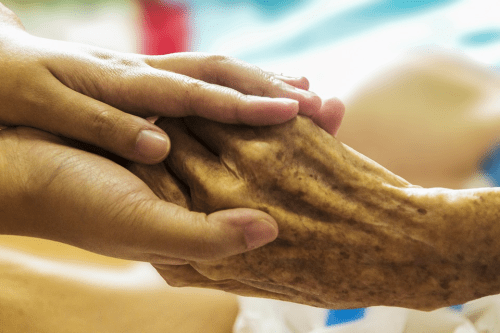
holding hands

Image courtesy of Pixabay.

The New York Times published an article this week that touched on a subject close to my heart. The article explores the impact of new data published this week in the New England Journal of Medicine that found more Americans are dying at home than in hospitals.

On the face of it, this sounds like good news. In poll after poll, the majority of people say they would prefer to die at home rather than in a hospital or nursing home. The tide now appears to be turning, and perhaps returning to a culture which embraces providing end-of-life care at home.

But the major challenge, which I’m grateful to reporter Gina Kolata for highlighting in her report, is the following: “Many terminally ill patients wind up in the care of family members who may be wholly unprepared for the task.”

This is something I’ve written about extensively, based upon my own family caregiving experience. My personal essay, Why Dying at Home is Not All It’s Cracked Up to Be, ruffled some feathers at the time. But my point wasn’t to be anti-home hospice. I think home hospice can be a wonderful service. The problem is that there are not enough home hospice service providers, especially in rural areas of this country. As the New York Times article discusses, this leaves family caregivers carrying the heavy burden of providing medical care for a dying loved one, while dealing with the financial cost and emotional toll of that experience. Most family caregivers are woefully unprepared.

“We have put a tremendous burden on families in the type of care they have to provide and the type they have to pay for,” said Dr. Sean Morrison, chair of geriatrics and palliative medicine at the Icahn School of Medicine at Mount Sinai in New York.

With my parents, I experienced the worst of both kinds of deaths. My father died in a skilled nursing facility without any family members with him, and my mother died at home, with myself, the only child, providing her end-of-life care but lacking support from limited home health care services.

The New York Times article also discusses another downside of dying at home: pain management. My mother’s pain was not managed as well as it could’ve been in an institutional setting, and that will haunt me for the rest of my life. No one should have to suffer needlessly at the end of life.

If you want to learn more, I was interviewed recently on the challenges of dying at home by journalist Blake Farmer at WPLN, Nashville Public Radio.

2 Comments

Filed under Awareness & Activism

Recharging when you can’t take a vacation

For caregivers, taking a vacation is often a non-starter. Even if someone was to gift a caregiver a cruise or a resort stay, the effort it takes to find care for loved ones makes what should be a relaxing trip a stressful endeavor.

When I was researching options for Respite Care Share, I ran into that feedback time and time again. Who would watch my loved one? Even if I could find someone, I would worry about them the entire time I was gone.

Mini-breaks can really make a difference. I had last week off from work so I treated myself to a massage and a salt room treatment. I also visited a cat cafe, which always is a mood lifter. These were all short sessions, no longer than an hour, but they were effective self-care options.


So this holiday season, consider giving the caregiver in your life a local option for recharging. Some great options include gift certificates for a massage or other spa service, a restaurant gift card, or tickets to an entertainment event. As part of the gift, either offer to sit with the caregiver’s loved one, or find an adult day care or home health service that can provide care. The idea is to keep it short and simple and hassle-free for the caregiver. That way, they are more likely to use the gift and most importantly, enjoy themselves!

1 Comment

Filed under Awareness & Activism

‘Home is still a hard place to die’

hospice-1794418_640_edited

Truthseeker08/Pixabay

I was interviewed for a series running on Nashville Public Radio called, “The Cost of Dying.” My interview is featured in the segment, “Home is Still a Hard Place to Die.”

I am grateful to Blake Farmer for reporting on the cost and challenges of end-of-life care. It’s a topic that is not discussed enough, until one finds themselves dealing with death in their own family.

Farmer took note of my essay, “Dying at home is not all it’s cracked up to be,” which appeared in my essay collection, The Reluctant Caregiver. That essay sparked a lot of debate on social media, because it revealed that there is another side to the aging-dying at home trend, and it’s not pretty. It’s one that family members often silently suffer through, because they feel guilty if they complain.

As it’s made clear in the Nashville Public Radio report, I am not anti-hospice by any means, and I know there are wonderful people who work in the industry. It is not a job I could imagine doing, and I think it takes a special kind of person to care for the dying and their families on a daily basis. But especially in rural areas, there are simply not enough hospice and home hospice providers available. That means the care falls upon family members, which is what I experienced with my mother. It was one of the most difficult things I’ve ever done, and while I don’t regret caring for my dying mother, I wish I had been better supported.

Farmer’s series places a spotlight on the challenges of dying at home, from interviews with family caregivers to an examination of the growing hospice industry. I encourage you to listen to the series and read the accompanying reports.

Leave a comment

Filed under Awareness & Activism

What I Wished I Knew When Dementia Was Diagnosed: Anosognosia(#1) — Dealing with Dementia

I learned a new word (anosognosia) and one that is so important for families who may suspect their loved one has Alzheimer’s or another form of dementia. It can be one of the most frustrating aspects for family members dealing with this disease.

Your loved one with dementia may not be able to recognize that anything has changed with their thinking and behavior.

Read Kay’s blog post for details.

via What I Wished I Knew When Dementia Was Diagnosed: Anosognosia(#1) — Dealing with Dementia

Leave a comment

October 24, 2019 · 6:02 pm

Caregiving 101: Maintain Your Life While Maintaining Theirs — The Diary of An Alzheimer’s Caregiver

This is an excellent, detailed post for first-time caregivers. Please share with those who are embarking on a family caregiving experience.

Giving your time and resources to loved ones brings feelings of delight and satisfaction while also attracting emotions of a heavy burden. Becoming a caregiver can be an extraordinarily taxing responsibility for many individuals, and therefore should not be taken lightly …

Read full post via Caregiving 101: Maintain Your Life While Maintaining Theirs — The Diary of An Alzheimer’s Caregiver

Leave a comment

October 10, 2019 · 12:17 pm

4 Realistic Self-Care Strategies for Alzheimer’s Caregivers — The Diary of An Alzheimer’s Caregiver

It’s something we don’t talk enough about, but it is so important: self-care. I know that phrase has become a bit touchy in certain circles, because it can seem like you are dumping one more responsibility on an already overworked caregiver. The sad truth is that in most cases, no one is going to offer you a respite out of the blue. You have to know your limits as a caregiver, ask for help when needed and yes, take care and be kind to yourself.

Read these helpful self-care tips via the blog post below from The Diary of An Alzheimer’s Caregiver.

Sign up to get these posts and a whole lot more delivered right to your inbox! The Diary of An Alzheimer’s Caregiver – Appreciate the good, laugh at the crazy, and deal with the rest! Caregiving is hard no matter what. Alzheimer’s caregivers, however, have an especially difficult job. Not only do people with Alzheimer’s…

via 4 Realistic Self-Care Strategies for Alzheimer’s Caregivers — The Diary of An Alzheimer’s Caregiver

Leave a comment

August 23, 2019 · 5:27 pm

Falls are Game Changers for Older Adults

falling-99175_640

This is such important information for family caregivers. To put it bluntly, a fall for a frail loved one can signal the beginning of the end. Both my mother and father experienced falls as their health situations declined. Learn more and tips on preventing falls from Kay Bransford.

via Falls are Game Changers for Older Adults

2 Comments

August 9, 2019 · 8:50 pm

Moving video on ‘Leaving Alzheimer’s Behind’


Those who have faced Alzheimer’s or other dementias in their families know that it can be a dreadful roller coaster ride, and while in the early stages there may be quite a few “good” days, they often seem overshadowed by the “bad” days.

One man in the UK who has early-onset Alzheimer’s is hoping to send a different, more hopeful message. He is using his beloved hobby of cycling to spread the message across the country.

Peter Berry was diagnosed with early-onset Alzheimer’s at 50, after 3 long years of trying to obtain a diagnosis for his increasingly troubling symptoms. He sank into a deep depression for about a year, but when he emerged, he was determined to help others who find themselves in a similar situation. Through a video series and on social media, Berry shares his experience and what has worked for him, including a healthy diet, regular sleep and long bike rides.

While he’s under no illusion as to what Alzheimer’s ultimately holds in store, he stresses the importance of having a positive outlook: “People who suffer from the disease know the journey and path we’re taking. We all know the end product of this disease. But it’s all about what you do in between. It is not about what I can’t do, but what I can do.”

Watch his inspiring story, produced by Being Patient, and share with others.

1 Comment

Filed under Awareness & Activism