Tag Archives: dementia

Which songs will be on your end-of-life playlist?

What songs would you like to listen to as you depart this world. Marie Curie conducted research on this intriguing topic and compiled a list of the most popular songs for those at the end of life, The Guardian reported. Familiar favorites like Frank Sinatra’s “My Way” and “Hey Jude” by the Beatles made the top 10 list, as did a couple of perhaps more surprising selections: “Girls Just Wanna Have Fun” by Cyndi Lauper and “The Best” by Tina Turner. Check out the complete top 10 list and learn more about the study on Marie Curie’s website and listen to the playlist on Spotify.

Music therapy can have a profound and positive impact at the end of life, as well as for those with conditions like Alzheimer’s disease. The Marie Curie study found that playing music had a calming effect for the vast majority of those in end of life care.

Music is a personal passion for many people, whether they play instruments or are devoted fans to particular artists and bands. There is no right or wrong answer when it comes to selecting favorite songs for an end of life playlist. Some may choose soothing music, others may want to rock out to their favorite songs that remind them of happy times in their life. I remember having a brief hospice consultation when my father was in the hospital at the end of his life. Sadly there was no room in the inpatient hospice unit for him, but I remember the counselor asking about Dad’s favorite music. That was easy to answer. Dad’s playlist would have included Bing Crosby, Frank Sinatra, and at least one rendition of “Danny Boy.”

When my mother was dying at home, I played her favorite music. Mom had fairly eclectic tastes, but she was most fond of classic country such as Willie Nelson, Dolly Parton, Kris Kristofferson, and Glen Campbell. But when my mother took her last breath, she departed on an upbeat tune by Trini Lopez, which matched Mom’s personality quite well.

I also have eclectic tastes in music so my playlist would include selections from Eva Cassidy, the McGarrigle Sisters, Gillian Welch, a mix of classic country and 1980s-1990s alternative rock, along with bluegrass and Celtic instrumentals.

What music would you include in your end of life playlist?

Image by Microsoft Copilot.

Leave a comment

Filed under Memories

A growing number of older women are living with dementia on their own

A recent article in The Washington Post discussed a growing and concerning trend: women who live alone and have dementia. Women tend to live longer than men and have a greater chance of developing dementia, so this trend is not surprising, but raising awareness may help communities better serve this aging in place population who have specialized needs.

As someone who is kinless and divorced, with dementia on both sides of my family tree, I think about this scenario often. For now, I’m focused on maintaining good overall health while I consider for my future living arrangements a planned community that intentionally accounts for the needs of their elder population. Things like providing rides to doctor’s appointments or for grocery shopping and offering lawncare and home repair services can help support an elder in the earlier stages of dementia who is living on their own. Making professional services such as financial and legal advisors is also beneficial. One of the most important tasks is one of the most simple: checking in on neighbors with dementia who are on their own to reduce isolation and as a way to ensure someone who needs a higher level of care receives it.

For long-distance caregivers, one challenge is encouraging your elder loved ones to take advantage of resources in their community. After my father died, my mother was very lonely, yet she shunned the social groups at the community senior center. I felt helpless in trying to aid in this situation. My mother didn’t have dementia, which can create an additional layer of resistance.

Here are resources for those with dementia who live alone:

The Alzheimer’s Association: If you live alone

National Institute on Aging: Tips for Living Alone With Early-Stage Dementia

Alzheimer’s Society: Living alone as a person with dementia

Image by Microsoft Copilot.

Leave a comment

Filed under Awareness & Activism

Can a light and sound show for the brain treat cognitive decline?

An article published by Nature recently caught my eye. Instead of medication, a non-invasive treatment called “gamma frequency stimulation” has shown some promise in curbing further cognitive decline in those in the early stages of Alzheimer’s disease, according to early clinical trial study results.

The method may sound dubious at first but the science behind it is interesting. Researchers have discovered that in addition to amyloid and tau protein accumulation, gamma frequency oscillations in the brain occur at a reduced rate in those with Alzheimer’s. Could gamma stimulation boost frequency, reduce amyloid and tau amounts and preserve or improve cognitive functioning?

Mouse models were promising and so are the initial findings of a randomized controlled trial, which found that the “daily use of 40Hz light and sound devices in patients with probable mild AD revealed preserved brain volume, improved memory, and stabilized sleep circadian rhythms.” A longer 30-month extension of this trial found that “patients showed surprising cognitive stability” even during the COVID-19 pandemic. Other trials both at the academic and industry level have reported similar results.

What does the patient have to do to receive such treatment? One product requires a person to wear a special headset and glasses for an hour each day which produces rhythmic clicking and flashing lights that repeat 40 times a second. Another product comes in the form of a specialized light box. Researchers are attempting to make the light flicker and clicking sounds required for the gamma stimulation treatment more tolerable to users by incorporating music into some devices.

Gamma stimulation is not without health risks, especially for those prone to seizures. More research is needed and those interested should be wary of vendors selling expensive machines to consumers that have not been approved for treatment. I’ll be following developments in this trial as I’m all for effective at-home treatments that don’t require pricey medication that can come with a host of serious side effects.

Illustration by Microsoft Copilot.

1 Comment

Filed under Awareness & Activism

Treasure the ‘grace-filled moments’

Leave a comment

Filed under Awareness & Activism

Remembering a former colleague, community activist

Earlier this month, a former colleague of mine, Marcia Killingsworth, died from lung disease. Our paths crossed professionally when we worked for the same newspaper and then we became longtime Facebook friends, where we shared a loving devotion to our cats.

I knew that Marcia had been actively involved in her community of Edison, Georgia, where she moved back to after retiring. An article written after her death highlighted just what a difference her contributions made to the town. Marcia was dogged in her dedication to holding the town’s leaders financially accountable, faithfully attending monthly city council meetings, taking notes and asking critical questions. She followed up on issues until she received answers, and documented everything on social media. This is not glamourous work, but it is necessary. Her actions inspired others to join her. One of those residents said of Marcia: “She was the one who brought Edison to light.”

I love that and hope it will offer inspiration for those of us working to raise awareness of Alzheimer’s and other dementias. Sometimes our work can seem futile and discouraging, but individually and collectively, we are making a difference. Our actions may not make headlines or go viral, but they will be remembered by others.

Illustration by Microsoft Copilot.

Leave a comment

Filed under Memories

Policies needed to address cognitive decline in the workplace

The Alzheimer’s Association had an interesting blog post recently about the issue of cognitive impairment in the workplace. As the U.S. population ages and older people by financial necessity or personal choice are staying in the workforce longer, we need policies to address this sensitive issue.

While modern workplaces, to be compliant with the Americans with Disabilities Act. have evolved over time to better accommodate workers with a variety of physical disabilities and conditions like autism and dyslexia, it seems like similar considerations for those with dementia are a work in progress.

Because dementia is an umbrella term that includes a variety of diseases from Alzheimer’s to frontotemporal dementia (FTD) each with their own unique set of symptoms and behaviors, creating a comprehensive policy will be difficult. The Alzheimer’s Association includes recommendations in their blog post:

  • Training: Human resources need to be educated on signs of dementia, which can present symptoms that may be mistaken for conditions like substance abuse or depression.
  • Accommodating: From flexible schedules to technology enhancements, employers should consider how to assist workers with dementia so they can remain productive and engaged.
  • Support: There will come a time when a person with cognitive decline will progress to the point where they need to retire. Companies should do their best to allow for a dignified exit that leaves the worker feeling some agency in the decision and provide the worker’s family with options for support, such as disability and retirement benefits.

Hopefully with greater awareness, employers in conjunction with medical experts and dementia awareness advocates will create sensible and sensitive policies to address this important issue.

Image created by Microsoft Copilot.

3 Comments

Filed under Awareness & Activism

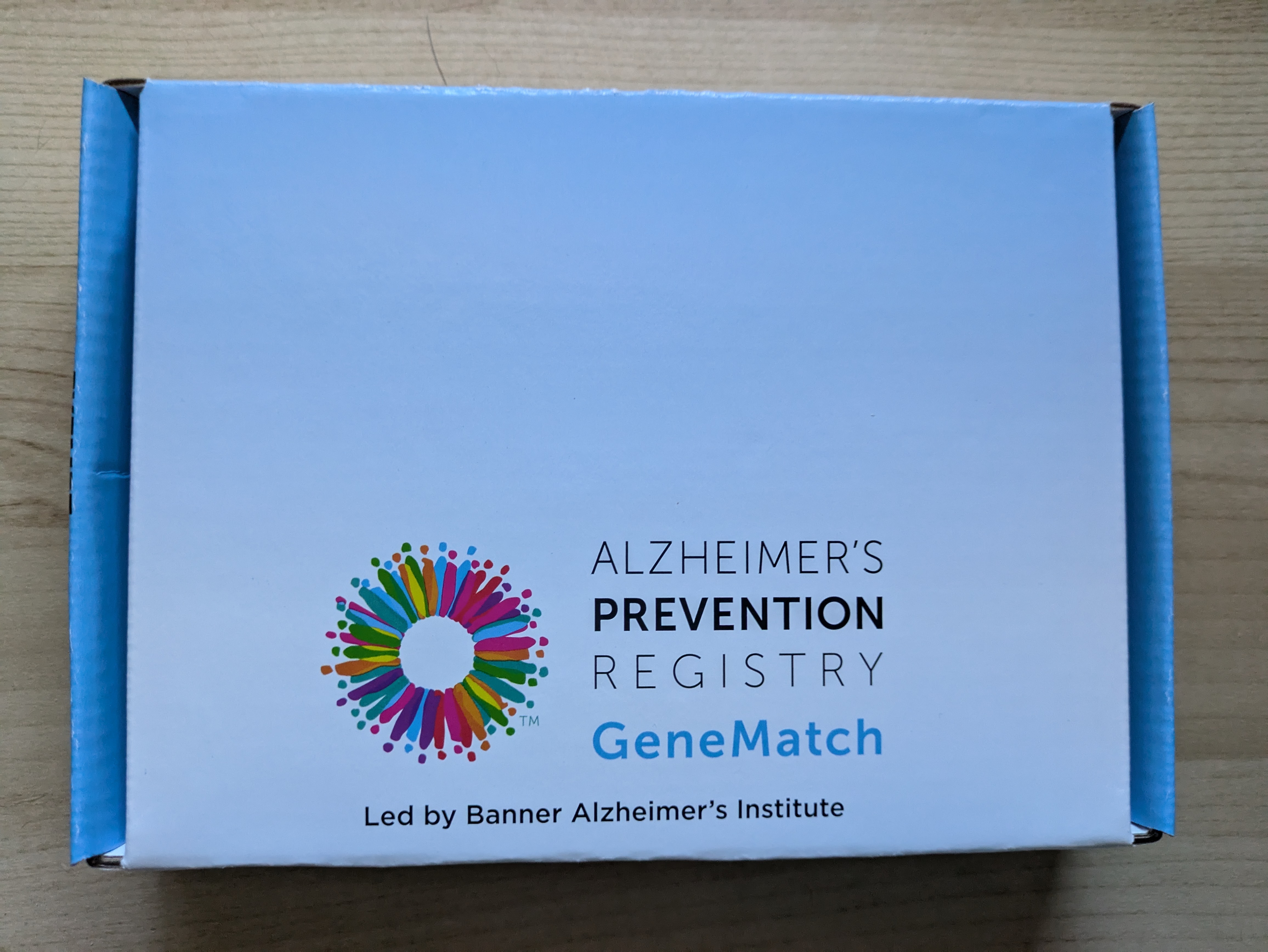
GeneMatch a way for older people to contribute to Alzheimer’s research

One of the tasks that has been on my to-do list since turning 50 is registering for GeneMatch, a program led by the Banner Alzheimer’s Institute. The program uses genetic testing to recruit people age 50-90 for Alzheimer’s prevention studies.

After what seemed like little activity for years when it comes to treatment options for Alzheimer’s and other dementias, in the past few years, new drug treatments have emerged that are offering some hope. These new medications have also been accompanied by controversy, as I’ve written before about Leqembi and Aduhelm. But one thing that isn’t in dispute is that effective treatments cannot be developed without a sufficient amount of study participants. According to the Alzheimer’s Prevention Registry, 80 percent of studies are delayed because of lack of qualified participants.

Joining GeneMatch is simple and free. Those who meet the basic requirements will be sent a cheek swab test that can be completed in the comfort of your home, and then returned in a postage-paid package. One thing to keep in mind is that you won’t necessarily learn the results of the genetic testing, but some studies may offer the opportunity to learn APOE results. Since I’ve had genetic testing done previously, I already know I carry one copy of the APOE e4 gene, which increases my risk for Alzheimer’s disease. With the disease appearing on both sides of my family tree, I’m eager to do whatever I can to find effective treatment.

For caregiver tips, check out my Caregiver Product Recommendations page, with a list of products that I used while caring for my parents.

As an Amazon Associate I earn from qualifying purchases.

Leave a comment

Filed under Memories

Study suggests link between shingles, cognitive decline risk

Is it just me, or are you inundated with pharmaceutical ads about shingles? The Shingrix vaccine ad blast is virtually in constant rotation on the streaming channels I watch. At this point, anyone 50 and older should have gotten the message about the threat of shingles as one grows older.

The commercial came on again as I was writing this blog post!

Now that I’ve turned 50, shingles is officially on my radar. I had chicken pox as a kid, so I’m at increased risk. The two-dose Shingrix vaccine is effective, but can trigger adverse reactions so those interested should consult their doctor.

A new study that suggests there could be a link between shingles and cognitive decline.

The latest study conducted by researchers at Brigham and Women’s Hospital analyzed data from three large independent studies that have been collecting data since the mid-1970s and mid-1980s. Researchers determined from their analysis that an episode of shingles was associated with an approximately 20% higher long-term risk of cognitive decline. The risk was greatest for men who are APOE ε4 carriers, a significant genetic risk factor for Alzheimer’s disease.

What could be the link between shingles and cognitive decline? The connection is not fully understood and will require further research, but inflammation may play a role. Vaccination may help reduce the risk of shingles-related cognitive decline, but more research is needed, according to the study.

Even without a potential link to dementia, shingles is a painful condition that can lead to significant, long-term symptoms. But for those of us already at increased genetic risk for Alzheimer’s, understanding how other conditions may trigger cognitive decline is worth monitoring.

For caregiver tips, check out my Caregiver Product Recommendations page, with a list of products that I used while caring for my parents.

As an Amazon Associate I earn from qualifying purchases.

Image created by Microsoft Copilot.

Leave a comment

Filed under Awareness & Activism

A heartfelt reminder for all caregivers

Elaine shares a tender reminder for all caregivers, past, present, and future: don’t forget your self-worth and be kind and forgiving of yourself when making tough decisions as a caregiver. Much time has passed since I cared for my parents, but I still feel pangs of guilt over some of the decisions I made.

I read another post recently about grief and guilt and that some researchers feel that the sharp pain of guilt may be the way some people attempt to maintain a strong emotional connection to their departed loved ones. I think there is some truth in this from my experience. Certainly the pain of guilt can overshadow more positive memories. Over time, we can make a conscious effort to let go of the guilt and accept the new relationship we have with those who have departed.

Image by Microsoft Copilot.

Leave a comment

Filed under Guest posts

Digital estate planning and dementia

Digital estate planning has become an essential part of end of life considerations. In our tech-driven society, you may spend more time and have more information stored in digital form than you do physical form.

As a Gen X member, I’m one of the last generations to have a foothold in both worlds. For example, my diaries from junior high and high school were kept in physical journals, and photos from that time period were physical prints. As an adult I’ve fully embraced technology and have most of my writing and photos, along with my financial and household information, are stored digitally. I will need to select a person comfortable with both physical and digital documents to handle my estate.

There’s no official method when it comes to digital estate planning. 1Password offers a guide with helpful tips. Maintain a list of your digital accounts with access information, and store that information somewhere secure. If you prefer, you can grant access to your online password manager to your digital estate executor. Only the person you choose to manage your digital estate should have access to that information and understand your wishes as to what to do with your accounts, personal writings, etc. Be very clear about what to do with potentially sensitive information that could be hurtful to others if discovered after your death.

Digital estate planning action steps (from Perplexity AI):

  • Take Inventory: List all your digital assets and account details.
  • Decide Asset Fate: Determine what should happen to each digital asset.
  • Appoint Executor: Choose a trusted digital executor.
  • Create Digital Will: Document your wishes legally.
  • Store Securely: Keep your digital estate plan in a safe and accessible place.
  • Update Regularly: Review and update your plan periodically.
  • Communicate: Inform your loved ones and executor about your plan.

Also something to consider are any messages, social posts, or works you would like shared after your death. Many social media services allow accounts to be converted to a memorial account. Dementia awareness advocate Wendy Mitchell wrote a final farewell blog post that she instructed her daughters to publish after her death.

Where digital estate planning can get tricky is when a person has dementia. If the person had no digital estate plan, it may be a challenge for family members to gain access to accounts, because login information may be stored haphazardly or be unintentionally discarded. Those who did create a digital estate plan may change details as their dementia progresses. My father was not digitally-minded at all, but I remember how I came across important account information mixed with junk mail stuffed in plastic shopping bags under the bed.

For those who need assistance, check out the resources offered by Memory Banc. Founder Kay Bransford, who also manages the Dealing with Dementia blog, was a caregiver for her parents who were diagnosed with two different forms of dementia, so she understands the challenges firsthand.

Every person with a digital presence should create a plan on how they wish for their digital information to be handled after their death. Communicate with those who will be handling your digital estate to make sure they are comfortable with the role and the responsibilities. If you find yourself designated as the executor for a digital estate, organize and process accounts by type and importance, and reach out to estate officials or the estate attorney if you have any questions.

For caregiver tips, check out my Caregiver Product Recommendations page, with a list of products that I used while caring for my parents.

As an Amazon Associate I earn from qualifying purchases.

Illustration created by Perplexity AI.

Leave a comment

Filed under Awareness & Activism