Tag Archives: end of life

Which songs will be on your end-of-life playlist?

What songs would you like to listen to as you depart this world. Marie Curie conducted research on this intriguing topic and compiled a list of the most popular songs for those at the end of life, The Guardian reported. Familiar favorites like Frank Sinatra’s “My Way” and “Hey Jude” by the Beatles made the top 10 list, as did a couple of perhaps more surprising selections: “Girls Just Wanna Have Fun” by Cyndi Lauper and “The Best” by Tina Turner. Check out the complete top 10 list and learn more about the study on Marie Curie’s website and listen to the playlist on Spotify.

Music therapy can have a profound and positive impact at the end of life, as well as for those with conditions like Alzheimer’s disease. The Marie Curie study found that playing music had a calming effect for the vast majority of those in end of life care.

Music is a personal passion for many people, whether they play instruments or are devoted fans to particular artists and bands. There is no right or wrong answer when it comes to selecting favorite songs for an end of life playlist. Some may choose soothing music, others may want to rock out to their favorite songs that remind them of happy times in their life. I remember having a brief hospice consultation when my father was in the hospital at the end of his life. Sadly there was no room in the inpatient hospice unit for him, but I remember the counselor asking about Dad’s favorite music. That was easy to answer. Dad’s playlist would have included Bing Crosby, Frank Sinatra, and at least one rendition of “Danny Boy.”

When my mother was dying at home, I played her favorite music. Mom had fairly eclectic tastes, but she was most fond of classic country such as Willie Nelson, Dolly Parton, Kris Kristofferson, and Glen Campbell. But when my mother took her last breath, she departed on an upbeat tune by Trini Lopez, which matched Mom’s personality quite well.

I also have eclectic tastes in music so my playlist would include selections from Eva Cassidy, the McGarrigle Sisters, Gillian Welch, a mix of classic country and 1980s-1990s alternative rock, along with bluegrass and Celtic instrumentals.

What music would you include in your end of life playlist?

Image by Microsoft Copilot.

Leave a comment

Filed under Memories

Don’t wait: Discuss end-of-life care wishes for those with dementia

The American Society on Aging, along with Compassion & Choices, hosted a webinar recently on honoring the end-of-life care wishes of those with dementia.

Also check out this interactive exhibit that discusses end of life care from a variety of individual perspectives.

This is an issue that I encourage everyone to consider, as my father’s end of life care was not what I wanted it to be. But without a roadmap (as is discussed in one of the videos above), my mother and I were forced to muddle through on our own. As I discussed in my book, The Reluctant Caregiver, my mother and I were at odds when it came to care options for my father as he neared the end of life. This is a common occurrence in families and can create regrets and guilt.

That’s why I suggest not waiting when it comes to discussing end-of-life care wishes after a dementia diagnosis. I also would like to point out that in the top video, honoring choices is the focus, but there are times when those wishes can’t be honored, for a variety of legitimate reasons. The ultimate goal is safety for your loved one and those caring for them.

Photo by Centre for Ageing Better on Unsplash.

Leave a comment

Filed under Awareness & Activism

Want to die at home? Start saving now

If you’ve followed The Memories Project blog for awhile, you know that helping families understand the complexities of dying at home is an important issue to me. I wrote an essay on the topic that went viral on The Caregiver Space: Why dying at home isn’t all that it’s cracked up to be.

Recently I read another essay that addressed the sobering financial costs that a family can incur to honor a loved one’s wishes to die at home: My grandmother died at home, just as she wanted. It cost $145,000.

In the essay, Sarah Romanelli describes a situation that will be familiar to many caregivers: “being held hostage” by a broken care system that breaks down as one becomes more fragile. In Romanelli’s grandmother case, she was too weak for rehab and too dependent to return to assisted living, who sent her back to the hospital. The family was forced to crunch numbers and develop a care plan, which involved at-home care.

The family moved the grandmother to an apartment close to family and hired 24-hour care. That cost a whopping $16,200 per month, but was still cheaper than securing a space in a long-term care facility. Keep in mind that care facilities may require families to pay out-of-pocket for private caregivers if a resident is deemed to need around-the-clock monitoring. This happens quite often for residents with dementia.

Romanelli says her grandmother received wonderful end-of-life care, but she knows that their family’s solution is not feasible for most people. My father also got passed around to various facilities and ended up being sent far away from my mother, because it was the only memory care facility with an opening. At over $4,000 a month, it quickly depleted my family’s modest resources. But 24-hour care would not have been feasible in my parents’ rural community due to staffing shortages, and definitely would have been more expensive.

Bottom line, no matter what care option you choose, it will be expensive. I want people to have the choice of dying at home, and not bankrupt their family in the process.

Photo by Alexander Mils on Unsplash.

Leave a comment

Filed under Awareness & Activism

Reflections on death being more about the journey than the destination

Photo by Greg Rakozy on Unsplash

I recently had the privilege of writing a blog post for The Conversation Project. My father died 10 years ago and in May, I will be marking seven years since my mother’s death. I’ve had a lot of time to think about end of life issues in the years since their passing and I’ve shared my perspectives here on The Memories Project blog and in my book, The Reluctant Caregiver.

In my post for The Conversation Project, A Good Death Is More about the Journey than the Destination, I discuss my family’s reluctance to talk about death and end of life issues, and how that impacted their end of life journeys, albeit in very different ways. My father’s death impacted how I cared for my mother, when just several months later, she was diagnosed with cancer.

Neither of my parents experienced the kind of death that I would want for myself, and that is why it has become such an important advocacy issue to me. Please talk to your loved ones, discuss your end-of-life wishes and document it all so that you can have some peace of mind when that phase of life is reached. What I wish for everyone is that you can find the time to simply be with your loved ones who are nearing the end of life, and not overly preoccupied with medical care duties. Just like at the beginning of life, it’s important we have those bonding moments at the end of life as well.

Visit The Conversation Project for tips and guides on how to start these important conversations with your own family.

Leave a comment

Filed under Awareness & Activism

Hospice Training: A Change in Perspective — The Day Between

What a fantastic exercise in developing empathy and understanding of the challenges facing those going through the end of life phase. I believe this training could also be adapted for those caring for those with dementia to better understand how one might feel like they are losing pieces of their identity to the disease.

From a fellow blogger training to be a hospice volunteer:

Yesterday, in a training for upcoming hospice volunteering, I was asked the following: Who are the 4 most important people in your life? What are your 4 most important possessions? What are your 4 top beliefs and/or aspirations in life? What are your favorite 4 activities to do? What are your 4 greatest comforts? I […]

Hospice Training: A Change in Perspective — The Day Between

Leave a comment

Filed under Awareness & Activism

Pandemic sparks discussion about end-of-life care options

Over a half-million deaths later, Americans may finally be ready to have more frank discussions about death. It is long overdue, and it pains me that it took a deadly pandemic to raise awareness, but perhaps it can be an important legacy of those who we’ve lost over the last year.

I’ve long championed the need to have “the talk” with elder loved ones, and how my parents’ refusal to discuss their end-of-life wishes created unintended but very real consequences. You can read more about my challenges in my collection of personal essays, The Reluctant Caregiver.

The pandemic showed us what many of us don’t want for our deaths: to be alone with no loved ones present, to be hooked up to machines, to die in a hospital instead of at home, to not be given a proper funeral or farewell ceremony. Hopefully we will take time to reflect upon these tragic, lonely deaths and take action now to better articulate what we would like the final phase of our life to look like.

Some may want to consider a death doula. Practically speaking, death doulas are helpers in all aspects of end-of-life care, from the bodily aspects of the dying process to spiritual concerns. They can assist with logistical issues, such as whether a client would prefer to die at home or in a hospice facility, and help coordinate burial and funeral plans. Doulas can serve as a comforting presence for both the dying and their grieving family. While it may seem awkward to bring in a stranger to what is considered a private family affair, having a compassionate, but clear-eyed presence can be a great benefit in an emotionally-charged setting. To learn more about this option, the International End of Life Doula Association offers a Doula Directory.

If you have not done so already, I hope you will take this time to think about how you’d like your end-of-life care to look and document those wishes. Encourage your loved ones to do the same. The coronavirus pandemic denied many the opportunity for a “good” death but by being more open in discussing a previously taboo subject, we can hopefully move towards a better end-of-life experience for all.

2 Comments

Filed under Awareness & Activism

Challenges of dying at home, revisited

This week, NPR aired Patients Want To Die At Home, But Home Hospice Care Can Be Tough On Families, the national version of a story that first appeared last year on Nashville’s NPR affiliate. I was interviewed for this series, and shared my personal challenges in tending to my dying mother at home.

This is such an important conversation for the nation to have and it is a cause near and dear to my heart. As I state in the story, I am not anti-hospice by any means. My father died in a facility and that was a horrible death. But caring for my mother who died at home had its own unique challenges. Both experiences scarred me for life, leaving me with regrets and with a mission to help other families avoid the mistakes my family made.

I encourage everyone to read and/or listen to this series and think about your own situation. Family caregivers need to be clear-eyed about the demands they may face in caring for a loved on at home at the end of life. It can be the most tender of bonding moments, a final act of love and sacrifice for a beloved family member. Knowing the pitfalls and identifying potential gaps in care ahead of time can help you from becoming overwhelmed and burned out.

Finally, for those who did not have a good experience with home hospice care, know that you are not alone and it’s not your fault. Forgive yourself for anything you may be blaming yourself for (I’m still working on this part.) Your loved one would want you to let go and move on, free of guilt.


2 Comments

Filed under Awareness & Activism

Getting creative with dying

blue-balloon-1193182-1920x1440

John Evans/Freeimages

Thanks to those who participated in my caregiver survey. The OpenIDEO end of life challenge is going through its final review, and top ideas will be announced in the coming week. Regardless of the outcome, the experience has been educational and inspirational.

I spend quite a bit of time on this blog sharing my frustrations with the health care system, but the good news is there are a lot of compassionate, smart people out there who are working on solutions. They want to improve the experience of those nearing the end of life, the death process itself and the caregiver’s well-being.

The ideas generated in this challenge were truly awe-inspiring. Some of my favorite ideas included musicians writing and playing songs for those in hospice inspired by the dying person’s life. I loved this idea because not only would it offer comfort to the dying, but also would be a memento the family could keep forever.

I also was inspired by the “Leave a Wish” idea, which would allow you to leave any message you want for family members after you have died. It could be something like hiking to a favorite spot to mark a holiday, or making sure your loved ones fulfill their own goals, like writing a book or running a marathon. I loved the way this idea could allow you to connect with your loved ones even after you are gone.

Other ideas included green burial options, documenting a loved one’s life stories and encouraging greater discussion of end-of-life wishes.

There were so many wonderful, innovative ideas that I can’t go into them all here but you can check out the full list on OpenIDEO.

It’s reassuring to know that there are good people out there who want to make dying not something painful and miserable, but a final phase of life in this world that can be meaningful and inspirational.

Leave a comment

Filed under Awareness & Activism

‘Driving Miss Norma’ inspires many

I have been following the journey of Norma, the 90-year-old woman who lost her husband and learned that she had cancer in the same 2-week time span. While that would drive many of us straight to our beds, Norma surprised everyone by saying she wanted to hit the road.

Her family is taking her on a trip around the country, and Norma is having the time of her life. She chose to skip a risky surgery, and cancer treatment that would have left her sick and exhausted, and instead live out her final days on a grand adventure.

Miss Norma

Miss Norma, via Driving Miss Norma/Facebook.


When Norma told her doctor of her plans, he responded, “Right on!”

The world agrees, and the Driving Miss Norma Facebook page has gone viral, with thousands of people around the world following her journey.

I love her attitude. And for those who think skipping treatment is “giving up” the only thing Miss Norma has given up is the misery of uncertainty. Yes, the cancer she has will likely kill her. But instead of sitting around and worrying about it, or obsessing over treatments that may offer false hope, Norma is doing exactly what someone with a limited time span should do: experiencing every last drop of life she can, while she can.

We don’t have to wait until we are 90 and have a terminal illness to live like Norma. Sure, we can’t all necessarily hop into an RV and tour the country, but we can start carving out time to focus on what is important to us, instead of what others think is important.


3 Comments

Filed under Awareness & Activism

On being mortal, from a doctor’s perspective

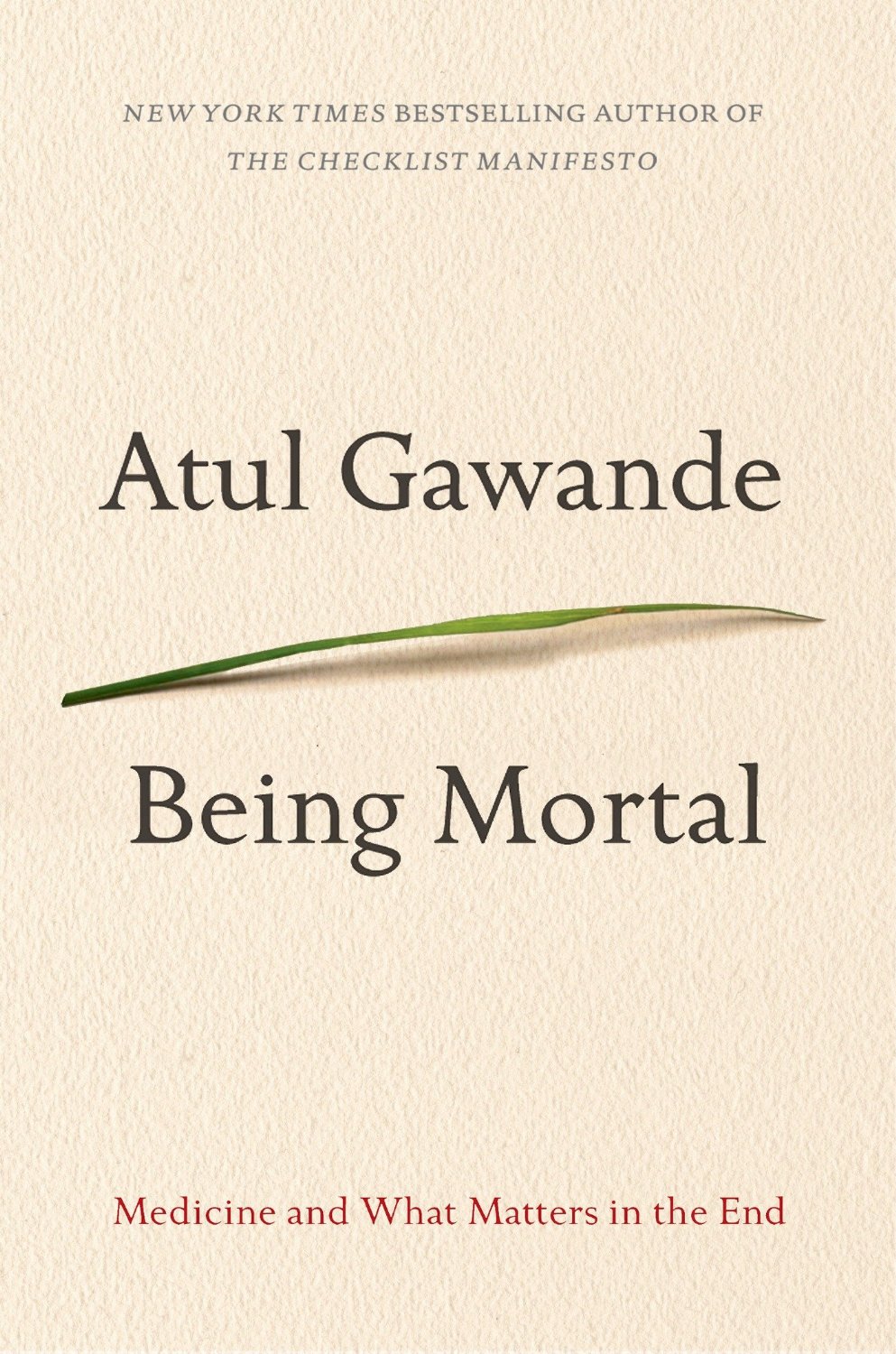
I watched an interesting Frontline special about end-of-life issues, from the perspective of a doctor treating terminally ill patients. The show featured Dr. Atul Gawande, who wrote the book, “Being Mortal: Medicine and What Matters in the End.” The book came out last fall, but I have not had the chance to read it yet. Another one added to my wish list, so many good books, so little time to read them!

being mortal cvr

In the program, Dr. Gawande tracks other doctors and interviews them about their approach to end-of-life care. Because of some negative experiences, I sometimes unfairly assume that the typical doctor’s main goal is to prolong life for as long as possible, quality of life be damned. But this documentary highlights the emotional turmoil that doctors experience when they are forced to tell their patients that medically speaking, there is nothing else to be done and it is time to transition to palliative care. The doctors feel like they’ve failed their patients when they cannot heal them.

Some patients accept the bad news with peaceful resignation, others go into denial, and still others fight the good fight for too long. One of the saddest stories was of a young woman about to give birth who was told she had stage IV lung cancer. She gave birth with a collapsed lung and immediately began a harsh and toxic treatment regimen. Of course one can understand why, she had so much to live for! But her husband now regrets the time she spent so ill from the treatment, which did nothing to extend her life. He wishes they had spent more quality time together as a family.

While somber in nature, the program offered a variety of takes on how to approach end-of-life care. It’s worth checking out. I watched in on the PBS channel on Roku.

3 Comments

Filed under Memories