Monthly Archives: March 2014

If only Alzheimer’s was a cruel April Fool’s joke

If one had to pick a holiday to associate with Alzheimer’s, it would definitely be April Fool’s Day.

file3681238874783

Our loved ones with early to middle-stage Alzheimer’s often appear so normal, just how they’ve always looked to us. (During the latter stages of Alzheimer’s, the physical symptoms of the disease tend to be more readily apparent.) But then they open their mouth, or don’t respond to their name, or don’t recognize that you are their loved one, and it is like the cruelest April Fool’s joke in the world.

If only our loved ones were pulling off such a prank, and could snap back into their old selves while laughing and shouting, “April Fool’s!”

As I’m reading the wonderful stories in the upcoming “Chicken Soup for the Soul Living with Alzheimer’s and Other Dementias” book, I found two Alzheimer’s-related behaviors that fascinate me. One relates to April Fool’s in that humor can still be found in the Alzeimer’s experience. Often it is unexpected or unintentional humor, but it is there if you seek it out. The other is the way the disease works on the brain and how people with even mid- to latter-stage Alzheimer’s can sometimes have a lucid moment. Time and time again, people described how it was like a veil was lifted, or the fog dissipated, albeit temporarily. I remember experiencing this with my father, and what precious moments those were for me.

But then Alzheimer’s would cry, “April Fool’s” and my dad’s mind would be lost in the fog of dementia once again.
1 Comment

Filed under Awareness & Activism, Memories

Supporting a grieving friend

I want to take a moment to send my condolences and loving support to Terry Shepherd. While I have never met her in person, I feel I know her quite well, as I’ve been following her terry1954 blog for awhile.

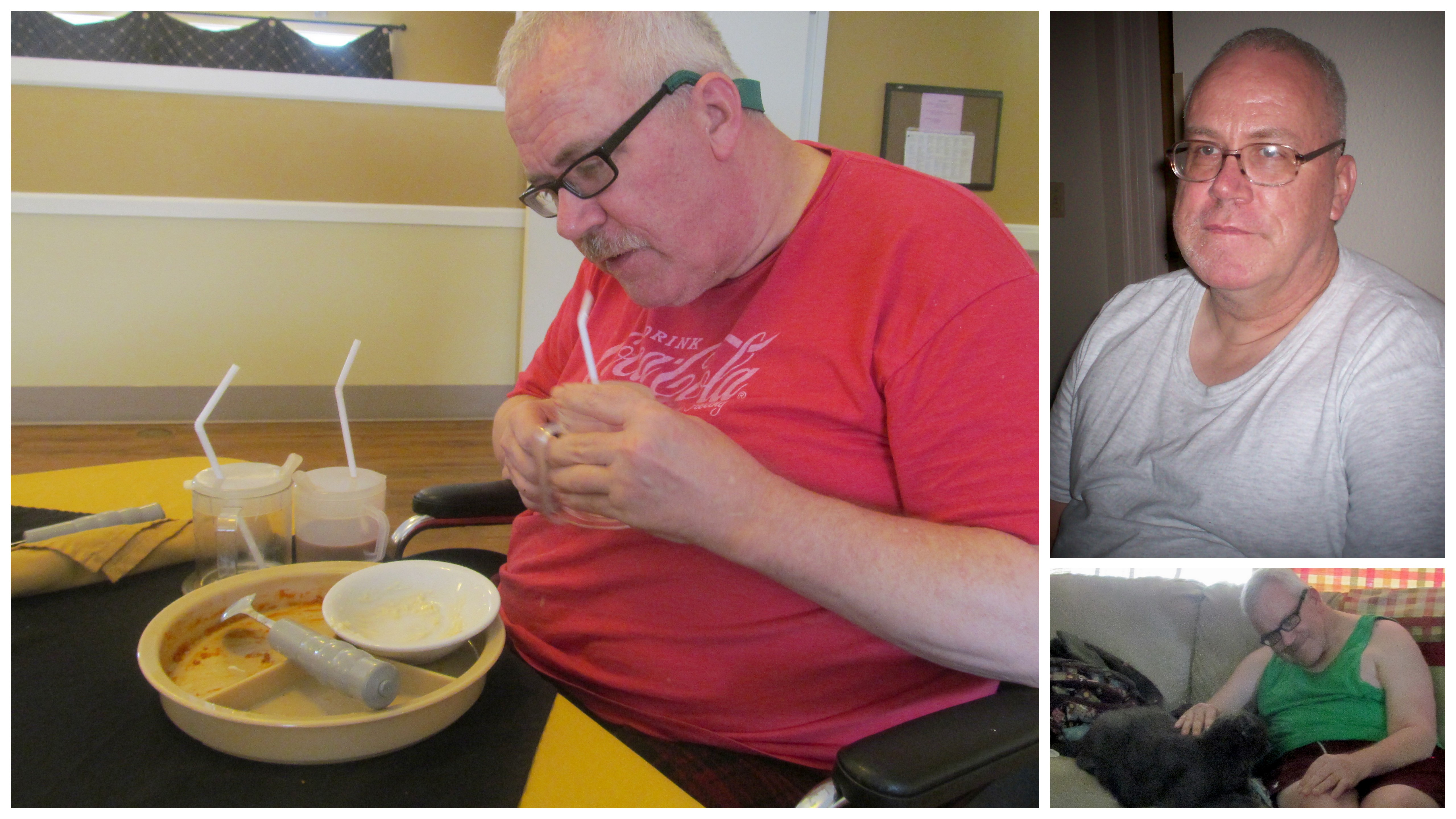
al-collage

Terry was the primary caregiver of her brother, Al, who had a terribly debilitating disease called Multiple System Atrophy. Al was mentally challenged as well, which complicates the caregiving situation. Over the last several months, poor Al has essentially been dying a slow death. While Terry had some home health help and a dear friend who would offer her moments of respite, Terry took care of most of Al’s needs, from feeding to bathing and changing his diaper. Terry bravely and beautifully documented her caregiving experiences on her blog. She has many blogger friends who like me, know what a special person she is and offered support and advice throughout the ordeal. On Monday, Terry wrote on her blog that the angels came.

Those of us who have experience the death of a loved one, especially when long suffering is involved, know that there is some level of relief that their loved one is free of pain and disease. But of course, the grief at the loss of someone you’ve been so close to and have taken care of is still so painful to bear. If you have any words of solace or support you would like to send along to Terry, you can do so on her blog.

I have learned so much from Terry. The patience, love and fighting spirit she had in caring for her brother is admirable and a great example for all of us to follow. She does not sugarcoat the caregiving experience: the loneliness and isolation, the frustration with care providers, the hopelessness and exhaustion. Terry bares her soul on her blog, and I can only hope that her blog followers offered her at least some solace through our support and prayers for her and Al.

Rest in peace, dear Al. I hope you are flying with the angels.

1 Comment

Filed under Awareness & Activism

The most difficult lessons of caregiving

I finally had the chance to read Jai Pausch’s memoir, “Dream New Dreams.” She was the wife of Randy Pausch, the professor who gave the moving “Last Lecture” that went viral a few years ago. As you may remember, Randy bravely battled pancreatic cancer, and Jai served as his primary family caregiver. The couple also had three young children at the time. The memoir covers all of the aspects of caregiving and the physical, mental and emotional impact being a caregiver has on an individual and a family. Jai Pausch writes with honesty and bravery. I highly recommend the book to other caregivers. There is a lot you no doubt will relate to in this book.

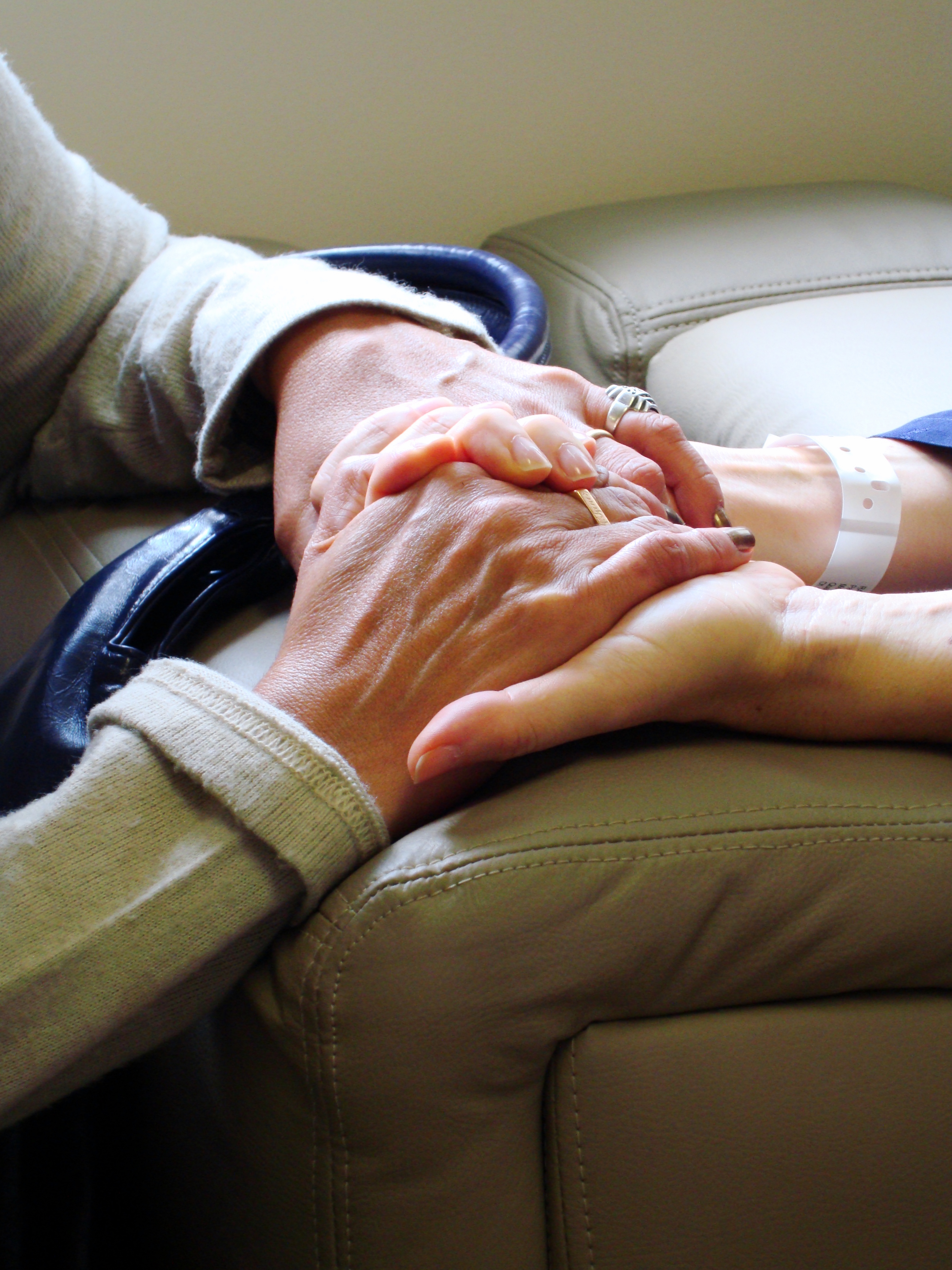
hands

One of the most poignant and enlightening moments of the memoir for me comes near the very end of Randy’s journey with cancer. Jai does not sugarcoat the impact that cancer had on their relationship as husband and wife, and how she often struggled to maintain the household, raise three young children essentially alone, and try to be a loving caregiver to Randy. In the last month of his life, they make one last trip together for an experimental cancer treatment. Jai admits that they were not getting along. In front of a social worker at the hospital, Randy said something about his wife that hurt her deeply.

“He said he felt I was unempathetic: doing a great job of all the things anyone could do, and a terrible job on the things only I could do.

Wow, what a devastating statement from a dying man. Jai was of course wounded by this accusation, as any family caregiver would be. Here she was, running the household, paying the bills, taking care of three kids under six years of age and being a caregiver for a cancer patient, and he had the nerve to complain? Jai really didn’t think she could do any more than she was already doing.

Jai recounts what their wise psychologist suggested when Jai told her the crushing words Randy had said: “He wants you to tell him you’re going to miss him when he’s dead.”

That is blunt advice to be sure, but it was a breakthrough moment for Jai as a caregiver. Jai was working so hard to maintain a stoic exterior, to not make Randy feel guilty about how much pain she was going to feel when he died that she was coming off as cold and uncaring to him. So on the doctor’s advice, she went to Randy and cried and expressed how much she was going to miss him. Jai says Randy was comforted.

I think this is a great lesson for all of us caregivers. We work so hard to be invincible that sometimes we forget we are human. While we may want to shield our sick loved ones from much of the pain, sadness and frustrations we feel, we should not do so at the expense of cutting off emotions altogether. Randy was right: almost anyone can perform the physical duties of caregiving, but the love you have for that person is unique and only something you can express. Take time to show how much you care.

1 Comment

Filed under Awareness & Activism

Doctors dropping the ball on nursing home transfers

Anyone who has spent any time in a hospital, whether as a patient or a caregiver knows that seeing the doctor is like finding the holy grail. I remember endless hours just waiting for the elusive doctor to appear, just so he could take a cursory glance at my mom or dad, flip through the chart, and then provide the signature we’d been waiting all day for. This is especially frustrating during hospital transfers.

hospital hallway

A recent University of Missouri survey of that state’s nursing home staff members found that there is poor communication between the doctors at transferring hospitals and physicians on staff at the admitting nursing homes. The survey also found that orders are often incomplete and difficult to read. The transfer process can take hours, creating a frustrating experience for both staff and families.

I wrote recently about the guilt I felt about Dad’s last minutes in this world. His DNR order had not transferred from the hospital to the skilled nursing facility, so the nursing home staff were legally required to take all measures to save his life when he collapsed in the shower. The result of that failure: my dad suffered broken ribs as he died.

The blame for this failure is not just on the doctors, hospitals and nursing homes. As family members for loved ones who are ill, we become patient advocates. I remember wondering if the DNR order for my dad had transferred, but I never inquired with the staff at the skilled nursing facility. It had been so difficult to get Mom to agree to the DNR at the hospital, I frankly did not want to deal with that drama again. I hoped Dad would pass quietly on his own, but as many of you know, that often doesn’t happen.

So yes, as patient advocates we need to demand better communication between the hospital staff and nursing home staff. But we also need to check behind them, and then double-check, to make sure medical care orders are recorded properly. Dealing with these issues may be frustrating, but it is much better to know that you tried than to have to live with a lifetime of regrets.

Leave a comment

Filed under Awareness & Activism

Would you take a blood test that can predict Alzheimer’s?

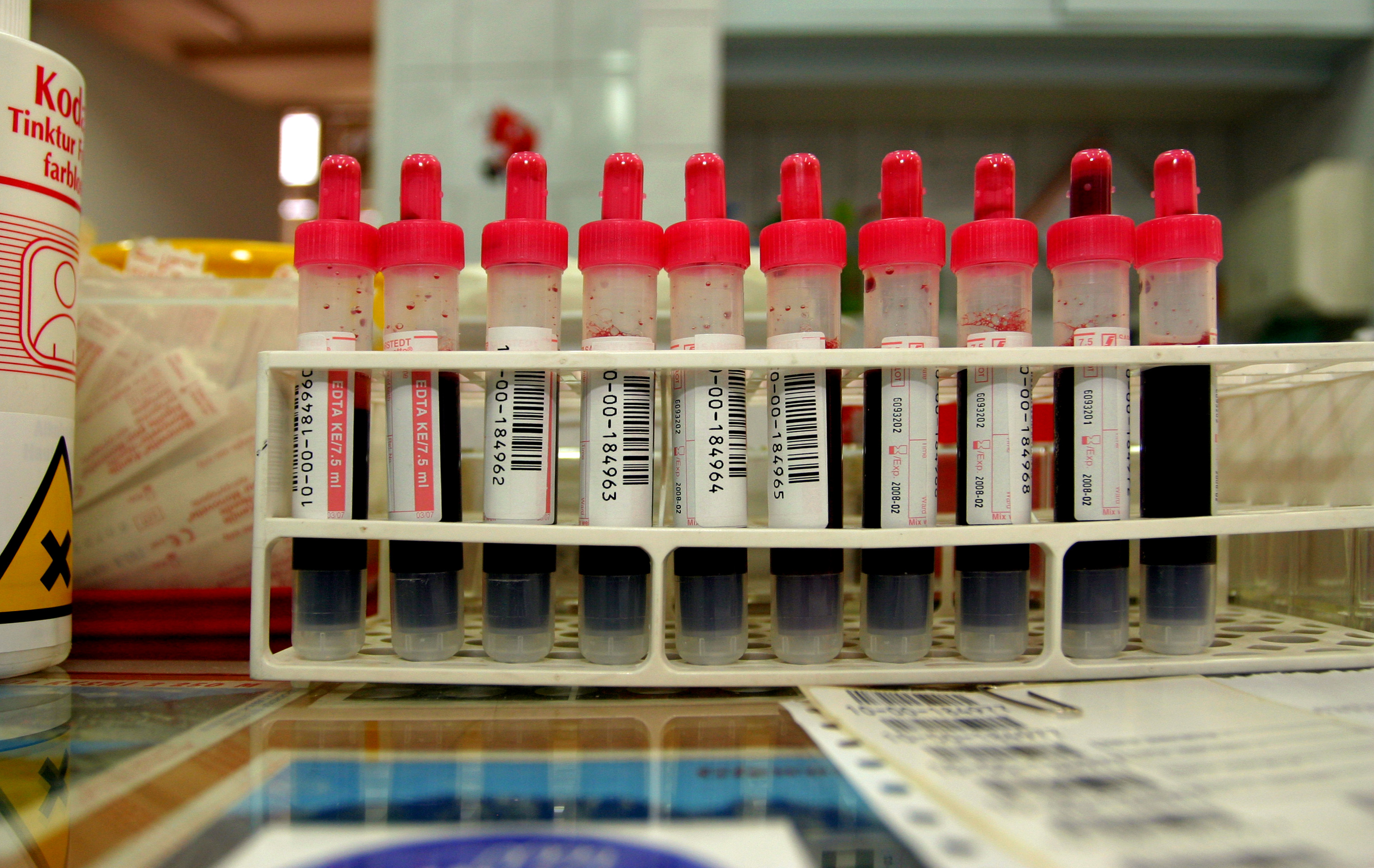
This past week, researchers revealed they had developed a blood test that can accurately predict whether a senior will develop dementia in the next few years. The test has been performed on a small pool of subjects, with promising results. The test focuses on a particular set of lipids that are present in those who end up developing Alzheimer’s disease and other variations of cognitive decline. In the studies conducted so far, the blood test has had an impressive 90 percent accuracy rate.

The blood test is still years from being made available to the public as a diagnostic tool for dementia. Still, the fact that a simple blood test now exists raises the question: would you take the test?

blood test

I definitely would want to know, so I would take the test. Something to keep in mind with this particular blood test is that it only can predict the development of cognitive decline two or three years prior to onset. When it comes to genetic testing, some people fear of living with the knowledge of increased disease risk for decades, like a black cloud over their lives. I can understand that, though I have undergone commercial genetic testing that indicates I have the ApoE4 gene variant that increases my risk for Alzheimer’s. But with this new blood test, that window of time is a more reasonable one, allowing you enough time to get your affairs in order and spend quality time with your family. Not everyone would accept this information in a positive manner and it could trigger depression or destructive behavior; obviously the test should never be forced upon a patient.

That being said, I’m not saying that getting those test results indicating you have a 90 percent chance of developing dementia in a few years would be easy to digest. You might well react differently than you think you would.

Would you take a blood test that could accurately predict the onset of dementia?

1 Comment

Filed under Awareness & Activism

Building community to prevent dementia-related tragedies

This story out of Alabama is tragic on so many levels. Neighbors called police to perform a wellness check on an elderly couple, one who has dementia. The neighbors reported not seeing the couple for months. When the police arrived, they saw the woman who has dementia moving about the home. Through a window they could see her husband, clearly deceased, on a bed. When the police gained access to the home, they found the woman with dementia in poor health, and two dogs that they believed starved to death. Authorities believe the woman lived with her dead husband in that home for at least a month.

holding hands

We must strengthen our communities to prevent heartbreaking tragedies like these from happening. In our modern society, it seems we have discarded a true sense of community. I keep to myself and do not socialize with neighbors; I live in a big city and while the neighbors seem harmless enough and I speak to them in passing, urban life tends not to encourage close neighborly relations. I did spend an hour tracking down my neighbors across the street to let them know they had left the trunk of their car wide open, so I’m not completely cold-hearted. I work from home so I naturally observe the routines of my neighbors. If I knew I had a neighbor with dementia, I think I would pay more attention. Of course, people have a right to privacy so communities can’t advertise who has dementia even if it is to provide assistance.

I’m not sure what the answer is but there does need to be more safety nets for our elderly population. Not everyone has children or a group of close friends or family members to check up on them. We shouldn’t let these people fall through the cracks, and end up in tragic situations like what occurred in Alabama.

Does your community offer any programs that check-in on seniors to make sure they are safe?

3 Comments

Filed under Awareness & Activism

Voices of the Sandwich Generation Dementia has Fueled

Check out this Huffington Post interview with three women in the sandwich generation that are providing care for parents with dementia. They do a great job at explaining the challenges we all face as caregivers.

Kay H. Bransford's avatarDealing with Dementia

huffpost I was interviewed by Nancy Redd with Huffington Post who did a story on  Parents Who Care For Parents With Alzheimer’s . She interviewed three of us, all at different stages with parents who have dementia and all with children.

You can watch the video interview and hear from:

  • Kathy Ritchie @MyDementedMom (Phoenix, AZ) Blogger at My Demented Mom; Writer. Kathy has a toddler.
  • Kay Bransford @kay_bransford (McLean, VA) Blogger at Dealing With Dementia; Chief Curator at MemoryBanc. I have an 11 and 16-year-old.
  • Susan Poulos (Greensboro, NC) Caring for Mother with Alzheimer’s; Freelance Writer. Susan’s boys are now considered adults.

It was interesting to hear the stories and I hope you will watch. Shared. 

View original post

Leave a comment

Filed under Memories

The dreaded conversation

UsAgainstAlzheimer’s recently sent out an email about planning for your parents’ future, if/when they become incapacitated in body or mind and are unable to care for themselves anymore. The message stressed how important it is to have “the conversation” where you discuss these difficult topics with your family and develop a plan just in case it is ever needed. Of course, I think this is the smart and right thing to do and would encourage all families to do this.

But from my personal experience, easier said than done. As I’ve mentioned before on this blog, my dad had a fear of death so he never wanted to broach the subjects of becoming ill and dying. My mom, ever the chipper one, would respond to my encouragement to fill out the will paperwork by saying, “Well, you already act like we have one foot in the grave. We’re not dead yet!”

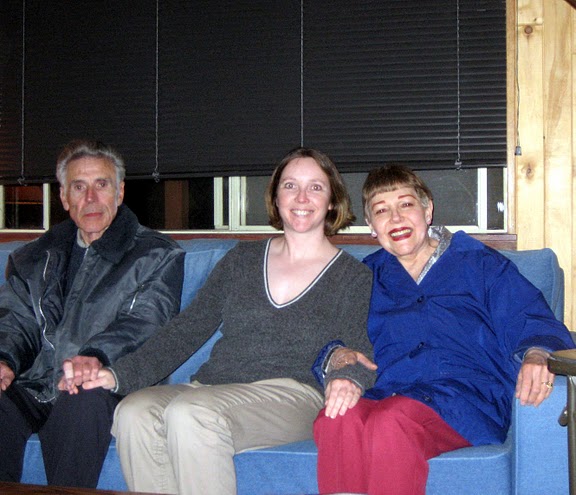
momdadme0308-2

I’m hoping that with the baby boomers, such discussions won’t be viewed in such a taboo fashion. And as long as Generation X and younger can fill out a form online, they’ll probably be willing to do it. While the younger generations certainly have earned some fair criticism about their navel-gazing tendencies, in this case, it is a good thing to sit down and spell out exactly how you want these aspects of your life to be. The more introspective, the better!

For those of us who have family members with dementia who did not plan ahead, you often feel like you are stumbling through the dark, hoping you are doing the right thing, but the uncertainty can haunt you in the middle of the night. My dad was afraid of dying, but if he could have understood what his sad reality was going to be with Alzheimer’s, would he have been more inclined to be a DNR? I’m not sure, but I am plagued by what the doctor on duty at the nursing home said the day Dad died. The DNR instructions from the hospital did not make it to the new facility, and the doctor said he thinks the EMS worker broke Dad’s ribs when performing CPR on him. That should not have happened. We as a family should have triple-checked about the DNR order. That’s why it is so vital to discuss these things before an emergency arises, because no one is in a proper frame of mind at that point.

What tactics have worked in your family to discuss these sensitive end-of-life topics?

5 Comments

Filed under Awareness & Activism