Category Archives: Awareness & Activism

Make a plan to vote now

This is not going to be a partisan political post. I truly believe senior care and caregiving is a bipartisan issue and will take the cooperation of members of all parties in order to pass much-needed legislation.

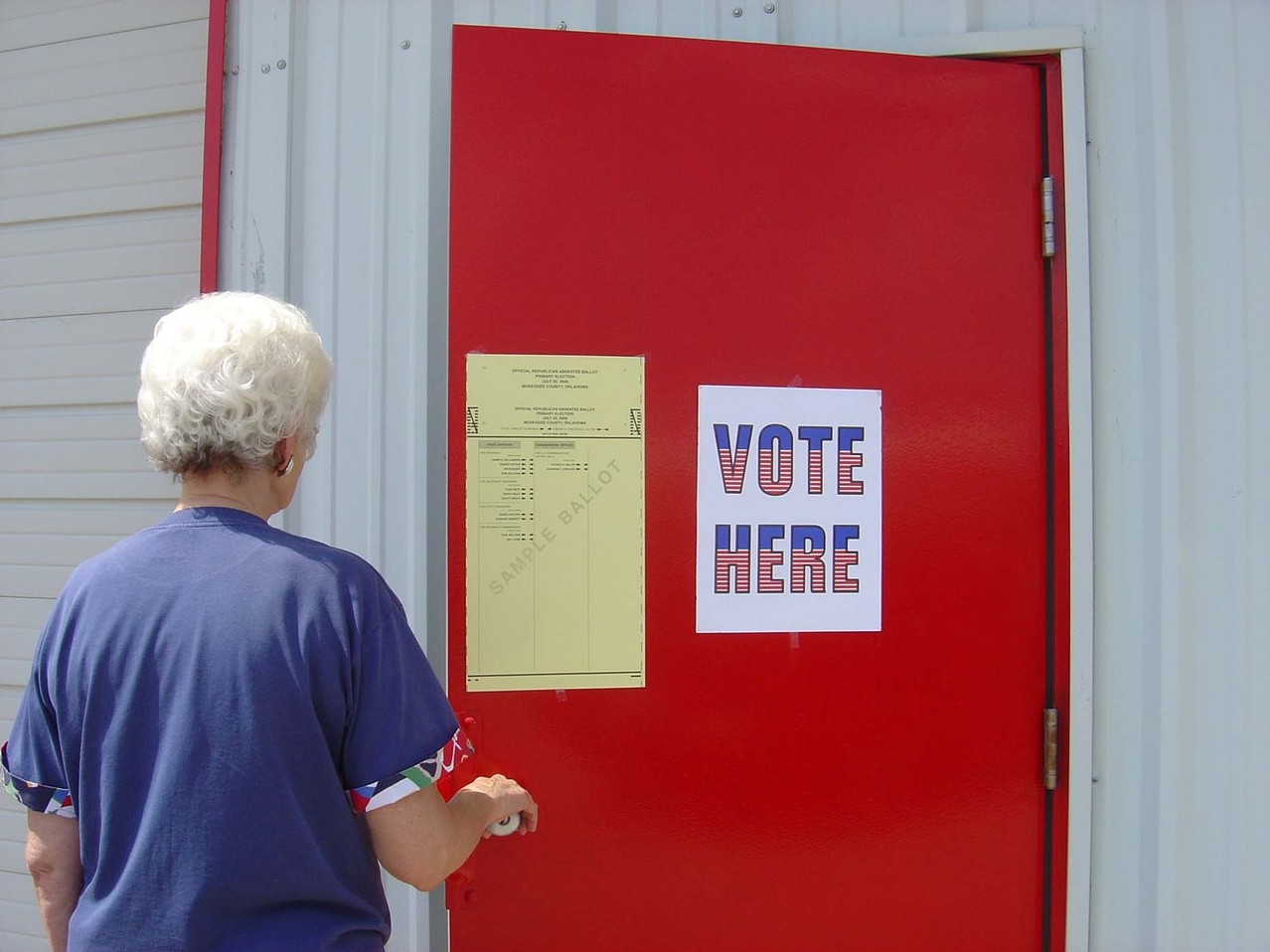
But the pandemic that has changed so much in 2020 is also changing the way we vote. How you vote and where you vote depends upon your local jurisdiction and personal preference; my only advice is to plan now if you haven’t voted already.

There are arguments to be made for and against the various forms of voting available this year. Here in Georgia, I took advantage of absentee voting and have already mailed in my completed ballot. Thanks to technology, I was able to monitor its progress and received electronic notification when it had been received and approved for processing.

For those who prefer to vote in person, check out your options for early voting. Many states are offering expanded voting locations and it may be a good way to avoid potentially long lines on election day. If you decide to go the traditional route and vote on Nov. 3, be prepared to wait in long lines. Hopefully it won’t be as bad as recent elections, due to the massive amount of people who are voting early this year.

And caregivers should keep COVID-19 in mind when making a voting plan, for yourself and your loved ones. Weigh the risks and comfort level when making your voting plan. Check with assisted living centers to see if they have a plan to help residents vote. For those needing a ride to vote, check out promotions from Uber and Lyft. Make sure to mask up if voting in person, and use hand sanitizer after touching the machine. The one caveat I would point out about waiting until election day to vote is with coronavirus cases on the rise in many areas of the U.S., do you want to run the risk of being sick and missing out on the chance to vote? Just something to consider.

After the election, the real work begins on working with those elected to create sensible, practical caregiving policies that offer families the support they deserve.

Leave a comment

Filed under Awareness & Activism

Teens develop, win prize for dementia app

There has been so much bad news lately that I wanted to spotlight a story about what the younger generation is doing to support dementia research. A group of teen girls in Ireland used the pandemic lockdown for a worthwhile cause.

The mentor’s mother had dementia, which helped inspire the team to create the Memory Haven app. Designed for use by both people with dementia and their caregivers, it has features designed to address three main issues: memory loss, difficulty with recognition and speech impairment. I loved how thoughtful the app is, using tools like facial recognition and music to help lift the moods of those who are feeling down.

While the teens are a STEM (science, technology, engineering and mathematics) success story, they unfortunately faced sexism and racism along the way. I hope their inspirational story will encourage youth around the world to support dementia research.

You can learn more about the app and see it in action in this BBC report.

Leave a comment

Filed under Awareness & Activism

Pandemic isolation taking deadly toll on those with dementia

Research has shown that social isolation can have a negative impact on anyone’s health, but seniors and particularly those with Alzheimer’s and other dementias are more vulnerable to its devastating effects. The pandemic has further tested this theory, with tragic results.

As a former dementia family caregiver, my heart broke for Dan Goerke and his wife Denise, profiled in The Washington Post this week. The images that accompany the story illustrate quite viscerally just how quickly a person with dementia can decline, physically and cognitively, when socially isolated. Weight loss and depression are common, among a more rapid decline in memory and speech skills.

According to The Washington Post analysis of federal data, there have been 13,200 excess deaths from Alzheimer’s and dementia since March in the U.S. That number is compared to the number of such deaths in previous years. While we may never know how much social isolation factored into this spike, the mandate that many nursing homes have implemented, effectively banning family members from visiting their loved ones in person, has taken a significant toll.

It’s not prudent to say that nursing home visitation should be reinstated without restrictions during a pandemic until a vaccine and more effective treatments are widely available. We’ve seen how COVID-19 has ravaged nursing homes and how superspreader events can lead to the deaths of our most vulnerable populations.

However, there could be a more sensible middle ground reached in some cases. Outdoor visits when possible, everyone taking safety precautions seriously, quick testing, limited visitation hours, etc. There are many stories about people visiting through windows, etc. and while this can be helpful, those with Alzheimer’s and dementia often benefit from touch. The image of the Goerkes, separated by a door threshold, with hands outstretched is so poignant.

The damage being done is not just to those with dementia, but to their caregivers. The emotional pain and stress family members are going through right now is unfathomable. As with most things and especially with this pandemic, there are no easy solutions, no one-size-fits all answers. But we must do better, and advocate for better outcomes. A visit to a nursing home during a pandemic does not have to lead to a death sentence, but banning visits can have a detrimental effect on those with dementia and their families.

2 Comments

Filed under Awareness & Activism

Help Against Nursing Home Abuse: Things You Should Know — The Diary of An Alzheimer’s Caregiver

It’s so important to recognize the signs of abuse in nursing homes and the steps to take if you feel your loved one is being abused in any way. This blog post by The Diary of an Alzheimer’s Caregiver provides a good overview.

Seniors and their families put a great deal of trust in nursing homes. Many of them believe that the decision…

Help Against Nursing Home Abuse: Things You Should Know — The Diary of An Alzheimer’s Caregiver

Leave a comment

Filed under Awareness & Activism

Navigating the ER as a dementia caregiver can be challenging

Emergency room entrance sign with ambulance

Steve Shepard

I was moved this week when I watched the video of a Maryland woman who was distraught because she was told by hospital staff that she would have to leave her mother-in-law, who was in severe pain and has Alzheimer’s, alone in the emergency waiting room due to COVID-19 restrictions.

As a former dementia caregiver, I can empathize with the helplessness and the frustration that Laura Kramer felt. It’s ridiculous that Kramer had to take her mother-in-law to another county in order to receive treatment and be at her side as her family caregiver. You can watch her emotional plea.

My own father had multiple trips to the emergency room in the last year of his life while he was a resident at a memory center. Their procedure was also to leave the patient at the ER once admitted because they didn’t have the staff to wait with the resident. I often thought about how confused and scared my father must have been, alone in a chaotic emergency room atmosphere.

The good news is that Kramer’s experience forced the hospital to revisit its guidelines and admit that they had made a mistake. Of course COVID-19 restrictions are necessary in a healthcare setting, but no-exception policies could have deadly consequences when it comes to caring for those with cognitive issues. Kramer’s actions should be a role model for other caregivers who find themselves in similar situations.

4 Comments

Filed under Awareness & Activism

We Need to Stop Minimizing the Grief of an Expected Loss — Life, Love, and Alzheimer’s

Totally agree with Lauren. While I experienced some sense of relief that dementia no longer had control of my father’s mind, his death was still a profound loss.

How many times have you heard someone say, “My loved one died. Well, she was sick and we knew it was coming, but still…”? Why do we feel the need to offer that explanation? Why do we feel the need to minimize our loss by saying that it was expected? Why do we diminish our […]

via We Need to Stop Minimizing the Grief of an Expected Loss — Life, Love, and Alzheimer’s

2 Comments

August 22, 2020 · 12:55 pm

Two new movies take fresh spin on eldercare, Alzheimer’s

demonstration-767983_640

geralt/pixabay

I’m always on the lookout for films dealing with caregiving issues, Alzheimer’s and other dementias, as well as those that offer an honest look at growing older. I came across two interesting movies this week that I want to pass along to kick off your weekend. The first is Senior Love Triangle and the second one is Ice Cream in the Cupboard.

These films offer a unique perspective and won’t be to everyone’s liking. For those who prefer to keep their movies more in the PG range with no profanity, you may want to take a pass.  I found both films to be moving and thought-provoking, offering a raw yet empathetic look at the challenges that aging can present. More films are tackling topics such as aging, dementia, and family caregiving and I wholeheartedly support this trend.

Senior Love Triangle is based upon a photo book by Isadora Kosofsky. The story and moving images follow an 84-year-old man who is attempting to balance his relationships with 81-year-old Jeanie and 90-year-old Adina, with nursing homes serving as the backdrop. Dementia, other mental illness and how vulnerable seniors are preyed upon also are part of the storyline. Adult children often have a hard time with their elder loved ones finding romance in the care center environment, but this movie shows how important such affection and human connection is to older people.

Ice Cream in the Cupboard is about a middle-aged couple whose lives change forever after the wife is diagnosed with early-onset Alzheimer’s in her mid-fifties. The movie is based upon a true story. I appreciated how realistically the film depicted the challenges in dementia caregiving. It never shied away from the more brutal, violent aspects and never sugarcoated what Alzheimer’s caregivers may face on their journeys. However, there is also much love and devotion on display.

Both of these movies are available on video on demand. If you’ve seen these films, I’d love to hear your thoughts.


Leave a comment

Filed under Awareness & Activism

The Memories Project selected as a top Alzheimer’s blog

Best Alzheimer's and Dementia Blog Award, 2020 by eMediHealth

☆☆☆☆☆ By eMediHealth ☆☆☆☆☆


I’m pleased to announce that The Memories Project was included in eMediHealth’s Best Alzheimer’s and Dementia Blogs for 2020.

I recognize just about every blog that made this list, from the major organizations to the personal bloggers like myself.  I was happy to see Alzheimer’s Daughter by Jean Lee, one of the founders of AlzAuthors, included on the list. Likewise, Kay Bransford does great work on her blog, Dealing with Dementia, covering important financial issues for those with dementia and their caregivers. Also making the list are two other blogs I frequently read, including The Caregiver’s Voice by Brenda Avadian and The Diary of an Alzheimer’s Caregiver by Rena McDaniel.

As many of you know, The Memories Project began back in 2012 as a tribute to my father, who died of Alzheimer’s. Over the years, it has grown into an awareness and advocacy blog for Alzheimer’s and other dementias, as well as their caregivers. I also documented my journey as my mother’s caregiver, who had colon cancer.

While it’s nice to be acknowledged, the true reward I receive for blogging is connecting with family caregivers and being given the opportunity to advocate for those who provide care for their loved ones. I’ve also learned so much from other caregivers. The caregiving community is smart, tough and compassionate and I am honored to be a part of it.

Leave a comment

Filed under Awareness & Activism, Memories

Adapting to a new normal

love-1120294_640

John Hain/Pixabay

I recently was interviewed for a new caregiving project called Open Caregiving. The website serves as a collection for caregivers to share their experiences and offer advice to other caregivers. I was happy to participate.

If you would like to share your caregiving story, fill out this form.

One of the pieces of advice I offered that proved to be a key for me in thinking about my father’s dementia was to learn how to accept the “new normal.” While it is natural to lament what your life was like before, who your loved one with dementia was before the disease changed them, it is not helpful to be consumed with the past. Cherish those memories and try to focus on the present.

This was very hard for my mother and I to do as my father’s Alzheimer’s disease progressed further. My mother couldn’t help but correct all of the mistaken memories or gibberish that came out of my father’s mouth and I felt shame and embarrassment for my father’s state of mind. I knew how mortified he would be if he could see himself in that state of mental decline. I discuss this further in my book, The Reluctant Caregiver.

But what helped once my father was in the memory care center was simply to visit him and enjoy his company in that moment. If that meant getting him a cup of coffee or navigating him around the outdoor area for a stroll, then that was enough. I would no longer be able to discuss politics or sports with my father but I could still hold his hand and tell him I loved him.

I hope you are finding ways to adjust to the new normal as you wind your way through your own journey as a dementia caregiver.


Leave a comment

Filed under Awareness & Activism

New study on family caregiving yields suprising finding

laboratory-2815641_640

Pixabay

As a journalist, I am inundated with dozens of reports on new medical studies weekly. The number has only increased during the coronavirus pandemic. One caught my eye this week, because I saw outlets running cheery headlines that set off my BS detector.

One headline example: “Long thought to be damagingly stressful, family caregiving does no harm”

That is quite a proclamation! It is certainly news to the thousands of us who have been family caregivers and experienced mental, emotional, and physical side effects. As with most such overly optimistic headlines, I go to the originating source. In this case, it’s a Johns Hopkins study, Transition to Family Caregiving, which found that “caregivers didn’t have significantly greater inflammation over a nine-year period.”

Certainly this is a significant finding, and it is good news that family caregiving may not have long-term physical effects. My concern is the way such studies are promoted across social media, which could cause family caregivers who are struggling to doubt their own experiences.

Let me be clear that caregivers should always listen to their own body, no matter what a study proclaims. Family caregivers may experience a range of emotional, mental and physical side effects attributed to caregiving. This can include anxiety, anger, depression, burnout, insomnia and appetite issues, just to name several common ailments. While these periods of stress may not trigger a response that show up in an inflammation study, it doesn’t mean that your symptoms are not real.

Bottom line, studies are useful but you know your own body better than any researcher. Don’t let rosy headlines discourage you from seeking help if you are feeling overwhelmed by the duties of family caregiving.

That being said, for those who are anxious about the long-lasting impact of family caregiving on their health, this study may help ease worries. I have found that being a family caregiver can strengthen one’s resiliency, which is a positive in these challenging times.

2 Comments

Filed under Awareness & Activism