Category Archives: Awareness & Activism

Sneaking in veggies to older people’s diets

cauli-margherita

A healthy diet can be a challenge for many people to follow, but it can become even more difficult as one grows older. Our older relatives can sometimes seem as fussy and stubborn as we were as children when it comes to healthy eating.

There are many reasons that an older person may not get enough fruits and vegetables in their diets. Deteriorating oral health can make eating raw fruits and vegetables a challenge. That’s what happened to my mother, who used to love to chomp on carrot sticks until it became too painful to do so, after a lifelong struggle with dental issues.

My father was at the other end of the spectrum, and viewed raw vegetables with great suspicion, as if they were an alien life form. The only reason he gave was that he was afraid that anything crunchy or crisp would hurt his sensitive teeth. Dad hated going to the dentist. An apple almost killed him back in his younger days, so I could understand his aversion to that fruit.

Arthritis can make the preparation efforts required in slicing carrots or peeling an orange difficult, though there are plenty of prepared products these days that take the work out of it.

Taste buds can change with age, and with the sign of disease, including everything from cancer to Alzheimer’s. Seniors are prone to decreased appetites, which can lead to nutritional deficiencies. Medical conditions may require our older loved ones to be on a restricted diet, which may lead to resentment of further dietary interventions.

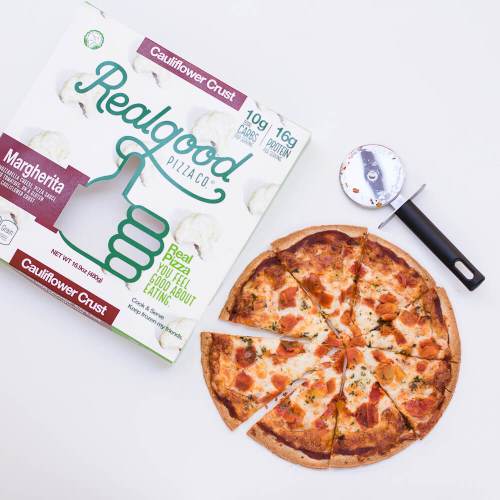
I recently was sent samples of Real Good Foods Co. cauliflower margherita pizzas. I had already tried the company’s low-carb chicken crust pizza, which I liked. Since I have celiac disease, I’m always on the lookout for a new type of gluten-free pizza. I’m not a huge fan of cauliflower but it has become quite the trend over the last year or so. You can buy cauliflower rice, cauliflower mashed potatoes and now, cauliflower pizza crusts.

The pizza crust browned nicely and the taste of the cauliflower was noticeable, but not overpowering. While there are tips on how to get the center of the crust crispier, it might actually be an advantage for sensitive older mouths if the crust remains on the soft side. (Even my crunch-phobic father loved DiGiorno pizza.)

Real Good also offers enchiladas, poppers and a breakfast pizza. (I’ve tried the enchiladas and breakfast pizza; both were tasty.)

Readers of The Memories Project can get 10 percent off their purchase by using the code Joy10 when ordering from the Real Good Foods website.

Pizza can make for a fun family meal, and when in bake-from-frozen form, an easy one for busy caregivers to prepare.  It can now be a good way to sneak in an extra vegetable and deliver a nutrition boost for our elder loved ones.

What tips do you have to give elders you care for a nutrition boost?


2 Comments

Filed under Awareness & Activism

How the voice first trend could help with elder care

dbw

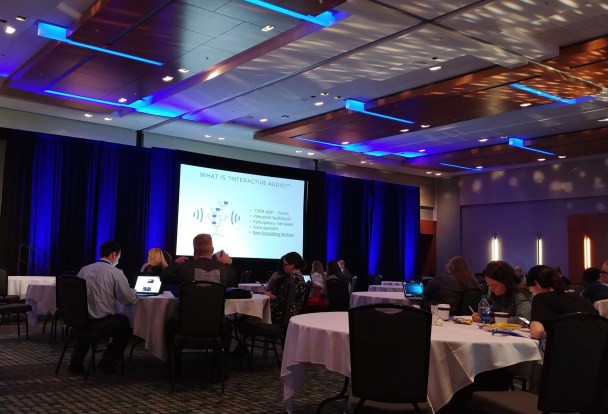
I attended Digital Book World in Nashville last week. It’s always inspiring to be surrounded by authors and others in the publishing industry who are pursuing their dreams and creating worthwhile projects.

It came as a bit of a surprise to me that voice-activated technology was among the biggest trend. As a writer, I’ve always concerned myself with the written word, whether it was in print or more likely, digital form. While I’m aware of voice-activated home devices like Alexa, and own one, I never thought about storytelling through such devices. Well, I learned last week that plenty of people are thinking about voice-first as an emerging platform for authors.

While many of the early examples and success stories involve children’s stories, I started thinking about how those of us involved in elder care may be more familiar with voice-activated technology than we think. Life Alert’s, “I’ve fallen and I can’t get up,” slogan has become a meme, but the company developed one of the earlier forms of a voice-activated devices that was adopted by the masses and has helped save countless lives.

Now there is a focus on using voice to create entertainment options, and I can think of ways this could benefit those with dementia. Witlingo’s Drill Skills could be useful for dementia caregivers to engage their loved ones in a fun mental exercise. Those with dementia who can no longer read longer works may enjoy the shorter “microstory” format that voice first publishing uses.

I will be following the developments in voice first publishing and look forward to seeing how it could be used by caregivers to entertain and engage their loved ones.

Leave a comment

Filed under Awareness & Activism

Everyone has a caregiving story

clone tag: 1246696358587046008

Keynote speaker Walt Mossberg shared his insights on the future of technology.

I’m at Digital Book World in Nashville this week so this post will be brief.

I’m always amazed at just how universal the experience caregiving is, and how everyone has a story to tell about that experience. It’s so interesting to attend a conference and come into contact with so many people from all walks of life, and when they find out I write about caregiving, they are typically eager to share their own stories.

As Rosalynn Carter to eloquently said, “There are only four kinds of people in the world: those who have been caregivers, those who are currently caregivers, those who will be caregivers, and those who will need caregivers.”

Just wanted to share this observation for caregivers out there who may be isolated and are feeling alone. You are most definitely not alone. There is a large, passionate, imperfect but striving to do their best tribe of family caregivers out there.

Don’t be afraid to share your caregiving story.

1 Comment

Filed under Awareness & Activism

Driving, Dementia, and the Right to Drive

The battle over driving can be one of the biggest and most heated that a family dealing with dementia has to face. Read this post from Dealing with Dementia to gain some valuable insight.

Kids want their parents to be safe, and their parents want to maintain their independence.

via Driving, Dementia, and the Right to Drive — Dealing with Dementia

Leave a comment

September 25, 2018 · 9:24 pm

Exploring natural stress relief for caregivers with CBD hemp oil

400dpiLogo

Caregiving is stressful. Even the most well-adjusted individual can find themselves struggling with the mix of emotions that a caregiver can experience. On top of stress, being a caregiver can be isolating, leading to depression.

I know I was totally stressed out when I was a caregiver for my parents.  There was that “always on edge” feeling, waiting for that phone call that someone had fallen or someone was headed to the ER. As a long-distance caregiver, there was a sense of helplessness and lack of control. When I moved in with my mother to help in her recovery from a colostomy, I experienced a different kind of stress. My mother and I were complete opposites personality-wise, and we often butted heads.

As I look for ways to help caregivers deal with stress, I’ve explored many options. While yoga and meditation can be beneficial, it can be difficult for caregivers to find time for such activities.  Pharmaceuticals work for some people, but come with a host of side effects. The key is to find something that could help relieve stress, anxiety and depression, but without making one loopy or sleepy. Caregivers have to remain alert in order to perform medical tasks.

Lately, I’ve been hearing a lot about Cannabidiol (CBD) hemp oil, and its potential in naturally relieving anxiety and depression, without the psychoactive side effects of marijuana.  My curiosity was piqued. There is  a lot of misinformation about CBD and hemp oil, so I began to investigate its potential for caregivers. Hemp comes from the cannabis plant but it is not marijuana and contains very little THC, which is what causes marijuana’s “high.”

Recently I launched a website, CBDforCaregivers.com. It’s an informational site that includes reviews of CBD hemp oil products that I’ve personally tried. My focus is on how these products can help ease anxiety and depression, along with offering pain relief. (The physical labor involved in caregiving can cause chronic pain.)

I’m excited about the potential of CBD hemp oil products, but the products remain in a murky legal state for now. The hemp provisions in the Farm Bill of 2018, if it passes, could remove the cloud of uncertainty at the federal level, though some states are targeting stores that sell CBD products.

It’s important to check your local laws and consult your doctor before using any natural supplement.

If you’ve tried CBD hemp oil, I’d love to hear about your experience.


2 Comments

Filed under Awareness & Activism

The many benefits of weightlifting for older adults

BenefitsWeightliftingSenior_Title

We know as caregivers that keeping elders active is important to support physical and mental health. But when we think about exercise for elders, we may picture a nice walk versus pumping iron. As it turns out, there are many science-supported benefits of weightlifting for older adults.

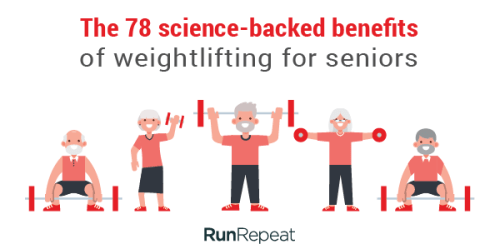
According to Nicholas Rizzo’s article on RunRepeat, there are 78 science backed benefits of weightlifting for seniors, to be exact. This excellent resource, along with the accompanying infographic, is useful for anyone caring for an aging relative who needs a jump-start in their fitness routine. Dementia caregivers will want to note the section on the mental health and cognitive functioning benefits of weightlifting. Studies show that weight training can help relieve depression, which is commonly seen in dementia patients. Weightlifting can also improve memory functioning, even in those with dementia.

Of course, safety is paramount when it comes to physical activity. Before beginning any kind of exercise regimen involving older adults, make sure to consult a health professional who can assess the person’s health and determine if there are any limitations. A weightlifting routine should begin with a proper warm-up, involve a safe progression of weights as tolerated and always focus on proper range of motion. When performed correctly, weightlifting can actually help prevent injuries in older adults and reduce their fall risk, by increasing balance, flexibility and mobility, relieving arthritic pain and increasing bone mineral density.

Reading this article makes me want to add some weight training to my exercise regimen and I’m not quite an “older adult.” I’m a walker and stay in decent shape that way, but neglect activities like weight-based exercises which are also important for overall health.

Do you have any weight training tips for older adults?


Leave a comment

Filed under Awareness & Activism

Caregivers facing tough financial times need better options

credit-card-2308179_640_edited

No one likes to talk about money and that’s why so many of us have money issues.

Caregiving can leave one financially devastated. I found myself in this position over the last few years, and I finally took concrete action to rectify my situation. Why did I put it off so long? I thought I could fix it on my own, pay down my credit card debt the old- fashioned way, through dogged dedication and hard work.

The one thing I’ve learned in the post-caregiving phase of my life is that life doesn’t go on pause while you are tending to an ill loved one or grieving over a family member’s death. In my case, I’ve had legitimate expenses like replacing a rotting porch and replacing a busted water heater (that my home warranty wouldn’t cover unless I replaced the pipes in the ENTIRE house.) I took a few trips, but no fancy overseas adventures. I didn’t live on rice and beans, but I wasn’t slurping down caviar, either.

I’ve always been pretty good at managing my debt, but things were not going in the right direction, and I had to set aside my ego and look at my options. I decided on a personal loan, to consolidate my credit card debt and establish one reasonable monthly payment. I had a lot of trepidation about doing it, but the process went fairly smoothly and I feel more in control of my financial situation. In hindsight, I probably should have done it sooner.

In an ideal world, caregivers would have greater access to financial support, so they wouldn’t have to go virtually bankrupt just because they are taking care of a loved one. It’s insane that the government thinks the average, middle-class person can be a full-time or even part-time caregiver and still earn enough to pay the bills without sinking into debt. And that’s if you are able to care for your loved one at home. Facility care can run thousands of dollars per month, and only the wealthy can afford that on a long-term basis.

There are no easy answers, but as more people find themselves taking on the caregiving role, we are going to have to find some practical solutions. Finances are one of life’s most stressful issues and the last thing a caregiver needs is any more stress!

Leave a comment

Filed under Awareness & Activism

How genetic testing helped me learn about potential, serious health issue

dna-163466_640_edited

Pixabay

There is a lot of buzz these days about genetic testing. Companies like 23&Me have come under fire as critics fear the genetic data could be used by health insurance companies to deny coverage, along with other privacy rights issues.

While I understand these arguments, for me personally, the information I have learned via genetic testing has been very valuable. The following isn’t an endorsement; I’m just sharing my experience.

I did the 23&Me genetic testing years ago. It flagged conditions I already knew I was at risk for, such as Alzheimer’s disease, and what I already have, such as Celiac disease. But the most curious result was the high risk I had compared to the general population for hereditary thrombophilia, which is a predisposition to developing harmful blood clots. I didn’t know what to make of the result (which indicated I had roughly a 60% higher risk than the average person) because blood clots have never been an issue in my family and I’ve never experienced one.

Then my mother became ill, and after her surgery, developed multiple blood clots. Those clots complicated her recovery, so instead of being able to return home post-surgery, she had to spend two months in a rehab center. She required an additional surgical procedure to address her blood clot, which led to its own complications, in which she began to bleed out. She eventually recovered, after spending months on blood thinning medication, which requires strict oversight.

Recently, 23&Me updated their genetic health risk results system and unveiled a new interface in which to interpret the results. By viewing this, I saw that I carry two major genetic variants linked to blood clotting issues: Factor V and Prothrombin G20210A.

So what does this mean for my health? It means that I am aware that because of my genetic makeup, I should alert medical staff before having surgery and I should be vigilant about maintaining leg movement when traveling for long distances. Fortunately, I don’t smoke and I’m not obese, two risk factors, though risk increases as one ages. With precautions, many blood clots are preventable. The problem is, people usually don’t know they are at risk until it’s too late. Just read these stories from the National Blood Clot Alliance.

Let’s face it, my risk for blood clots is not something that would have been uncovered during an annual physical. I have no idea if my mother had the same genetic variants that I do, but I know she would have wanted to know before going through the medical setbacks that the blood clots caused her.

Have you done any form of genetic testing? If so, did you find it helpful or not?


2 Comments

Filed under Awareness & Activism

Food And Alzheimer’s: How To Maximize Nutrition And Make Mealtimes Easier — The Diary of An Alzheimer’s Caregiver

Good tips here! While my dad retained a remarkable appetite when he was in the memory care center, when he landed in the hospital, his appetite dissipated. Caregivers should be prepared to “bend the rules” and let dessert be eaten first, etc. In the end, it doesn’t matter about the order of consumption, as long as your loved one is happy and eating.

Sign up to get these posts and a whole lot more delivered right to your inbox! The Diary of An Alzheimer’s Caregiver – Appreciate the good, laugh at the crazy, and deal with the rest! 97 more words

via Food And Alzheimer’s: How To Maximize Nutrition And Make Mealtimes Easier — The Diary of An Alzheimer’s Caregiver

Leave a comment

August 21, 2018 · 8:35 pm

A son’s moving musical tribute to his mother with Alzheimer’s goes viral

If you’ve spent time on social media over the past month, you may have seen a video of a touching performance by a young country musician from Iowa named Jay Allen. While Allen may not have been a household name before, he certainly is now.

Allen now lives in Nashville but on July 28, he was performing at Dubuque County Fair in his home state. He had a special guest, his mother, who has early-onset Alzheimer’s. Sherry Rich was diagnosed at just 53 years old, and it has been devastating for the entire family. It prompted Allen to write a song, “Blank Stares.” It includes such moving lines as, “If I could only seal the cracks you’re slipping through,” and “Deep down somewhere I swear I still see you/Between the blank stares.”

Allen performed “Blank Stares” at the fair with his mother by his side. A fan captured the touching moment on video, and it was posted on Facebook, where it quickly went viral. The video has been viewed over a million times.

While heartbreaking, it’s wonderful to have young people like Jay Allen raising awareness about this terrible disease. I so appreciate him talking about the financial hardship that Alzheimer’s can cause, because that’s a topic that is not discussed enough. He has touched many people, and proceeds from “Blank Stares” are raising money for Abe’s Garden, a memory care center in Nashville.

If you’ve seen the video or heard the song, I’d love to hear your thoughts.

Leave a comment

Filed under Awareness & Activism