Category Archives: Awareness & Activism

Taking a stand in your own way

Embed from Getty Images

What is there to say about the violent, deadly events over the last week and the last month? We are allowing hate and fear to triumph over love and respect, and we must find a way to reach common ground, or our existence, as individuals and as a nation, will remain in jeopardy.

I think about the way my mom was raised, imperfect yet with a strong, unwavering core of human decency. My mother was raised on a farm in rural Tennessee during the 1940s and 1950s. Racism, Jim Crow laws and the KKK were all thriving. My mother’s family referred to Brazil nuts that they received in their Christmas stockings as “n-word toes.” It was not said with hatred, it was the standard nickname used in those parts, but it illustrates just how comfortable the locals were with using racist slurs.

Yet my mother’s hometown of Newport also had a black doctor, Dr. Dennis Branch. He became well-known enough that he was on “This is Your Life” and had his obituary published in the New York Times. According to the local newspaper, a documentary is in the works. My mother’s family loved and respected Dr. Branch. He made house calls and was kind to the children when they were ill, unlike some of the older, crotchety white doctors. He even accepted produce in lieu of cash for some families.

When my mother was grown and working in Memphis, she encountered her first direct act of racism. My mother was at a diner having a meal when a black woman came in and set at the counter a few seats down from my mother. The waitress saw her, but blatantly ignored her. She served the white patrons who came in after the black woman. My mother watched this unfold and overheard the waitress tell a customer, “We don’t serve those kind here.”

My mother paid for her food and abruptly left, never to return. When she recounted the story, she often wondered how long that black woman set at the counter, waiting to be served. It bothered my mother, that the woman had not been treated with common decency.

Over the years, I have thought a lot about that woman as well.

So my mother may not have walked in civil rights marches, she may not have been the most vocal person when it came to civil rights, but her small action made a big impression on me.

If we all did our small part, make the choice of human decency when it matters in our daily lives, our world would be a better place.


2 Comments

Filed under Awareness & Activism

Legendary coach Pat Summitt gone too soon

Embed from Getty Images

Even if you are not a women’s college basketball fan, you probably would have recognized the former Tennessee Vols coach and her intense sideline expressions. Pat Summitt, the winningest coach in collegiate sport history, has died from Alzheimer’s complications at the age of 64.

Though early-onset dementia is usually more aggressive, I am still surprised at how quickly the disease claimed Summitt.

Word of her declining health spread on social media over the weekend. After being diagnosed with early-onset Alzheimer’s in 2011, Summitt retired from coaching in 2012 but was an active and passionate  Alzheimer’s activist. Over the last year or so, she had made less public appearances, but I had no idea her health had declined so significantly.

Again, even if you don’t care about sports statistics, Summitt’s record was absolutely amazing. Summitt amassed the most successful coaching career in collegiate history with her head coaching record of 1,098 wins and 208 losses, earning her an impressive .841 win percentage. That’s best college coaching record, male or female.

Known for her fierce competitive streak and steely-eyed intensity, players remembered Summitt as a tough but gifted coach who encouraged them to give their all in each game.

In response to her Alzheimer’s diagnosis, Summitt said, “There’s not going to be any pity party and I’ll make sure of that.” After the end of her coaching career, Summitt worked tirelessly to raise awareness for Alzheimer’s by establishing The Pat Summitt Foundation.The Pat Summitt Alzheimer’s Clinic at the University of Tennessee Medical Center is scheduled to open in December.

Summitt’s passion and dedication will be missed on and off the court. I hope her death at such a young age will at least make people take note that Alzheimer’s is not just an “old person’s” disease, and that it can claim the lives of even the toughest fighters among us. (Though one could argue that death is victory over Alzheimer’s.)

May she rest in peace, and my thoughts are with her son Tyler and the family.

Leave a comment

Filed under Awareness & Activism

The most important conversation of all

Many of us have struggled with having end-of-life discussions with our loved ones. But “the talk” is one of the most important conversations we can have with those we care about the most. Christopher MacLellan tackles the talk and offers some practical advice.

The best preparation for tomorrow is doing your best today. H. Jackson Brown, Jr. Having “The Talk” does not have to be hard or difficult, yet the talk does have to happen at some point in our lives. I’m not referring to the birds and the bees talk our parents have with us when […]

via Having The Talk: How To Make End Of Life Wishes Easier — The Purple Jacket

Leave a comment

Filed under Awareness & Activism

Supporting caregivers of wounded warriors

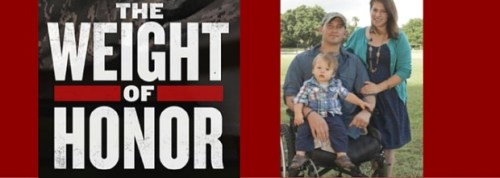
weight of honor

I’m always eager to support caregiver causes, and this upcoming documentary caught my attention.

“The Weight of Honor” is a documentary about family caregivers tending to their loved ones who were wounded while serving in the military. These caregivers, often young and caring for young children, find themselves suddenly tending to spouses who have suffered catastrophic injuries and who are dealing with PTSD.

You can watch the trailer here:

I recently watched a very moving PBS documentary, “Of Men and War,” that focused on a PTSD treatment center, the first of its kind. To hear what these men went through, and what they are battling to overcome, was gut-wrenching, but something that deserves more recognition and support.

Like many documentary filmmakers, funds are tough to come by, even for such a noble cause. Director and producer Stephanie Howard has started a crowdsourcing campaign for finishing funds for the film. If you would like to support the project, please consider a donation and share information about the film on your blog and social media.

I look forward to seeing this documentary and learning more about what military family caregivers experience.

3 Comments

Filed under Awareness & Activism

Thanking Jim Garner and family

I have been following Jim Garner’s inspiring, heartbreaking, well-documented journey with early-onset Alzheimer’s.

He died in April, five years after his initial diagnosis. His mother and brother also died from the disease.

https://twitter.com/alzjourney4m/status/716447814511767552

Garner was only 53 years old, and leaves behind a wife and two children. The family showed remarkable strength, grace and selflessness in allowing the Daily Press to document how Alzheimer’s impacted them over the last several years.

In a struggle for aid, Garner, a veteran, was denied access to government programs, including Medicaid, Medicare and social services. Despite 23 years in the Air Force, he Veterans Administration only offered Garner  a 30-day respite stay in a one-star facility.

A friend of Jim’s wife set up a GoFundMe campaign with her reluctant approval. Karen, Jim’s wife, was overwhelmed by the outpouring of support and donations. The money raised allowed Jim to be placed in a secure memory-care unit for the remainder of his life.

Don’t underestimate the power of a caring community.

Karen wants to dedicate the rest of her life to raising awareness for Alzheimer’s, but knows that she will have to get a job to support her two children. Just by allowing her family’s struggles and triumphs to be documented, she has done so much to personalize the toll that this disease takes on the entire family.

One quote from the interview with Karen really struck me. She was talking about how Jim always was about not sweating the small stuff and taught her to appreciate the seemingly mundane things in life. “We don’t realize how lucky we are that we can empty the dishwasher until we can no longer do it, “she said.

So true.

Wishing the Garners love, peace and healing as they mourn their loss.


1 Comment

Filed under Awareness & Activism

A call to support a fellow artist and caregiver

Many of you dear people who follow The Memories Project dabble in writing or other art forms, and are either caring for or lost loved ones to dementia.

Emily Page is an artist and blogger who recently lost her father, who had FTD. She has started a crowdfunding campaign for a book she is writing about the experience, which will include some of her fabulous art.

If you are so inclined and in the position to do so, please consider donating to her campaign. You can find out more about the project on her blog and via her Publishizer page.

I’ve never met Emily personally, but I have a feeling we would get along, because we both love cats and bourbon!

In less than 72 hours, I have had over 250 pre-orders for my book, Fractured Memories, about my family’s sometimes hilarious, sometimes horrible journey through my dad’s dementia. Seriously. Are you people kidding me? Did you know you were that awesome? Did you? I kind of vaguely suspected you might be pretty cool, but damn, I […]

via You People Are The Best People — The Perks of Being an Artist

Leave a comment

Filed under Awareness & Activism

‘Driving Miss Norma’ inspires many

I have been following the journey of Norma, the 90-year-old woman who lost her husband and learned that she had cancer in the same 2-week time span. While that would drive many of us straight to our beds, Norma surprised everyone by saying she wanted to hit the road.

Her family is taking her on a trip around the country, and Norma is having the time of her life. She chose to skip a risky surgery, and cancer treatment that would have left her sick and exhausted, and instead live out her final days on a grand adventure.

Miss Norma

Miss Norma, via Driving Miss Norma/Facebook.


When Norma told her doctor of her plans, he responded, “Right on!”

The world agrees, and the Driving Miss Norma Facebook page has gone viral, with thousands of people around the world following her journey.

I love her attitude. And for those who think skipping treatment is “giving up” the only thing Miss Norma has given up is the misery of uncertainty. Yes, the cancer she has will likely kill her. But instead of sitting around and worrying about it, or obsessing over treatments that may offer false hope, Norma is doing exactly what someone with a limited time span should do: experiencing every last drop of life she can, while she can.

We don’t have to wait until we are 90 and have a terminal illness to live like Norma. Sure, we can’t all necessarily hop into an RV and tour the country, but we can start carving out time to focus on what is important to us, instead of what others think is important.


3 Comments

Filed under Awareness & Activism

Pundits tackle pain and painfully fail

There has been some buzz over what to me was a benign ad during the Super Bowl for a medication that treats opioid-induced constipation.

As any of you who have been a caregiver probably know, constipation is one of the most common side effects of long-term opioid use. My mother suffered from severe constipation during her last year. It drastically reduced her quality of life.

color pills

To me, this issue is not a joke.

To millions of Americans who live with chronic pain, it is not funny.

After the ad aired during the Super Bowl, Bill Maher cracked the following joke on Twitter.

Maher took flak for his tweet from those who suffer from chronic pain. Maher, who was fined recently for allegedly smoking a joint on television, strongly supports the legalization of marijuana, so he’s not anti-drug by any means, he just prefers weed to pills. Good for him, but for those with chronic pain who work real jobs and face drug tests, marijuana can be risky, even in states where it is legal.

The White House Chief of Staff also sounded off on the commercial.

The White House Press Secretary agreed.

These allegations, while perhaps well-meaning, are woefully misguided.

It’s true that the amount of people abusing opioids has increased dramatically since the 1990s. Pain management clinics popped up everywhere, serving as pill mills, with the doc essentially being a legal drug dealer. The pharmaceutical companies underplayed the dependency risks of their highly profitable products.

The government, under pressure to do something, placed stiff restrictions on opioids. But if you’ve ever known an addict, you know the war on any kind of drug is likely to fail. Addicts only kick the habit when they are ready to do so, and will readily switch to another drug to maintain a high. Many pain pill addicts are switching over to heroin, which is now cheaper and more readily available in many parts of the country.

The only people who are being truly affected by the government crackdown on opioids are those who suffer with chronic pain and who require these medications to function like a normal human being.

My mother relied on pain medications over the last few years of her life. After her cancer surgery, Mom was placed on a low dose of hydrocodone and her doctor kept her on it without question until the new Medicare regulations started to be phased in near the end of 2014. Suddenly, my mother was required to come in to the doctor’s office much more frequently to get her prescription refilled. It was difficult for her to get to the doctor’s office due to transportation issues and because she was in so much pain. It was devastating to know my mom was suffering and there was nothing I could do about it.

Terminal patients suffering excruciating pain should not be denied or delayed pain relief. Those with chronic pain should not face draconian laws to get the medications which help them hold down jobs and raise families. Yes, pharmaceutical companies need to be closely regulated and rehab needs to be readily available for those seeking help, but pain is no laughing matter and neither are the side effects of pain-relieving medications.

6 Comments

Filed under Awareness & Activism

Nine to Ninety: A short film with a lot to say

You’ll only get to know Phyllis and Joe Sabatini for 29 minutes, but you will feel like you’ve known them for a lifetime. I saw much of my mom in the adorable yet feisty Phyllis. No doubt many of you will be able to recognize characteristics of your elderly relatives in this strong, loving couple.

The couple, married 62 years, live with an adult daughter, and you can clearly see how much genuine love flows through that house.

nine to ninety

But at 89 and 90, Joe’s health issues are becoming a major concern for the couple, and the couple’s adult children, who coordinate their living arrangements and health care. Phyllis doesn’t want to be a physical, emotional or financial burden on her daughter any more, who is raising her own child, age 9, hence the title of the short film.

The unusual solution Phyllis comes up with will likely surprise you. It’s not a choice most people would make, but it was seen as the best for their family. I’m not going to reveal any spoilers, but the film raises a lot of interesting issues about aging in place and the sandwich generation.

I have a lot of respect for the family, who talk openly about the realities of aging and death. These discussions are not always easy, especially for the granddaughter, but I think she will end up appreciating the fact that her family included her in such discussions. All too often, we overprotect children from the realities of life, but children are curious and resilient, and don’t always want to be shut out of such family matters.

I hope you get a chance to check it out. If you do see it, let me know what you thought about it. I watched it on the PBS channel on my Roku. The website for the film is called Nine To Ninety.

1 Comment

Filed under Awareness & Activism

Guest post: 5 tips for reducing your risk of developing Alzheimer’s

By Vee Cecil

blueberries

Image via Pixabay by JanTemmel

It seems every week, there’s a new study recommending that people do this or don’t do that to reduce their risk of Alzheimer’s. The most reliable tips line up with an overall healthy lifestyle. Guest blogger Vee Cecil highlights several popular recommendations. – Joy

Alzheimer’s disease isn’t a normal part of aging, although it is much more prevalent among seniors ages 65 and older. In fact, the risk of developing Alzheimer’s disease rises with age, doubling every five years beyond age 65. The aging population in the United States continues to grow as the Baby Boomer generation enters its senior years, thus, the incidence of Alzheimer’s disease is also on the rise.

As members of the Baby Boomer generation are expected to live longer, healthier lives than the generations before them, Baby Boomers, as well as younger generations, seek ways to maintain their health and well-being long into their golden years. While there is no surefire preventative measure that eliminates your risk of developing Alzheimer’s disease, there are a few lifestyle changes that may help to reduce your risk.

  1. Exercise regularly and avoid excessive weight gain. A healthy weight and a physically active lifestyle help you to avoid developing diseases such as heart disease, high blood pressure, and diabetes. In fact, studies have linked diabetes to a higher risk of Alzheimer’s disease. If you are among the 10 percent of older Americans who have diabetes, proper management of the disease is essential. If you aren’t already physically active, consider taking up a cardio activity like walking or swimming. Swimming is an especially good choice for seniors because it strengthens muscles that help reduce your risk of falling and is also easy on the joints.
  1. Eat a diet rich in vitamins and nutrients. According to an article appearing in ABC News, 16 researchers presented convincing evidence of the benefits of various nutritional strategies in reducing the risk of developing Alzheimer’s disease at the International Conference on Nutrition and the Brain in Washington, DC, in 2013. For instance, minimizing your intake of saturated and trans fats and getting enough vitamins and other nutrients from diet staples such as vegetables, legumes, fruits, and whole grains may contribute to a reduced risk of developing Alzheimer’s disease.
  1. Berries, in particular, have beneficial properties that may combat memory impairment. “Berries contain high levels of biologically active components, including a class of compounds called anthocyanosides, which fight memory impairment associated with free radicals and beta- amyloid plaques in the brain,” explains Prevention.com. For maximum benefit, make berries a part of your daily diet.
  1. Reduce your risk of heart disease. Scientists continue to research prevention strategies, but there is not yet a proven way to prevent Alzheimer’s disease. However, there is strong evidence to suggest that many of the same risk factors that increase your risk of heart disease also increase your risk of Alzheimer’s disease; therefore, it’s possible that lowering your risk of heart disease would also lower your risk of developing Alzheimer’s. Such risk factors include high blood pressure, high cholesterol, excess weight, and diabetes. A combination of physical activity, cognitive stimulation, social engagement, and a healthy diet is a multi-component approach in development with the hope of reducing the risk of Alzheimer’s disease.
  1. Stay mentally active. That includes reading, writing, and participating in any activities that engage your brain, such as puzzles, games, and even activities like sewing or crocheting. Studies have shown that people who remain mentally active and regularly participate in reading, writing, and other brain-challenging activities perform better in tests that measure memory and thinking. Learning promotes brain health, and activities that engage your mind are thought to help reduce memory decline over time.

There may not yet be a proven method for preventing Alzheimer’s disease, but taking steps to ensure your overall health and well-being will help you lead a longer, more vibrant lifestyle long into your golden years. Because the risk factors for Alzheimer’s disease overlap with those associated with other diseases, such as diabetes, a proper diet and regular physical activity will go a long way in preserving a healthy body and mind.

Vee Cecil is passionate about fitness, nutrition and her family. A Kentucky-based personal trainer, bootcamp instructor, and wellness coach, she also recently launched a blog, where she shares information on how to lead a happy, healthy lifestyle.


2 Comments

Filed under Awareness & Activism