‘The Weight of Honor’ sheds light on family caregivers of veterans

On this Veterans Day weekend, I can’t think of a better topic to discuss than the new documentary, “The Weight of Honor.”

I have been following the making of this important documentary for awhile. I donated a very nominal amount (wish it could have been more) and received a lovely thanks in the film’s credits. It’s an honor to help support this documentary, which depicts those who often remain invisible: the family caregivers of military veterans. The filmmakers followed a group of female caregivers of catastrophically wounded veterans for five years, charting their triumphs and struggles.

Caring for wounded warriors is a unique experience, as debilitating physical wounds are often accompanied by equally brutal psychic wounds. PTSD can make recovery a challenge, which means the burden on caregivers is even greater. Along with that, many military wives are young and tending to children when their wounded husband returns home, requiring constant care. The documentary doesn’t shy away from the consequences of stress and caregiver burnout, and how it can end up straining relationships.

Overall, “The Weight of Honor” displays the tremendous resiliency that these caregivers exhibit every day of their lives. A life forever changed by the violence of war, but a life that they are determined to make the best of for their families. I’m thankful that the filmmakers chose to tell their stories in such compassionate detail.

I hope you get a chance to see this film. It is available for streaming on Amazon, YouTube and other major platforms. I’d love to hear what you think about it.


Leave a comment

Filed under Awareness & Activism

Understanding the importance of self-care for Alzheimer’s disease caregivers

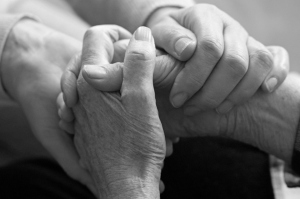
holding hands

Image courtesy of Pixabay.

Here is a guest post from Lydia Chan of Alzheimer’s Caregiver. Her post covers a topic I strongly support: self-care for caregivers.

November is National Family Caregivers Month and National Alzheimer’s Disease Awareness Month.  It’s important to understand the implications of caring for Alzheimer’s patients.  The disease is far-reaching, and being a caregiver is taxing physically and mentally.  If you’re a caregiver for someone with Alzheimer’s, here are some ways to offset the stress you may be experiencing.

If you care for someone with Alzheimer’s Disease, you are not alone.  There are almost 15 million dementia and Alzheimer’s caregivers in America.  At this time, there is no cure for Alzheimer’s, and there is limited relief for symptoms.  This leaves caregivers with what experts at HelpGuide describe as “a series of grief experiences as you watch your loved one’s memories disappear and skills erode. The person with Alzheimer’s will change and behave in different, sometimes disturbing or upsetting ways. For both caretakers and their patients, these changes can produce an emotional wallop of confusion, anger, and sadness.”

Potential burnout.  Caring for a loved one struggling with this disease can lead to burnout.  The chronic stress of the situation is emotionally and physically exhausting, and can leave you with no energy or interest to care for yourself or anyone else.  Here are signs some experts say indicate you may be reaching the breaking point:

  • Abuse of alcohol or medications
  • Unhealthy changes in appetite – overeating or undereating
  • Depression, hopelessness, loss of energy
  • Feeling alienated
  • Lack of self-control physically or emotionally
  • Rough treatment or neglect of the patient
  • Inability to sleep
  • Inability to concentrate
  • Not keeping appointments

Self-care for the caregiver.  Because you are traveling this difficult road, it’s essential that you take care of yourself.  Experts at the National Institute on Aging recommend the following:

Connect.  Participate in a caregivers’ support groups and spend time with friends.

Recreate.  Spend time doing your favorite hobbies and activities.

Maintain your physical health.  Eat right, exercise, and get enough sleep.  Keep up routine medical exams.

Get help.  Don’t try to do everything all the time.  Take breaks daily and ask family members and friends to assist with some caregiving duties. Be specific when you ask for help from other family members and friends.  For instance, ask for someone to prepare supper or take your loved one shopping.  If you are having trouble finding help, you can pay someone to help for a couple hours per day.  If that isn’t possible, even a couple hours per week can provide relief.  If you aren’t sure how to find services, check out the Eldercare Locator.

Spend time with Fido.  Part of your self-care routine can include time with your four-legged family member.  According to some experts, dogs are a terrific relief for anxiety and depression.  Here are some of the ways your pooch can improve your well-being:

  • Lowers your blood pressure.
  • Offers a soothing presence.
  • Reduces cortisol.
  • Helps you forget negative emotions such as anger and frustration.
  • Offers unconditional support, love and companionship.
  • Encourages exercise.
  • Gets you outside to enjoy fresh air and sunshine.
  • Increases social interaction.

Make sure your time with your dog is a stress-reducer and not a stress-inducer.  If you have trouble getting to your dog’s needs at times, hire a dog walker to reduce stress associated with getting your pup exercised when you can’t be at home.

Your needs as a caregiver.  As someone who cares for an Alzheimer’s patient, you are under a fair amount of pressure.  Without proper care of yourself, you risk burnout.  Embrace a healthy, balanced lifestyle with good self-care. You will have more to offer yourself and the loved one you’re caring for.

For more respite care resources, visit Respite Care Share.

2 Comments

Filed under Awareness & Activism

Carve out Time at Thanksgiving to Talk with Family and Friends

Great advice. Take advantage of the upcoming holidays to have “the talk” about end-of-life care wishes.

Kay H. Bransford's avatarDealing with Dementia

carveouttimeThe fact that 9 out of 10 American’s will need someone to speak on their behalf before the end of their life was documented in a joint study done by the National Institutes of Health and Veteran’s Affairs.

Do yourself and your loved ones a favor by having a discussion about this FACT before you are faced with the reality. Those that step in to help will face a lifetime of guilt and doubt if you have not been clear about end-of-life wishes.

For those of us who have cared for someone with dementia, what we know is that there are years of choices to be made well before end-of-life that can be just as challenging. Telling someone I want to “die in my home” is probably not always practical, so offering some more guidance on ways you would like to spend your time if you have limited mobility or…

View original post 483 more words

Leave a comment

Filed under Memories

Can America afford to age in place?

reliable-cane-1571831-1278x883

Joe Zlomek/Freeimages

While many people, including myself, would prefer to age in place, for financially strapped communities throughout America, the trend is straining limited resources.

An article about my mother’s home state of Tennessee and its struggle to care for a rapidly growing older population is a scenario taking place in many states. Many state, county and city budgets are already overwhelmed with issues ranging from high unemployment to the opioid epidemic. I read one article that said older people calling 911 due to falls at home was straining EMS budgets. While the federal government contributes money to elder care each year via the Older Americans Act, it’s simply not enough to address the needs of a growing elder population.

In Tennessee, thousands of older people are on waiting lists for government assistance programs. The organizations do the best they can, but those cited in the article said more resources are needed, and officials are going to have to address the issue soon.

Transportation was listed as a major issue. While some older people may be physically healthy and not need in-home assistance, they may no longer be able to drive and need transportation options to maintain their quality of life and independence. This of course was an issue for my parents. Thankfully, they did have a county-funded shuttle service that they used for years. (Most county officials were against the idea of the shuttle, however. Its funding is always on the verge of being cut.)

Meal delivery was another major need. The meal delivery service also serves as a status check on the older person, so it has a dual purpose. For those in rural areas, this can be a lifeline.

In Tennessee, supporting someone staying in their home costs $3,000-$15,000 annually, while putting a person in a facility costs over $50,000 annually. You don’t have to be a math whiz to see what is the financially efficient solution. Unfortunately, the federal  government has not been proactive in addressing the issue. Tennessee reports some success at the state level, working with community organizations.

Has your community addressed aging in place issues? I’d love to hear about programs that are working in your area.

2 Comments

Filed under Awareness & Activism

Two isolated groups join forces via caregiving

young old wheelchair

Photo: svklimkin/Morguefile

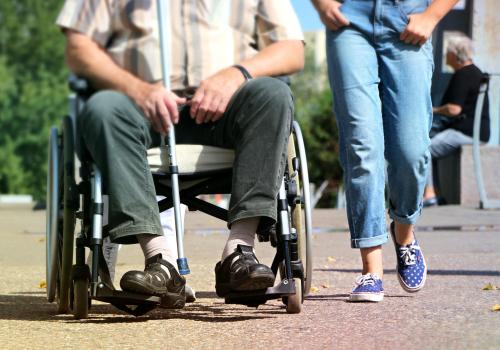
Those of us who have cared for our elders know how advanced age and health issues can lead to social isolation. On the younger end of the spectrum, those with learning disabilities can feel ostracized from their peers. An innovative program in New York brings these two groups together and has created a beautiful sense of purpose for all involved.

Daniel Reingold, the CEO of the Hebrew Home at Riverdale, founded HOPE in 1995, originally as a way to fill job vacancies at the nursing home by employing those born to drug-addicted mothers, The Associated Press reported. HOPE stands for “Health Care Offers Permanent Employment.” Over the years, the program has evolved to include those with autism and intellectual disabilities.

https://twitter.com/APEastRegion/status/919881038058442753

The thread that binds these two seemingly disparate groups is caregiving. The youths assist nursing home residents with daily tasks, and the nursing home residents help the young carers with academic tasks like reading, by giving them real-world history lessons by sharing their life stories, and by being patient as the youths learn to perform caregiving tasks.

It’s a win-win situation. The kids can graduate and work at the nursing home if they choose, or explore other job opportunities. Nursing home residents are energized by the presence of young people, who are eager to show them what they can do on their smartphones and other gadgets.

The kids also learn important lessons on life and death that their peers might miss. Favorite residents die, and the students have to learn how to cope with the loss.

I love to see innovative solutions to social issues that often get ignored, and hope such success stories will inspire others to implement similar programs.

4 Comments

Filed under Awareness & Activism

Ending the caregiver guilt trip

palliative health care layperson's guide

I think all caregivers end up on a guilt trip at some point, but this blog post from gerontologist Dr. Elaine Eshbaugh is another good reminder to let go of that guilt. She discusses the negative emotions that many family members feel when placing their loved ones with dementia in a nursing home, and why caregivers shouldn’t be so hard on themselves.


And then there are people who promise their loved ones that they will never place them in a nursing home. I once had a woman say to me, “My husband and I promised we’d never do that to each other.” I can promise my spouse a lot of things. I can promise I’ll never cheat on him. I can promise I’ll never blow all our money at the casino. I can promise to always take the kitchen trash out when it’s overflowing. (Bill, I promise you the first two–I make no commitment to the third. The third was just an example.) You see, those are things I can control.

via Nursing Homes and Guilt Traps in Dementialand — Welcome to Dementialand

Leave a comment

Filed under Memories

Holograms of the departed

Embed from Getty Images

I watched an intriguing movie recently that I thought might be of interest to those of you who have lost loved ones. It’s called, “Marjorie Prime,” and is based upon a Pulitzer-nominated play.

The movie is set in the near-future, where there are lifelike holograms that can be programmed to act like the dearly departed, and have the ability to learn via artificial intelligence.  The movie’s central concept is: “What would we remember, if given the chance?”

Marjorie, 86, is dealing with memory loss and chooses to create her deceased husband’s hologram when he was in his prime, which her daughter, played by Geena Davis, finds creepy. Davis perfectly captures the reluctant caregiver role, and I could relate to the mix of emotions she expresses in the movie. Lois Smith as Marjorie was brilliant. For you “Mad Men” fans, Jon Hamm plays Marjorie’s husband in hologram form.

I found the film to be very moving and thought-provoking. While you could label it science-fiction, it’s much more rooted in the human condition than in mechanical processes. The holographic “primes” look like normal people, not some CGI monstrosity. It made me think, wow, if I had the option to create holograms of my parents, would I, and if so, how would I program them? Would I leave out my mother’s traits that annoyed me? If I did, would she be an accurate representation of my mother? I think it would be easier with Dad; I would love to hear him sing Bing Crosby tunes and serenade me on my birthday. Still, Dad’s life stories would be incomplete because I don’t remember all of the details.

The film made me think about creating pet holograms, but would that be as rewarding? So much of an experience with a pet is tactile in nature: petting, hugging, stroking their fur.

After we lose a loved one, many of us think about what would we do if we had one more moment with that person. Sometimes it’s expressing things left unsaid, other times it’s apologizing for regretful actions. “Marjorie Prime” is an intriguing study on what technology could offer to help bridge the worlds between the living, the dead, and our memories of them.


4 Comments

Filed under Memories

Addressing aging issues, village by village

welcome-1196763-1599x1066

Anna Wolniak/Freeimages

While the concept that “it takes a village” has become a platitude in popular culture, there are people out there actually putting the village concept to the test. I’m now following the village concept in earnest, and will be interested in seeing how it develops.

I first heard of the concept through Kay Bransford, who has the excellent Dealing with Dementia blog.  She lives in McLean, Virginia, which is home to an active village community. The village is volunteer-based, and supports the needs of its inter-generational community members, with an emphasis on the aging population and the special needs of those with disabilities.

The idea of a grassroots movement that allows one to age-in-place without heavy government involvement is intriguing. The local, community-based approach makes the most sense to me, because neighborhoods have their own individual challenges and opportunities. We also shouldn’t hold our breath that the federal government is going to address the needs of our rapidly aging population anytime soon, no matter who’s in office.

The village movement began over 15 years ago, and the Village to Village Network was established in 2010. Over 200 villages now exist in 45 states. Members help each other by looking out for one another, making sure those who need help aging in place have access to affordable, dependable services for things like home repairs and running errands. Village communities work with existing government and community agencies to address any gaps in care and resources.

I think about how much a strong village model could have helped my parents as they dealt with medical issues and aging concerns.

What do you think about the village concept?


5 Comments

Filed under Awareness & Activism

High-tech invention helping those with dementia reconnect with memories

Embed from Getty Images

It only took 25 hours without power post-Hurricane Irma to realize how much we rely upon technology to manage our daily lives. It’s difficult for me to imagine life without the internet, because of its ability to supply endless amounts of knowledge and connect me to people with similar interests around the world. At the same time, I’ve had multiple people who I consider to be tech-savvy who have asked me about paperback editions of my book, because they prefer the feel of a print book versus the digital format.

I understand that preference, as well as the benefits and consequences of living in a digitally-driven world. One often-heard criticism is that technology can divide us, and make us more isolated. And while that can be true, a researcher has utilized a popular program from tech giant Google to develop a tool that can help bring those with dementia closer to the memories of their past.

BikeAround features a stationary bike placed in front of a screen. In tests of the prototype by Swedish engineer Anne-Christine Hertz, those with dementia are asked about where they grew up. Google Street View is used to create a “virtual ride down memory lane.” The theory is that the physical stimulation from pedaling helps stimulate the brain as well, helping those with memory loss recall details of their past more readily. You can see it in action below, I found the video very moving.

It was powerful to see this invention in action. We know that many people with dementia can recall the past, particularly their childhoods, better than they can the present, but the amount of details the man could remember was remarkable.  I would like to see this or similar devices placed in memory care centers and memory cafes.

1 Comment

Filed under Awareness & Activism, Memories

Free books for my fellow bookworms

travel and memoirs twitter if sept

UPDATE: Over 170 books given away, thanks for the support! Look for more promotions soon.

This post will be short and sweet, to allow my fellow bookworms to do what they love most, read!

To mark the debut of The Reluctant Caregiver, my caregiving essays collection, I am participating in a free book giveaway via Instafreebie. Not only can you download my ebook for free, you can download a total of 2 dozen books in the memoir and travel genres for free. All you have to submit is an email address.

Instafreebie Travel & Memoirs Giveaway

The promotion ends this Saturday, Sept. 23, so claim your free copies today.

Leave a comment

Filed under Memories