Holiday Tips for Caregivers

These are great tips for us all to remember as we approach the holiday season. Also keep in mind that not everyone feels cheerful during this season. I know for myself, I approach this week with trepidation, because two years ago it was the beginning of the end for my father.

alzga's avatar Georgia Chapter Blog

thanksgiving

For most families, holidays are filled with opportunities for togetherness, sharing, laughter and memories. However, holidays can also be filled with stress, disappointment and sadness. This is especially true for individuals experiencing memory loss or other dementia symptoms and their caregivers. See below for a few tips that may help make the holiday season a little less stressful:

  • Give yourself permission to do only what you can reasonably manage. For example, instead of hosting 15 -20 people at your home, consider hosting just a few or consider having a potluck dinner and asking others to bring dishes to contribute. 
  • Let visiting friends/family know what your care giving situation is so that they can have realistic expectations about what kind of visit they will have and, if possible, how they can be helpful to you if you’re also trying to make holiday preparations.  
  • Try to maintain the person with memory…

View original post 114 more words
Leave a comment

Filed under Memories

Where was Dad when JFK was shot?

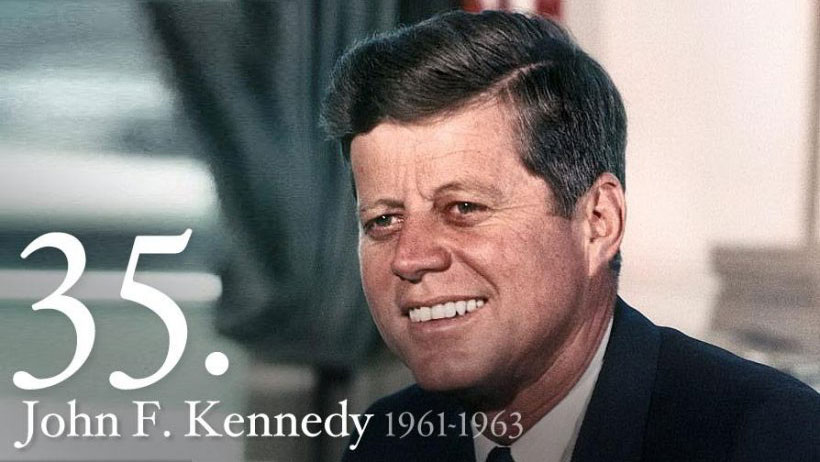
Unless you have been living under a rock this week, you’ve probably noticed the media coverage of the 50th anniversary of the assassination of President John F. Kennedy. Many people are taking to social media outlets to report where they were when they heard the sad and shocking news.

Source: patrioticcoloringpages.com

Source: patrioticcoloringpages.com

Since I wasn’t born yet, I have to wonder where my parents were on that fateful day. I’m pretty sure my mom was in the Navy but I’m sure she will let me know in our next phone conversation. I’ve written many times on this blog about how my Dad practically worshipped the Kennedy family. So I know he would have taken the news particularly hard. His naturalization record is dated 1965, so I’m guessing that in 1963 he was already in the Los Angeles area. Since it happened on a Friday afternoon, I’m guessing he would have been at work, but sadly, I don’t know where exactly he was when he heard the news.

And that’s not because Dad didn’t talk about it. I’m sure he told us on several occasions where exactly he was and how he felt, etc. But I never recorded the information. In fact, I probably ignored it, because when Dad started talking about the Kennedy family, he could go on for a long time. As a teenager, I never thought I would care about remembering such information. But of course, you grow up and wise up.

And now I’m left wondering where Dad was and how he felt on such a personally devastating day. Don’t be left like me, with gaping holes in your family history. Ask the questions now, while your loved ones are still alive and able to provide you with answers.

2 Comments

Filed under Memories

Reduce antipsychotic drug use in dementia patients by using another drug?

The rampant and dangerous use of antipsychotic drugs to treat dementia symptoms in elderly patients has been in the spotlight recently due to Johnson & Johnson being hit with a $2 billion fine for the false marketing of Risperdal. Could the answer to this disturbing trend be yet another medication?

pills
A drug called Pimavaserin is undergoing a trial right now to examine its safety in treating Alzheimer’s disease psychosis. Currently there is no medication on the market that specifically treats this condition, and we’ve seen the consequences of the off-label use of other antipsychotic drugs. I saw what Risperdal did to my father and readers of this blog were vocal about their concerns in properly medicating those with dementia.

One would hope that a medication can be created to ease the mental and emotional suffering of dementia patients without turning them into walking zombies.

Leave a comment

Filed under Awareness & Activism

Risperdal lawsuit exposes ugly truths about elderly care

This past week, Johnson & Johnson was fined over $2 billion for false marketing and providing kickbacks to doctors and medical care providers regarding the off-label use of the drug Risperdal. I’ve written before how much my father’s mental and physical health declined after being prescribed Risperdal in the nursing home. Omnicare, which supplied my father’s medications, also paid a major fine of $98 million.

I remember the indifferent attitude the doctor at the local hospital had when I questioned the use of Risperdal, which was already controversial even while my dad was still alive. The doctor just shrugged his shoulders and said they had to continue prescribing what the doctor from the nursing home had ordered. He asked me if I knew what it was for and I responded “to make patients like zombies so they’re easier for the nursing home staff to deal with” and the doctor agreed with a laugh. I did not find it funny at all.

Image credit: Schmidt  & Clark, LLP

Image credit: Schmidt & Clark, LLP

Fines don’t bring back our loved ones who were harmed by this drug, but perhaps it will make pharmaceutical giants, doctors and nursing homes think twice before prescribing medications that can cause great harm to their patients. It’s difficult for caregivers to keep track of all of the medications being provided to a loved one when they are in a nursing home. I only discovered the extensive medication list for my dad when I examined the invoices that had been mailed to my mother from Omnicare. They wanted their money, over several thousand dollars worth racked up in less than a year, when in fact they were pushing a drug that was hazardous for elderly patients with dementia like my dad.

I’m not one for overzealous lawsuits and I’m not necessarily anti-corporate, but I’m glad that the whistleblowers exposed these companies for the malicious practices they were engaged in that impacted those with mental health issues who could not defend themselves. Better late than never when it comes to justice.

12 Comments

Filed under Awareness & Activism

The Question Behind the Question

Great post! It is important for those of us who are caregivers to learn that if we are not getting the answer we expect or want from our loved one, perhaps we are asking the wrong question (or the right question but the wrong way.)

Kay H. Bransford's avatarDealing with Dementia

mailpileFor two weeks, my Mom has been relentless on the topic of mail. Some days, she will call more than 5 times in an hour to discuss the topic. “Kay, I’m not getting any mail. Are you getting all of my mail now?” Nothing has changed, so I’m a little confused about her question.

I’ve been in her apartment when the mail is delivered. The remnants of the mail can be found on her bed, the entry hall table, next to her favorite chair, why does she not recognize that she is getting mail? Some days she gets as many as 9 pieces of mail. After a few days of her calls, I ask my Mom what was she expecting and not getting in the mail?

“I’m not getting any condolence notes, where are they going?” Ah-ha! I now understood the question she was really trying to ask, but was…

View original post 166 more words

Leave a comment

Filed under Memories

Lessons learned from an Alzheimer’s caregiver

This insightful essay was posted on Maria Shriver’s website earlier this month. It is written by a neurologist who became a caregiver for his father when he was diagnosed with Alzheimer’s. The piece outlines 10 lessons that the author learned as he helped guide his father on this journey that no one wishes to take. Most of the points are well-known to those who are Alzheimer’s caregivers, but the simplest and most obvious advice can easily get buried as you struggle to deal with the emotional impact of the disease. We all know that we need to stay positive, live in the moment, keep our sense of humor and stop sweating the small stuff. While all of that is easier said than done, the author does a good job of giving examples of how this sage advice helped his dad live the best quality of life possible, despite the grim diagnosis.

hands

The last lesson is perhaps the most important of all but one many of us may struggle with the most: put away resentment and regret.

What lessons have you learned from being an Alzheimer’s caregiver that you think are the most important to share with others?

Leave a comment

Filed under Awareness & Activism

“Tip of tongue” moments may be harmless

Good news for my mom and other seniors who have their fair share of “it’s on the tip of my tongue” moments. Apparently, the frustrating condition does not appear to be a symptom of dementia, according to the results of a recent study. The study involved over 700 subjects and while older people struggled more with these “tip of tongue” moments, the study concluded that there was no link between these temporary memory glitches and dementia.

remember

We all have those moments where we try our darndest to think of something but it remains just out our reach of memory. It’s frustrating, but as we get older, those moments sometimes are more frequent. My mom is an interesting case because she has always had this way of going off on several different tangents and forgetting what the original point was. It’s frustrating for her, and for me. 🙂

But Mom worries every time she struggles to remember something that she is exhibiting the early signs of dementia. After losing Dad and a sister to Alzheimer’s, it’s an understandable fear. As I march towards 40, early-onset Alzheimer’s is on my mind.

It’s a relief to know that these slips of memory are not something that we should worry about too much. We have enough to worry about as it is!

Leave a comment

Filed under Awareness & Activism

Bringing cheer to loved ones who are ill

And now for a shameless plug. I submitted a story about taking care of my mom when she was in the hospital to an online callout from an author. My story was accepted and the book has been released. The book’s title is “101 Awesome Things to Do for Someone Who’s Sick” by Elaine Wilkes, PhD. It’s a collection of sweet, fun or thoughtful things you can do for someone who is ill. The Kindle edition of the book is only 99 cents through 10.22.13.

awesome_sick

My entry is titled “Find Something to Entertain Them” and it’s on page 217-218. It’s about the joy that a talking parrot toy brought my mom while she was recovering from cancer surgery last year. As I’ve written before, Polly the Parrot also brightened up my Dad’s spirit while he battled Alzheimer’s.

I don’t make any profit from the book but I just want to pass the info along because I think it might be of interest to those who follow this blog. It would also make an ideal gift for a caregiver. I haven’t had the chance to read through all of the ideas yet, but so far I have been amazed by people’s kind-hearted gestures.

I would love to hear the kind gestures you have performed for a loved one who is ill!

3 Comments

Filed under Memories

ICU stays can trigger dementia

The Intensive Care Unit offers the best of care for critically ill patients. It is necessary in certain cases and the quality of care and technology available in the ICU has saved countless numbers of lives. But a recent study discovered that extended stays in the ICU can trigger dementia symptoms.

A new study suggests that staying in the ICU too long can trigger dementia symptoms.

Shorter ICU stays may help reduce the risk of dementia symptoms.

The Vanderbilt University study followed 800 patients after their ICU stay for a year. A whopping 75 percent exhibited signs of dementia during the study period. 1 in 3 exhibited symptoms of Alzheimer’s disease. The age of patients did not impact the display of symptoms. One example given in the article was a 46-year-old woman who spent three weeks in the ICU was still dealing with cognitive impairment issues 18 months later.

The study concluded that both serious illness and anesthesia drugs used during surgery could be dementia triggers.

My mother, who does not have dementia, had two surgeries last year that landed her in ICU. Her first surgery was of emergency nature and landed her for several days in the ICU. The second surgery was scheduled and Mom spent only the minimum amount of time in the ICU that is required post-surgery. Mom also had multiple complications (blood clots) with the first surgery. Her mental state was impaired for months after the first surgery but she was alert and talking just about an hour after the second surgery was completed. Her mental recovery from the second surgery was very quick.

When my dad had to have surgery to remove a kidney stone, he was in the middle stages of Alzheimer’s. His recovery was very slow and I do believe his cognitive functioning declined more rapidly than it had been before the surgery.

We can’t always avoid stays in the ICU, but advocates suggest asking for lighter sedation options when possible and trying to get patients engaged in mentally stimulating activities while they are recovering.

What has been you or your family member’s experience been like in the ICU?

2 Comments

Filed under Awareness & Activism

Michael’s Story – Living With Dementia

Michael’s story is a brutally honest and heartbreaking personal story of living with dementia.

Alzheimer's Speaks's avatarAlzheimer's Speaks Blog

Michael’s Story

micheal_ellenbogen

Living With Dementia

Check out Michael’s beautifully written story of what life is really like, living with dementia.  Katie Couric featured his article on her program yesterday where she covered the disease. 

Kudos Michael for connecting with Katie! 

Keep up the great work.

For more resources check out Alzheimer’s Speaks Website

Alz_Spks_Logo_Website_090413

View original post

Leave a comment

Filed under Memories