Tag Archives: Alzheimer’s

‘Alive Inside’ and the power of music

I was able to go see the documentary, “Alive Inside” this weekend and it definitely met and exceeded my expectations.

As many of you probably know, the inspiring project at the center of the film is best known by a clip posted on YouTube of an elderly African-American man named Henry, who is in the latter stages of Alzheimer’s. He lives in a nursing home and his caregivers say he is barely verbal, usually keeping his head down all day long. Then they put the headphones on, and play the beloved music of his youth. Like a switch, Henry becomes alive, and most surprisingly, quite verbal and coherent. The effect is truly amazing. The video has gone viral, receiving millions of page views.

alive inside-poster

Dan Cohen, through his Music & Memory program, has a mission: he wants to bring personalized music to every nursing home resident in America. It sounds like a simple, clear-cut mission, but it turns out to be quite a challenge. Bottom line, there’s more profit to be made in the creation and marketing of ineffective medications than there is in Cohen’s proven grassroots program.

The benefits of music to those with dementia and other mental illnesses is astounding. Music has a greater impact on us than just making us tap our toes and fingers. Music touches the deepest parts of our emotional core, that usually remain intact even into the latter stages of Alzheimer’s.

Music has been part of my life for as long as I can remember. My dad would sing to me as a baby, I had a collection of Disney records as a little girl, and then I went on to develop my own eclectic taste in music as a teen and adult. Music can move me to tears or pump me up with energy. I can’t imagine life without music.

I wish I had understood the power of music better while my father was still alive, because I’m sure he would have loved to have heard Bing Crosby and Frank Sinatra.

Another point the documentary makes is how lonely and dehumanizing institutional life is for the residents. While music is not a substitute for human companionship, it can help fill a void.

“Alive Inside” is getting great reviews and I hope the buzz around the film will translate into donors who will help Cohen reach his worthy goal. If you have an iPod collecting dust, please consider donating it to this program.


1 Comment

Filed under Awareness & Activism

Showing appreciation for the dementia caregiver community

A big thank you to Neighbor Nancy and Ann Ahnemouse for nominating me for a Very Inspiring Blogger Award. Nancy I have had previous contact with but I don’t believe I have with Ann, so it was a pleasant surprise to hear she had been following my blog for quite some time. It is yet another reminder of the wonderful community of caregivers waiting to be found in the blogosphere.

The rules are simple:

Thank and link to the amazing person who nominated you.
List the rules and display the award.
Share seven facts about yourself.
Nominate 15 other amazing blogs and comment on their posts to let them know they have been nominated.
Proudly display the award logo on your blog and follow the blogger who nominated you.

7 facts about me:
– I have Celiac Disease, and have been on a gluten-free diet since 2005.
– I’m a cat lover.
– I like my coffee black, no sugar.
– I’m a bourbon aficionado.
– I was born and raised in California, but have no interest in returning.
– A big Greek salad is one of my favorite meals.
– Stephen King is one of my favorite authors.

Bloggers you should follow (For sake of time, I have less than 15 but will try to add more soon!)

My Neighbor Miss D Nancy is a devoted elder advocate, and has been the driving force in helping a neighbor in her building who has dementia return to her home after she suffered abuse from family members.
Ann Ahnemouse As I said, this is a new blog for me, but she’s been posting for a few years! Ann writes about her journey with her partner, and how his dementia impacts their lives.
terry1954 I’ve been following Terry’s blog for quite a while. Terry was the sole family caregiver of her brother, who had MSA. He died this year, and while the end of his suffering was indeed a blessing, there is a giant hole left behind when our loved ones depart, no matter the circumstances. Terry is a fearless writer who shares her thoughts on many topics.
Alzheimer’s Speaks: Lori La Bey is a tireless advocate for caregivers. She has a radio show as well!
SaveEveryStep: You should subscribe to this blog for the weekly “Joe’s Letter” post alone. The letters are from the blogger’s uncle from WWII and they are so fascinating! If you love nostalgia, you’ll love her blog, as she often writes about the fashions and music from her childhood and adolescence. But Helen Spencer founded the website, SaveEveryStep.com in memory of her mother. She is giving back to the world by allowing you to capture your own family’s memories and preserve them for free, a useful service to anyone, but especially for families touched by Alzheimer’s and dementia.
Hot Dogs and Marmalade: This blogger’s mother has Alzheimer’s and she writes both poignant and humorous accounts of her family’s life. You’ll have to read her blog to find out the reason for the unusual title of her blog!
My Demented Mom: Kathy Ritchie doesn’t sugarcoat one bit of her experiences caring for her mom, who has frontotemporal dementia. Kathy is in her 30s and is now a mother herself. Her blog is breathtaking in both its agony and in the way she expresses her love and dedication to her mother.
Quilt of Missing Memories: Talk about a family devastated by dementia. Jacquelyn’s father, mother and husband all have a form of dementia. Her father has passed, and late last year, so did Jacquelyn’s husband. I appreciate this blog because of the simple and joyous photos and short poems that are posted on a regular basis.
Lori’s Lane While not a caregiving blog in particular, the blogger did find herself in that role when her husband suffered a serious accident on the job. I love this blog for the insightful posts and the uplifting quote every Friday.

1 Comment

Filed under Awareness & Activism

Is unexplained weight loss an early symptom of Alzheimer’s?

I came across an interesting article about a piece of Alzheimer’s research I had not heard about before. Apparently, researchers at Weill Cornell’s Feil Family Brain and Mind Research Institute found a possible connection between the buildup of amyloid-beta peptides and weight loss. The peptides create the notorious plaques in the brain that is commonly associated with Alzheimer’s disease. The otherwise unexplained weight loss often occurred several years before symptoms of cognitive decline were diagnosed.

scale

According to the researchers, the amyloid-beta peptides interfere with the body’s ability to regulate its weight. If the research proves to be accurate, it is yet another cruel and devastating way Alzheimer’s destroys the body.

My dad was always on the lean side so it’s difficult to say if he suffered from weight loss early on in the disease. By the mid to late stages, my father was certainly wasting away, but up until the last couple of months of his life, he had a voracious appetite.

The more we learn about Alzheimer’s, the more we understand that this disease can manifest itself in ways we never imagined before. Alzheimer’s is not just about losing your memory; the disease attacks the brain in ways that can impact everything from swallowing to weight control.

Did you notice otherwise unexplained weight loss in your loved one before they were diagnosed with Alzheimer’s disease?

9 Comments

Filed under Awareness & Activism

Turning 40: My hopes for the next decade of my life

This Saturday, I turn 40. I’m not one to worry about wrinkles or grey hairs. My recent physical showed that I’m in good health for now.

But considering the health issues that have impacted my family over the last several years, I can’t help but worry.

ttronslien-8721

It is somewhat ironic that if you had asked me before my parents became sick, I would have chosen Alzheimer’s and cancer as the diseases I dread most. Little did I know that I would have to face both diseases head-on, with dementia striking my dad and colon cancer striking my mom. I always figured Dad would get cancer, being a smoker since he was 16. Mom doesn’t smoke and eats a mainly vegetarian diet, and she gets colon cancer. Go figure.

With Mom’s health in the balance again, it’s not really feasible to make concrete plans for my 40th year, let alone the next decade of my life. But then again, if life has taught me anything over the last few years, it is to live in the here and now.

Still, there are a few wishes I have that I hope I can make come true over the next decade of my life.

  • I want to write a book. Whether it be memoir, fiction, or self-help, I’m not sure yet. Maybe one of each! I’ve lit my creative flame again over the last few years, but I know it will take hard work and focus to keep it glowing. And yes, I do want to publish the book, even if I have to go the self-publishing route. I plan on signing up for a writer’s workshop this fall.
  • I want to visit my father’s homeland, Ireland. I had planned on doing this in my 30s, or as a special gift on my 40th birthday, but alas, that is not going to happen. But I can still make it happen over the next few years. Making that family connection is important, and I think will hold greater meaning for me now than ever before.
  • I want to continue and expand my Alzheimer’s awareness work. In particular, I would like to do more hands-on advocacy work.

I’ve been through many life-changing events over the last decade, and I’m sure I will face more moments, both good and bad, over the next decade. My 40th birthday wish is that I approach these moments with a bit more wisdom, and much more compassion.

5 Comments

Filed under Memories

Guest post: Diagnosing Alzheimer’s Disease: How Can Loved Ones Help?

A new case of Alzheimer’s disease is developed every 67 seconds. Meanwhile, the number of Alzheimer’s patients is on the rise, with the numbers expected to double or even triple by the year 2030. This degenerative brain disease affects millions of people around the world…and has no known cure. Over time, it impacts your memory function, mood, and even your independence. With so many life-altering symptoms related to the disease, early detection is key. Unfortunately, obtaining an Alzheimer’s diagnosis can be difficult.

Dr. David Tal of the Age Matters Clinic in Toronto.

Dr. David Tal of the Age Matters Clinic in Toronto.

Despite the fact that Alzheimer’s affects the lives of men and women across the country, diagnosis can take months or even years. Why is this the case? Early symptoms may appear to be signs of other diseases or may be dismissed as issues related to aging. This can prolong proper diagnosis, which in turn causes patients and loved ones to feel frustrated and powerless. Are you wondering what you can do to speed things up? Then you’ll need to understand how Alzheimer’s disease is diagnosed – and what to be on the lookout for.

Early diagnosis is important. For starters, it allows families to look at treatment options for symptoms related to the disease, like depression. It also gives patients and their loved ones the opportunity to focus on a healthy diet and lifestyle. This has been found to slow down the progression of the disease. In addition, early diagnosis gives family members more time to find appropriate care plans for the patient as the disease progresses. However, the reality is that Alzheimer’s disease cannot be diagnosed completely accurately until after death. That is why a proper diagnosis can be drawn out. Doctors use a process of elimination that has an accuracy of about 90%.

It starts by finding out more about the patients’ medical history. This allows doctors to determine whether there are other medical issues at play and how to come up with the best treatment plan for their needs. Some of the questions your loved one will be asked include: Are you taking any medications? Do you have a family history of dementia or Alzheimer’s disease? Are you dealing with any current illnesses? What type of issues or symptoms have you been experiencing? and so on. The answers to these questions will help the medical professional get a better understanding of the situation.

From there, the doctor will give a mental state exam to test the patients ability to problem solve, their memory skills, and attention span. This can reveal whether or not there has been a decrease in memory function. Next is the physical exam. This will let the doctor know more about their overall health and physical condition. It can also signal whether the patient has another medical problems that has similar symptoms to Alzheimer’s disease. X-Rays, blood tests, and brain imaging will likely be done as well to rule out any other potential health problems. The results of the questions, exams, and tests will help to pin point a diagnosis.

So, what can you do to help during this process? Show your support, take note of any changes in memory, mood, or behaviour, and ensure your loved one gets the proper medical attention they need. It is important to act quickly. The sooner your loved one is diagnosed, the better. If you feel unsure or overwhelmed, seek the help or advice of a professional.

Have you noticed a friend or family member showing signs of Alzheimer’s disease? Then help them take that first step towards diagnosis. It may seem scary at first – but receiving a medical assessment will lead to a plan of action. Whatever the outcome, remember: your love and support can make all the difference.

About the author: Dr. David Tal has more than twenty years of clinical experience. He manages the Age Matters Clinic in Toronto, Canada. He strongly believes that medical treatment can improve the life of Alzheimer’s and memory loss patients.

2 Comments

Filed under Memories

Free Alzheimer’s books in honor of The Longest Day

UPDATE: Thank you to all who requested a book. Your copy will be mailed soon. And a big thanks to all of you who participated in The Longest Day.

Today the Alzheimer’s Association sponsors The Longest Day, where from sunrise to sunset everyone is encouraged to participate in Alzheimer’s awareness activism.

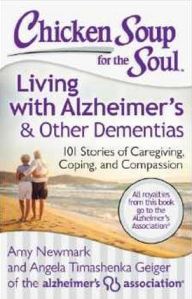
Chicken Soup For the Soul: Living With Alzheimer's and Other Dementias

My way of participating this year is to offer a free copy of “Chicken Soup for the Soul: Living with Alzheimer’s and Other Dementias” to anyone who is interested. I have a limited supply, but I can fulfill several requests. They will be handled on a first come, first serve basis. If you would like me to send to a friend, relative, organization, etc. I am happy to do that as well. I just want these inspirational and moving stories to find a good home where they will be appreciated by others who are on a similar journey.

Rest assured I will never share any contact information with anyone else.

I will cover all shipping costs. Simply email me at joyjohnston.writer@gmail.com or leave the mailing info in the comment section below. I will update this post when I have received the maximum number of requests that I can fulfill.

What are you doing for The Longest Day?

8 Comments

Filed under Awareness & Activism

Let’s talk about guns and dementia

Here’s an important topic for family members to discuss: gun ownership and seniors, especially those who have been diagnosed with dementia. While there is quite a bit of awareness of the need to take the car keys away from those with dementia when their driving skills become impaired, there is little discussion about another deadly weapon found in many households. As part of the “caring for our aging parents” #Blog4Care blog carnival, please spread awareness about this topic so that families can have discussions about the proper precautions needed in their homes. Perhaps we can help prevent injuries and save lives.

If you’ve been following the news in America recently, there has been a slew of tragic shootings that have once again ignited the gun debate. The issues surrounding gun ownership and gun violence are being passionately debated right now. But one angle of this issue I never thought about before involves seniors and guns.

gun

An intriguing post on Alzheimer’s and Dementia Weekly made the point that more seniors own guns than any other age group. With the increased risk of dementia as one ages, this could create a dangerous situation. The article quotes Dr. Ellen Pinholt, who wrote in the Journal of the American Geriatrics Society that as family members, we should think about seniors and guns the same we do about seniors and driving. While there is no maximum age limit for owning a gun or driving, mental health status should be taken into consideration for both situations.

Dr. Pinholt recommends asking “the 5 L’s” when it comes to gun ownership and seniors. The questions include if the gun is locked, if it is loaded, if there are children present where the gun is located, whether the senior is depressed, and whether the senior has been diagnosed with dementia.

Sounds like simple and sane advice for an issue that is so complex and controversial. Still, I think it is just as important to consider the issue of having a gun in the house as it is allowing a person to drive once they’ve been diagnosed with dementia. It is yet another question to add to the all-important discussion with your elderly parents and the rest of your family.

While stereotypically, these random mass shootings tend to be perpetuated by young men, anyone who has a condition that impairs the brain and impacts judgement and emotions should probably have their access to a gun restricted, to protect themselves and others. I’m not a fan of legislative restrictions on personal liberties, but when someone’s safety and society’s safety is at risk, smart and limited restrictions may be appropriate.

While there is not a good substitute to driving a car, seniors with dementia may be able to handle a replica gun that either shoots a safe-type pellet or even better, a replica gun without ammunition. Of course, immediate supervision would be necessary. As caregivers, we should try to allow our loved ones with dementia to enjoy their hobbies as long as possible, if safety measures can be taken.

What do you think about the issue of gun ownership and seniors, especially those with dementia? Should guns be immediately removed from the household upon a diagnosis of dementia or are there alternative and less drastic solutions to consider?

1 Comment

Filed under Awareness & Activism

How should we deal with the unfiltered versions of our loved ones?

I wrote previously about the rumors that the least favorite man in professional sports, Clippers owner Donald Sterling, had Alzheimer’s. It appears that those rumors have been confirmed. USA Today reports that Sterling exhibited symptoms consistent with Alzheimer’s disease after undergoing an extensive neurological examination.

man speaking outline

On the one hand, this development places Alzheimer’s disease in the national spotlight, where it belongs. Unfortunately, because the disease is now associated with a man that so many find morally reprehensible, there is bound to be some backlash.

As I followed the news on Twitter, I found many people who found the Alzheimer’s diagnosis all too convenient, a way to look for sympathy from a public that was left aghast by his vehemently racist remarks that were secretly recorded by his much younger girlfriend. Others simply equated Alzheimer’s with crazy, saying “duh” of course Sterling is a crazy old man.

I hope in the days and weeks to come, as this dirty sports saga plays out in the American media, we can have an honest conversation about Alzheimer’s and behavior. This case raises many interesting questions for me. First of all, I think many of have experienced how those with Alzheimer’s lose their conversational filters, saying whatever comes to mind, whether it is offensive or just strange. Some begin to use profanity when they never did before. Generally I think those of us in the Alzheimer’s and dementia communities understand that this is the disease talking, and those afflicted should not be held responsible for their harsh words. For physically abusive actions, we can try behavior modification techniques and medications.

But the Sterling case is a bit different. There are numerous reports that Sterling had been a virulent racist his entire life, despite winning awards from the NAACP. Has the disease just erased his filter? Should the Sterling family be forced to sell the team for what a mentally ill man said, when he was allowed to be an NBA owner all of this time, even with his racist views?

I’m not raising these questions to defend Sterling; certainly he is a very wealthy man who can afford the best of lawyers and doctors to serve his best interest. But it is interesting to debate how much we should hold those with Alzheimer’s and dementia accountable for their words and actions.

Leave a comment

Filed under Awareness & Activism

Want a free copy of a new Alzheimer’s book?

It has been just over a month since “Chicken Soup for the Soul: Living with Alzheimer’s and Other Dementias” was released. So far, the demand has been overwhelming, the reviews extremely positive, and a second printing has been ordered!

Chicken Soup For the Soul: Living With Alzheimer's and Other Dementias

Since I was fortunate enough to be selected as a contributor, I have a few extra copies available. Starting today at noon ET, through Friday noon ET, you can enter a raffle for a chance to receive a complimentary copy of “Chicken Soup for the Soul: Living with Alzheimer’s and Other Dementias.”

Note: You must click on the Rafflecopter link below to be registered for the contest. Rafflecopter is a popular, safe contest platform. You can login through Facebook or with an email address. Follow the prompts on the form to enter the raffle.

Enter the book giveaway

1 Comment

Filed under Awareness & Activism

What about dementia in the workplace?

This week, there has been much talk about the Donald Sterling interview on CNN. The Clippers owner continues to make outrageous statements and accusations. It is easy to dismiss him as a crazy, racist old man who has not embraced modern civilization.

office blurry

But then his wife, in another interview, stated that she thinks Sterling has dementia. Now, the wife is desperately trying to retain her stake in the team, so she may just be doing damage control and trying to drum up sympathy. Still, it raised an interesting question for me.

What do we do about dementia in the workplace?

I wrote an article asking the same question on LinkedIn. I am curious to know what laws or regulations exist in the area you live in, or if the company you work for addresses the topic of dementia in any way. Dementia isn’t a new disease, obviously, but my guess is that in past generations, older people who started having difficulties on the job were just encouraged to retire sooner. Most probably did. But in today’s economy, retirement isn’t an option for many older people, or at best, they delay their retirement by several years. There is also the growing number of early-onset Alzheimer’s cases to contend with, so those in their career prime, in their late 30’s and 40s, could also have to tackle this issue.

I’d also like to know what policies you think should be put in place to deal with this sensitive issue. I’m trying to gather perspective from both sides, from the more business-focused people on LinkedIn, to the dementia awareness advocates that I follow here on WordPress.

1 Comment

Filed under Awareness & Activism