Tag Archives: caregiving

‘Depression tiredness’ and caregivers

As we prepare to enter another holiday season, it’s important to note if you are exhibiting signs of depression and fatigue. This social post from the Academy of Grief calls it “depression tiredness.”

I experienced much of this list while caring for my parents. I thought the “pretending to be okay” entry and being tired from faking a smile all day was particularly notable for caregivers. Instinctively people may project an outward image of strength, but inside, we may be feeling something quite different.

It’s also important to note the small things one can do when they experience these emotions. Of course, seeking professional care is vital, but “small glimmers” can help one get through a difficult day. I’ve actually used all of these at one time another to ground myself or lift my spirits.

What would be your small glimmers?

Photo by Kristina Tripkovic on Unsplash

Leave a comment

Filed under Awareness & Activism

Marking World Alzheimer’s Month

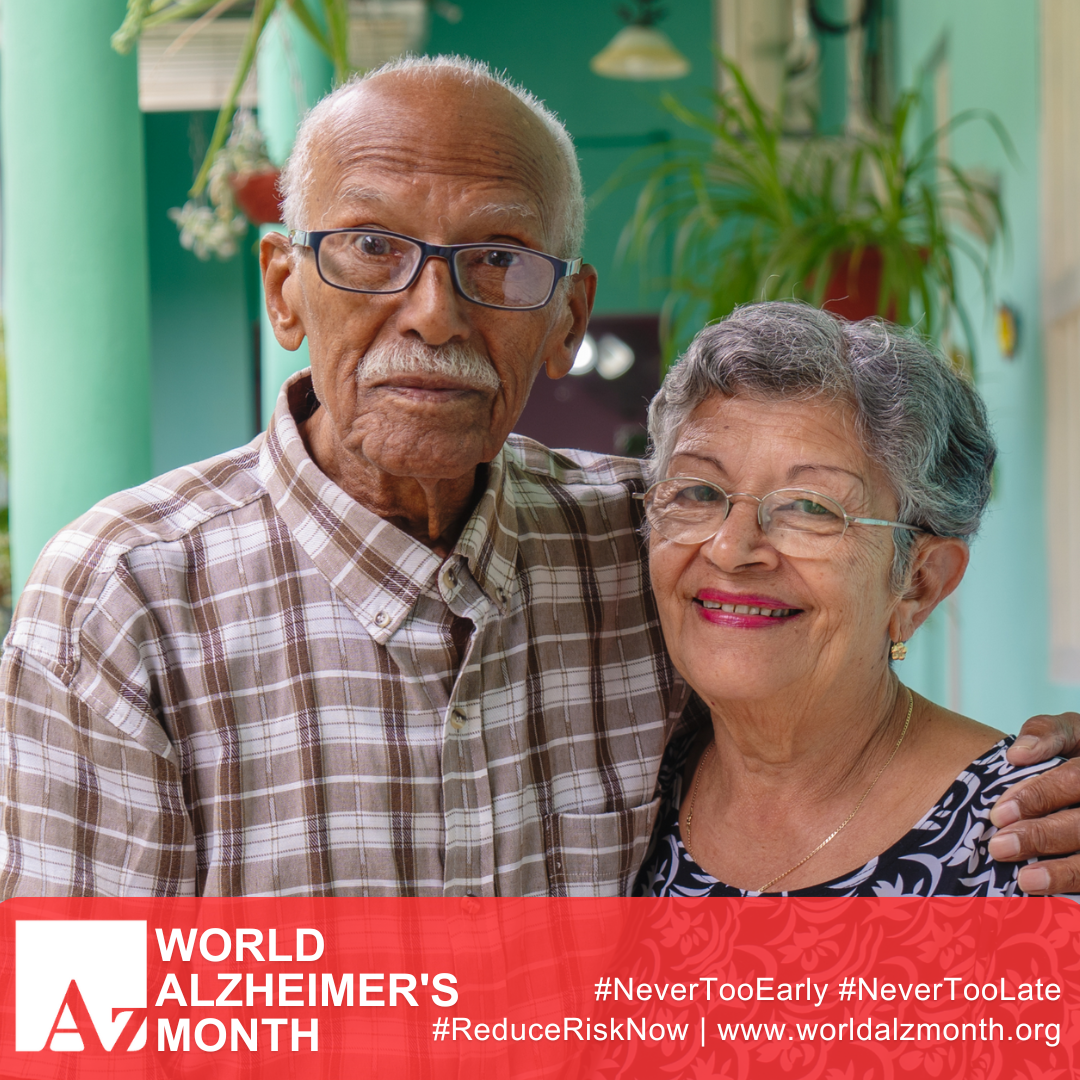
September is World Alzheimer’s Month and this week on Sept. 21 will be World Alzheimer’s Day. This year’s theme is “Never too early, never too late,” with a focus on reducing the risk of Alzheimer’s by educating people on their own risk factors.

Alzheimer’s Disease International has many resources on its website, including a Dementia Fact Sheet.

While modest strides are being made in the development of medications to slow down the disease, it’s key that people understand their risk of developing Alzheimer’s and the steps they can take to reduce their risk.

Looking for ways to support the Alzheimer’s and dementia communities this month? Consider purchasing a copy of Chicken Soup for the Soul: Living with Alzheimer’s & Other Dementias. It’s on sale at Amazon and includes a story I wrote about my father. Also check out my collection of personal essays, The Reluctant Caregiver, which includes further accounts of the impact dementia had on my family.

If you’d like to support an organization for World Alzheimer’s Month, consider purchasing an item from the AlzAuthors shop.

Image courtesy of Alzheimer’s Disease International.

3 Comments

Filed under Awareness & Activism

GUIDE Model seeks to offer better support for dementia caregivers

Caregivers of loved ones with dementia face unique challenges. A new model from the Centers for Medicare & Medicaid Services, GUIDE, seeks to change that.

GUIDE stands for Guiding an Improved Dementia Experience, and the program will launch on July 1, 2024 and run for eight years in its initial demonstration phase. The model has worthy goals:

  • First, by focusing on the person with dementia, and better addressing their care needs and transitions between levels of care.
  • Support dementia caregivers by providing them with training, social services, and respite care.
  • Focus on providing sufficient support for those dementia to safely live at home for as long as appropriate and reduce the need for nursing home care.

I think most dementia caregivers will welcome such support, even if it is long overdue. It will be interesting to see how this program is implemented and how it evolves during its testing period. For more information, review the GUIDE fact sheet.

Infographic image by cms.gov.

Leave a comment

Filed under Awareness & Activism

New research finds walking just 4K steps daily offers health benefits

For caregivers who may wonder if they or the loved ones they care for get enough exercise, a new study offers recommendations that are more achievable than traditional guidelines.

According to a study published recently in the European Journal of Preventive Cardiology, walking just 4,000 steps per day is associated with a lower risk of death. A 2017 study cited by NBC found that the average person in the U.S. walks 4,774 steps per day.

I’ve been using a smart ring that tracks a variety of health-related metrics including steps. You might be surprised how many steps you log by doing daily household tasks. Cleaning, gardening, caregiving: exercise comes in many forms and offers health benefits.

For those able to move a bit more, the payoff was even better, with every 1,000 extra steps per day associated with a 15 percent reduction in a person’s overall risk of death, according to the new study. Walking has also been associated with a reduction in the risk of dementia.

But what about the 10,000 steps per day rule? That was actually based upon a Japanese marketing campaign for a pedometer, according to NBC. The number caught on and became standard, but according to a health expert interviewed by NBC, it’s a misconception and there’s a wide range of recommended daily steps depending upon age and physical ability.

I inherited my father’s love of walking. While walking didn’t prevent my father from getting dementia, it kept him lean and in decent physical health despite being diagnosed with COPD due to smoking. He would do laps at the memory care center and maintained his mobility up until the last couple of months of his life.

Photo by RDNE Stock project.

1 Comment

Filed under Awareness & Activism, Memories

Sharing the harsh realities of caregiving

While my caregiving journey with my parents was difficult, I try to share a variety of experiences here on The Memories Project, to reflect the diversity of caregiver stories. No two caregiving experiences are ever alike, but an essay I read this past week hit close to home for me on so many levels.

In this HuffPost essay by Kim Richards, she recounts the difficult experience of caring for her mother with cancer. I found so many similarities between Richards’ experience and my own caregiving experience that I recounted in my personal essay collection, The Reluctant Caregiver. Our mothers died within a year of each other, both lived in New Mexico, and both were in denial about their terminal condition. Richards had to give up her small business to move out-of-state to care for her mother; I had to quit a new job and was left with no health insurance.

I know these accounts are difficult for many to read and can be triggering for those of us who had a difficult caregiving journey. But I do think it’s important to share both the good and the bad, the inspirational and the challenging, so that hopefully people can be more emotionally prepared when it’s time for them to be a caregiver.

I’m grateful to all who share their caregiver stories as it helps me gain a better understanding of the diversity of the caregiving experience.

Photo by Isaac Quesada on Unsplash.

4 Comments

Filed under Awareness & Activism

Slow Dog a Purple Dragonfly award winner

I’m pleased to announce that my children’s book, Slow Dog, received Honorable Mention awards in two categories of the Purple Dragonfly Book Awards. This contest is focused solely on children’s books, so it’s extra special to me that Slow Dog was selected among the winning titles.

Sometimes nudging yourself out of your comfort zone can lead to good things. If you are on the fence about pursuing a creative endeavor of your own and doubting your abilities, I hope you can take some inspiration from this post. Whether you are sharing your caregiving journey or something completely unrelated, you won’t know what your capable of until you try.

I also can’t help but think about Dad’s unfinished novel. I know he would be proud of my modest success as a writer, because it was one of his unrealized dreams.

1 Comment

Filed under slow dog

Rosalynn Carter, tireless caregiver advocate, diagnosed with dementia

Embed from Getty Images

Last week, The Carter Center announced that Rosalynn Carter has been diagnosed with dementia. This follows the news that former President Jimmy Carter has entered hospice.

Rosalynn Carter has long been an advocate for caregivers, founding the Rosalynn Carter Institute for Caregivers. Her quote about caregivers is well-known and so true: “There are only four kinds of people in the world––those who have been caregivers, those who are currently caregivers, those who will be caregivers, and those who will need caregivers.”

Carter, age 95, has served in all these roles and will now receive care herself. If you’d like to leave the Carter family a message of support, you can do so at the link in the tweet below.

Leave a comment

Filed under Awareness & Activism

Consider sharing your caregiving story

I had a great time at the Atlanta Writers Conference Book Fair. It’s been awhile since I’ve attended a conference in-person. It’s always inspiring to see so much creativity on display.

To that point, I met several caregivers at the Book Fair who shared their personal caregiving stories with me. If you are on the fence about writing about your caregiving experience, I would encourage you to try, even if it’s in a personal journal and not for public consumption. Doing so can be a cathartic experience. You may find that you do have lessons to share that would benefit other caregivers. If so, there are many self-publishing platforms available, in addition to the traditional publishing route.

Understandably, while you are an active caregiver, you likely will not have time to work on a book project. I scribbled down notes, quotes, scenes, anything that I thought I might want to revisit in written form later. Sometimes having a bit of distance can help in framing an experience in a balanced way, but capturing those visceral images in real-time was important for me. I published The Reluctant Caregiver 2 years after my mother’s death and 6 years after my father’s death. Of course if you’ve been following my blog from the beginning you know I began The Memories Project within weeks after my father’s death. At the time I thought I would mainly be writing about my father’s journey with Alzheimer’s but then my mother fell ill. By the end of my caregiving journey with my parents, I had a variety of experiences and lessons to share.

No doubt you will too.

[To give you inspiration, check out the recording of Poetry for the Dementia Journey, a poetry reading event hosted by AlzAuthors. At about the 37-minute mark, you can hear a poem I shared about my father.]

Leave a comment

Filed under Awareness & Activism

Moving short film “Ruth” captures dementia experience in single take

Whenever I come across realistic, compassionate depictions of the dementia experience I like to share them here. Paul Romero Mendez, the filmmaker behind a short film named “Ruth” reached out to me recently. His moving film was released in 2021. The film depicts a woman with dementia who is lost in her own home. Highlighting this experience is very important, because while remaining in the family home can offer those with dementia the comfort of familiarity, the disease may strip away the very memories that makes the home feel meaningful and safe.

Many of us who have had cared for loved ones with dementia have had to confront the dreaded request to “go home.” But home may not be what you think. If your loved one is in a memory care center, maybe it is their last home, but it could be their childhood home. Time doesn’t necessarily move in a linear fashion for those with dementia. One minute they may be back in their childhood, the next a young adult, and the next to the current time. My father often asked to go home when he was in the memory care center, but he also talked about going home to Northern Ireland to be with his sisters. So I don’t believe home was the condo in Ruidoso where my parents retired. Home may not be a fixed place in the way we think of it, but a feeling of love and contentment.

The film was shot in a single take, so the audience can understand better the swirling cloud of confusion that those with dementia may contend with on a daily basis. It’s a powerful depiction, filmed with compassion. You can watch the film below. (This is a different short film from the one I posted about in January, which is also called Ruth.)

Photo by Danie Franco on Unsplash.

2 Comments

Filed under Awareness & Activism

AARP: Valuing the Invaluable 2023 report

This month, AARP released a report: Valuing the Invaluable 2023 Update. While no one has to tell caregivers how much free labor they provide while caring for their loved ones, it does help to calculate a value for caregiving work and have a well-known organization like AARP broadcast how much economic value caregivers provide.

Among the highlights of AARP’s report:

  • In 2021, approximately 38 million Americans spent 36 billion hours caring for adults with a range of health conditions.
  • The estimated economic value of that care is $600 billion.
  • 60 percent of caregivers juggle a full- or part-time job and care.
  • 40 percent of caregivers say juggling a job and caregiving duties is their biggest and most emotionally stressful challenge.
  • 30 percent of caregivers are “sandwich caregivers” caring for two generations at the same time.
  • Caregivers come from diverse populations and an individual’s culture informs their caregiving experience.

In addition to the findings, the AARP report made several recommendations. The AARP advocates for the passage of caregiver support legislation and strengthening paid family leave, offering caregiver tax credits, expanding respite care options and making sure caregivers are part of their loved one’s care plan.

How many reports will have to be produced for our government to take caregiving seriously? Every year I highlight such reports and the progress we’ve made to support caregivers is frustratingly slow. Keep telling your caregiving story to whoever will listen.

Leave a comment

Filed under Awareness & Activism