It has been sweltering in Atlanta for the past month, and summer just began. When it’s too hot to be outside for long, I’m going to turn to one of my favorite pastimes that often gets pushed to the side: reading. I read all day as part of my job, but reading for pleasure is something that I wish I did more. My Kindle is full of books I haven’t started yet, and I have plenty more on my wish list. Reading is something that makes me feel close to my dad, and I feel I inherited my love of books from him.
I could write a book about the many amazing books available for dementia caregivers, but here are my top recommendations:
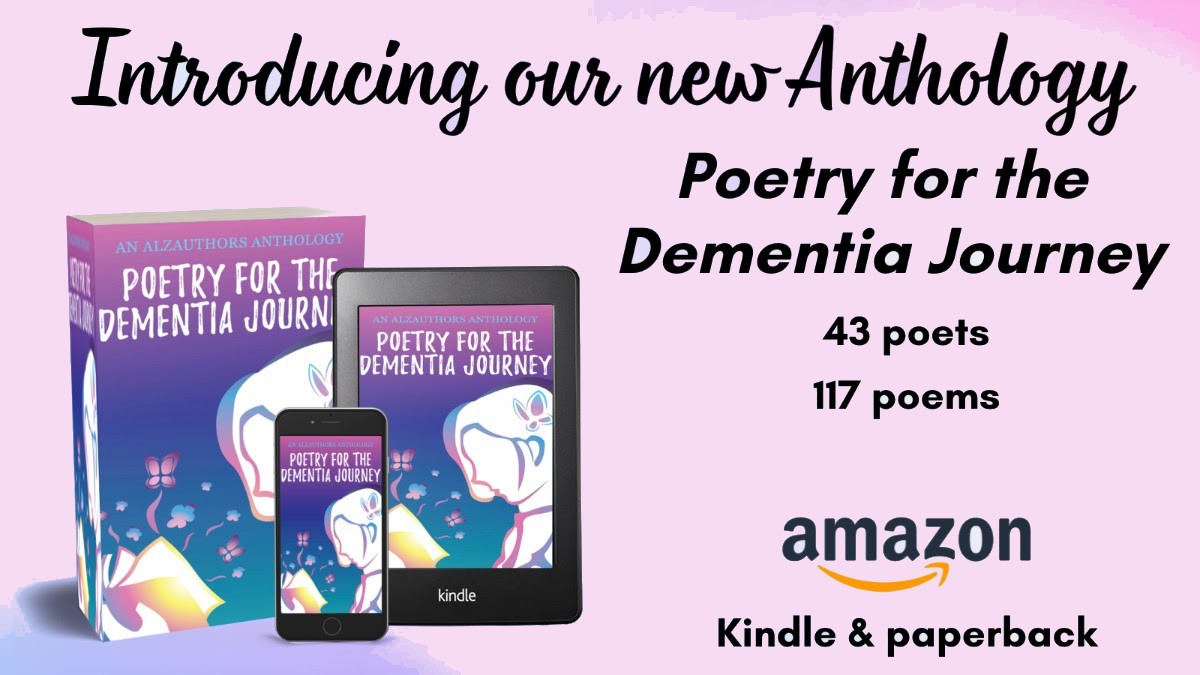
I’m honored to have “At the Crossroads,” a poem about my father, included in Poetry for the Dementia Journey: An AlzAuthors poetry Anthology. This new collection was published in June and is available on Amazon. Check out AlzAuthors for a large and impressive library of books that inform and support dementia caregivers.
I’m participating in the Smashwords Summer/Winter sale. Get the e-book version of my award-wining collection of personal essays, The Reluctant Caregiver, for half-off (just 99 cents!) during the entire month of July. Enter the code SSW50 at checkout.
If you’d like to honor the memory of dementia awareness advocate Wendy Mitchell, who died earlier this year, consider one of her books. One Last Thing is aptly titled as her final work. Somebody I Used to Know is her best known and highly acclaimed book.
Finally, another shameless plug: Chicken Soup for the Soul: Living with Alzheimer’s and Other Dementiasis a wonderful collection that captures the highs and lows of the dementia caregiving journey. I’m honored to have a story about my father, “French Toast,” included in this edition.
What books are on your summer reading list?
For more suggestions beyond books, check out my Caregiver Product Recommendations page, with a list of products that I used while caring for my parents.
As an Amazon Associate I earn from qualifying purchases.
A poem I wrote about my father, is included in the collection. “At the Crossroads” is about the week I spent with my father in a hospital in Albuquerque in the last month of his life. He was in a medically induced coma so I spent many long hours looking out the window of his room.
I’ve found that beyond personal essays, writing poems about my caregiving experiences has been healing for me. Writing poems encourages me to distill memories using concise language and experiment with perspective and voice.
I had a chance to review an early copy of the book and was so moved by the poems people wrote about the dementia experience, from a myriad of perspectives.
To celebrate the launch of the collection, AlzAuthors is hosting a reading on Monday, June 3 at 4 p.m. ET. I’ll be participating, so I hope to see you there. If you are not able to attend live, the session will be recorded. You can access the Zoom link here..
CNN’s Dr. Sanjay Gupta has reported on Alzheimer’s and other dementias over the years, but recently he became the subject as he explored his own dementia risk, knowing his family history with the disease. The takeaways were enlightening, though it may be some time before such tests are widely available to the general public and covered by insurance.
Gupta is not an ordinary patient; he is a brain surgeon. Yet in his report he shares his surprise about what he learned about his own brain during a “preventative neurology” visit at the Institute for Neurodegenerative Diseases of Florida. While there he went through a battery of tests: blood, saliva to check oral health, genetic testing for the APOE4 gene, body composition, and a series of cognitive tests. In regards to the intense series of cognitive tests, Gupta said, “I felt like my brain was being cross-examined by a very skilled prosecutor.”
Dr. Richard Isaacson conducted the tests on Gupta and came to some interesting conclusions. He said the results suggested Gupta may have undiagnosed dyslexia. He also found a gene mutation that could explain low B12 levels, and suggested that Gupta take supplements to boost his Omega 3 levels. Gupta was surprised to learn about his elevated body inflammation. Isaacson also made recommendations when it comes to Gupta’s exercise regimen.
Of course, the cost of all of these tests aren’t affordable for the average person at this time. To his credit, Isaacson is working on a method to do many of these tests at home for free or at a reasonable cost. I just did a finger prick cholesterol test at home and it was simple and affordable, so I would definitely be interested in similar tests for Alzheimer’s risk. My cholesterol is a bit elevated and as discussed in the CNN report, there is believed to be a connection between high cholesterol and cognitive decline risk, so I’m taking steps to address that, as I know I carry a copy of the APOE4 gene so my Alzheimer’s risk is already elevated.
Not everyone wants to know their dementia risk, and while I think it should be a personal choice, I’m definitely in the camp of wanting as much data as possible. My dad had high cholesterol and took steps to alter his diet, but if he’d known his Alzheimer’s risk, would he have quit smoking sooner? Would it have made a difference? That’s impossible to say, but if there are simple things I can do to reduce my dementia risk, I’m open to considering the recommendations.
Happy Mother’s Day to mothers of all kinds. I will be holding space for all of us whose mothers are no longer here.
On a related note, congratulations to Katie Engelhart, contributing writer for The New York Times Magazine, who won a Pulitzer Prize for Feature Writing for The Mother Who Changed: A Story of Dementia. With compassion and clarity, she shared this family’s complex and fraught journey with dementia. The piece raises important ethical and moral issues that should be discussed.
In case you missed it, I’m sharing again a poem about my mother that was published by The Prose Poem earlier this year. “Her Lists” is my way of coming to terms with some of my mother’s more eccentric qualities. Below is an example of one of her lists for reference.
Recently, Bloomsbury Publishing released a final message from author and dementia awareness advocate Wendy Mitchell, who died earlier this year. I encourage you to watch the video, in which she so eloquently explains her decision to take agency over the end of her life.
In the video, she speaks so poignantly about those with dementia working so hard to present as “normal” in public and the toll that takes on a person over time. This can apply to other conditions as well, such as depression. We could all learn a lesson here, by being more compassionate when encountering others whose struggles may not be readily apparent on the surface.
A new study suggests that the type of work on does over the course of their life could impact their risk of cognitive decline and dementia.
The study, published in Neurology, tracked and analyzed the health and occupational data for 7,000 Norwegians over a roughly 30-year period. The individual’s occupation was categorized by researchers based upon its cognitive demand: for example, a factory worker’s repetitive tasks vs a doctor’s more complex duties. Teacher was the most common occupation in the higher cognitive demand category.
The study found that those with routine jobs were linked to a 66% higher risk of mild cognitive impairment and a 37% greater risk of dementia compared to those with jobs that were more cognitively demanding. As has been found in other studies, higher education offers a cognitive health protective benefit, offsetting some of the negative impact from repetitive jobs.
My father worked as a freight checker most of his life, a physical, blue-collar job that was repetitive in nature. In his later years, he worked as a security guard, which offered little mental stimulation. While my father didn’t have a lot of formal education as an adult, he was self-taught in areas he cared deeply about by being a voracious reader. He read deeply complex topics such as war strategy.
While the study’s findings are interesting, people have lives beyond their career choice. Some people may choose a routine job to pay the bills, so they can save their energy for hobbies such as playing a musical instrument or chess. My job requires a great deal of data analysis, and I also enjoy word puzzles and jigsaw puzzles.
We know that dementia can strike anyone, regardless of occupation. It makes sense to engage in mentally stimulating activity on a routine basis, whether it’s at work or a hobby.
I had a work trip this week that took me to New York City for the day. It just so happened to fall on what would have been my father’s 92nd birthday. It was nice to be able to mark the occasion in the first city my father lived in after immigrating to America.
While it’s been almost 70 years since my father walked the streets of the Big Apple, the city’s nonstop energy remains. I can only imagine what my father felt walking these streets, gazing up at skyscrapers, and being part of a community filled with a wide range of cultures and languages. As a young man with his whole life ahead of him, it must have been exciting and likely a bit overwhelming.
On my flight back home, a couple of strangers struck up a conversation and the topic turned to Alzheimer’s. Both were caring for people with dementia, with the man saying he cared for three gentlemen who were younger than him. I find that the amount of people whose lives have been touched by Alzheimer’s has grown a great deal since my father died in 2011.
A short film by the UK-based Alzheimer’s Society has generated a wide range of strong emotions from those with dementia and their families. In addition to the original video campaign embedded above, there is also an extended cut version and a profile of a couple who faced a heartbreaking FTD diagnosis.
The crux of the criticism comes from the film’s fatalistic point of view, framing dementia as a series of deaths that occur when a person loses the ability to do something they loved or remember something fundamental to their life, such as remembering their child’s name. With these series of “deaths”, one will need an organization for support, which is where the Alzheimer’s Society says it will be there for families impacted by dementia again and again.
George Rook, a patient activist living with dementia, has posted his eloquent rebuke of the film on his blog. It’s garnered a lot of support within the dementia community, and he has since written more posts related to the film that I encourage you to read.
The Guardian also wrote a column about the controversy, with the columnist agreeing that the film is uncomfortable to watch and concluding that “the advert went too far, but that one of the many issues with the public discourse about dementia is that it can be overly sanitised.”
Below is the Twitter/X post from the Alzheimer’s Society which I’m including so you can read the replies. As you can see, the video sparked a passionate discussion from those living with dementia who felt personally offended that they were being portrayed as the living dead when in fact they are living with dementia reasonably well.
In the Alzheimer’s Society response to the video’s controversy, it states the need for a societal wake-up call when it comes to dementia. It’s the leading cause of death in the UK and according to the organization, only 10 percent of people are aware of that sobering fact. I know I was not aware of that statistic.
If you’ve read my book, The Reluctant Caregiver, I think you’ll know my take on the film. While I can understand some may find the tone of the film harsh, I do agree with the need for a wake-up call. That’s why I wrote about the difficult moments in my caregiving experience, even if that has led to some reviews that the book is depressing.
In the US in particular, the financial impact of dementia is something many people are woefully unprepared for as they think Medicare will cover expenses. People don’t fully appreciate the challenges of living in place nor are they prepared for the astronomical cost of memory care. As for the “series of deaths” a person with dementia may experience, there is a real sense of loss when the disease takes away people’s abilities and aspects of their personality. As I wrote in my book, it did feel like an imposter had taken over my dad’s body. When he looked my mother straight in the eye and asked where she was by name, the heartbreak I experienced was worse than when I viewed his body in the morgue.
My mother dealt with the brunt of my father’s dementia. From what my mother, the eternal optimist, told me, there were not many good days. I’m sure she didn’t even share all of the horrific moments, though some she couldn’t hide, like when my father punched my mother in the jaw as she tried to get him ready for bed.
Once he was heavily drugged in the memory care center, his aimless shuffling through the hallways with the lost, vacant stare in his eyes did make him seem like a zombie in some ways. I know some people may find that portrayal offensive, but that was my honest reaction at the time.
I’m encouraged by those with dementia who continue to lead rewarding lives, and if I get the dreaded disease one day I hope I will follow their example. Unfortunately, that was not my family’s experience with the disease. It not only had a dire financial impact but I’m also convinced that the toll of caring for my father played some role in my mother ignoring her own health issues and being diagnosed with stage III colon cancer just six months after his death. I live alone and don’t have children, so for those of us without a support network, thriving with dementia may be a challenge.
We live in polarizing times when we refuse to recognize that multiple things can be true at once. There are some people living well with dementia, and maybe that should be the focus of the Alzheimer’s Society’s next awareness campaign. Kudos to these people and we should all be working towards the goal of improved treatments and better support resources so that living well with dementia becomes the norm and not the exception. But there are also those whose lives, and their family’s lives, are devastated by dementia. Those stories should not be buried because they make some people uncomfortable.
Each person with Alzheimer’s or another form of dementia will experience the disease in their own unique way. So will their families. We should encourage those from across the spectrum of dementia experiences to share their stories, the good, the bad, and the ugly.
The 2024 Alzheimer’s Disease Facts and Figures has been released by the Alzheimer’s Association. One major fact that jumped out to me was the topline figure. For years, it’s been over 6 million people in America are living with Alzheimer’s. Now we are at the 7 million threshold.
Here are other major takeaways from the report:
1 in 3 seniors dies with Alzheimer’s or another dementia.
Alzheimer’s kills more people than breast cancer and prostate cancer combined.
Between 2000 and 2021, deaths from Alzheimer’s have increased by 141 percent.
In 2024, Alzheimer’s and other dementias will cost the US $360 billion.
That cost would have been even higher if it hadn’t been for the over 11 million Americans who provided unpaid care to people with Alzheimer’s and other dementias.
Changes in speech and word recall can be among the earlier signs of cognitive decline. We’ve all experienced this, no matter what the age: “It’s on the tip of my tongue!” While not always a precursor to Alzheimer’s or other forms of dementia, it’s important to recognize changes and talk to your doctor about them.
A recent study, albeit with a small sample size of 125 people, shed new light on what is a frustrating yet common complaint among older adults: difficulty in finding words. Among the findings: “Overall reaction time for word retrieval (controlling for psychomotor slowing) was the best predictor of spontaneous WFD (word finding difficulty) and executive function decline, suggesting processing speed as the key factor, and that verbal reaction time may be an important clinical measure.”
AI software was used to extract data such as speech speed, word variety and pauses in speech, according to The Conversation report. The study participants also completed a series of tasks designed to gauge executive function ability, and the results found a link between age-related decline in executive task ability and speech pace.
The findings are interesting but of course more research will be needed with a larger study group. If confirmed, the findings could help in forming more accurate tests for cognitive decline.








![Pageflex Persona [document: PRS0000038_00069]](https://memoriesproject.files.wordpress.com/2014/02/reluctant-caregiver-cover.jpg)






 The Memories Project