
Tag Archives: dementia

Activity boxes offer stimulation, engagement for those with dementia

A dementia diagnosis is disruptive in many ways, but one particular challenge for family members is how to keep their loved ones engaged and occupied. Whether one was retired before their diagnosis or forced to leave their jobs as their symptoms progressed, the days and nights can be long as one becomes less independent.

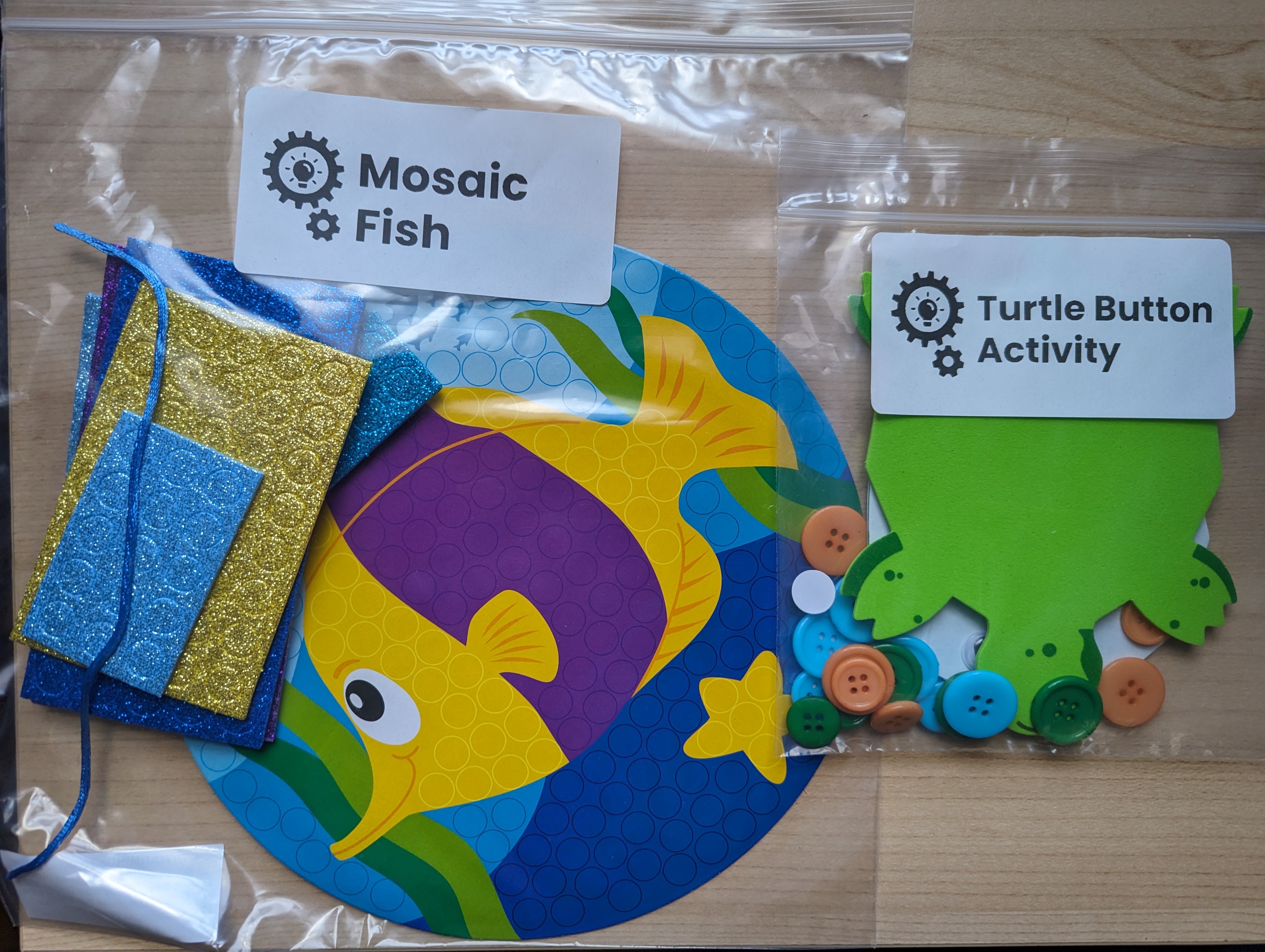
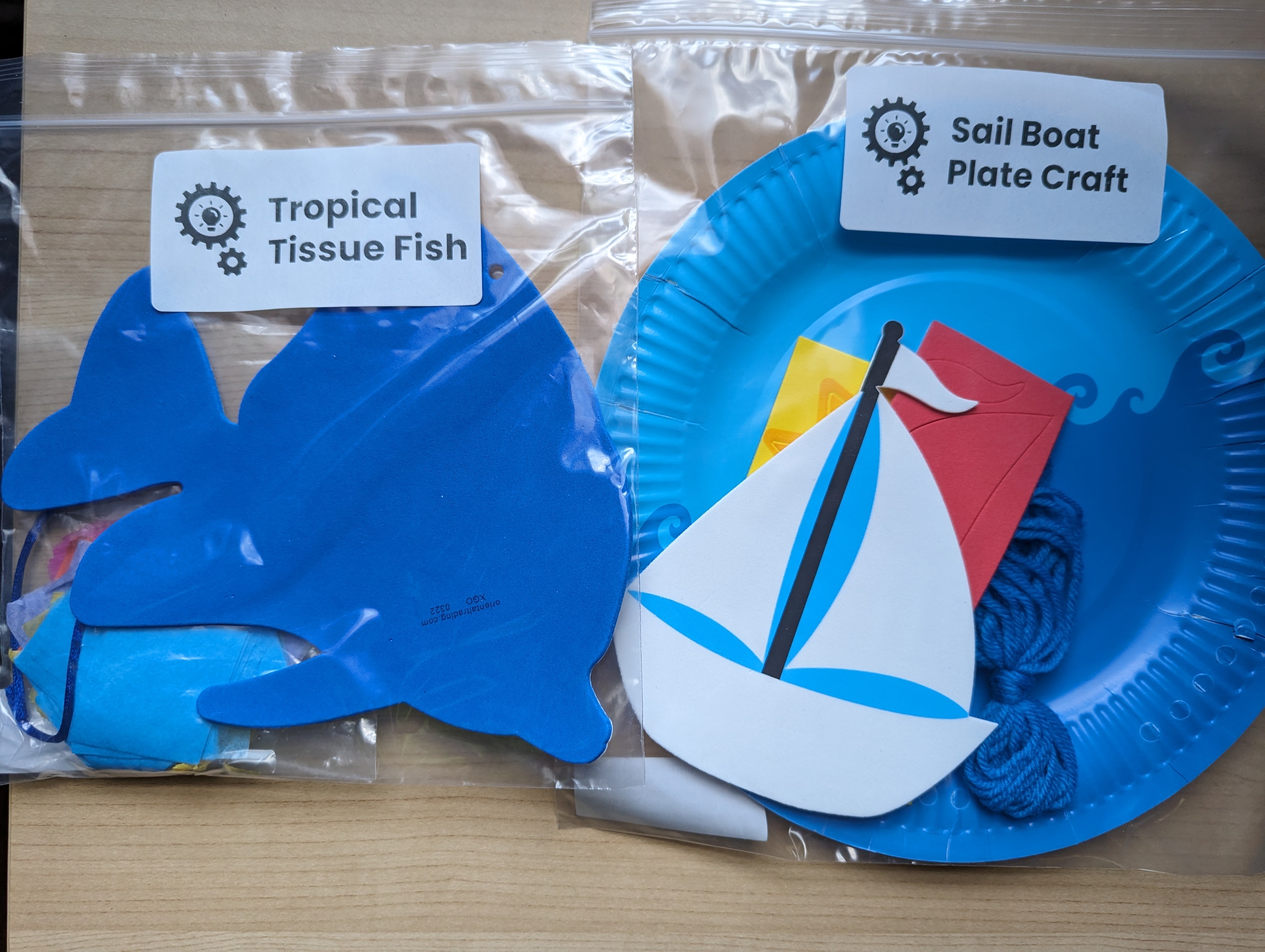
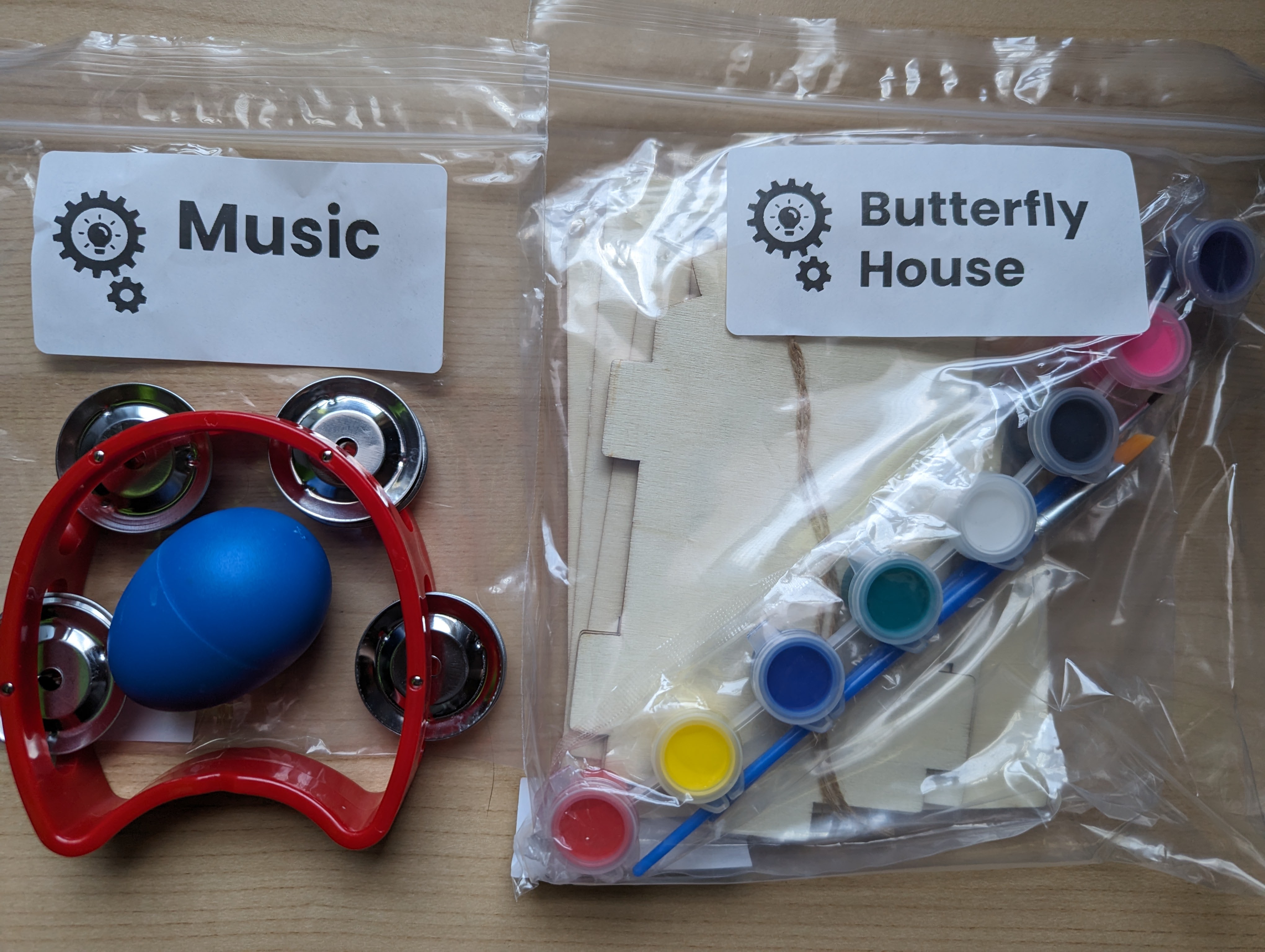
Always Home Connected was founded by two women who both had parents who were diagnosed with Alzheimer’s. They’ve created a series of activity boxes for those with dementia and their family members that cover a wide variety of interests and skillsets. The company was kind enough to send me a sample, which included a variety of crafts, musical instruments, as well as word puzzles and a coloring book.

I was impressed with the variety of crafts offered in the activity box. I also appreciated how everything was included, including a bottle of glue. Each craft came in its own bag, making it easy for transporting. The instructions were clear and I liked how there were a series of conversation starters included with each craft, to encourage engagement. We know that those with dementia can become withdrawn and hesitant to communicate as verbal skills fade. Encouraging conversation while crafting is a good way to spark memories and create meaningful moments for all involved.

Always Home Connected offer a variety of activity boxes for individuals and groups, along with specialty items like fidget blankets, memory book, and a sensory product called HUG.

If you’d like more inspiration on crafts for those with dementia, check out Creative Carer.

1 Comment

Filed under Awareness & Activism

Rosalynn Carter, tireless caregiver advocate, diagnosed with dementia

Embed from Getty Images

Last week, The Carter Center announced that Rosalynn Carter has been diagnosed with dementia. This follows the news that former President Jimmy Carter has entered hospice.

Rosalynn Carter has long been an advocate for caregivers, founding the Rosalynn Carter Institute for Caregivers. Her quote about caregivers is well-known and so true: “There are only four kinds of people in the world––those who have been caregivers, those who are currently caregivers, those who will be caregivers, and those who will need caregivers.”

Carter, age 95, has served in all these roles and will now receive care herself. If you’d like to leave the Carter family a message of support, you can do so at the link in the tweet below.

Leave a comment

Filed under Awareness & Activism

Clare Nowland case: Global training needed for police engaging those with dementia

A tragic case out of Australia demonstrates the need around the globe for police forces to receive training on how to interact with those who have dementia,

Clare Nowland died after a police officer fired a Taser at her when confronting the 95-year-old woman, who had dementia and used a walker, because she was wielding a steak knife, according to The Sydney Morning Herald. She fell, hit her head and died about a week later.

The officer had been called to the care center where Nowland, a great-grandmother, resided because of the incident. According to authorities, Nowland refused commands to drop the weapon and approached them while holding the knife.

While such incidents may be more common in America, this tragic case is a stark reminder that we need better training and guidelines across the globe for law enforcement who engage with those with dementia. In the Nowland case, her refusal to drop the weapon escalated the situation, but we know those with dementia have trouble following directions of any sort. It’s not unheard of for those with dementia to lash out in a violent manner. My father was physically assaulted by a fellow memory care resident after my father became confused, thought he was in a restroom and defecated in the resident’s room. The attack sent him to the hospital.

The officer who fired the Taser at Nowland has been charged with recklessly causing grievous bodily harm, assault occasioning actual bodily harm, and common assault, according to The New York Times.

Photo by Scott Rodgerson on Unsplash.

1 Comment

Filed under Awareness & Activism

Hope to see you at the Atlanta Writers Conference

I will be participating in the Book Fair being hosted at the Atlanta Writers Conference this weekend. The Book Fair is being held Friday, May 5 from 11 a.m. to 6 p.m. I will be there most of the day. My latest title, my award-winning children’s book, Slow Dog, will be featured, but I’ll also have a few copies of my award-winning personal essay collection, The Reluctant Caregiver, and a few copies of Chicken Soup for the Soul: Living with Alzheimer’s and Other Dementias, which includes an essay I wrote about my father. All books will be priced at a special book fair discount.

The event will be held at the Westin Atlanta Airport Hotel. Conference details can be found on the Atlanta Writers Club website.

Shortly after my mother’s death, I learned that I had been selected as the recipient for the 2015 Rick Bragg Prize for Nonfiction, in the annual contest hosted by the Atlanta Writers Club. That honor gave me the confidence I needed to keep writing about my caregiving experience and eventually, publish a collection of my personal essays. So the Atlanta Writers Club will always hold a special place in my heart.

If you will be in attendance, please swing by the Book Fair room to say hello!

1 Comment

Filed under Awareness & Activism

Gardening offers a myriad of health benefits, experts say

While I love walking, I don’t enjoy working out on exercise machines and have zero interest in going to a gym. I prefer solo activities so exercise classes are not something that interest me. But I do enjoy gardening and yardwork and have thought to myself, while breathing hard and sweat pouring down my face, that such activities must provide a good workout.

It turns out that science agrees with my theory. According to a recent CNN article, gardening for fitness is set to become a health trend. The article provides an overview of research that supports gardening as an effective fitness activity. Included is a link to a CDC chart that shows the calories burned while doing common physical activities. The CDC says light gardening/yard work burns 330 calories for a 154-pound person. That’s the same amount of calories burned as dancing and golfing.

What I like about yard work is that it’s a full body workout. From raking leaves and hauling heavy leaf bags to the curb, to pulling weeds and digging holes for new plants, you engage a variety of muscles and also get a cardio workout. For me, it’s not only about the physical activity but the satisfaction one feels after planting something or removing weeds. A yard tended to your tastes can be a serene space for reflection.

For caregivers of those with dementia, gardening is something that could be a satisfying outdoor activity for both you and your loved one, at least in the earlier stages of the disease. Yardwork involves the hands and rote activity, something that those with dementia seem to find soothing. As long as those with dementia are physically capable, getting light exercise and spending some time outdoors on a regular basis is recommended. Do be careful to keep an eye on your loved one and keep sharp gardening tools out of their reach.

Image by marinabridger from Pixabay.

1 Comment

Filed under Awareness & Activism

Moving short film “Ruth” captures dementia experience in single take

Whenever I come across realistic, compassionate depictions of the dementia experience I like to share them here. Paul Romero Mendez, the filmmaker behind a short film named “Ruth” reached out to me recently. His moving film was released in 2021. The film depicts a woman with dementia who is lost in her own home. Highlighting this experience is very important, because while remaining in the family home can offer those with dementia the comfort of familiarity, the disease may strip away the very memories that makes the home feel meaningful and safe.

Many of us who have had cared for loved ones with dementia have had to confront the dreaded request to “go home.” But home may not be what you think. If your loved one is in a memory care center, maybe it is their last home, but it could be their childhood home. Time doesn’t necessarily move in a linear fashion for those with dementia. One minute they may be back in their childhood, the next a young adult, and the next to the current time. My father often asked to go home when he was in the memory care center, but he also talked about going home to Northern Ireland to be with his sisters. So I don’t believe home was the condo in Ruidoso where my parents retired. Home may not be a fixed place in the way we think of it, but a feeling of love and contentment.

The film was shot in a single take, so the audience can understand better the swirling cloud of confusion that those with dementia may contend with on a daily basis. It’s a powerful depiction, filmed with compassion. You can watch the film below. (This is a different short film from the one I posted about in January, which is also called Ruth.)

Photo by Danie Franco on Unsplash.

2 Comments

Filed under Awareness & Activism

Celebrating the Irish spirit

My father was fiercely proud of his Irish heritage, but was not a fan of the commercialized St. Patrick’s Day festivities. As I grow older, the more I appreciate the culture of my Irish ancestors: resilient, creative, and brilliant storytellers who can tell the funniest of jokes and sing the saddest of songs and care deeply for family and country.

Of course, there is a darker side to every culture and I witnessed my father struggle through what he called “black” moods of depression and over-indulging in alcohol. I touch upon this in my book, The Reluctant Caregiver. But his love of his hometown of Belfast, Northern Ireland and his hopes of a united Ireland never wavered. In fact, in the last conversation I had with him just a month before he died, deep in the fog of dementia, he told me he wanted to go to Ireland.

So I will raise a toast to Dad with some Irish whiskey tonight and continue my exploration of my Irish heritage.

Murphy showing off his St. Patrick’s Day spirit.

I have a lucky giveaway to share with you. Get my e-book, CBD for Caregivers, which I recently revised, for free through April 1.

3 Comments

Filed under Memories

Do brain games offer protection against Alzheimer’s?

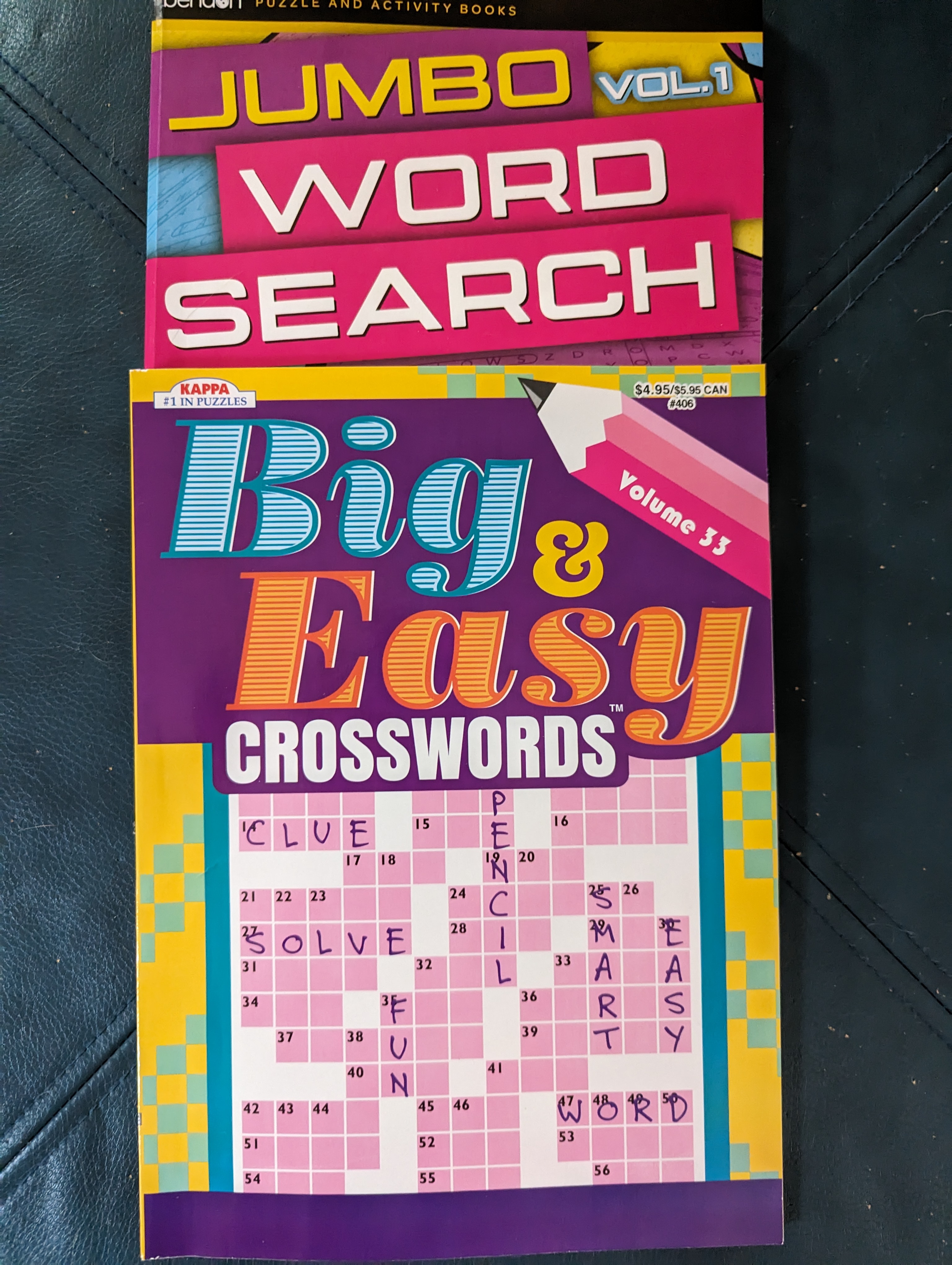
Every night I wind down by playing two games on my tablet: a crossword and a Jumble word puzzle. I’ve always enjoyed word puzzles. I inherited my love of the Jumble puzzles from my mother, who was a devoted player. One of the ways we bonded as she recovered from cancer surgery was working on Jumble puzzles together. My dad was an avid reader, but his love of words didn’t extend to games. It was particularly cruel when Alzheimer’s took away his favorite hobby of reading.

There are many apps and articles that promote “brain games” as a way to reduce the risk of Alzheimer’s and other dementias. While proponents of such games are enthusiastic about their potential in supporting cognitive health, the research so far is mixed when it comes to benefits.

One study that involved people diagnosed with mild cognitive impairment found that crosswords helped support cognitive health more than other games, though the positive results were not dramatic.

There’s no harm in playing such games if it brings you comfort. I do notice that if I’m tired or not feeling well, I struggle with completing the puzzles as fast as I normally do. I like to challenge myself to complete the crosswords as fast as possible. For me, this means not stopping to ponder a clue that I’m stuck on; instead I keep going and complete as many other words as possible before coming back to the ones that stumped me.

While such games may not offer protective benefits against Alzheimer’s, we do know that doctors use a series of tests which could be considered game-like to help diagnose someone with the disease, such as word memory exercises. I’ve participated in a study which has me complete a series of games along with a cognitive questionnaire a few times per year. Doing word games as part of your daily routine could help you spot a decline in your cognitive abilities earlier than you might have noticed otherwise.

Photo by Ross Sneddon on Unsplash.

2 Comments

Filed under Awareness & Activism

ChatGPT: Does it have uses for caregivers?

If you’ve been online over the last few months, you’ve probably come across discussions about ChatGPT. The conversational AI-powered (artificial intelligence) tool developed by OpenAI is the latest tech fad that some experts claim could take over our jobs in the future. (If you are interested in working with images instead of words try the related DALL-E.)

You may have seen some of the program’s capabilities: it can write articles, essays, jokes and songs, debug software code, and create resumes with some input from the user. Users can have a conversation of sorts with ChatGPT while refining their requests and the tool can ingest those new points and update its responses in real time.

As someone who enjoys exploring new tools but retains a healthy amount of skepticism about such tools taking over the world, I’ve spent some time testing out ChatGPT, focusing on how the tool could potentially be of aid to caregivers.

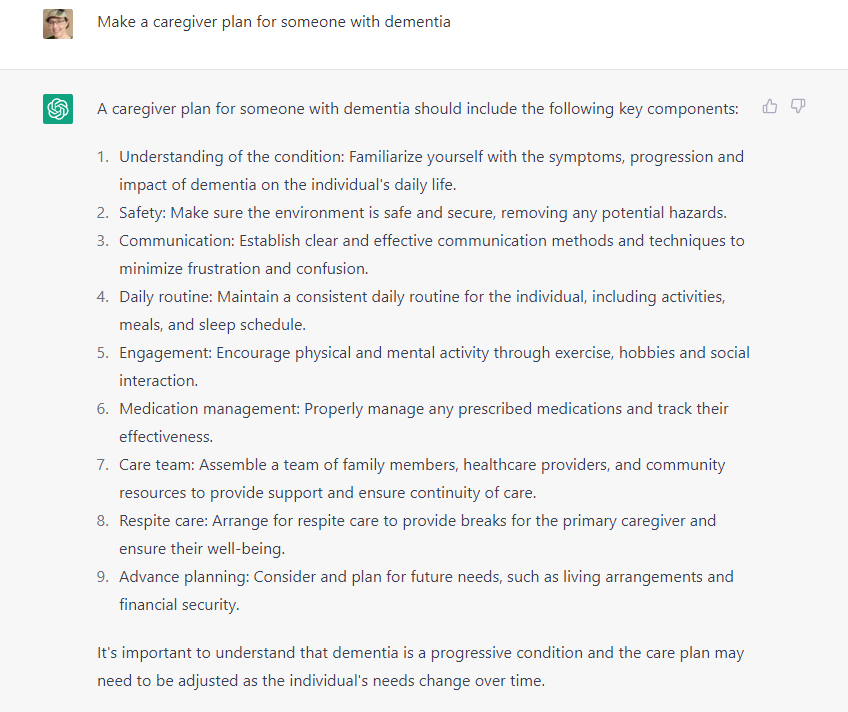
My main takeaway is that while ChatGPT can adequately provide information on a vast amount of topics, the responses are mainly generic and middling in quality, like someone reciting an encyclopedia entry. Your mileage will vary if you are asking a question on a highly technical topic or asking it to generate code for a website. But when asking for caregiving advice such as making a caregiver plan for someone with dementia or tips on aging in place, it regurgitates acceptable but basic advice that can be found across the internet. You can see a couple of examples below:

The glaring issue for me is that there is no attribution with ChatGPT responses. That could be important when you are seeking medical advice such as dementia caregiving tips. Are the pointers it is offering come from a dementia expert like Teepa Snow or a low quality resource? At this point, the responses could be used as a decent starting point, but the user would need to do additional research outside of the ChatGPT system to verify, augment, and personalize the information. Google and other search engines are seeking to incorporate attributes of such AI-based tools into their own programs which would offer a more conversational way to search for information.

I’m going to continue to explore the uses of ChatGPT and how it might be useful for caregivers. If you’ve used the tool, I’d love to hear your feedback.

Photo by Zac Wolff on Unsplash.

1 Comment

Filed under Awareness & Activism

Short film ‘Ruth’ brilliantly captures dementia caregiving experience

Dementia caregivers who are juggling careers and care duties will appreciate how director Alex Berg depicted the caregiving experience with empathy and accuracy in his short film, “Ruth.” The film was released in 2022 but is receiving renewed interest due to an Alzheimer’s Association interview with the director that was published this month.

In just 9 minutes, “Ruth” beautifully depicts the frustrations and joy of a mother with dementia and her middle-aged daughter who is trying to balance career demands with caregiving. Berg told the Alzheimer’s Association that his grandfather was an inspiration for the project. The confusion and repetition of questions is something many dementia family caregivers will relate to. The frustration that bubbles over for the daughter is also familiar.  “I wanted the daughter-caregiver in the film to be just as central as the mother character, going through personal challenges of her own, ones that don’t go away just because she is a caregiver,” Berg said.

The acting and direction is heartbreakingly beautiful. Family caregivers will finally feel seen after viewing “Ruth.”

Photo by Danie Franco on Unsplash (not from the short film.)

1 Comment

Filed under Awareness & Activism