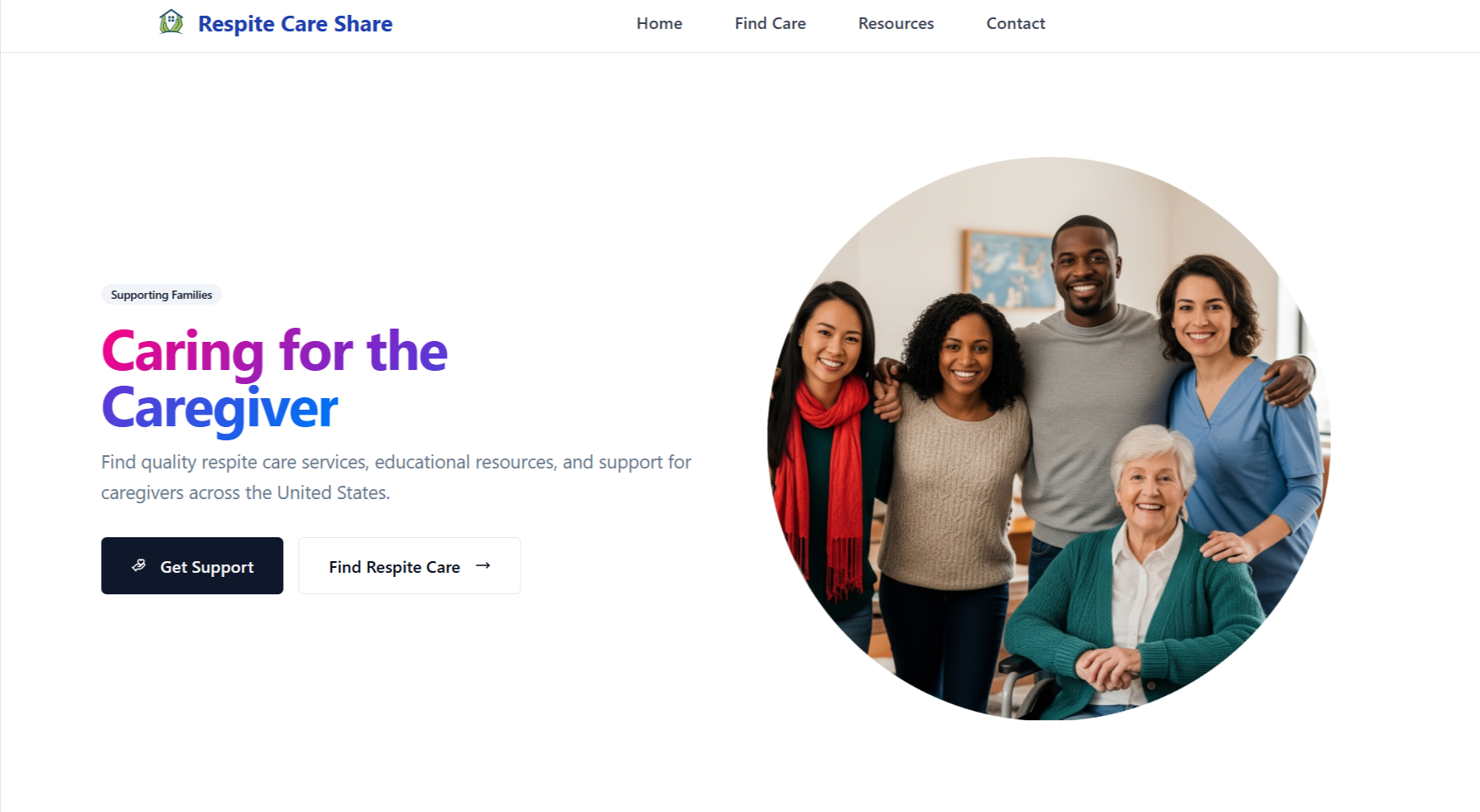
While I had the week off for my birthday, I spent time revamping my website, Respite Care Share. This is a project I started back in 2016 as part of a challenge to launch new initiatives to support end-of-life caregivers. Over the years I’ve added to the resources page, but the website itself, one of those freebie templates that comes with a domain purchase, was lacking in style and functionality.
In comes “vibe coding” which is AI-assisted coding programs. I maintain a healthy skepticism of AI’s powers but I have to say that l’ve been impressed with using AI to update a website. I was able to create a fresh new web design and add a table of respite care resources in the U.S. which is something I’ve been wanting to do for awhile. Before AI coding assistance, I would have had to hire a web designer to do a reboot, which I don’t have the budget for right now. I enjoy learning new tech skills and had fun doing this project.
I hope to add more resources in the future, including self-care tips and respite suggestions. Hope you find the resource helpful, I’d love to hear your feedback.
Today is my birthday. After last year’s leap of faith, I’m keeping it simple this year with a staycation. An at-home vacation gives one opportunities to indulge in self-care.
I’m a believer in self-care; my project Respite Care Share is all about helping caregivers take breaks from caregiving duties. (I’m wrapping up a refresh of that project, more to come soon.) There are numerous studies about caregiver burnout and the dangers it presents to caregivers and care recipients. Taking regular caregiving breaks is key to recharging and maintaining an identity outside of caregiving.
But reality check: self-care doesn’t happen by waving a magic wand. I wish it did! For solo caregivers and single folks, self-care is yet another task one has to perform on top of all of the other chores and duties necessary for a functional life. And at some point, caring for yourself can feel like a burden.
If you find yourself struggling with self-care, try connecting with resources that are meaningful and authentic. I listened to an episode of the Happy Healthy Caregiver podcast recently with two of my favorite people in the metro Atlanta caregiving community: Elizabeth Miller and Hope Cross. This was a down-to-earth discussion about the challenges of caregiving and taking care of oneself. You may remember I’ve written about Hope before, as she cared for her husband, Steve Dezember, who had ALS. She is now a licensed counselor with a practice focused on family caregivers.
If you are looking for ways to incorporate more self-care into your life (most of us need to!) the Happy Healthy Caregiver website is a good resource. From my own experience with Respite Care Share, it’s best to start small, with easy to manage and access respite activities, even if it’s just getting away for an hour and enjoying your favorite beverage at a local cafe or taking a walk in the park. Respite can be designed to fit the caregiver’s needs and caregiving situation. For some, it might mean a weekend away; for others an afternoon to recharge. What’s important about respite and self-care is not so much what you do, but how often you engage in caring for yourself.
Looking at old family photos is a favorite respite of mine. If you haven’t tried My Heritage’s new AI feature, Live Memory, consider giving it a spin. You get to try it for free. It brings motion to images. It added an extra sweet dimension to this beloved photo with my father.
Here’s hoping you can find a way to make self-care the gift it should be and not a burden in your life.
A new analysis conducted in part by the Alzheimer’s Association found that dementia caregivers are much more likely to report at least one modifiable risk factor that increases their own risk of developing dementia. According to the analysis conducted by two public health centers in the US, nearly 60% of dementia caregivers report having at least one modifiable risk factor and nearly 25% report having multiple risk factors.
The analysis was based on data collected from 47 states and focused on six modifiable risk factors for cognitive decline among individuals caring for someone with dementia: diabetes, obesity, physical inactivity, smoking, sleep, and hypertension.
Compared with the overall population, dementia caregivers were more likely to report five of the six risk factors examined. The differences were most significant for smoking (30% more likely), hypertension (27% more likely), and poor sleep (21% more likely). Dementia caregivers were also 12% more likely to have diabetes and 8% more likely to be obese.
Gender, age, and race played a role, according to the analysis findings. Male dementia caregivers were about 15% more likely to have at least one risk factor versus female dementia caregivers.
American Indian/Alaska Native dementia caregivers were the most vulnerable population according to the analysis, reporting at least one risk factor (77 percent). Black caregivers were close behind at 72 percent, followed by Hispanic (59 percent), White (58 percent) and Asian American (28 percent) caregivers.
Dementia caregivers under 45 were about 13% more likely to have at least one risk factor compared to all adults under 45 and 40% more likely to have multiple risk factors.
“This analysis should be a wake-up call for public health to develop strategies that address caregiver health to help this at-risk population,” said Matthew Baumgart, senior vice president, Health Policy, Alzheimer’s Association.
According to the researchers, more than a quarter of dementia caregivers delay or do not do things they should to maintain their health. My own mother delayed going to the doctor for her GI symptoms, and six months after my father’s death from dementia complications, she was diagnosed with colon cancer.
The goal of sharing such sobering statistics is that the health of dementia caregivers is being neglected by the healthcare system, and earlier interventions and greater resources are needed to turn around this trend. No one should see their health suffer because they are caring for a loved one.
Today Mom would have been 88 years old. My mother and I shared a birthday month which always made July special to me. Now it’s a little bittersweet, but I still carry the memories of how my mother tried to make my birthday special each year and how I did the same by making her handmade cards and crafts. What my gifts lacked in artistic talent they made up for in love.
Even though my mother and I were born in the same month and the same astrological sign, we were opposites in personality. I write about those challenges in The Reluctant Caregiver. But one thing we shared was a love of creativity and the arts. Over her lifetime my mother learned how to play the guitar and took dance lessons. She made fabric art wall hangings. I’m grateful to have inherited a love of creativity as well, as it can make the world a better place during challenging times.



![Pageflex Persona [document: PRS0000038_00069]](https://memoriesproject.files.wordpress.com/2014/02/reluctant-caregiver-cover.jpg)







 The Memories Project