Author Archives: Joy Johnston

Joy Johnston's avatar

About Joy Johnston

Joy Johnston is an experienced digital journalist and award-winning author. The Reluctant Caregiver, her collection of essays on caregiving, received a gold medal at the 2018 Independent Publisher Book Awards. She received the 2015 Rick Bragg Prize for Nonfiction from the Atlanta Writers Club. Her father’s death from Alzheimer’s complications in 2011 inspired “The Memories Project” blog, which was featured on NPR. She is an Alzheimer's awareness and caregiver advocate.

FDA gives full approval to controversial Alzheimer’s drug, Leqembi

Last week, the Food and Drug Administration (FDA) granted full approval to Leqembi, an Alzheimer’s treatment that has shown some moderate benefits in those in the early stages of the disease, but also has potential side effects that are concerning to some medical professionals.

While the drug received accelerated approval earlier this year, the full approval designation will mean that Medicare will now cover the cost of the medication, which was one of the main hurdles to access. The Alzheimer’s Association released a statement in favor of the FDA’s actions and opening up access to the Alzheimer’s treatment. The organization is advocating for Medicaid to cover the costs of Leqembi. The drug costs $26,500 annually, making it out of reach financially for many families.

The drug’s approval has been controversial in the medical community because of its initial very modest benefits and its array of potential serious side effects, including brain swelling and bleeding. Subsequent studies showed a larger benefit to patients. The drug “slowed cognitive and functional decline by 27 percent over 18 months compared with placebo,” according to The Washington Post report.

The drug is administered via infusion and requires a significant amount of medical monitoring. Those with early-stage Alzheimer’s and their families hopeful to slow the progression of the disease will need to carefully weigh the pros and cons of Leqembi and consult with their doctor before making a final decision.

2 Comments

Filed under Awareness & Activism

Helping those with dementia stay hydrated during heat waves

Atlanta is in the middle of an early summer heat wave. Yesterday the heat index was above 100 degrees, with temperatures in the 90s and humidity over 60 percent. By noon, it’s very uncomfortable to be outside for any extended amount of time. It feels like you are trying to breathe through a hot, wet blanket.

Older people and those with dementia are at particular risk during heat waves. I’ve written before about how some older people on limited incomes are afraid to turn on their air conditioners because of the high cost. And while air conditioning is pretty common here in the Deep South, other parts of the country that are used to more moderate summer temperatures can be taken by surprise during a heat wave. I experienced that in the mountains of New Mexico and it was very uncomfortable with just a fan.

Hydration is just as important as having a cool place to reside. Elders and those with dementia often struggle to drink enough water or other fluids. For my parents, drinking water was not the necessity that I find it to be. My father drank mostly juice and coffee, with an occasional diet soda. My mother was a bit more diverse, with juice, coffee, tea, milk, and occasional diet soda. Water was not on the menu, unless they were taking their medication.

I can’t imagine not drinking water. It seems like a no-brainer to me, but it’s a generational difference that is important to note. Caregivers will be relieved to know that the traditional advice of consuming 8 glasses of water per day has been debunked. In fact, recent research has found that the amount of water one needs typically declines with age. Instead of focusing just on water, focus on total fluid intake. Harvard Health recommends 4-6 cups of water per day, on top of the other fluids and hydrating foods that you eat.

Here are some additional recommendations to encourage hydration for those with dementia:

  • Don’t focus just on plain water. While limiting sugary sodas and juices is important, coffee and tea is fine, up to about 400 mg of caffeine per day, according to researchers.
  • Sparkling water and adding fresh fruit to water is another good option to make beverages more visually attractive and more flavorful.
  • Hydrating foods are key for those who are not fond of drinking water. Fruits like watermelon and vegetables like cucumbers and celery are all very hydrating. Soups are ideal for hydration.
  • Instead of juice, try whipping up smoothies to sneak in some healthy vegetables and fruits.
  • If your loved one takes medication, this is great opportunity to encourage drinking water.
  • Make sure to use cups and glasses that are easy for your loved one with dementia to use.

Image by Silvia from Pixabay.

2 Comments

Filed under Awareness & Activism

Activity boxes offer stimulation, engagement for those with dementia

A dementia diagnosis is disruptive in many ways, but one particular challenge for family members is how to keep their loved ones engaged and occupied. Whether one was retired before their diagnosis or forced to leave their jobs as their symptoms progressed, the days and nights can be long as one becomes less independent.

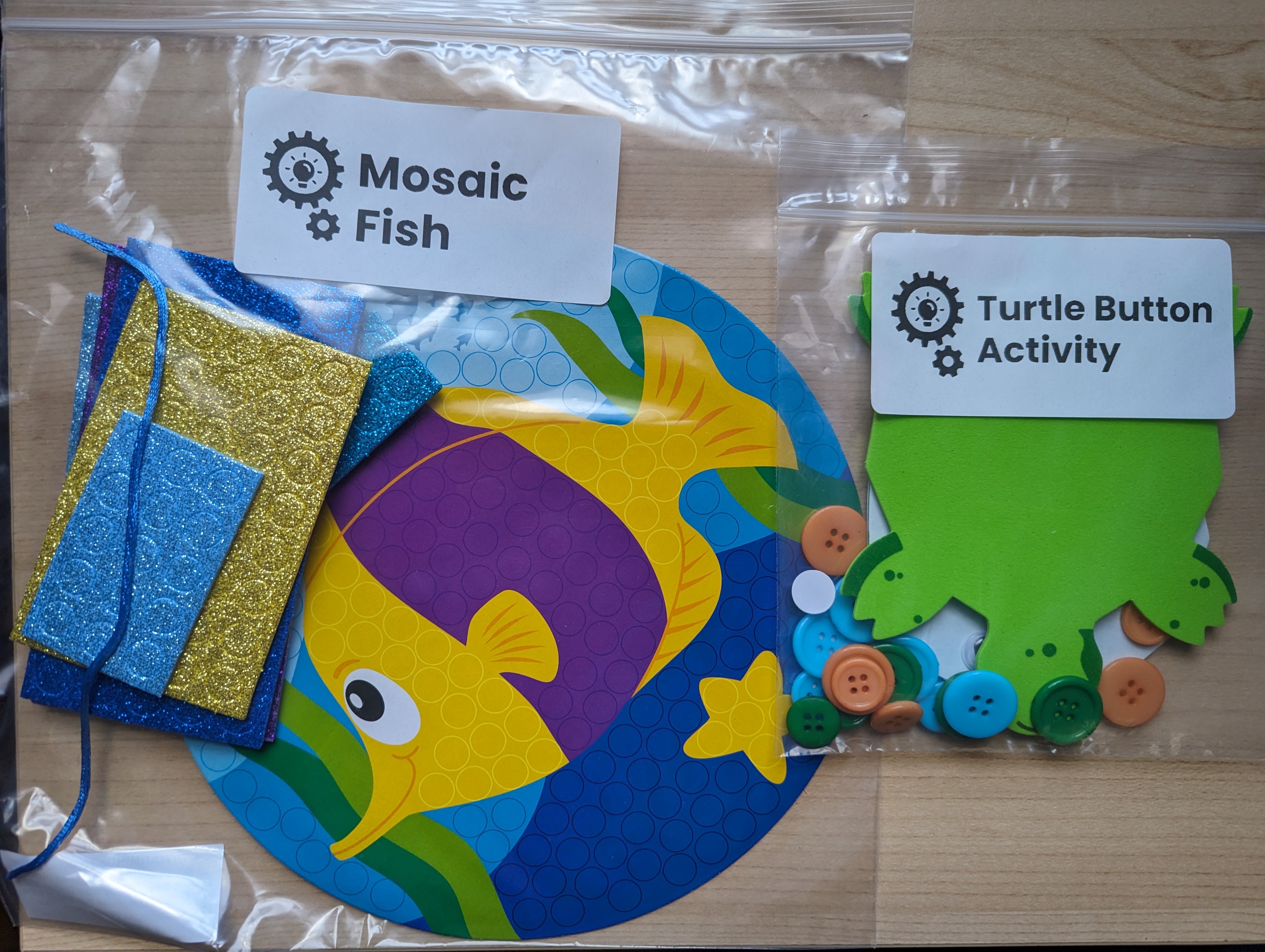
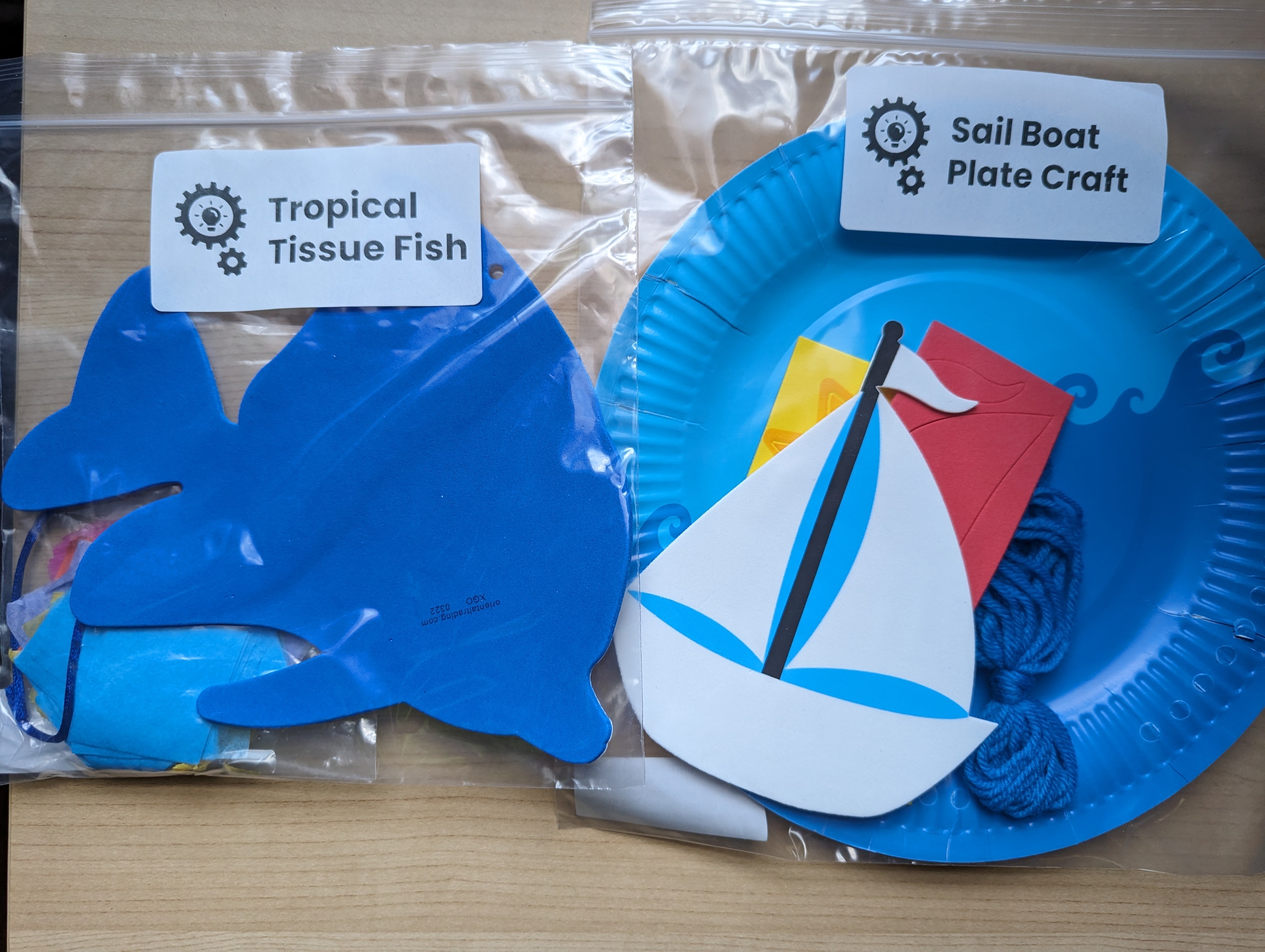
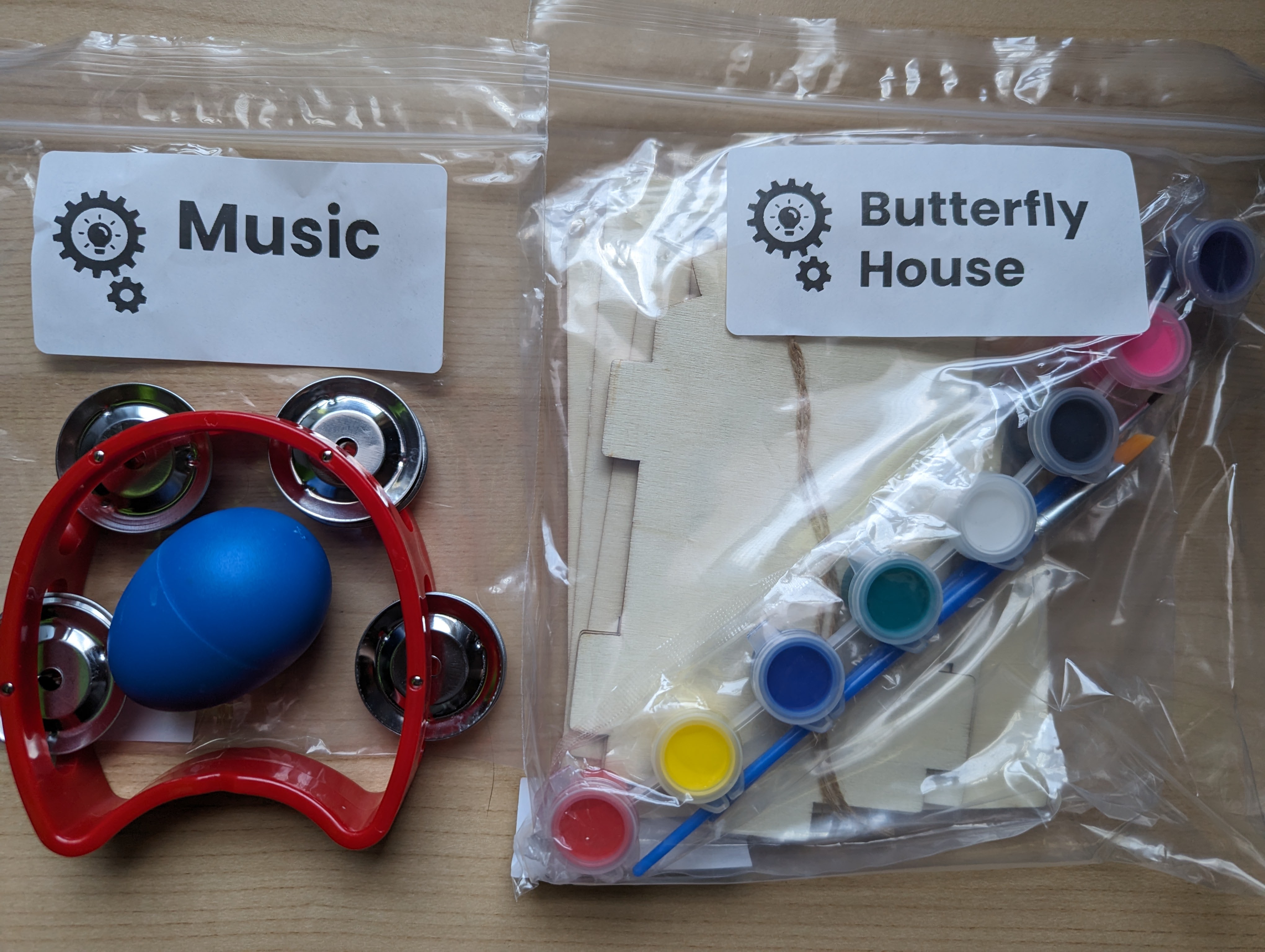
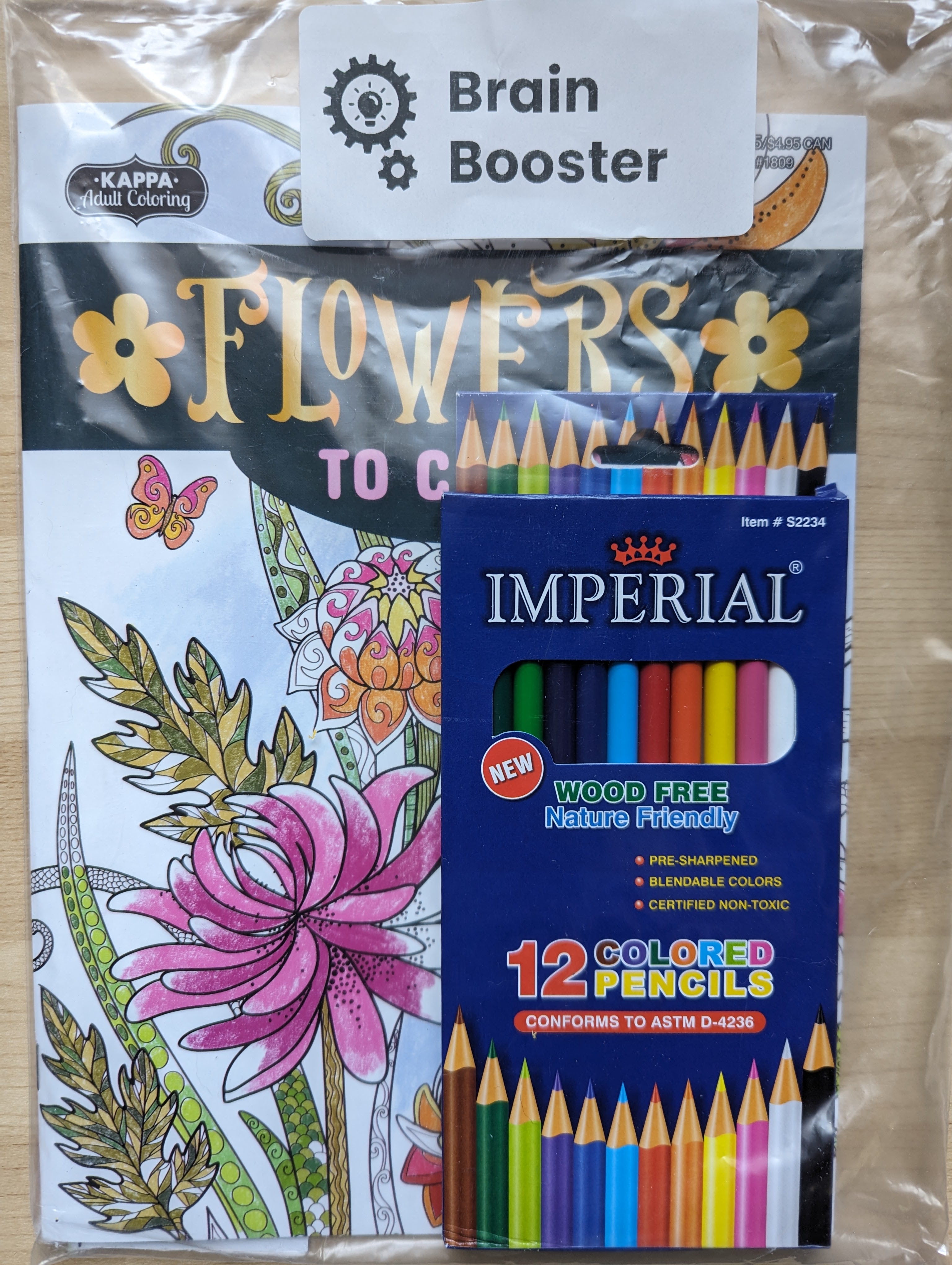
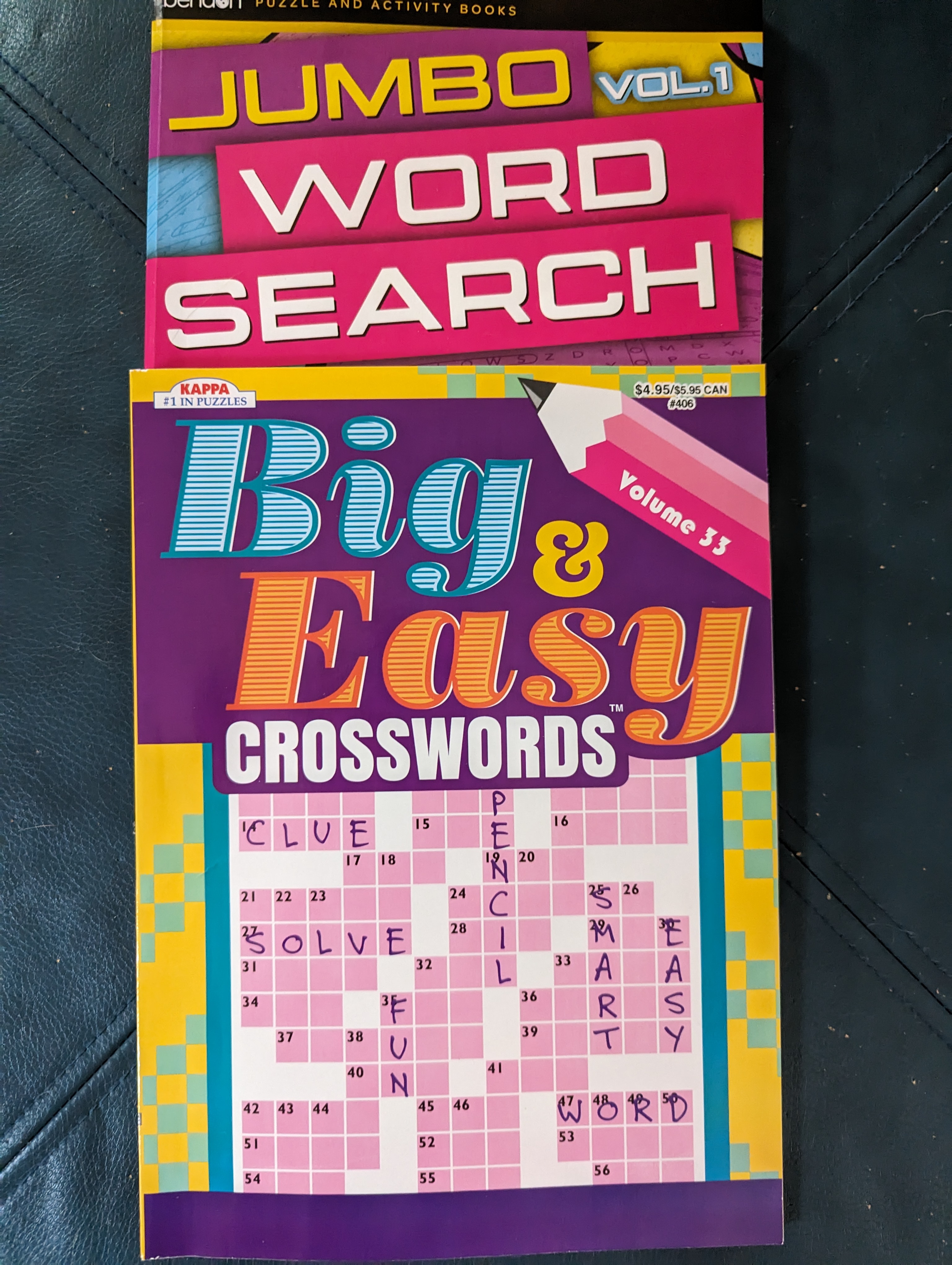
Always Home Connected was founded by two women who both had parents who were diagnosed with Alzheimer’s. They’ve created a series of activity boxes for those with dementia and their family members that cover a wide variety of interests and skillsets. The company was kind enough to send me a sample, which included a variety of crafts, musical instruments, as well as word puzzles and a coloring book.

I was impressed with the variety of crafts offered in the activity box. I also appreciated how everything was included, including a bottle of glue. Each craft came in its own bag, making it easy for transporting. The instructions were clear and I liked how there were a series of conversation starters included with each craft, to encourage engagement. We know that those with dementia can become withdrawn and hesitant to communicate as verbal skills fade. Encouraging conversation while crafting is a good way to spark memories and create meaningful moments for all involved.

Always Home Connected offer a variety of activity boxes for individuals and groups, along with specialty items like fidget blankets, memory book, and a sensory product called HUG.

If you’d like more inspiration on crafts for those with dementia, check out Creative Carer.

1 Comment

Filed under Awareness & Activism

Happy Father’s Day

Happy Father’s Day. For those whose fathers are still living, I hope you get to spend quality time together. Its not about the gifts or the celebrations but simply time spent together.

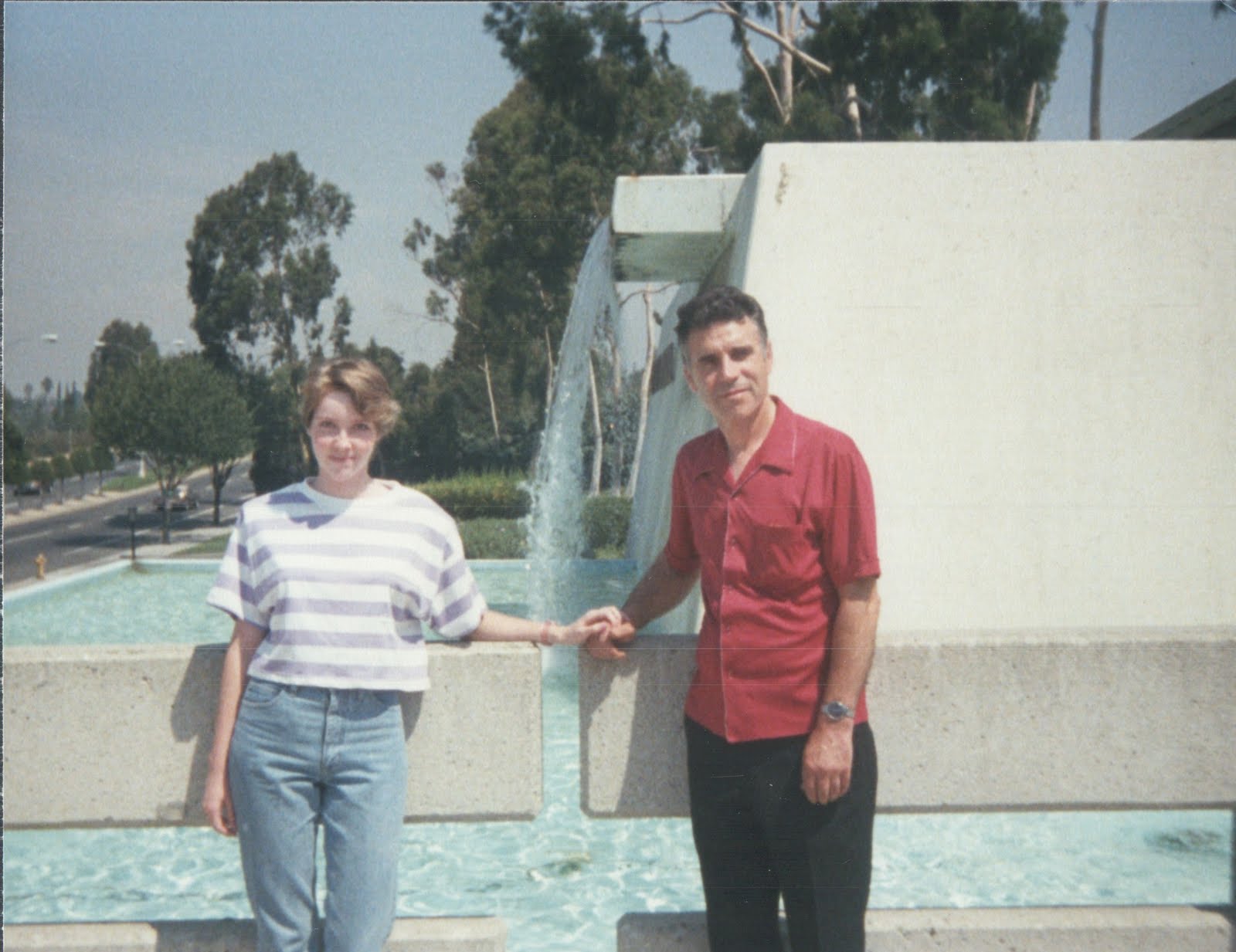
Dad wasn’t one for big events. Father’s Day in our household were simple affairs, maybe a walk in the park and then a dinner at one of his favorite restaurants. In this photo we were at a park that had a library next to it. My father’s idea of heaven on earth!

For those of you like myself, whose fathers are no longer living, may you find treasured memories to reflect upon. And for those who have/had difficult relationships with their fathers, I hope you can focus on your own healing today.

Leave a comment

Filed under Memories

Merakoi seeking patients, caregivers to interview

If you or someone you care for has mild cognitive impairment, in the early stages of normal onset Alzheimer’s or appears to have memory loss issues, merakoi, a company seeking to “to create healthcare solutions that help people better navigate life with a disease,” is inviting you to join their network.

Those interested in joining the merakoi network must be a US resident and age 65 or over. You will be compensated for your participation in interviews at a rate of $150 per hour.

Here is a direct link to the merakoi network sign-up form. Please select the memories project in the How did you hear about us? drop down menu. Full disclosure: I will receive a referral fee for those who sign up to the merakoi network through The Memories Project blog.

Take some time to review the merakoi website to see if you are interested in participating. The company is focused on facilitating a patient-led approach in designing health solutions.

Leave a comment

Filed under Memories

Rosalynn Carter, tireless caregiver advocate, diagnosed with dementia

Embed from Getty Images

Last week, The Carter Center announced that Rosalynn Carter has been diagnosed with dementia. This follows the news that former President Jimmy Carter has entered hospice.

Rosalynn Carter has long been an advocate for caregivers, founding the Rosalynn Carter Institute for Caregivers. Her quote about caregivers is well-known and so true: “There are only four kinds of people in the world––those who have been caregivers, those who are currently caregivers, those who will be caregivers, and those who will need caregivers.”

Carter, age 95, has served in all these roles and will now receive care herself. If you’d like to leave the Carter family a message of support, you can do so at the link in the tweet below.

Leave a comment

Filed under Awareness & Activism

Clare Nowland case: Global training needed for police engaging those with dementia

A tragic case out of Australia demonstrates the need around the globe for police forces to receive training on how to interact with those who have dementia,

Clare Nowland died after a police officer fired a Taser at her when confronting the 95-year-old woman, who had dementia and used a walker, because she was wielding a steak knife, according to The Sydney Morning Herald. She fell, hit her head and died about a week later.

The officer had been called to the care center where Nowland, a great-grandmother, resided because of the incident. According to authorities, Nowland refused commands to drop the weapon and approached them while holding the knife.

While such incidents may be more common in America, this tragic case is a stark reminder that we need better training and guidelines across the globe for law enforcement who engage with those with dementia. In the Nowland case, her refusal to drop the weapon escalated the situation, but we know those with dementia have trouble following directions of any sort. It’s not unheard of for those with dementia to lash out in a violent manner. My father was physically assaulted by a fellow memory care resident after my father became confused, thought he was in a restroom and defecated in the resident’s room. The attack sent him to the hospital.

The officer who fired the Taser at Nowland has been charged with recklessly causing grievous bodily harm, assault occasioning actual bodily harm, and common assault, according to The New York Times.

Photo by Scott Rodgerson on Unsplash.

1 Comment

Filed under Awareness & Activism

Marking 8 years since my mother’s death

With each passing year, it becomes more difficult to believe so much times has passed since my mother’s death in 2015. Death has a way of warping time, so one can feel the distance of those elapsed years but also be surprised at the sharp pangs of grief that can arise at random moments.

I made an active choice to stay in the caregiver community after the death of my parents and have no regrets about that, but it does keep the illness and end-of-life memories fresher than perhaps they would be otherwise. What is most disappointing is seeing so many family caregivers dealing with the same bureaucratic roadblocks and healthcare challenges that I experienced.

I’m grateful to be able to share my caregiving story and read the moving accounts of other caregivers.

An unusual thing happened this morning after I published this blog post. As I came down the stairs, arms full of laundry, I turned to a portrait of my mother that hangs on the wall at the top of the staircase. I said, “Hi Mom,” and continued on my way. About an hour later I was in the kitchen when I heard a crash and then something tumbling down the stairs. When I went to see what had fallen, it was the portrait of Mom I had just acknowledged an hour before. Mom was never a subtle communicator. It would be just like her to make a dramatic statement. For now, Mom’s portrait has a new spot in the living room.

2 Comments

Filed under Memories

Mother’s Day and loss

I was going through family photos ahead of Mother’s Day and opened an envelope that I haven’t look in very often because it’s photos of my grandmother in her casket at her funeral. My grandmother on my mother’s side died exactly 2 months before I was born. I had never noticed that my grandmother’s funeral date and my mother’s day of death were just a single day apart in the month dedicated to mothers.

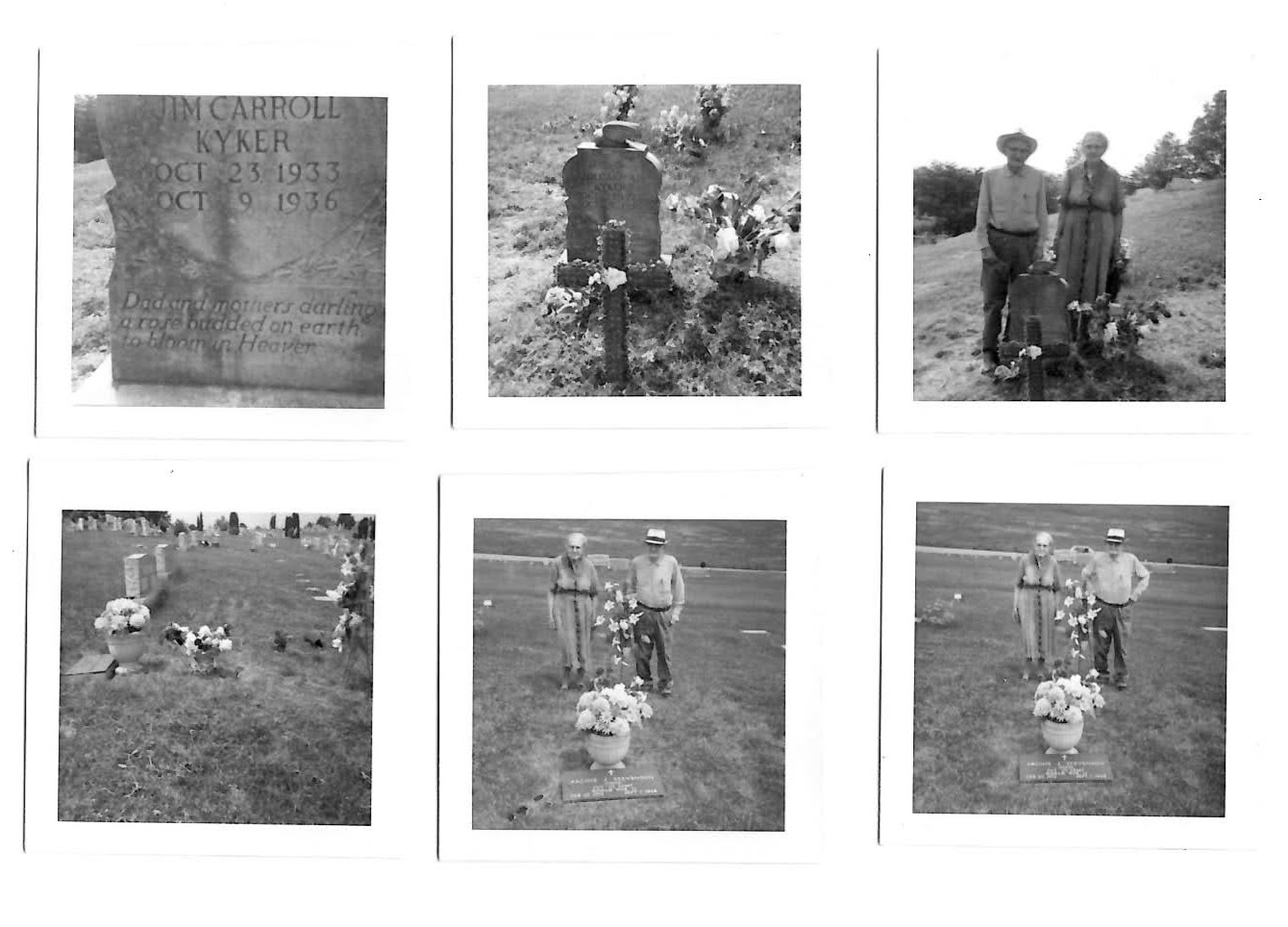
Behind the funeral photos were a set of tiny photos, just a bit larger than postage stamps. I don’t remember seeing these photos before. They were of my grandparents at the grave of my beloved uncle, Jim Carroll, who died just before his third birthday. He died from complications after an accidental drowning. I can only imagine the pain and sorrow his untimely death caused. My mother was born the following year, and she always said that she believed God gave her a sense of humor to lift the spirits of the grieving family, especially her mother.

In the photos, my grandparents are older, so I can assume this was taken in the late 1960s or early 1970s. Little Jim Carroll died in 1936 but the decades that had since passed had not lessened the love for their beloved child.

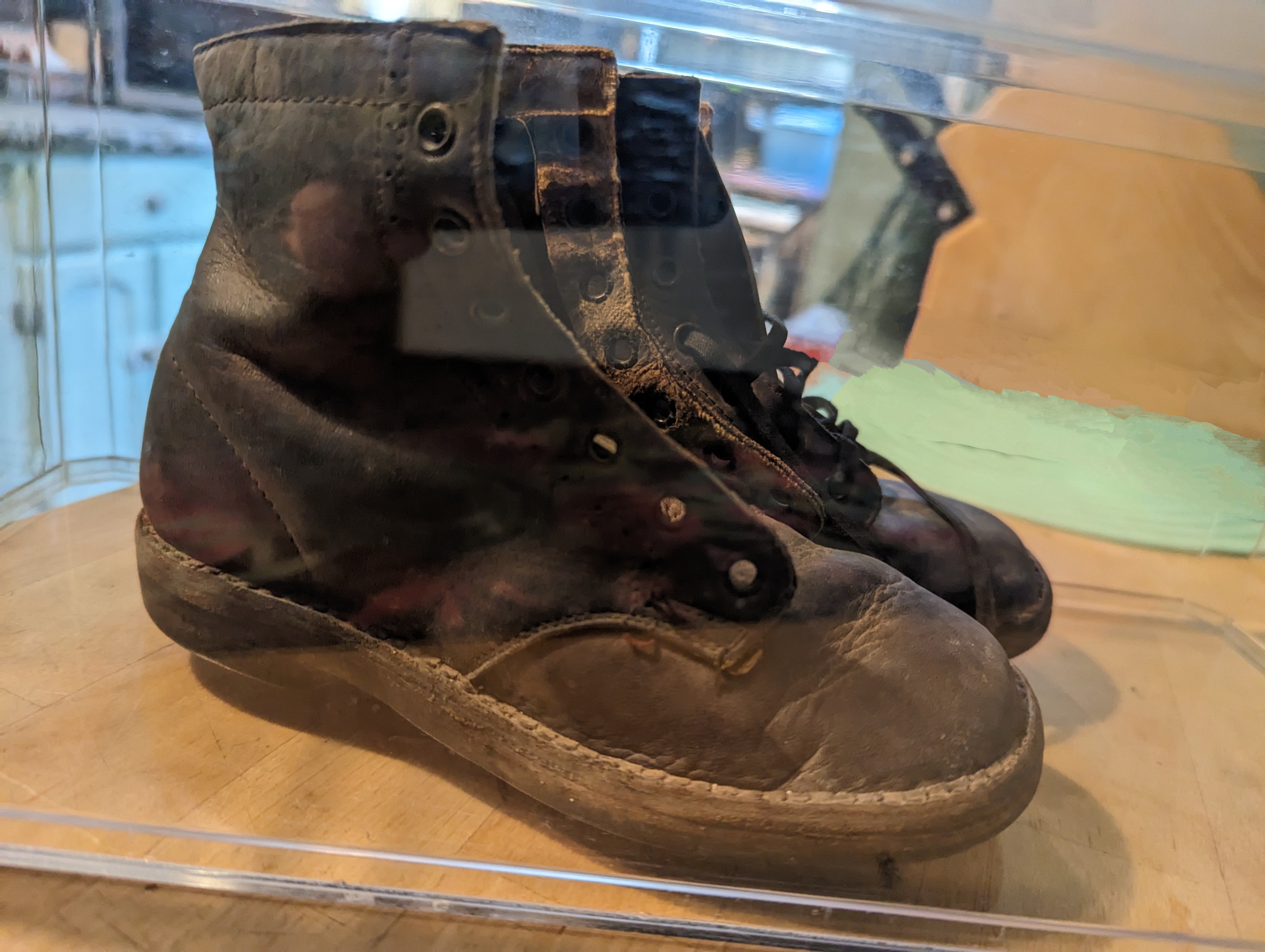
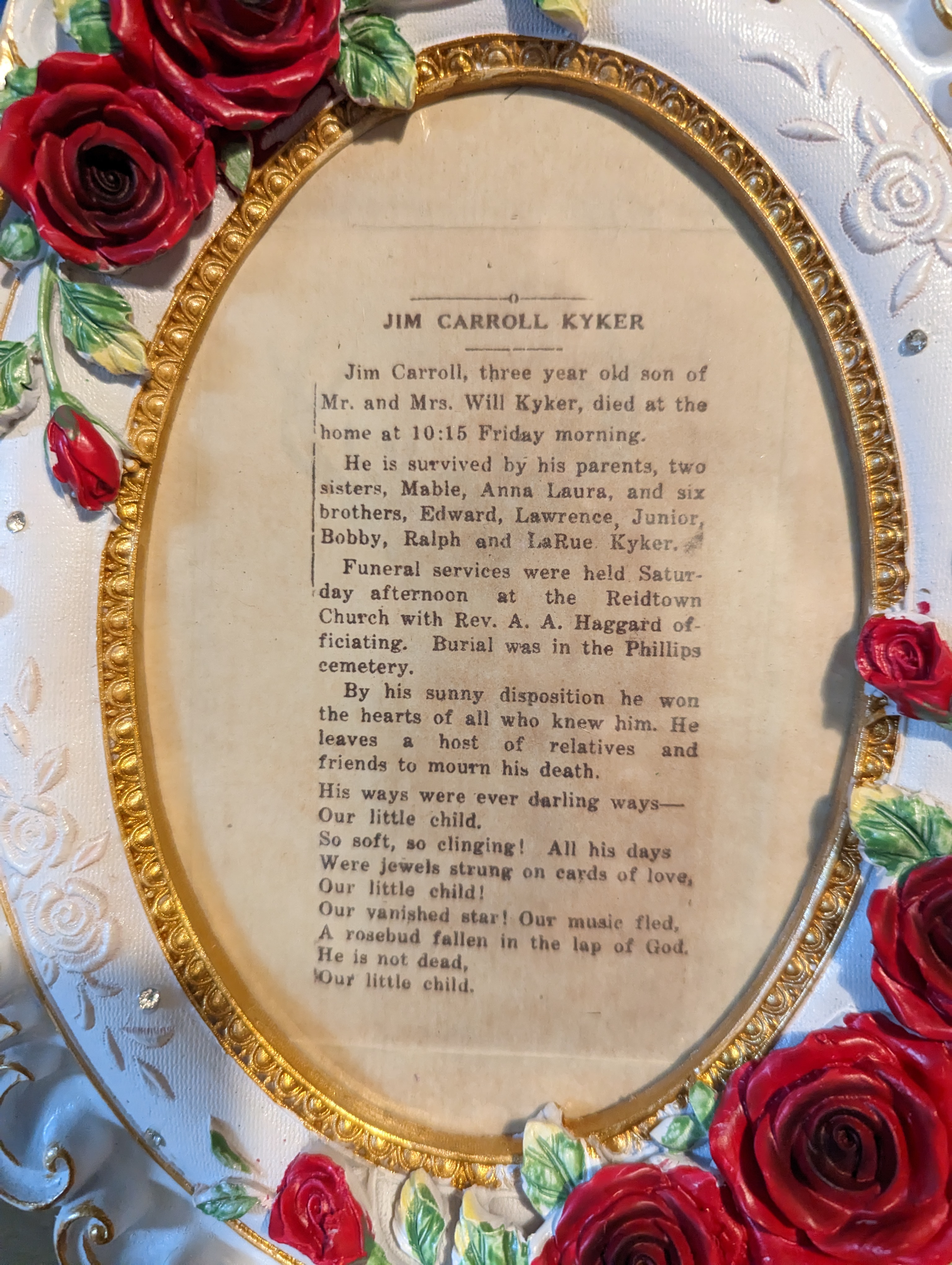
I think of Jim Carroll often, as I have what is a most precious heirloom: his shoes. Still caked with clay, the tiny shoes were handed down to my mother, who was disturbed by the sight of them. I told her to keep them for me. Now they sit on top of my family memorial display, next to his moving obituary.

If you are grappling with family loss this Mother’s Day, I hope you can find some peace and comfort.

Leave a comment

Filed under Memories

Consider sharing your caregiving story

I had a great time at the Atlanta Writers Conference Book Fair. It’s been awhile since I’ve attended a conference in-person. It’s always inspiring to see so much creativity on display.

To that point, I met several caregivers at the Book Fair who shared their personal caregiving stories with me. If you are on the fence about writing about your caregiving experience, I would encourage you to try, even if it’s in a personal journal and not for public consumption. Doing so can be a cathartic experience. You may find that you do have lessons to share that would benefit other caregivers. If so, there are many self-publishing platforms available, in addition to the traditional publishing route.

Understandably, while you are an active caregiver, you likely will not have time to work on a book project. I scribbled down notes, quotes, scenes, anything that I thought I might want to revisit in written form later. Sometimes having a bit of distance can help in framing an experience in a balanced way, but capturing those visceral images in real-time was important for me. I published The Reluctant Caregiver 2 years after my mother’s death and 6 years after my father’s death. Of course if you’ve been following my blog from the beginning you know I began The Memories Project within weeks after my father’s death. At the time I thought I would mainly be writing about my father’s journey with Alzheimer’s but then my mother fell ill. By the end of my caregiving journey with my parents, I had a variety of experiences and lessons to share.

No doubt you will too.

[To give you inspiration, check out the recording of Poetry for the Dementia Journey, a poetry reading event hosted by AlzAuthors. At about the 37-minute mark, you can hear a poem I shared about my father.]

Leave a comment

Filed under Awareness & Activism