Author Archives: Joy Johnston

Joy Johnston's avatar

About Joy Johnston

Joy Johnston is an experienced digital journalist and award-winning author. The Reluctant Caregiver, her collection of essays on caregiving, received a gold medal at the 2018 Independent Publisher Book Awards. She received the 2015 Rick Bragg Prize for Nonfiction from the Atlanta Writers Club. Her father’s death from Alzheimer’s complications in 2011 inspired “The Memories Project” blog, which was featured on NPR. She is an Alzheimer's awareness and caregiver advocate.

Challenges of dying at home, revisited

This week, NPR aired Patients Want To Die At Home, But Home Hospice Care Can Be Tough On Families, the national version of a story that first appeared last year on Nashville’s NPR affiliate. I was interviewed for this series, and shared my personal challenges in tending to my dying mother at home.

This is such an important conversation for the nation to have and it is a cause near and dear to my heart. As I state in the story, I am not anti-hospice by any means. My father died in a facility and that was a horrible death. But caring for my mother who died at home had its own unique challenges. Both experiences scarred me for life, leaving me with regrets and with a mission to help other families avoid the mistakes my family made.

I encourage everyone to read and/or listen to this series and think about your own situation. Family caregivers need to be clear-eyed about the demands they may face in caring for a loved on at home at the end of life. It can be the most tender of bonding moments, a final act of love and sacrifice for a beloved family member. Knowing the pitfalls and identifying potential gaps in care ahead of time can help you from becoming overwhelmed and burned out.

Finally, for those who did not have a good experience with home hospice care, know that you are not alone and it’s not your fault. Forgive yourself for anything you may be blaming yourself for (I’m still working on this part.) Your loved one would want you to let go and move on, free of guilt.


2 Comments

Filed under Awareness & Activism

Bathroom Safety Tips For Seniors — The Diary of An Alzheimer’s Caregiver


Good tips! It’s so easy to overlook all of the alterations needed to keep an elder loved one, especially one with dementia, safe in the bathroom. My mother did not have dementia, but she fell and broke her shoulder while using the toilet in the middle of the night. She never fully recovered from that injury, and her mobility was limited because of it. Falls in the bathroom are all too common, so beware the risks and take action to keep your loved one safe.

Sign up to get these posts and a whole lot more delivered right to your inbox! The Diary of An Alzheimer’s Caregiver – Appreciate the good, laugh at the crazy, and deal with the rest! A primary concern of senior citizens is whether they can continue to live independently as they get older. Their loved…

via Bathroom Safety Tips For Seniors — The Diary of An Alzheimer’s Caregiver

2 Comments

January 16, 2020 · 4:36 pm

Caregiver shortage expected to grow, must address issue now


Hope everyone had a good holiday and that your new year is off to a good start.

The fact that there is a caregiver shortage is not new; however  a Quartz article posted this week has put the issue back on the national radar. The article cites the slowing population growth, along with increased longevity and a decrease in immigration among the issues that will potentially trigger a caregiving crisis. By 2030, that shortage may grow to more than 100,000 caregivers for the elderly, according to Quartz.

Here are some ways we could address this major healthcare issue:

  • Pay caregivers a livable wage: In order to recruit new generations into a caregiving career, we’re going to have to revamp the woefully inadequate pay scale. Professional caregivers deserve to have decent pay, benefits, and access to training and educational opportunities to grow in their fields. Caregiving should no longer be a job of last resort; it should be a career choice one takes pride in.
  • Immigration policies: We need a fair immigration policy that offers those interested in becoming U.S. citizens an opportunity for a stable career in a field with severe shortages. Too often, immigrants who become caregivers, especially those with questionable legal status, are taken advantage of and paid below minimum wage without benefits.
  • Offer incentives: Just like with geriatric or rural medicine, caregiving is not a “sexy” career choice. Certainly it can be rewarding, but in order to fill the large care gap we may need to get innovative. I’m a fan of the Care Corps concept, and a student loan forgiveness program in exchange for serving as a caregiver could attract candidates.
  • Offer better support for family caregivers: Realistically, the bulk of caregiving duties will likely continue to fall on family members. We need to support them better, by employers offering flexible work schedules and the government embracing universal family care. A tax credit would help some with the financial hit family caregivers suffer.

There is no easy fix, but we definitely need to keep pushing this topic into the general conversation and advocate for common-sense actions and programs to alleviate the caregiving shortage and burden on family members.

Leave a comment

Filed under Awareness & Activism

Caregiving goals for a new decade

new-years-eve-4664930_640_edited

Gerhard Gellinger/Pixabay

A new decade is upon us. It’s hard to believe that we are about to begin not only a new year, but a new decade.

Caregiver advocacy will remain a focus of mine, because there is so much work that remains to be done. We’ve definitely made some progress over the last 10 years, but here are the main areas I’d like to see positive movement in over the next 10 years.

Respite care: Caregivers need regular breaks, plain and simple. Sadly, many caregivers never get a break, leading to burnout and increasing their risk of becoming ill and needing care. We need to break that vicious cycle, but there are no easy answers. Respite care requires care providers and facilities that can step in and care for a loved one while the caregiver takes a break. Many communities lack such services or have very limited services. I’d like to see more funding, at the federal and state level, and some innovation in this area to bridge the care gaps and give caregivers the breaks they so deserve.

Support in the workplace: Caregivers are hard workers, but the time they may need to take away from their job in order to care for loved ones puts their careers at risk. It shouldn’t be this way. Not all jobs can be done remotely, but for those that can, employers need to dedicate resources and support teleworking for caregivers. Alternative schedules and flexible schedules is also essential in the modern workplace. We need to allow caregivers to earn a living and provide care for their loved ones. Universal family care would address many of these issues. No one should have to quit their job to become a family caregiver.

Effective Alzheimer’s treatment: There have been several disappointments over the last decade when it comes to drug trials that once held great promise in treating Alzheimer’s. Most have failed or underperformed. There is a threat that pharmaceutical companies may turn their focus to other diseases that may be easier to crack. But there are many bright minds in the scientific community who are dedicated to the cause. I won’t be so overly optimistic to hope for a cure, though that would be the best news of all. A treatment that could delay the most severe symptoms would be welcomed.

Better end-of-life care: If the previous decade has been about aging in place, the new decade should focus on how we are going to support end-of-life care, especially those who choose to die at home. From pain management to respite care to a lack of home hospice care in rural areas, we are not delivering the “good death”  that we are capable of as a society.

I wish you and your family a happy new year and hope this will be the beginning of a decade where we all can thrive and develop a more compassionate society.


Leave a comment

Filed under Awareness & Activism

Grief at the holidays

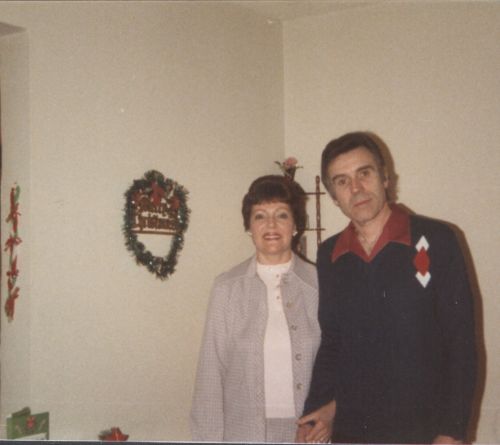
mom-dad-xmas

Whenever I learn of someone’s passing during the holiday season, I feel an extra pang of sympathy. Losing a loved one at any time of the year is devastating, of course. But there is something about loss during a period of such joy for others that is particularly painful.

Today it has been eight years since my father’s death. So much has happened since then, yet it’s still hard to believe that it has been so long since his passing. I remember how odd the Christmas decorations and Christmas music blaring everywhere seemed to be after I learned the news of my father’s passing. It’s a tough lesson to learn in such a fragile state: the world goes on without your loved one.

If you find yourself grieving this holiday season, cut yourself some slack. Don’t feel obligated to put on a happy front. There are many others just like you who feel conflicted emotions during this time of year. Hopefully over time, some happier memories will filter in through the grief. If you know someone who has lost someone during the holidays, reach out to them and offer your support.

I hope you and your loved ones have a holiday filled with peace and love.

Leave a comment

Filed under Memories

More Americans are dying at home, but family caregivers still lack support

holding hands

Image courtesy of Pixabay.

The New York Times published an article this week that touched on a subject close to my heart. The article explores the impact of new data published this week in the New England Journal of Medicine that found more Americans are dying at home than in hospitals.

On the face of it, this sounds like good news. In poll after poll, the majority of people say they would prefer to die at home rather than in a hospital or nursing home. The tide now appears to be turning, and perhaps returning to a culture which embraces providing end-of-life care at home.

But the major challenge, which I’m grateful to reporter Gina Kolata for highlighting in her report, is the following: “Many terminally ill patients wind up in the care of family members who may be wholly unprepared for the task.”

This is something I’ve written about extensively, based upon my own family caregiving experience. My personal essay, Why Dying at Home is Not All It’s Cracked Up to Be, ruffled some feathers at the time. But my point wasn’t to be anti-home hospice. I think home hospice can be a wonderful service. The problem is that there are not enough home hospice service providers, especially in rural areas of this country. As the New York Times article discusses, this leaves family caregivers carrying the heavy burden of providing medical care for a dying loved one, while dealing with the financial cost and emotional toll of that experience. Most family caregivers are woefully unprepared.

“We have put a tremendous burden on families in the type of care they have to provide and the type they have to pay for,” said Dr. Sean Morrison, chair of geriatrics and palliative medicine at the Icahn School of Medicine at Mount Sinai in New York.

With my parents, I experienced the worst of both kinds of deaths. My father died in a skilled nursing facility without any family members with him, and my mother died at home, with myself, the only child, providing her end-of-life care but lacking support from limited home health care services.

The New York Times article also discusses another downside of dying at home: pain management. My mother’s pain was not managed as well as it could’ve been in an institutional setting, and that will haunt me for the rest of my life. No one should have to suffer needlessly at the end of life.

If you want to learn more, I was interviewed recently on the challenges of dying at home by journalist Blake Farmer at WPLN, Nashville Public Radio.

2 Comments

Filed under Awareness & Activism

Recharging when you can’t take a vacation

For caregivers, taking a vacation is often a non-starter. Even if someone was to gift a caregiver a cruise or a resort stay, the effort it takes to find care for loved ones makes what should be a relaxing trip a stressful endeavor.

When I was researching options for Respite Care Share, I ran into that feedback time and time again. Who would watch my loved one? Even if I could find someone, I would worry about them the entire time I was gone.

Mini-breaks can really make a difference. I had last week off from work so I treated myself to a massage and a salt room treatment. I also visited a cat cafe, which always is a mood lifter. These were all short sessions, no longer than an hour, but they were effective self-care options.


So this holiday season, consider giving the caregiver in your life a local option for recharging. Some great options include gift certificates for a massage or other spa service, a restaurant gift card, or tickets to an entertainment event. As part of the gift, either offer to sit with the caregiver’s loved one, or find an adult day care or home health service that can provide care. The idea is to keep it short and simple and hassle-free for the caregiver. That way, they are more likely to use the gift and most importantly, enjoy themselves!

1 Comment

Filed under Awareness & Activism

National Caregiver Appreciation Month eBook Sale & Giveaway

alzauthors giveaway 112019

I can’t believe it’s this time of the year already, but November is National Caregiver Appreciation Month.

Supporting caregivers is one of the issues I’m most passionate about. Having been a family caregiver for my parents, I know how tough it can be. So I’m always happy to participate in the  annual National Caregiver Appreciation Month eBook Sale & Giveaway hosted by AlzAuthors. All books will be discounted from Nov. 21-25, with many books priced at 99 cents and some books will be available for free. You can get my award-winning book, The Reluctant Caregiver, for just 99 cents.

AlzAuthors is a group of more than 200 authors and bloggers who write on the topics of Alzheimer’s and other dementias. Many of the authors are family caregivers. I’ve seen this group grow and participate in many wonderful events over the years, and I’m honored to be a member.

In addition to books, AlzAuthors has a fundraiser going on through Nov. 25. Buy a cozy fleece jacket with the lovely AlzAuthors logo for just $44.99. These would make great holiday gifts for the caregiver in your life! All proceeds will support the continued outreach of AlzAuthors.

Leave a comment

Filed under Awareness & Activism

Continuing care at home: Pricey but intriguing elder care option

hand-2906458_1920

Photo: Pixabay

I’m always on the lookout for nontraditional elder care options. As we face a growing elder population, we are going to need some out of the box thinking and smart innovation to meet the high demand for elder care and elder-friendly housing.

A recent New York Times article highlighted one such option: continuing care at-home, an offshoot of the more well-known continuing care retirement communities. The NYT refers to the at-home option as a CCRC without walls. The goal is to keep people living comfortably and safely in their homes for as long as possible and for as long as the person desires, but with the option to move into assisted living if needed.

Instead of moving into an independent living apartment on a CCRC campus, people remain at home. Members are assigned a “care navigator” who monitors their health daily living needs. This hybrid aging at home with the option for supportive home care services and residential care could be attractive to baby boomers.

However, there are some downsides. The main one is cost. While the at-home version of the CCRC is cheaper than the traditional format, it’s still requires a hefty entrance fee (typically tens of thousands of dollars) plus monthly fees. In many cases, elders sell their home and move into more affordable housing in order to cover the costs. This is not a financial option for everyone.

There are also medical requirements to enter such programs, with a dementia or Parkinson’s diagnosis, among others being disqualifiers.

So it’s not for everyone, but it could be a good compromise for those who can afford it and want to remain in their homes as long as possible.

2 Comments

Filed under Awareness & Activism

Looting the elderly via CRAIN’S COMMENTS

In my line of work I read about so many cases involving criminals preying upon the elder population. Those with dementia are particularly vulnerable. As family caregivers, be vigilant upon checking bills, bank statements, etc. There’s a fine line between allowing your elder loved one to maintain their independence and protecting them from criminals, but it’s important to be aware.


IN 2017, financial institutions filed 63,500 inquiries regarding suspected fraudulent activities involving senior clients. That’s up 400% over 2013, and may still represent 2% or less of actual crimes. Traditionally, the elderly have been victims of their own family and care-givers. Now there are concerns that they are being victimized by financial professionals they trust, […]

via Looting the elderly — CRAIN’S COMMENTS

Leave a comment

November 9, 2019 · 10:15 am