Category Archives: Awareness & Activism

Ageism Awareness Day

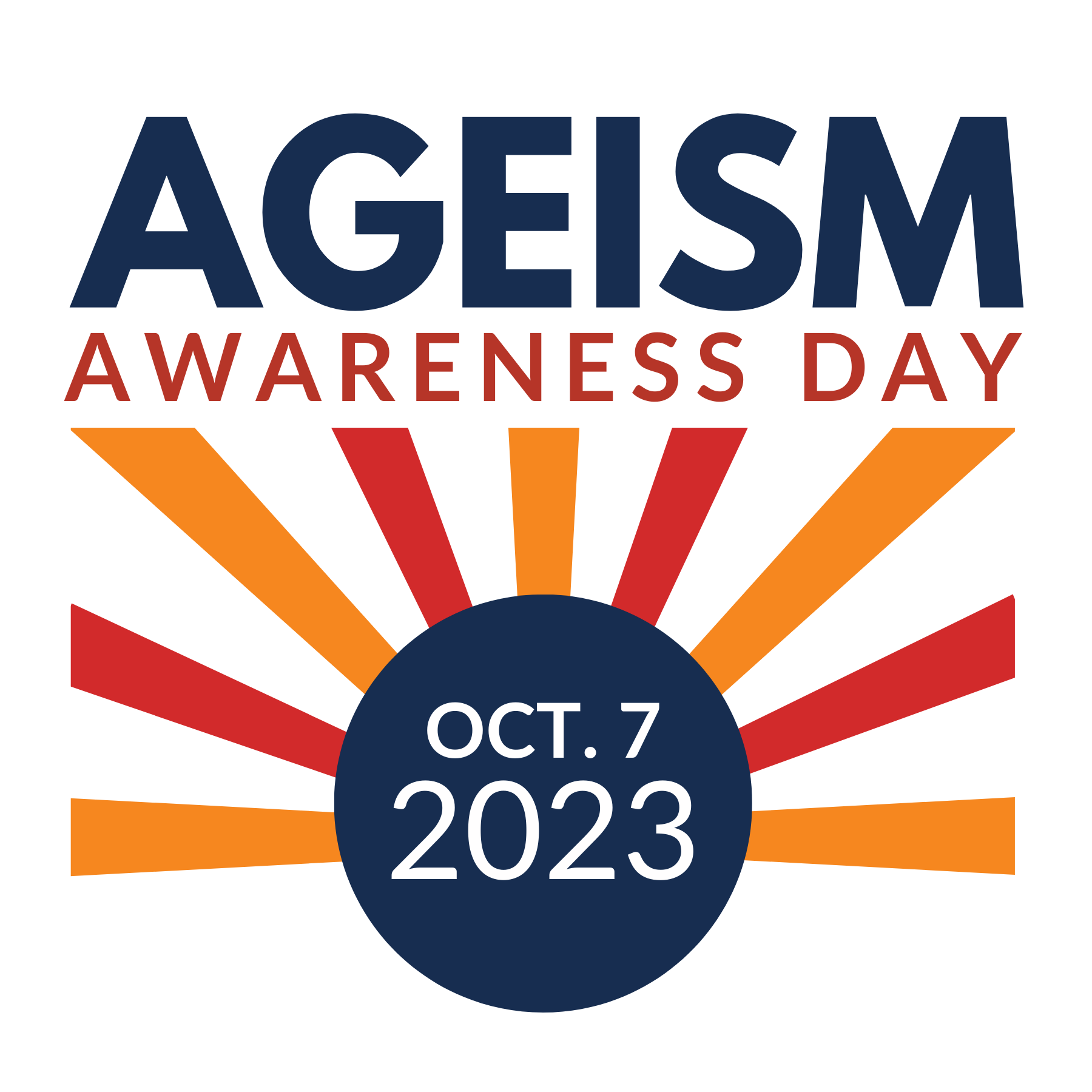
October 7 is Ageism Awareness Day. As caregivers, we see aging from a myriad of perspectives. While we no doubt see the physical and cognitive challenges that our loved ones contend with as they grow older, we also see the discrimination that older people, those who are disabled, and those with dementia face on a routine basis.

Ageism can be found in a variety of settings, from popular culture to the doctor’s office. According to the American Society on Aging, “Ageism is one of the most widespread and socially accepted form of
prejudice.”

Here are a few facts to know about ageism, courtesy of the American Society on Aging.

  • Ageism occurs in many forms, including Internalized, cultural, implicit and benevolent.
  • Older individuals with more positive self-perceptions of aging live 7.5 years longer than those with a less positive self perception of aging, according to one study.
  • Ageism in the workplace has many consequences. AARP estimated $850 billion in lost gains to the Gross Domestic Product (GDP) as a result of involuntary retirement underemployment, and unemployment among older workers.
  • In medicine, there is a shortage of geriatricians in the U.S. that will only worsen as the demand is set to skyrocket. Ageism can also be found in grant fund recipients for aging-related projects and clinical trial participants.

What can you do? Be vocal when you or your loved ones face ageism. Support efforts that seek to portray aging in a more realistic, less stereotypical manner. How can we as a society better support changing needs as we age?

Leave a comment

Filed under Awareness & Activism

Don’t wait: Discuss end-of-life care wishes for those with dementia

The American Society on Aging, along with Compassion & Choices, hosted a webinar recently on honoring the end-of-life care wishes of those with dementia.

Also check out this interactive exhibit that discusses end of life care from a variety of individual perspectives.

This is an issue that I encourage everyone to consider, as my father’s end of life care was not what I wanted it to be. But without a roadmap (as is discussed in one of the videos above), my mother and I were forced to muddle through on our own. As I discussed in my book, The Reluctant Caregiver, my mother and I were at odds when it came to care options for my father as he neared the end of life. This is a common occurrence in families and can create regrets and guilt.

That’s why I suggest not waiting when it comes to discussing end-of-life care wishes after a dementia diagnosis. I also would like to point out that in the top video, honoring choices is the focus, but there are times when those wishes can’t be honored, for a variety of legitimate reasons. The ultimate goal is safety for your loved one and those caring for them.

Photo by Centre for Ageing Better on Unsplash.

Leave a comment

Filed under Awareness & Activism

Marking World Alzheimer’s Month

September is World Alzheimer’s Month and this week on Sept. 21 will be World Alzheimer’s Day. This year’s theme is “Never too early, never too late,” with a focus on reducing the risk of Alzheimer’s by educating people on their own risk factors.

Alzheimer’s Disease International has many resources on its website, including a Dementia Fact Sheet.

While modest strides are being made in the development of medications to slow down the disease, it’s key that people understand their risk of developing Alzheimer’s and the steps they can take to reduce their risk.

Looking for ways to support the Alzheimer’s and dementia communities this month? Consider purchasing a copy of Chicken Soup for the Soul: Living with Alzheimer’s & Other Dementias. It’s on sale at Amazon and includes a story I wrote about my father. Also check out my collection of personal essays, The Reluctant Caregiver, which includes further accounts of the impact dementia had on my family.

If you’d like to support an organization for World Alzheimer’s Month, consider purchasing an item from the AlzAuthors shop.

Image courtesy of Alzheimer’s Disease International.

3 Comments

Filed under Awareness & Activism

Bob Barker: Alzheimer’s disease noted on death certificate

Embed from Getty Images

Legendary “The Price is Right” game show host Bob Barker died Aug. 26. It was revealed last week that the cause of death per his death certificate was Alzheimer’s disease, according to NBC News. Barker was 99 years old and had suffered from serious falls in recent years but it’s unknown when he was diagnosed with Alzheimer’s disease.

Barker was one of those rare celebrities who was beloved by multiple generations. He was a mainstay of my childhood, especially before I started school and during school vacations. “The Price is Right” was my favorite game show. It was fun and exciting with the variety of games being played. The players being called out of the audience created memorable moments. Announcer Johnny Olsen (and later Rod Roddy ), the models, aka “Barker’s Beauties,” and Barker served as a second family for many kids from my generation. “Come on down!” was a catchphrase almost everyone knows, whether they were a fan of the show or not.

Watching “The Price is Right” also was my early introduction to animal rights, with Barker ending each show by reminding the audience to spay and neuter their pets. I may not have understood those terms as a child, but Barker over his long life devoted much time, effort, and money to improve the lives of animals. People has a good overview of Barkers animal rights advocacy work.

According to ET, the bulk of Barker’s estate will be donated to animal rights and military charities.

Leave a comment

Filed under Awareness & Activism

GUIDE Model seeks to offer better support for dementia caregivers

Caregivers of loved ones with dementia face unique challenges. A new model from the Centers for Medicare & Medicaid Services, GUIDE, seeks to change that.

GUIDE stands for Guiding an Improved Dementia Experience, and the program will launch on July 1, 2024 and run for eight years in its initial demonstration phase. The model has worthy goals:

  • First, by focusing on the person with dementia, and better addressing their care needs and transitions between levels of care.
  • Support dementia caregivers by providing them with training, social services, and respite care.
  • Focus on providing sufficient support for those dementia to safely live at home for as long as appropriate and reduce the need for nursing home care.

I think most dementia caregivers will welcome such support, even if it is long overdue. It will be interesting to see how this program is implemented and how it evolves during its testing period. For more information, review the GUIDE fact sheet.

Infographic image by cms.gov.

Leave a comment

Filed under Awareness & Activism

Study: Wildfire smoke exposure may increase dementia risk

The wildfires in Maui have been devastating. Canada has also been dealing with significant wildfires this year and parts of the US have been impacted by the smoke, triggering air quality alerts.

It’s no surprise that being exposed to wildfire smoke is bad for one’s health. But a new study from the University of Michigan School of Public Health found that long-term exposure to wildfire smoke may increase one’s risk for dementia.

Researchers focused on fine particulate matter (PM2.5) air pollution which is produced by a variety of sources, including wildfires, traffic, and coal-fueled power plants. This particular form of air pollution is so dangerous because its tiny size allows it to cause inflammation in multiple parts of the body, including the brain.

Other studies have associated PM2.5 exposure with an increased dementia risk, according to Medical News Today.

This study drew my attention because the area where my parents retired, Ruidoso, New Mexico, is also prone to wildfires. While authorities will issue evacuation orders when a fire gets too close to neighborhoods, it’s not always easy for older people or those with disabilities to leave their homes and find adequate care in a shelter. People on fixed incomes can’t afford to wait it out in a hotel, and may not have access to transportation even if they want to leave. This is the situation my parents were in, and they would remain indoors as much as possible during wildfire outbreaks in the region.

Photo by Malachi Brooks on Unsplash.

Leave a comment

Filed under Awareness & Activism

New research finds walking just 4K steps daily offers health benefits

For caregivers who may wonder if they or the loved ones they care for get enough exercise, a new study offers recommendations that are more achievable than traditional guidelines.

According to a study published recently in the European Journal of Preventive Cardiology, walking just 4,000 steps per day is associated with a lower risk of death. A 2017 study cited by NBC found that the average person in the U.S. walks 4,774 steps per day.

I’ve been using a smart ring that tracks a variety of health-related metrics including steps. You might be surprised how many steps you log by doing daily household tasks. Cleaning, gardening, caregiving: exercise comes in many forms and offers health benefits.

For those able to move a bit more, the payoff was even better, with every 1,000 extra steps per day associated with a 15 percent reduction in a person’s overall risk of death, according to the new study. Walking has also been associated with a reduction in the risk of dementia.

But what about the 10,000 steps per day rule? That was actually based upon a Japanese marketing campaign for a pedometer, according to NBC. The number caught on and became standard, but according to a health expert interviewed by NBC, it’s a misconception and there’s a wide range of recommended daily steps depending upon age and physical ability.

I inherited my father’s love of walking. While walking didn’t prevent my father from getting dementia, it kept him lean and in decent physical health despite being diagnosed with COPD due to smoking. He would do laps at the memory care center and maintained his mobility up until the last couple of months of his life.

Photo by RDNE Stock project.

1 Comment

Filed under Awareness & Activism, Memories

Sharing the harsh realities of caregiving

While my caregiving journey with my parents was difficult, I try to share a variety of experiences here on The Memories Project, to reflect the diversity of caregiver stories. No two caregiving experiences are ever alike, but an essay I read this past week hit close to home for me on so many levels.

In this HuffPost essay by Kim Richards, she recounts the difficult experience of caring for her mother with cancer. I found so many similarities between Richards’ experience and my own caregiving experience that I recounted in my personal essay collection, The Reluctant Caregiver. Our mothers died within a year of each other, both lived in New Mexico, and both were in denial about their terminal condition. Richards had to give up her small business to move out-of-state to care for her mother; I had to quit a new job and was left with no health insurance.

I know these accounts are difficult for many to read and can be triggering for those of us who had a difficult caregiving journey. But I do think it’s important to share both the good and the bad, the inspirational and the challenging, so that hopefully people can be more emotionally prepared when it’s time for them to be a caregiver.

I’m grateful to all who share their caregiver stories as it helps me gain a better understanding of the diversity of the caregiving experience.

Photo by Isaac Quesada on Unsplash.

4 Comments

Filed under Awareness & Activism

Study identifies which states have highest rate of Alzheimer’s

This month, researchers for the first time released county-level estimates of Alzheimer’s disease prevalence in the U.S.

The data, shared at the Alzheimer’s Association International Conference and published in Alzheimer’s & Dementia: The Journal of the Alzheimer’s Association, found that the southeast and the east regions of the U.S. had the highest prevalence of the disease.

For counties with a population of 10,000 or more individuals age 65 or older, researchers estimate the highest Alzheimer’s prevalence rates are in:

  • Miami-Dade County, Fla. (16.6%)
  • Baltimore City, Md. (16.6%)
  • Bronx County, N.Y. (16.6%)
  • Prince George’s County, Md. (16.1%)
  • Hinds County, Miss. (15.5%)
  • Orleans Parish, La. (15.4%)
  • Dougherty County, Ga. (15.3%)
  • Orangeburg County, S.C. (15.2%)
  • Imperial County, Calif. (15.0%)
  • El Paso County, Texas (15.0%)

According to CNN, at the state level, Maryland registered the highest prevalence of Alzheimer’s disease, followed by New York and Mississippi.

The findings suggest that counties with an older average age population and higher percentages of Black and Hispanic residents are at higher risk. The hope in compiling and releasing such data is that it “may help public health programs better allocate funding, staffing and other resources for caring for people with Alzheimer’s and all other dementia,” according to Kumar B. Rajan, Ph.D., professor in the Department of Internal Medicine at Rush Medical College.

Leave a comment

Filed under Awareness & Activism

FDA gives full approval to controversial Alzheimer’s drug, Leqembi

Last week, the Food and Drug Administration (FDA) granted full approval to Leqembi, an Alzheimer’s treatment that has shown some moderate benefits in those in the early stages of the disease, but also has potential side effects that are concerning to some medical professionals.

While the drug received accelerated approval earlier this year, the full approval designation will mean that Medicare will now cover the cost of the medication, which was one of the main hurdles to access. The Alzheimer’s Association released a statement in favor of the FDA’s actions and opening up access to the Alzheimer’s treatment. The organization is advocating for Medicaid to cover the costs of Leqembi. The drug costs $26,500 annually, making it out of reach financially for many families.

The drug’s approval has been controversial in the medical community because of its initial very modest benefits and its array of potential serious side effects, including brain swelling and bleeding. Subsequent studies showed a larger benefit to patients. The drug “slowed cognitive and functional decline by 27 percent over 18 months compared with placebo,” according to The Washington Post report.

The drug is administered via infusion and requires a significant amount of medical monitoring. Those with early-stage Alzheimer’s and their families hopeful to slow the progression of the disease will need to carefully weigh the pros and cons of Leqembi and consult with their doctor before making a final decision.

2 Comments

Filed under Awareness & Activism