There are so many excellent documentaries about caregiving that have been released over the last few years and I’d like to highlight a recent entry, “Duty Free.” It’s about a woman named Rebecca who gets fired from her job at age 75 and is facing a dire housing and economic situation while caring for a son with mental health issues. Her other son, a young filmmaker, uses the challenging moment as an opportunity to help his mother complete a bucket list of adventures and experiences she never got to enjoy as a single immigrant mother raising two children. What transpires are moments of joy and heartbreak as Rebecca forges a new path for herself while addressing her past.
I found this documentary to be very moving while spotlighting an issue that more and more elders find themselves facing. Retirement is becoming less of a certainty as rising economic insecurity means more and more older people will continue to work their entire lives. Rebecca immigrated to this country when she was young and worked hard all of her life in the hotel industry, working her way up to a supervisor position in the housekeeping department before being fired at age 75. Her housing arrangement was also nullified as the result of her job termination, so Rebecca was facing dual hardships. We know from studies that starting around age 50, women in particular find it much harder to secure employment or move forward in their careers. At Rebecca’s age, though she is still vibrant and physically active, the job search is even more grim.
The film also is about caregiving, as Rebecca financially supports her son who has schizophrenia and is unable to work. So many older people find themselves supporting their adult children for a variety of reasons, and that adds to their own economic insecurity. Her other son, Sian-Pierre, is limited in financial resources but does offer something priceless, which is encouraging his mother to do all of the things she never had time to do while raising children and documenting his mother’s story for the world to see.
I encourage you to watch this film and share with others. If you have seen it, I’d love to hear your thoughts.
I hope you and your loved ones are able to reconnect in person this Memorial Day weekend. More opportunities to spend time with our elders abound with Father’s Day and July the 4th. Enjoy these special moments together, but also put this time to good use by having “the talk” about your loved one’s health care wishes.
Recently the University of Michigan published results of a poll that found COVID-19 had not prompted a significant increase in family discussions about what to do if one is struck with a severe illness or facing end-of-life care. If a deadly pandemic doesn’t prompt such discussions, then what can?
I understand how difficult these conversations can be. In my book, The Reluctant Caregiver, I discuss the challenges I had in initiating these discussions with my own parents. But I also talk about how my parents’ reluctance to make end-of-life care choices came with significant consequences for our family when they became ill. That is why I champion so passionately for everyone to have these talks and make these important health care decisions so your loved one’s wishes (and your own wishes) can be honored.
If you need assistance getting started, refer to the helpful resources section at the end of the University of Michigan Health Lab article. I also recommend Five Wishes. For those who have successfully had “the talk” with their loved ones, I’d love to hear your approach.
A recent study found that the spread of a key marker for Alzheimer’s develops in four distinct patterns, each presenting with a specific set of symptoms. The findings could help provide more targeted treatment for Alzheimer’s in the future.
An article in Genetic Engineering & Biotechnology News offers a good overview of the study. Researchers focused on the spread of the tau protein in the brain, which has long been a key marker for Alzheimer’s. Studying the PET scans of approximately 1,600 individuals in relation to tau pathology, researchers found four distinct patterns:
Variant one: Found in 33 percent of cases and primarily affects the memory. The tau spread was mainly found in the temporal lobe.
Variant two: Found in 18 percent of cases and targets executive functioning. Tau spread was in the rest of the cerebral cortex.
Variant three: Occurring in 30 percent of cases, this variant targets the visual cortex, leading to a variety of visual processing issues.
Variant four: Found in 19 percent of cases, this variant spreads in the left hemisphere, leading to issues with one’s language ability.
I thought these were intriguing findings. Of course more research is needed in this area to confirm the findings of this study and learn more about the variants. But these finding could eventually lead to better, more targeted treatment for the specific variants of Alzheimer’s disease.
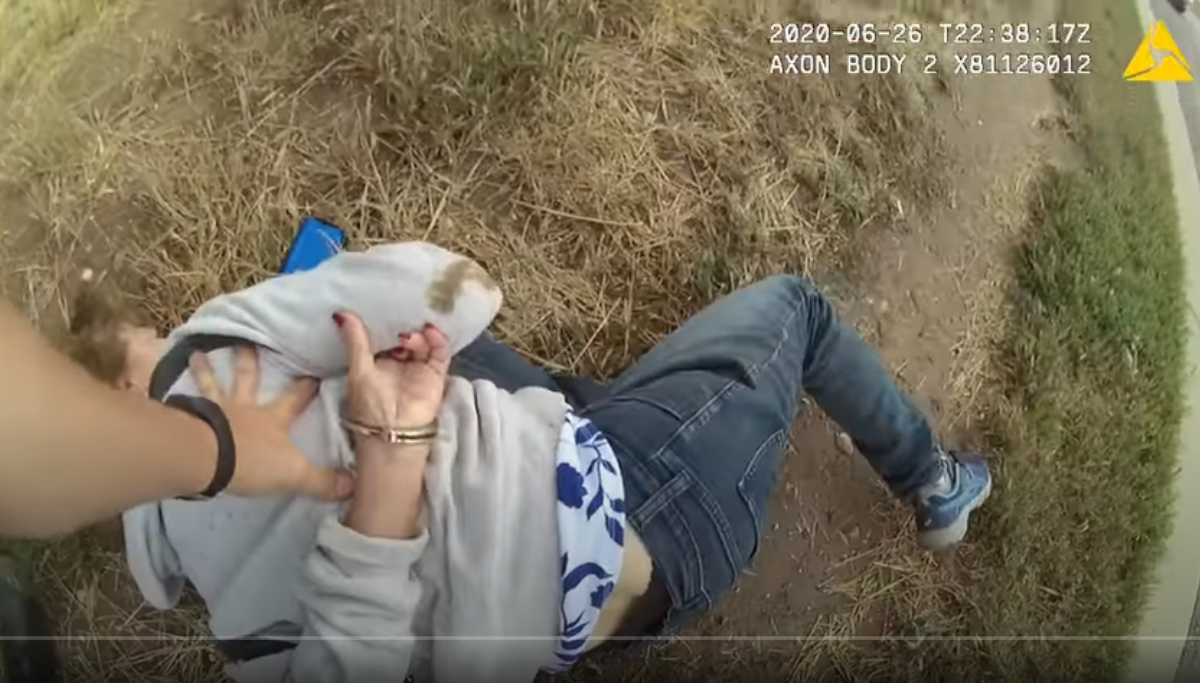
UPDATE: The officers involved in the arrest of Karen Garner have been charged and arrested.
NEW: The two former Loveland Police officers involved in the arrest of Karen Garner have turned themselves in — both facing charges for the takedown of the 73-year-old woman with dementia & failing to report the use of excessive force. Follow @DillonMThomas for more updates. https://t.co/M8mLrk8i23
A second video in this case has been released, showing the police reaction back at the station. It is almost equally as disturbing. In my opinion, this isn’t a case of “gallows humor” used as a coping mechanism by those in law enforcement, health care, etc. who face daily traumas. As a journalist, I often find that dark humor in private exchanges can help buffer the pain of covering a terrible crime story. But laughing and boasting about injuring an older woman’s shoulder while making “pop” sound effects displays an utter lack of humanity and should make one unfit to serve in any role involving the public. Would any of these officers want their elder relatives treated and mocked in such a way? It also reinforces the urgent need for better training and accountability.
Case is even worse than first reported: After violently arresting woman, 73, with dementia, police laughed about it, video shows: ‘We crushed it’ https://t.co/jaYdedZfTE
A case in Colorado involving the arrest of a 73-year-old woman with dementia for attempted shoplifting grabbed national headlines this week. It disturbed me personally because my father was in a similar situation. I believe many dementia caregivers fear this situation for their loved ones and we must do better as a community to protect those with dementia from ending up in this heartbreaking situation.
Karen Garner, 73, filed a lawsuit this week against the city of Loveland and its police officers. The incident took place in June 2020. Garner is accused of attempting to walk out of a Walmart with $14 worth of merchandise without paying. Walmart employees stopped her and were able to retrieve all items. According to the lawsuit, she offered to pay for the items at that point but the store declined, instead calling police to report the incident and offer the location in which Garner began walking. Store employees told police that the store had suffered no loss, according to the lawsuit and video of the arrest.
You can watch for yourself what happens next, as a police officer tracks down Garner. Warning: It is disturbing.
Garner is 5 feet tall and weighs 80 pounds. According to the lawsuit, her shoulder was dislocated during the arrest and she now requires assistance with daily tasks like bathing. She didn’t receive medical care until several hours later, though she complained of pain during the arrest. The criminal case against her was dropped by the district attorney’s office, while no disciplinary actions were taken against the officers until this week, when the lawsuit was filed and the video of the arrest went viral.
There is so much wrong here, and it starts way before the officers arrived. First and foremost is that America does a poor job in how it interacts with those who are mentally ill in the public sphere. I don’t know if Walmart has a blanket policy on calling police when minor incidents like this one happen in which a shoplifting attempt is thwarted, but this could have all been avoided if they had handled the situation internally. Ask if a family member can be called to pick her up and speak to them. Ban her from the store. Take a photo of her and post it in employee areas so staff know to be aware.
Police departments need better training in interacting with those with dementia and with mental health challenges in general. This arrest of Garner was a waste of law enforcement time and resources, and demonstrates the urgent need for engaged community policing.
And of course we need better resources for those with dementia. We don’t know Garner’s personal situation, if she was still attempting to live alone without regular supervision or if she wandered away. Both are common scenarios, and leave family members fearful for their loved one’s safety. With many adult day programs shut down due to COVID-19, there is likely an increase of those with dementia who feel bored and restless. While there are privacy concerns, offering identification that one has dementia could be helpful. The officer looked through Garner’s wallet about midway through the arrest. If there had been a card that said, “I have dementia. Please call this number for assistance,” the officers may have responded differently.
I thought about a similar incident with my father. I talk about the “burrito incident” in my book, The Reluctant Caregiver, and how it became a turning point in our family. He was at the stage of Alzheimer’s where his symptoms were becoming more apparent, but he still wanted to be independent. My mother sent him on an errand to pick up some items at a nearby convenience store, where they were regular customers. He picked up a couple of burritos and tried to walk out without paying. The clerk stopped him and my father got verbally agitated. Fortunately my mother was called instead of the cops and she hurried down to handle things. I believe my father would have ended up like Garner if the police had been called. Perhaps even worse.
None of this is easy. Police officers are not mental health experts, nor are store clerks. The pandemic has disrupted funding and access to community services. But it is clear in this particular case that no justice was served. I hope this case can demonstrate how broken our community services are for those with dementia and other mental health challenges and inspire solutions that are based in common sense and compassion.
We finally had infrastructure week in which President Biden’s infrastructure plan was unveiled to the public. One area of the ambitious plan has some people raising their eyebrows: “Solidify the infrastructure of our care economy.”
Traditionally infrastructure has referred to maintaining roads and bridges, along with other transit-oriented projects like airports and ports. Infrastructure is also often used to refer to essential services like water supply systems and power grids. All of these things are addressed in Biden’s plan. On the surface, caregiving may seem unrelated to how we typically define infrastructure. But make no mistake that care is just as essential to our wellbeing as the roads we use to travel and the electricity we use to power our homes.
As this editorial by Ai-Jen Poo and Heather McCullouch points out, we need to invest in the “systems of support for human capital” so that we can help people get back to work and revive the economy post-pandemic. Just as our roads need repair, so does the way we support citizens who are caring for family members. Biden’s plan focuses on the expansion of home and community care services, which is long overdue. So many caregivers are struggling right now, and the COVID-19 pandemic has demonstrated the need for additional support. Expanding services like childcare, elder care and care for those with disabilities would not only create new jobs, but would help family caregivers get back to work themselves.
Like most people, I want my taxpayer dollars to be spent in an efficient manner on essential programs. In my opinion, caregiving is just as essential as clean drinking water, electricity and roads. Our population, much like our physical infrastructure, is aging and in need of support. Care advocates like Poo have long championed viewing caregiving as an essential sector of the economy that deserves investment. I couldn’t agree more.
Over a half-million deaths later, Americans may finally be ready to have more frank discussions about death. It is long overdue, and it pains me that it took a deadly pandemic to raise awareness, but perhaps it can be an important legacy of those who we’ve lost over the last year.
I’ve long championed the need to have “the talk” with elder loved ones, and how my parents’ refusal to discuss their end-of-life wishes created unintended but very real consequences. You can read more about my challenges in my collection of personal essays, The Reluctant Caregiver.
The pandemic showed us what many of us don’t want for our deaths: to be alone with no loved ones present, to be hooked up to machines, to die in a hospital instead of at home, to not be given a proper funeral or farewell ceremony. Hopefully we will take time to reflect upon these tragic, lonely deaths and take action now to better articulate what we would like the final phase of our life to look like.
Some may want to consider a death doula. Practically speaking, death doulas are helpers in all aspects of end-of-life care, from the bodily aspects of the dying process to spiritual concerns. They can assist with logistical issues, such as whether a client would prefer to die at home or in a hospice facility, and help coordinate burial and funeral plans. Doulas can serve as a comforting presence for both the dying and their grieving family. While it may seem awkward to bring in a stranger to what is considered a private family affair, having a compassionate, but clear-eyed presence can be a great benefit in an emotionally-charged setting. To learn more about this option, the International End of Life Doula Association offers a Doula Directory.
If you have not done so already, I hope you will take this time to think about how you’d like your end-of-life care to look and document those wishes. Encourage your loved ones to do the same. The coronavirus pandemic denied many the opportunity for a “good” death but by being more open in discussing a previously taboo subject, we can hopefully move towards a better end-of-life experience for all.
We will turn our clocks forward this coming weekend, officially at two a.m. on Sunday, March 14. Of course, no one does it at that precise time. The general practice is just to move clocks ahead an hour when you go to sleep Saturday night, and don’t forget the clock in your vehicle! For most of us, […]
More than 6 millions Americans are living with Alzheimer’s
Over 11 million Americans provide unpaid care for those with Alzheimer’s and other dementias
1 in 3 American seniors die with Alzheimer’s or other dementia
This year, Alzheimer’s and other dementias will cost the nation $355 billion
The value of the care unpaid Alzheimer’s caregivers provide is $257 billion
One other important statistic to note is the racial disparity in care. Discrimination in the health care setting can prevent or delay people getting the care they need. Half of Black Americans report such discrimination. Over 40 percent of Native Americans reported discrimination. Over a third of Hispanic and Asian Americans reported discrimination. I would also add to this the discrimination that women face in healthcare settings. Discrimination can take many forms, including a doctor not taking complaints of pain as seriously and assuming a symptom is emotional vs. physical in nature. I remember my own mother suffering at the hands of doctors who did not take her cancer pain seriously, instead assuming she was drug seeking.
As caregivers, we must be vocal and tireless advocates when faced with such discrimination. Don’t be afraid to ask for a different doctor if you are uncomfortable or dissatisfied with the care being provided. I’ve read many accounts from adult children who sought treatment for their elder parents with signs of dementia but the doctors shrugged off symptoms as the elder was able to present well for the duration of the appointment. Be persistent. While there is no miracle treatment for Alzheimer’s or other dementias, there are medications and treatments which may help in the earlier stages. That is why receiving a correct and timely diagnosis is crucial.
As a former resident of Texas, I have closely monitored the widespread power outages caused by winter storms this week. Having experienced the vicious ice storms that can strike North Texas, I am not surprised, but saddened. Texas and the entire southern region of the United States are ill prepared to handle a lengthy, severe winter blast. Governments in these states are reluctant to invest significant money to prepare for a weather event that typically only happens once every several years.
The power is slowly being restored and conditions should begin to improve in Texas. There will be calls to hold officials and utilities accountable, to better winterize the equipment so a catastrophe like this doesn’t happen again. But caregivers need a plan of their own to keep themselves and loved ones safe. If there can be any positives to come of of the crisis in Texas, it is that people will be prompted to think about their own situation and how they would survive if faced with such dire circumstances. Here are some things to consider.
Stay or evacuate: There are many factors to consider when deciding whether to evacuate before a significant weather event. While most people would rather remain in their homes, a loved one’s medical condition may determine what is the safest approach. Does your loved one need routine medical care, such as dialysis, that is provided at a facility? Hundreds of dialysis clinics lost power and water during the Texas storm and were unable to provide services. Does your loved one receive oxygen or on a machine that requires electricity? Rolling blackouts in Texas left some caregivers in fear of medical equipment failure. If you plan to ride out the storm, do you have the space to stock up on shelf-stable food, medications and medical supplies?
Power and clean water sources: In Texas, the two main issues are the lack of power, which means people can’t heat their homes, and a lack of clean water, due to frozen pipes and water treatment plant issues. As a caregiver, are you prepared to tackle these problems? Do you have a reliable backup power source like a generator? Do you have ample fuel to run such equipment? If you have a fireplace, do you have enough wood and do you know how to operate it? Do you have a supply of drinking water stored or a clean water source? People are getting creative in Texas, boiling snow to use as a water source but experts warn that this still carries health risks.
Evacuating after the storm: You’ve probably seen the videos of cars going sideways trying to navigate their neighborhood’s icy streets. Removing snow from walkways and digging out cars is strenuous, and can even trigger heart attacks. Will you be able to evacuate yourself and your loved ones safely if you need to leave after a winter storm strikes? Those living in rural areas may find roads to be impassable, due to heavy snow, ice or fallen trees. Road crews focus on the highways, meaning your neighborhood streets will likely not be treated. Plan your evacuation route ahead of time.
Reach out for help: Don’t wait until disaster strikes. If you have concerns about how you and the loved ones you care for will fare in a winter storm, address them now. Talk to other family members, neighbors, church members, etc. and make a safety plan. Talk to your loved one’s doctor if you need assistance in coordinated medical care during inclement weather. While one can hope to never have to implement such a plan, having these resources available during a crisis can make all of the difference.
I spend quite a bit of time on this blog discussing the challenges of delivering health care, and in particular, elder care, in rural regions of America. But I want to highlight a recent success story: West Virginia’s COVID-19 vaccination system.
West Virginia, one of the country’s poorest states and ravaged by the opioid epidemic, seems an unlikely source when it comes to innovations in health care. As of this week, 11 percent of West Virginia’s population has received at least the first dose of the COVID-19 vaccine. In comparison, wealthier states such as Massachusetts and California have only vaccinated 7 percent of their populations. Of course population size has an impact, but considering the bumpy rollout of the vaccine nationally, it’s a fairly impressive feat.
What is the key to West Virginia’s success? Simplicity. The state has opted to manage their vaccine program closely at the state level, instead of delegating the entire complex process to county or city governments like many other states. Vaccine supply is distributed to five hospitals in different areas of the state, which then distribute it to local agencies and medical centers familiar with administering other vaccination programs such as the flu vaccine. They’ve also leaned on the state’s National Guard forces for their logistical expertise.
The centralized approach avoids some of the complications that can arise even with well-meaning collaborations from outside agencies. For example, West Virginia was the only state to opt out of a federal partnership with pharmacy chains Walgreens and CVS that assisted states in getting nursing home residents and workers vaccinated. West Virginia instead utilized the local pharmacies throughout their state and were able to complete the process before many states had even began, according to The Washington Post.
West Virginia isn’t the only success story. Rural communities in other states also have shared their vaccination success stories, many using old school tools like the phone and word of mouth to reach out to residents directly. There is often a collaborative effort in small towns, where everyone from the public health officials to firefighters and librarians willing to jump in and do their part, Reuters reported.
It’s a good thing these rural communities have found a way to get a jump start on vaccinating their residents, as the lack of medical care resources means those who develop coronavirus may not get the specialized treatment they need in time or have to be moved far out of the area. There is also an increasing worry that issues with vaccination supply may mean rural areas have to wait longer for additional supplies, while urban and suburban areas catch up.
Personal touch, word of mouth: How U.S. rural communities succeed getting COVID-19 shots into arms https://t.co/xOKj6cIIEC






![Pageflex Persona [document: PRS0000038_00069]](https://memoriesproject.files.wordpress.com/2014/02/reluctant-caregiver-cover.jpg)






 The Memories Project