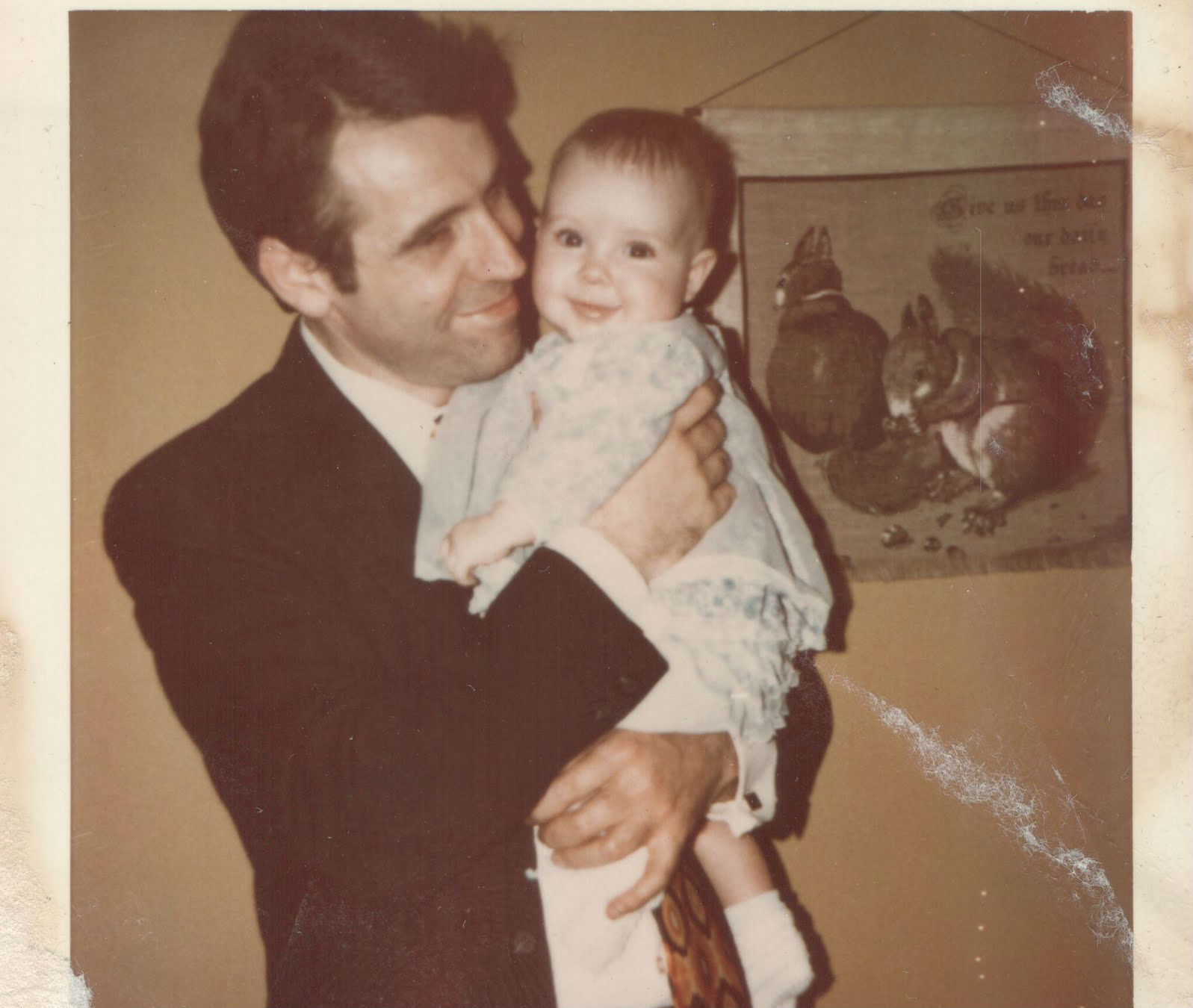
Thinking of Dad today and what it would be like to take a long walk in the park with him and discuss all of the troubles happening in the world right now.
Hope you get to spend quality time on this Father’s Day with your fathers or those who serve as father figures in your life.
It’s hard to believe that today marks 10 years since my mother’s death. The moment my mother took her last breath is still crystal clear in my mind, even though I can recognize the considerable amount of time that has passed. Considering the turmoil that has engulfed the world over the last decade, I have to say Mom had impeccable timing when she exited this world.
As I was writing this blog post, Maria Shriver’s Sunday Paper hit my inbox. In it was an article, Want to Have No Regrets When You Die?, which was written by Diane Button, a death doula. She shared an encounter she had with one of her dying clients, who told her, “I am not yet ready to die. I’ve spent my whole life caring for others, and honestly, I don’t even know who I am.”
This really resonated with me as it’s one of the cornerstones of my caregiver advocacy, to support the needs of family caregivers and making sure they don’t lose their own voice. Writing is one effective way of maintaining your identity, and can help process the complex emotions that caregiving triggers. One of my goals with publishing The Reluctant Caregiver was to encourage other caregivers to release the guilt and shame they felt during their caregiving experience.
Button shared a simple yet powerful, “I am …” writing prompt that anyone can use to connect with themselves. The prompt could also be used in an audio format if that’s one’s preference. Button suggested that it’s an exercise that one can revisit, then review prior answers to see how your sense of self has transformed over time.
Here’s what I came up with to mark this somber anniversary:
I am resilient. I am learning. I am determined. I am evolving.
Feel free to share your “I am” creations in the comments section. I’m working on a project that includes writing prompts for caregivers. More to come soon.
This May marks 10 years since my mother’s death. It’s hard to believe that my mother has been gone that long.
Because of the timing, Mother’s Day has become another day of mourning for me. The last Mother’s Day my mother was alive, she was less than two weeks from dying. I was very aware of my mother’s impending death but my mother, the eternal optimist, was less certain. What message to write in the card your mother will receive on her final Mother’s Day? I agonized over the few lines, settling on a message of gratitude and acknowledging that I would support her through her journey from this world. She appreciated the card and especially the flowers that I bought her, but I think no matter how gentle I broached the subject, my mother was still resistant to recognizing her own mortality.
May 2015: My mother reading the card on her last Mother’s Day.
Since my mother’s death, I’ve joined those who find the incessant marketing around Mother’s Day tiring and virtually inescapable. A few thoughtful companies offer opt-out emails for holiday promotions, but mostly it’s Mother’s Day ads everywhere, from TV commercials to website ads and smartphone messages. Of course I’m pleased that people who have living mothers get to dote on them, but every ad is yet another reminder of the most difficult period of my life. Getting through the day only makes me one day closer to the anniversary of her death, May 21.
Writer Anne Lamott posted her annual Mother’s Day message on Facebook for those who dread the holiday. For those of you who may be struggling with feelings of grief and longing this Mother’s Day, I hope you find some solace and recognition in her words.
While you are spring cleaning this year, it’s a great opportunity to consider the fate of family heirlooms. Too many people never have discussions about what they want to happen to their possessions when they die. This puts a huge burden on relatives who become responsible for determining the fate of a loved one’s personal items.
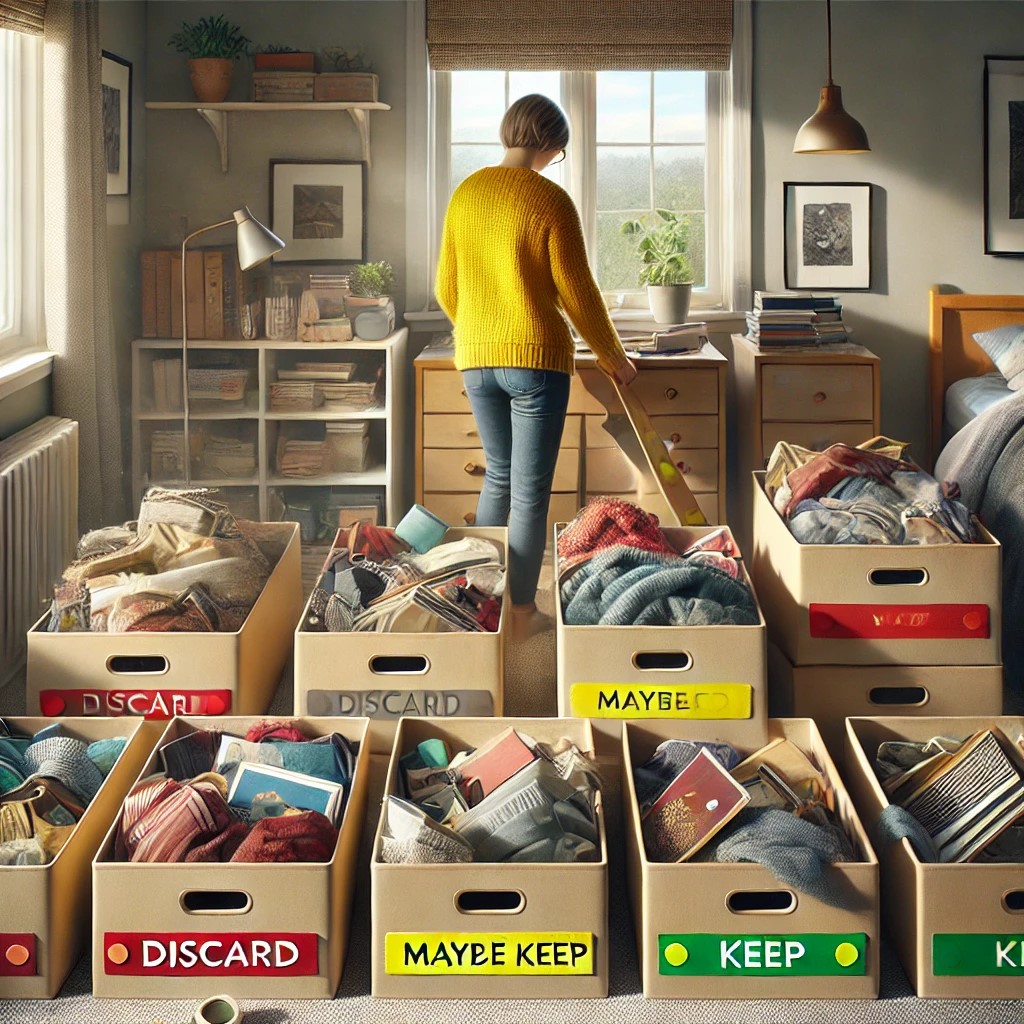
Swedish death cleaning has become a trend, but being thoughtful and methodical about going through possessions can be done at any age and stage of life. Some people like a system which offers direction about how to begin, such as tackling clothes first because they can be easier to sort through and may hold less sentimental meaning. Using a color coded system, such as red for discard, green for keep, and yellow for unsure, is a simple way of sorting, allowing even children to participate in the process.
I used a similar method to a certain extent to sort through my parents’ belongings before I put their condo up for sale. While it’s not always possible, I would recommend not attempting to sort through a recently deceased loved one’s possessions because the complex emotions of grief may cloud your judgment. If a home must be cleaned out in a timely manner, consider placing the items in a storage unit until you are ready to tackle. On the other hand, I wish I had gone through more of my parents’ belongings before the final “purge” as I had limited time for the final sorting process and only could keep a limited amount of items. My main regret is not being able to find a home for a few items.
What I kept were humble items that represented our family, like a homemade coat of arms from my father’s family in Northern Ireland, and an ice cream dish from my mother’s side of the family, which held happy memories from my mother’s childhood on the farm making homemade ice cream. I kept a few sentimental items that made me feel loved, like the knitted elephant art my mother made that decorated my room as a child, or the stuffed bunny my grandmother made from rags. I made special effort to ship my mother’s guitar to my home, and I’m glad I did. My father was not the sentimental type when it came to mementoes, but he did keep every letter to the editor that he got published, so I kept those and placed them in a scrapbook because I know they were important to him.
Having recently gone through the cleaning out process, and beginning a similar process with my own belongings, a common theme I’ve found is that too often, special items are tucked away to preserve them but they also don’t get to see the light of day. If possible, showcase those special belongings, so you can appreciate them throughout your life.
If you want to learn more about the Swedish death cleaning method, there’s a book and TV show. I’ve written before on this blog about the show, which I found moving and inspiring.
One common behavior in those with Alzheimer’s disease is to ask to “go home.” It seems like the simplest of requests, but caregivers are often stumped because their loved one may make this request when they are already home. That’s because the meaning of “home” can change as the disease progresses.
My father asked to go home almost every time my mother visited him at the memory care center during the last year of his life. But my mother didn’t get the sense that my dad meant home as the condo they had purchased. Home seemed to be a more vague destination. In fact, my dad and his roommate reportedly hatched a plan to escape the memory care center and catch a bus to … somewhere undefined. The memory care center had secured access and the escape plan was quickly forgotten.
The last time I saw my father alive, he also expressed a desire to go home. This time, it was clear that home meant to Belfast, his birthplace, because he mentioned wanting to see his sisters. There is some evidence to suggest that those with dementia hold on to their earliest memories longer than more recent ones.
For caregivers, the “going home” request can be difficult to navigate. This recent article in Self has some good tips and strategies. Once physical discomforts are ruled out, caregivers can implement a variety of strategies to engage with their loved one and help them move on from the “going home” obsession loop. These strategies may need to be adjusted over time; be prepared for a period of trial and error.
Loved ones with dementia who express great distress about their current surroundings may attempt to wander. In these cases, making sure home are adapted to prevent escape attempts is essential. Specialized door locks and high-tech tracker tags can help in these situations.
Losing a sense of home must be frightening, as our homes are often our sanctuaries. Helping loved ones with Alzheimer’s navigate this disturbing yet common behavior takes compassion, patience, and creativity.
You don’t have to be a medical professional to know that getting a good night’s sleep is important for overall health and wellbeing. A new study, following up on findings from previous studies, finds evidence of a potential link between a particular phase of sleep and Alzheimer’s.
The study, published in the Alzheimer’s Association Alzheimer’s & Dementia Journal found a potential link between Alzheimer’s and a delay in the onset of the rapid eye movement (REM) phase of sleep. The study was small (128 people) and was conducted in a sleep clinic, which could have impacted sleep quality. Still, the findings were notable due to its focus on REM sleep. According to HealthDay, researchers focused on this key phase of the sleep cycle because its during this period that the brain processed memories.
Half the patients in the study had been diagnosed with Alzheimer’s, and another third had mild cognitive impairment (MCI), while the average age of the study participants was 70.
Two groups were created for the study: those who entered the REM sleep phase earlier (less than 98 minutes after falling asleep), or later than average (more than 193 minutes after falling asleep.) The study found that those with Alzheimer’s were more likely to experience delayed REM sleep. This group also had higher levels of amyloid and tau, toxic brain proteins long associated with Alzheimer’s disease., and lower levels of healthy brain proteins than those with an earlier onset REM sleep phase.
I’m fortunate to never have suffered from insomnia, but I’ve seen the negative impact that being unable to get a good night’s sleep has on the lives of others. My mother had chronic insomnia, though she never developed dementia. My father didn’t suffer from insomnia but he had a sleep cycle that was outside the norm. He worked the swing shift most of his work career, so he wouldn’t get home until very late at night, and then stay up until the early morning hours to wind down. My father also suffered from periodic nightmares. Decades later, my father began having disturbing dreams whose effects lingered long after waking, which coincided with his earliest symptoms of dementia.
As insomnia has seemingly become more common in our society, there’s a lot of resources out there for those who are sleep deprived and looking for better quality sleep. Sleep hygiene has become a popular concept in recent years, which can include everything from diet to bedroom setup. Natural supplements like melatonin may help some, while OTC and prescription medication may be necessary for stubborn cases but come with a host of side effects. Non-medication options include meditation and things like the Calm app’s “sleep stories.” (Check with your health care insurer as some offer complimentary Calm subscriptions.)
While researchers haven’t been able to determine whether insomnia is a risk factor and/or an early sign of Alzheimer’s, good sleep comes with a host of health benefits beyond cognitive function. That’s something worth sleeping on.
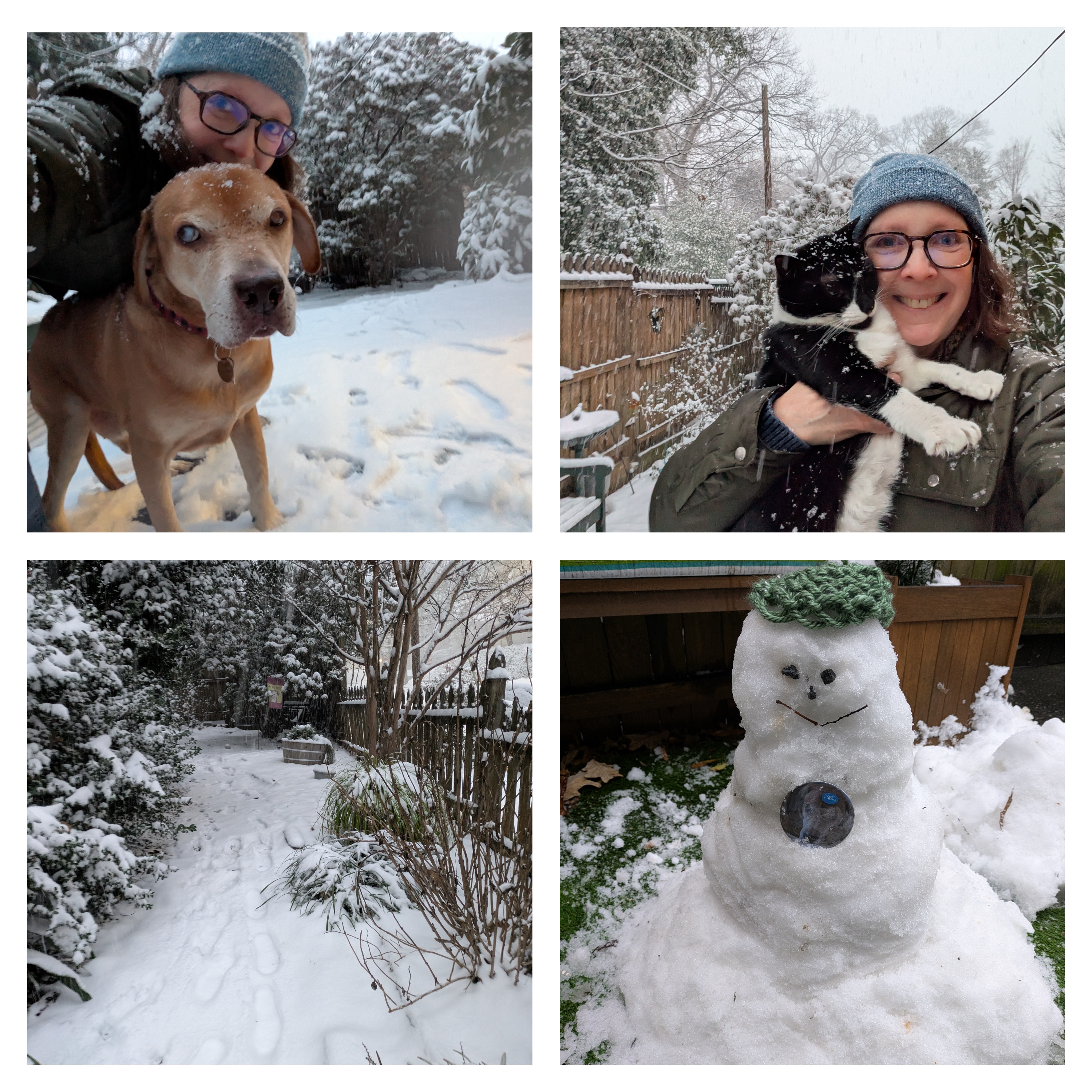
We had the rare snow day in Atlanta on Friday. It snowed a bit more than expected intown, and upon waking one walked into a winter wonderland.
It’s always fun to see how pets react to snow, especially when they don’t see it very often. My dog Murphy was braver than expected. My girl kitty Serena, who on a sunny day loves to try to bolt out the door to explore the yard, approached the snow with extreme caution and immediately regretted her decision, haha. And Dorian, my boy cat, the daredevil of the bunch, flat out refused to even put a paw into the snow.
Growing up in southern California, I never saw snow until I moved away for college, but I remember my mother having fond memories of snow days on the farm in Tennessee where she grew up. While there were still farm chores to be done, school was out. The family would make snow cream from the freshly fallen snow. Of course nowadays, with all of the pollutants in the environment, this wouldn’t be safe to do, but back in the day, my mother had fond memories of this rare, special treat.
Of course, winter weather can bring challenges to those with health issues and their caregivers. Last year around this time I wrote about keeping your loved ones with dementia warm and comfortable during winter weather events. I notice that as I age, the cold tends to bother me more so I’m using some of the tips on the list as well, such as layering and paying attention to my hands, which can be a challenge to keep warm.
Hope you are staying warm and cozy this winter season.
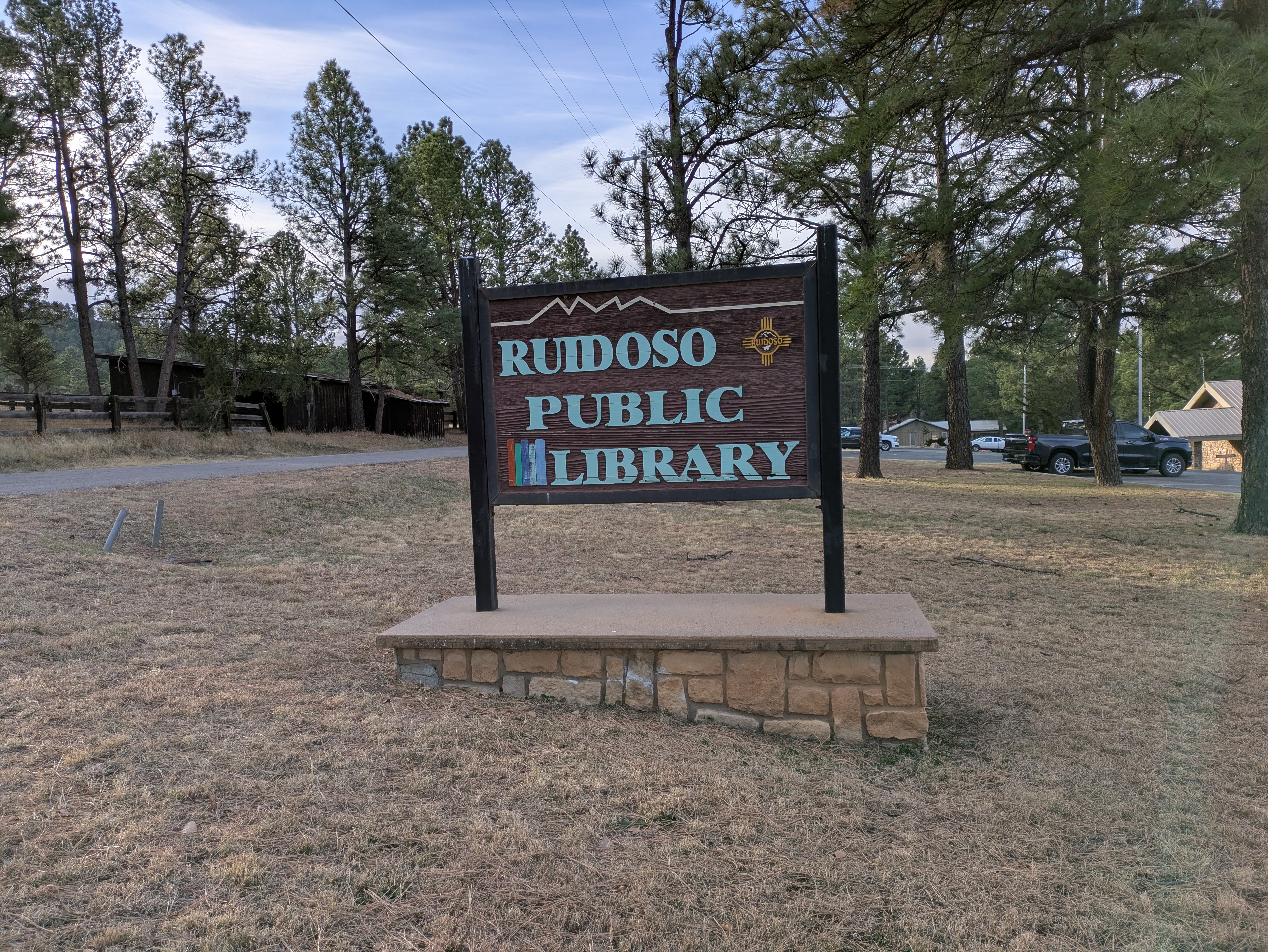
Posing with the bears outside of the Ruidoso Public Library, 2004.
My father died 13 years ago today. Having spent time recently going through the final batch of my father’s possessions, I feel his spirit even closer this year.
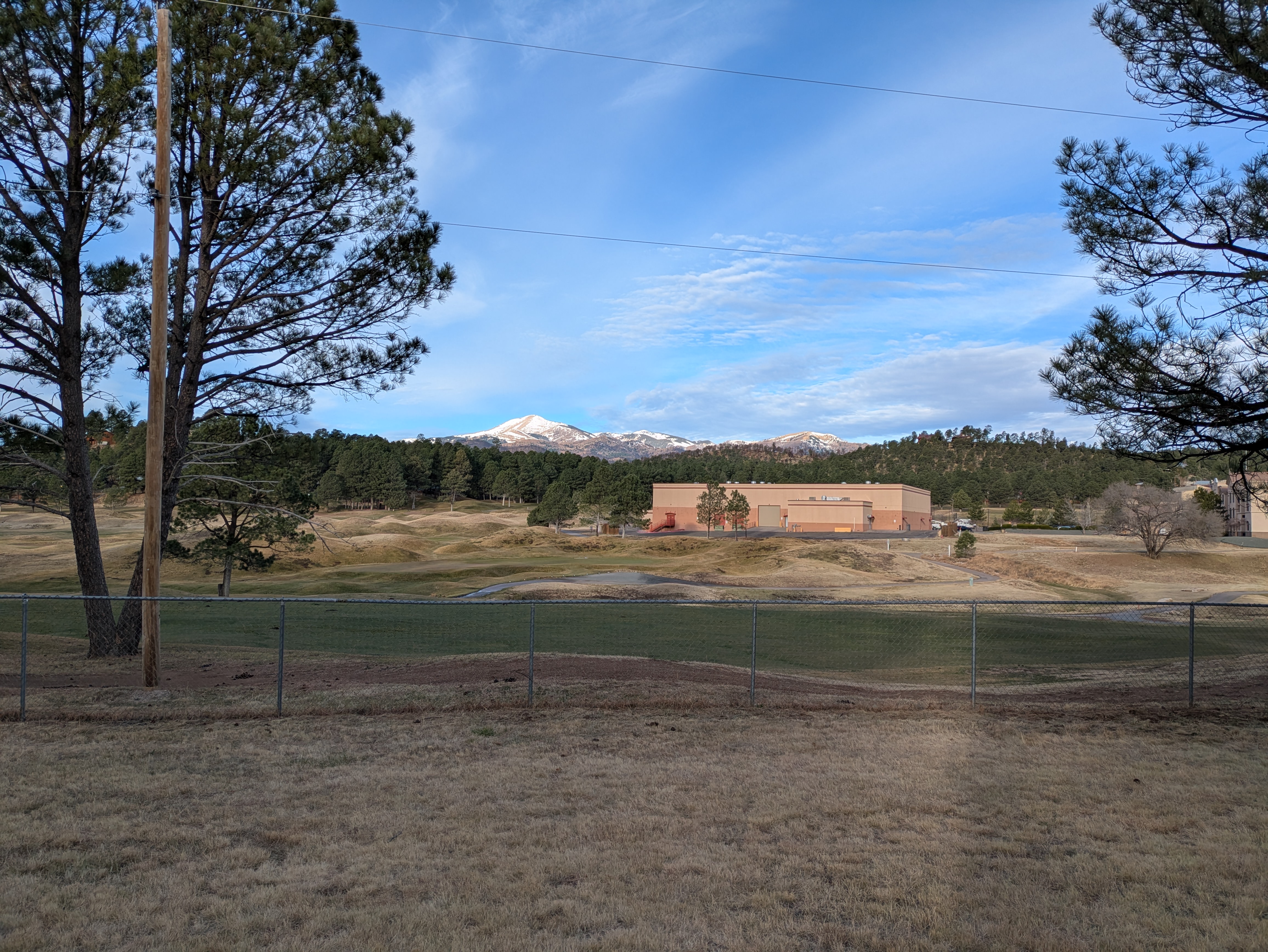
I didn’t have down time while I was cleaning out my parents’ condo, so I got up extra early on the day I was leaving to visit the library. I took a photo with one of the bear statues. It was too early for the library to be open but I was glad I squeezed in the time to take in the sights and sounds of nature along the picturesque walking trail to the library, as my father did so many times.
Posing with the bears again, Nov. 2024.
It was my father’s favorite spot. He spent countless hours there, and even as his dementia progressed and his reading skills diminished, he still made his way to the library out of habit.
I don’t visit libraries myself anymore, having adopted the convenience of e-books, but as I mentioned in my last blog post, libraries will always hold a special place in my heart.
Even though it’s been well over a decade since my father’s passing, marking the somber anniversary still does have an impact on my holiday spirit. For those who have experienced loss during the holiday season, allow yourself the space and self-compassion to adjust expectations.
Reflection and remembrance can take many forms, and your preferences may change over time. Be authentic and don’t try to force emotions.
I know this can be easier said than done when it comes to demands from others, who may not appreciate the complexities and individuality of the grieving process. My wish for you this holiday season is that others will be supportive and understanding.
When I was cleaning out my parents’ condo, I came across so many books! I’d donated many books to the local library over the years, so I couldn’t believe how many books were still left when I did the final cleanout. Most of the books belonged to my father, who had a deep interest in WWII history, as he lived through the bombing of his hometown of Belfast when he was a child.
Reading was my father’s passion. He was a voracious reader and always had a book or two on his nightstand or coffee table. He sparked my love of reading, and some of my happiest childhood memories are Saturday afternoons spent with Dad in the library. I still enjoy physical books, but I do most of my reading now via e-books. It’s just more convenient and I’m at a point in life where I want to downsize, beginning with my possessions.
With that being said, books can make wonderful gifts this time of year so I want to let you know about Smashwords 2024 End of Year Sale. I’m a participating author in this sales event so you can get e-book versions of The Reluctant Caregiver and CBD for Caregivers for half off from Dec. 12 through Jan. 1, 2025. Use the code SEW50 at checkout.
Digital books can make ideal gifts for those who live far away or for last-minute gift ideas. If you are gifting a book to a caregiver, you may wonder, do caregivers have time to read? It really depends upon the individual circumstance, but reading can be a source of respite, a way to whisk away to another world, even if one only has time to read a page or chapter at a time. A great resource for books that are curated by and for dementia caregivers can be found at AlzAuthors. Their collection includes everything from memoir to self-help to children’s books.
Speaking of children’s books, my tale about my senior rescue dog, Slow Dog, is also still available.
Murphy posing with his book.
Hope you get to enjoy the gift of a good book this holiday season.













![Pageflex Persona [document: PRS0000038_00069]](https://memoriesproject.files.wordpress.com/2014/02/reluctant-caregiver-cover.jpg)







 The Memories Project