I’ve been following the Two Socks on One Foot blog for awhile, and often see similarities in our stories as family caregivers of a parent with dementia.This post especially reminds me of how Dad suddenly ended up in a care center. It’s important reading for any dementia caregiver.
10 days ago Mum had 2 falls in one day. I came in at lunchtime and she was sitting on the bedroom floor, though apparently uninjured. I couldn’t get her back on her feet so rang my sister to help but we still couldn’t get her up between us. At one point she went quite pale and breathless so I rang an ambulance. We laid Mum on the floor with pillows under her and a blanket over her….and there she spent the afternoon. The ambulance took 5 hours to arrive! I rang several times and it was always the same response. There were higher priority emergencies apparently.
We managed to get her up before the ambulance arrived. My niece came round and between the 3 of us, we got Mum up again but she was so unsteady on her feet, I was really concerned. When the paramedics arrived, they gave…
I can’t help but think of Dad on St. Patrick’s Day. I’ve already made my toast with Irish whiskey and I’ve cooked vegetarian versions of Irish stew and Colcannon. I believe I’ve mentioned before that for Dad being such a proud Irishman, he was not big on celebrating the holiday. I think he was suspicious of the cartoonish leprechauns and the focus on getting drunk (though Dad loved to have a few pints himself).
Image: Clipartpal.com
Mom was telling me today that she thinks it was more her idea to marry than Dad’s. He seemed to be in no rush to get hitched, despite the fact that he was in his mid-thirties and still single. She didn’t have to push him very hard for him to agree to go down to Mexico and get married, but I wonder what was running through his head at the time.
I think sometimes daughters find it awkward to talk to their fathers about romance, but there are questions about his relationship with Mom that will forever go unanswered now. Mothers and daughters tend to share more information like that more readily. My advice is if you want to know something about your parents, ask now. The worst they can say is no. Otherwise, you may be left wondering the rest of your life about little details of your parents’ lives before you came into the picture.
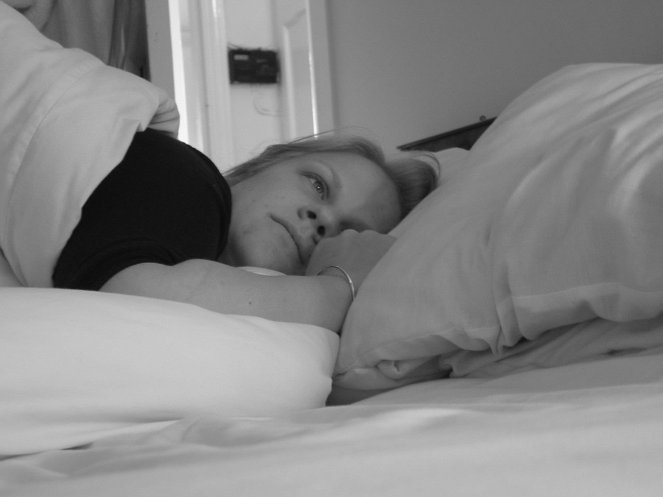
An interesting study has been in the news this week, suggesting a possible link between sleep quality and Alzheimer’s. While the study doesn’t suggest that everyone with insomnia will develop dementia, the study did find an interesting correlation between poor sleep quality and an increase in amyloid protein production, the latter which is associated with the brain plaque found in Alzheimer’s patients.
My father had no trouble sleeping most of his life. In fact, sometimes I felt like he slept too much, especially when I was a kid. He worked the swing shift so he was on a different schedule from the rest of us. He would go to bed about 2 a.m. after winding down with a couple of beers and watching late night TV. So even if he just slept the recommended eight hours a night, that would mean he wouldn’t rise until mid-morning. I was an early riser for school and I don’t know if Mom ever slept at all, haha.
Other than Dad’s occasional nightmares, I don’t remember Dad having any sleep issues. As Dad’s dementia progressed, his sleep patterns shifted. He would stay up all night, just sitting in his chair in the living room, fully dressed in his day clothes. He would spend the day nodding off, falling asleep wherever he was.
What came first? The sleep issues or the dementia? We will never know, but getting a good night’s sleep offers many health benefits. I’ve never been one prone to insomnia, but in the past couple of years, I’ve been awakened by my senior pets in the middle of night needing food or other care. So my sleep pattern has been consistently broken. I will be following further sleep and dementia studies very closely.
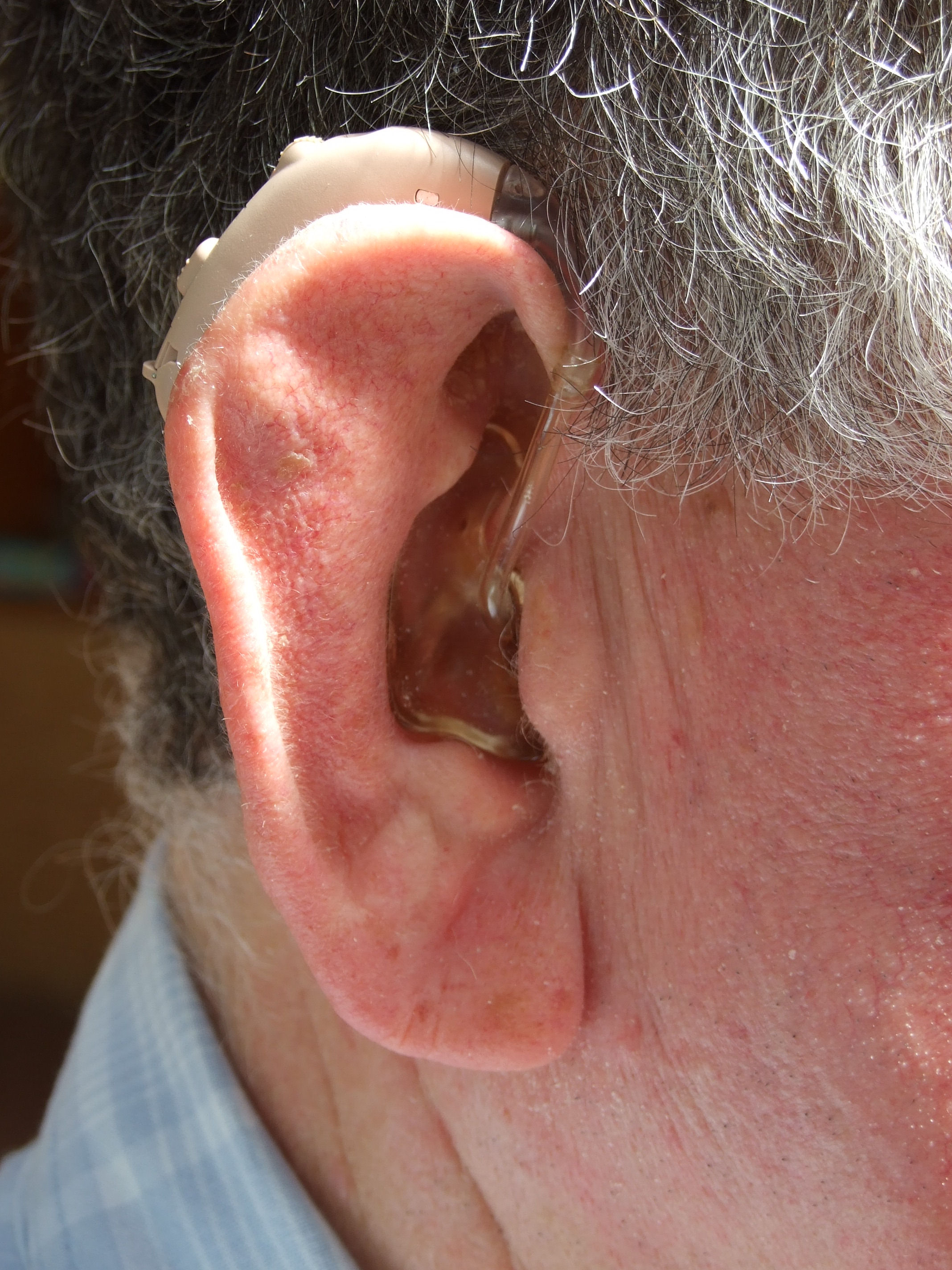
One topic I’ve seen latelyin the world of dementia news is that hearing loss could be a symptom of dementia. There is growing evidence suggesting that hearing loss speeds up cognitive decline in the elderly. Doctors think there may be a mental and physical component. Physically, the brain has to direct extra resources to help with hearing problems and emotionally, people become more socially isolated as their hearing loss becomes more profound.
Dad did experience fairly significant hearing loss in the years before his dementia symptoms appeared. Mom suspected Dad was just using hearing loss as a way to tune her out, and I could see that as being a real possibility! But now I wonder if Dad’s hearing loss was the first sign of a much more serious health issue.
I think it would be a good idea if dementia screening became routine for elderly patients that complain of hearing loss. Many of the dementia screening tests are non-invasive, painless and quick to perform. Early diagnosis usually means more treatment options.
I read this USA Today article about how family caregivers of dementia patients are having a negative impact on the workforce. It is very true and yet another consequence of Alzheimer’s, one that is often overlooked. According to the article, 1 in 7 Americans have been or are currently caregivers for family members. Almost 70 percent of those people had to modify their work schedule in some way. This is a big loss of productivity for companies, if you want to look at it from a cold, hard statistical perspective.
Of course, as any caregiver knows, caregiving goes beyond just the physical tasks. Caregivers often become depressed, anxious and suffer from exhaustion. This can lead to accidents on the job or poor working relations with co-workers.
While I was not a direct caregiver to my dad, I was for my mom for the last half of 2012. My mom didn’t have dementia, she had cancer, but her need for a family caregiver was just as necessary. And I did the only thing I felt like I could do in that situation, which was quit my job. It was not a decision I made lightly, but my mom’s recovery depended upon having a family advocate by her side for several months. I’m an only child, and Dad passed the year before.
Right now, I’m back home but I’m still only working part-time. I’m hesitant to apply for full-time work again because I fear my mom may need me again. Financially, part-time income will not be sustainable in the long-term.
There are no easy answers, but caregivers and their ill loved ones need better community support. While there are some family members who want to be full-time caregivers, I think many caregivers benefit from keeping to as normal as a routine as possible. Caregivers shouldn’t have to choose between providing loving care for their loved ones and being able to support themselves and their families.
Well, here’s something about my parents that I never knew before. Mom and I were discussing the strange case of the Canadian tourist found dead at the Cecil Hotel and Mom mentioned that Dad was staying there when they dated. She said she would take the bus from her apartment to the Cecil Hotel to meet Dad. Then they would take another bus to the race track or wherever they were going on their date. They had to take a bus because Dad did not have a car. At the time, he did not even know hw to drive.
Dad was a handsome devil!
And it was Dad’s lack of wheels of all things that caused them to break up a few times. Mom came from that era and culture where you looked at a guy’s shiny set of wheels before you checked out the guy himself. Mom told me they got in a few tiffs that would cause them to take a break from each other for a few weeks at a time. Guess it’s a good thing that Dad got his best buddy to teach him how to drive.
But Mom admitted that she was the one that caved in and would call up Dad when they were on hiatus. Dad would ask why Mom was calling him and Mom would say to find out why Dad hadn’t called her. 🙂
Eventually, Dad obtained his license and a car and Mom’s heart. (Not necessarily in that order.)
UPDATE FEB. 2020: The documentary, “Crime Scene: The Vanishing at the Cecil Hotel,” premieres on Netflix on Feb. 10. I was interviewed for the project. Check out the trailer below.
UPDATE JUNE 2013: News sources are reporting that the death of Elisa Lam has been ruled accidental with bipolar disease being a “significant condition.” This ruling still does not answer the main question on most people’s minds, which is how Elisa Lam ended up on the roof of the hotel (a reportedly secure area only accessible to staff) and how she ended up in the water tank where it has been ruled she accidentally drowned. If no foul play was involved, was there negligence in security by the hotel? Did Elisa Lam have a mental health crisis? So far the police haven’t indicated that the hotel has done anything wrong. It appears we may never really know what caused Elisa Lam to end up on the roof where she tragically died.
My previous post about my father’s encounter with a ghost at the Cecil Hotel started receiving a lot of hits this past week. I soon realized there was a news report of a missing college student named Elisa Lam from Canada and her last known whereabouts were at the Cecil Hotel (also referred to as Hotel Cecil). Furthermore, there is video of her acting strangely in the elevator of the hotel.
A retro image of the Cecil Hotel. Photo: Crow’s Nest postcards, ebay.com
I hoped, along with everyone else, that there would be a happy ending to this story. But whether it is curse or merely coincidence, the Cecil Hotel is now the scene of another tragic death. Over the coming days, perhaps we will learn more about how Elisa Lam, 21, ended up dead in one of the hotel’s water tanks located on the roof. My condolences go out to her family and friends.
Right or wrong, the Cecil Hotel has earned quite the garish reputation over the years. The hotel has seen strange deaths over the years and served as a temporary home to serial killer Richard Ramirez. My father’s frightening experience in a room at the Cecil Hotel shook him up every time he retold the story. Of course, there have been thousands of uneventful stays at this hotel as well. I’m an open-minded skeptic when it comes to buildings with bad atmospheres.
I know Dad would have followed this case closely and would have been very saddened by the unfortunate outcome.
I’ve always been a big fan of film director Michael Haneke’s work. He makes films that are emotionally brutal and can make the viewer uncomfortable, because even in the darkest moments, we may catch a glimpse of ourselves in his films. Haneke’s movies are not everyone’s cup of tea, but for those who are involved with caregiving of an ill family member, “Amour” is essential viewing.
Copyright: Sony Pictures Classic
The movie has earned many awards and accolades, and is nominated for best film at the Oscars. Both of the lead actors are in their mid-80’s and offer amazing performances. The story is deceptively simple. A long-married couple faces upheaval when one of them becomes ill. For any of us who have been family caregivers, the roller coaster of emotions is displayed quite realistically in this film.
As the film progresses, the side effects of the wife’s illness begins to take greater hold over their lives, making both of them more desperate as they valiantly attempt to preserve their loving relationship. I won’t spoil the ending, but bring some tissues.
While the film is certainly a stark, sobering and heartbreaking look at family caregiving, there are some beautiful and tender moments of love displayed throughout the movie. I think anyone who has ever been a family caregiver will be able to relate to the new world that is formed when a loved one becomes ill.
I spoke this week to a representative of the Alzheimer’s Prevention Initiative. I’ve mentioned them before. They are one of many organizations waging battle against Alzheimer’s, with an emphasis on research. The Alzheimer’s Prevention Registry is focused on building up a database of willing participants for clinical trials they hope to begin in 2014.They hope to grow their database to 250,000 participants.
Why such a large number? As I learned the other day, it can be so difficult to fill a trial with people when such specific criteria is required. The bigger the pool of participants to choose from, the better chance these trials have of being filled with the best matches and seeing completion.
It is simple to sign up online. You are under no obligation whatsoever to participate in any trials or any of the organization’s activities. You will not be bombarded by emails, but you can receive updates on how current research is going in the area of prevention and treating Alzheimer’s. If you are willing to share your personal story, there is an option for that, which is why I was sharing my story with the representative the other day.





![Pageflex Persona [document: PRS0000038_00069]](https://memoriesproject.files.wordpress.com/2014/02/reluctant-caregiver-cover.jpg)







 The Memories Project