Today marks 14 years since my father’s death. The events of that day in 2011 and receiving the call that every family member dreads is so sharply engraved in my memory that it’s difficult to believe so much times has passed. Yet my own life and the world has transformed so much that it’s equally as difficult to believe all of these changes have occurred in the last 14 years. Grief processing tends to warp the time element.
For those of you experiencing grief during the holidays, thisWhat’s Your Grief? resource posted by Happy Healthy Caregiver in a recent newsletter may be helpful. It offers 64 tips on how to manage grief and honor the memories of departed loved ones during the holiday season.
Finally, I want to express gratitude for those who read this blog. The Memories Project was born in the immediate aftermath of my father’s death. I’m grateful to the caregiver blogging community for their support and sharing their own caregiving journeys. The blog led to personal essays and then my award-winning book, The Reluctant Caregiver. For those grieving this holiday season, consider a creative outlet to process those complex emotions. Most of all, give yourself the space to simply be with your emotions.
I was attending an event this weekend where we were talking about grief and gratitude. It’s an appropriate topic for November as we quickly approach Thanksgiving where we are reminded to be grateful for our blessings.
But when one is going through difficult times or actively grieving, tapping into gratitude can feel impossible. A person at the event I attended suggested that the bigger and deeper the grief, aiming to engage in smaller moments of gratitude can feel more achievable and still have a significant impact. The last thing one should do is force themselves to be grateful, because authenticity is essential. The last thing someone who is grieving should do is feel guilty because they cannot muster feelings of gratitude.
What can be helpful is taking time to be present in the moment. Recognizing the complexity of the more negative emotions and understanding that grief’s depth mirrors the bond you had with what is gone. Those relationships that were complicated may trigger even a deeper mix of emotions. Honoring those feelings over time can slowly make space for other feelings to emerge, such as gratitude.
It can also help to focus on something outside of your current situation. I find nature to be one of the simplest and most satisfying ways to ground oneself in a moment of gratitude. Being of awe of the stars in the night sky, a gorgeous sunrise, the colors of the leaves in autumn — these simple moments of gratitude have helped chip away at the oppressive grief I have felt at times during the holiday season.
Hope these tips help if you are navigating grief this holiday season.
Today Mom would have been 88 years old. My mother and I shared a birthday month which always made July special to me. Now it’s a little bittersweet, but I still carry the memories of how my mother tried to make my birthday special each year and how I did the same by making her handmade cards and crafts. What my gifts lacked in artistic talent they made up for in love.
Even though my mother and I were born in the same month and the same astrological sign, we were opposites in personality. I write about those challenges in The Reluctant Caregiver. But one thing we shared was a love of creativity and the arts. Over her lifetime my mother learned how to play the guitar and took dance lessons. She made fabric art wall hangings. I’m grateful to have inherited a love of creativity as well, as it can make the world a better place during challenging times.
It’s hard to believe that today marks 10 years since my mother’s death. The moment my mother took her last breath is still crystal clear in my mind, even though I can recognize the considerable amount of time that has passed. Considering the turmoil that has engulfed the world over the last decade, I have to say Mom had impeccable timing when she exited this world.
As I was writing this blog post, Maria Shriver’s Sunday Paper hit my inbox. In it was an article, Want to Have No Regrets When You Die?, which was written by Diane Button, a death doula. She shared an encounter she had with one of her dying clients, who told her, “I am not yet ready to die. I’ve spent my whole life caring for others, and honestly, I don’t even know who I am.”
This really resonated with me as it’s one of the cornerstones of my caregiver advocacy, to support the needs of family caregivers and making sure they don’t lose their own voice. Writing is one effective way of maintaining your identity, and can help process the complex emotions that caregiving triggers. One of my goals with publishing The Reluctant Caregiver was to encourage other caregivers to release the guilt and shame they felt during their caregiving experience.
Button shared a simple yet powerful, “I am …” writing prompt that anyone can use to connect with themselves. The prompt could also be used in an audio format if that’s one’s preference. Button suggested that it’s an exercise that one can revisit, then review prior answers to see how your sense of self has transformed over time.
Here’s what I came up with to mark this somber anniversary:
I am resilient. I am learning. I am determined. I am evolving.
Feel free to share your “I am” creations in the comments section. I’m working on a project that includes writing prompts for caregivers. More to come soon.
This May marks 10 years since my mother’s death. It’s hard to believe that my mother has been gone that long.
Because of the timing, Mother’s Day has become another day of mourning for me. The last Mother’s Day my mother was alive, she was less than two weeks from dying. I was very aware of my mother’s impending death but my mother, the eternal optimist, was less certain. What message to write in the card your mother will receive on her final Mother’s Day? I agonized over the few lines, settling on a message of gratitude and acknowledging that I would support her through her journey from this world. She appreciated the card and especially the flowers that I bought her, but I think no matter how gentle I broached the subject, my mother was still resistant to recognizing her own mortality.
May 2015: My mother reading the card on her last Mother’s Day.
Since my mother’s death, I’ve joined those who find the incessant marketing around Mother’s Day tiring and virtually inescapable. A few thoughtful companies offer opt-out emails for holiday promotions, but mostly it’s Mother’s Day ads everywhere, from TV commercials to website ads and smartphone messages. Of course I’m pleased that people who have living mothers get to dote on them, but every ad is yet another reminder of the most difficult period of my life. Getting through the day only makes me one day closer to the anniversary of her death, May 21.
Writer Anne Lamott posted her annual Mother’s Day message on Facebook for those who dread the holiday. For those of you who may be struggling with feelings of grief and longing this Mother’s Day, I hope you find some solace and recognition in her words.
AI technology has seemingly immersed itself in every part of our lives, so why not in our afterlives as well?
The concept of “generative ghosts” is outlined in a research paper released in 2024 that includes a Google DeepMind scientist as a contributor. Since then, thanks to a grant from Google, the research continues while at the same time, enterprising AI companies are swooping in to offer products and services. I’ve been following the trend over the last year.
In the paper, the researchers defined generative ghosts as “AI agents that represent a deceased person.” According to the researchers, this differs from a static “griefbot” program where you could have chats with your deceased grandmother about her life based upon data you provide, such as letters, journals and audio and video files to create the information source that the AI chatbot would rely on to provide responses. With generative ghosts, the program is able to create novel content and evolve over time. An example would be a grandmother offering advice on her granddaughter’s wedding day, years after the grandmother’s death.
While some may find such a concept creepy, I can see its benefits especially for younger generations, who have been raised solely in a digital world and who may not have the same emotional connection that older generations have to low-tech sources of family history such as photo albums and scrapbooks. A griefbot that’s a phone app or an avatar of grandma in a short web video sharing her beloved recipe for chocolate chip cookies might be more impactful for younger relatives. Generative ghosts could be tailored to interact with relatives of a variety of ages, serving as a generational bridge to ancestors.
Of course there are many ethical and practical considerations to ponder when it comes to such a concept, which the research paper outlines. One question is whether the generative ghost would speak in first person, as if they were actually the deceased loved one, or in third person, representing the loved one. The form in which the generative ghost assumes is also a question to consider: does it remain in a digital format, exist in a virtual reality world, or does it take on a physical form like a robot? Does the generative ghost remain in its own time period or does it grow in its understanding of current events is another interesting question. One of the most intriguing questions that I found in the research paper was whether the generative ghosts should be allowed to earn income, if say, your relative was a successful author.
The impact of generative ghosts to society could present a host of benefits and consequences. While it could help some through the painful grieving process, it could also interfere with a person’s ability to move on with their lives after the death of a loved one. As with any digital tool, there is the risk of cybercriminals to hack and hijack personal data.
If you could create a generative ghost of a deceased loved one, who would you choose?
While you are spring cleaning this year, it’s a great opportunity to consider the fate of family heirlooms. Too many people never have discussions about what they want to happen to their possessions when they die. This puts a huge burden on relatives who become responsible for determining the fate of a loved one’s personal items.
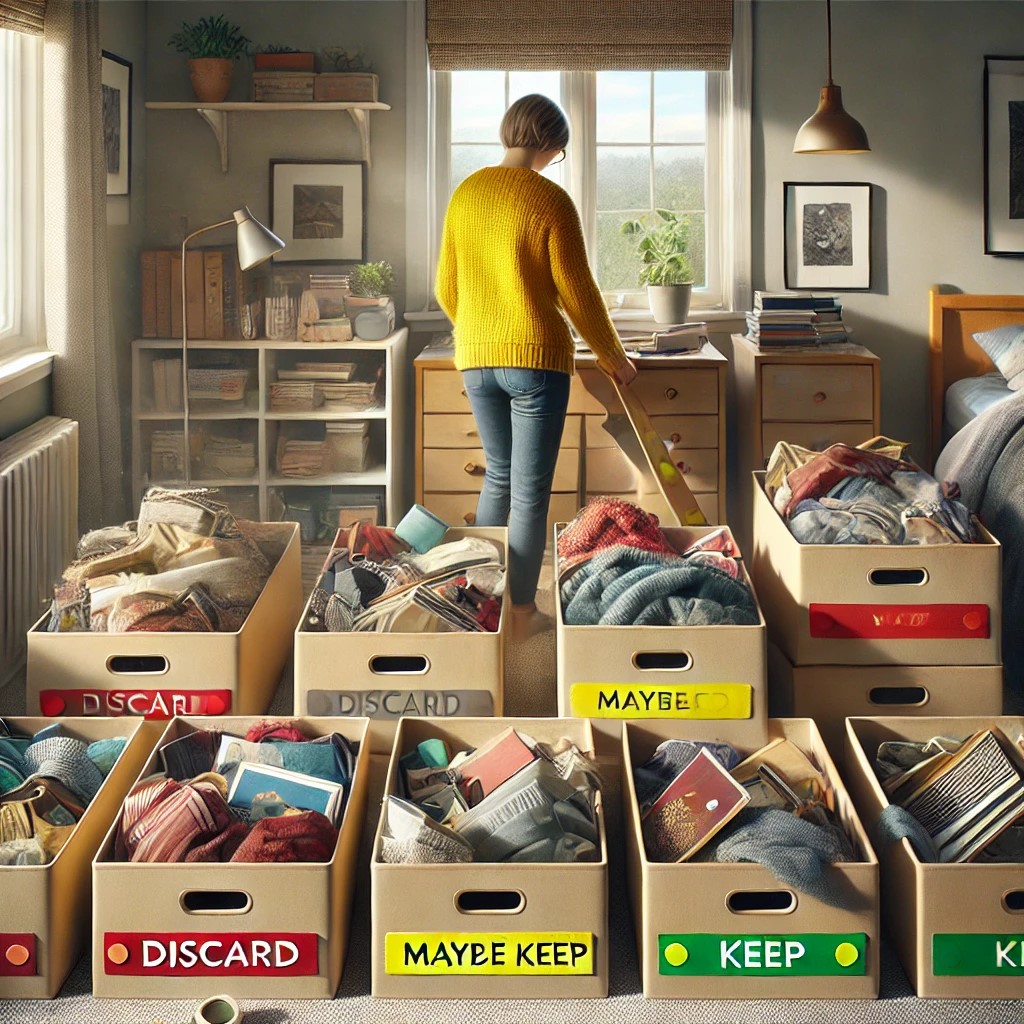
Swedish death cleaning has become a trend, but being thoughtful and methodical about going through possessions can be done at any age and stage of life. Some people like a system which offers direction about how to begin, such as tackling clothes first because they can be easier to sort through and may hold less sentimental meaning. Using a color coded system, such as red for discard, green for keep, and yellow for unsure, is a simple way of sorting, allowing even children to participate in the process.
I used a similar method to a certain extent to sort through my parents’ belongings before I put their condo up for sale. While it’s not always possible, I would recommend not attempting to sort through a recently deceased loved one’s possessions because the complex emotions of grief may cloud your judgment. If a home must be cleaned out in a timely manner, consider placing the items in a storage unit until you are ready to tackle. On the other hand, I wish I had gone through more of my parents’ belongings before the final “purge” as I had limited time for the final sorting process and only could keep a limited amount of items. My main regret is not being able to find a home for a few items.
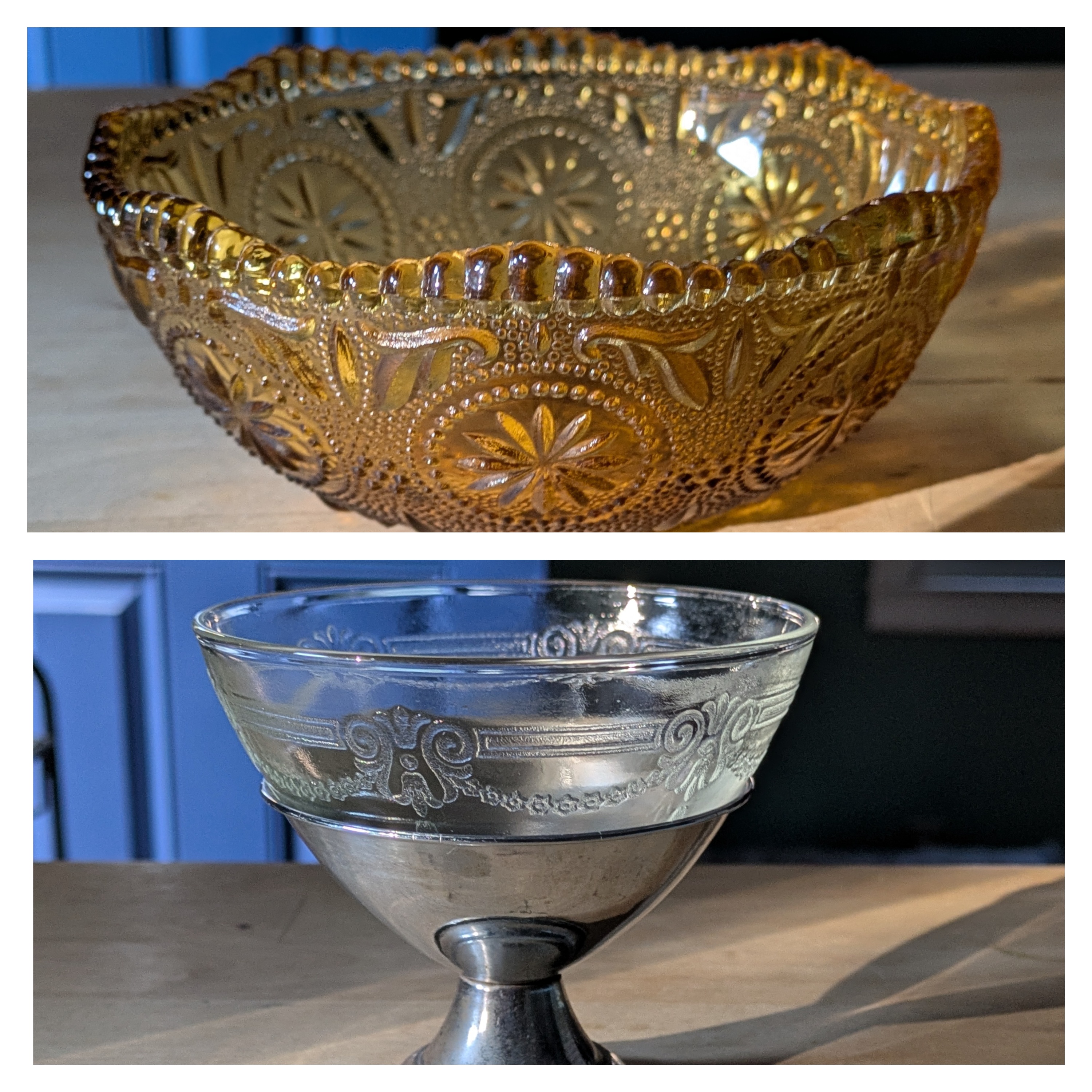
What I kept were humble items that represented our family, like a homemade coat of arms from my father’s family in Northern Ireland, and an ice cream dish from my mother’s side of the family, which held happy memories from my mother’s childhood on the farm making homemade ice cream. I kept a few sentimental items that made me feel loved, like the knitted elephant art my mother made that decorated my room as a child, or the stuffed bunny my grandmother made from rags. I made special effort to ship my mother’s guitar to my home, and I’m glad I did. My father was not the sentimental type when it came to mementoes, but he did keep every letter to the editor that he got published, so I kept those and placed them in a scrapbook because I know they were important to him.
Having recently gone through the cleaning out process, and beginning a similar process with my own belongings, a common theme I’ve found is that too often, special items are tucked away to preserve them but they also don’t get to see the light of day. If possible, showcase those special belongings, so you can appreciate them throughout your life.
If you want to learn more about the Swedish death cleaning method, there’s a book and TV show. I’ve written before on this blog about the show, which I found moving and inspiring.
The unusual circumstances surrounding the deaths of actor Gene Hackman and his wife serve as a stark reminder of what can happen when a spouse who also is the primary caregiver of a spouse with Alzheimer’s dies before their loved one.
Hackman and his wife, Betsy Arakawa, who at 65 was 30 years his junior, were found deceased in their secluded Santa Fe, New Mexico home on Feb. 26. A pest control worker alerted security for the gated community in which the couple lived after showing up to provide service but not receiving a response, KRQE reported. Upon investigating, the security officer found the bodies and contacted authorities.
An autopsy revealed that Arakawa died of hantavirus pulmonary syndrome around Feb. 11, KRQE reported. Since my parents retired to New Mexico, I was aware of hantavirus, which is rare, with most cases appearing in the southwestern part of the U.S.
Hackman, 95, died of heart disease with complications of what the medical examiner noted as an “advanced state of Alzheimer’s disease.” He’s believed to have died on Feb. 18, when the last activity on his pacemaker was recorded. That means authorities believe Hackman could have spent up to a week alive after his wife died. We will likely never know the details of those days, and whether Hackman realized his wife was deceased or whether Hackman’s cognitive decline may have prevented him from understanding the dire situation.
In addition to the couple, one of their dogs died, while two were found alive. The deceased dog was found in a crate near Arakawa’s body. Veterinary records show that the dog had undergone a recent medical procedure, which likely was the reason it was confined to the crate, authorities said.
Such a tragic ending is a sobering reminder for those who serve as the sole caregiver for a spouse or other relative with a condition like Alzheimer’s in which the care recipient may not be able to call for help or care for themselves in the case of a medical emergency involving the caregiver. By all accounts from friends of the couple, Arakawa closely managed Hackman’s health. As his Alzheimer’s progressed, he likely became even more dependent upon her guidance.
Some have questioned why Hackman didn’t have a professional caregiver, or even a live-in care provider, as he likely could have afforded such a service. It seems Hackman and his wife enjoyed their privacy, and with Arakawa considerably younger than Hackman, and very capable of managing his care, outside help may have felt intrusive and unnecessary. As those of us who have cared for loved ones know, bringing in external help can be upsetting and disruptive to those with Alzheimer’s, as they thrive on routine and familiarity.
What can caregivers do if they find themselves in a similar situation? Having a plan in place to account for a caregiver’s acute health crisis is vital. Share a document with family that includes key health information, current prescriptions, etc. Technology can help; there are numerous medical alert systems available which can call for help with a click of a button or can sense when someone has fallen and automatically send help. My mother found such medical alert services useful as she lived alone. Having a trusted friend or relative who can serve as a check-in buddy can be helpful. Over the last year or so of my mother’s life, we spoke almost daily, which allowed me to assess her wellbeing in addition to offering social connection.
If you have a loved one that you haven’t heard from in awhile, don’t hesitate to check on them.
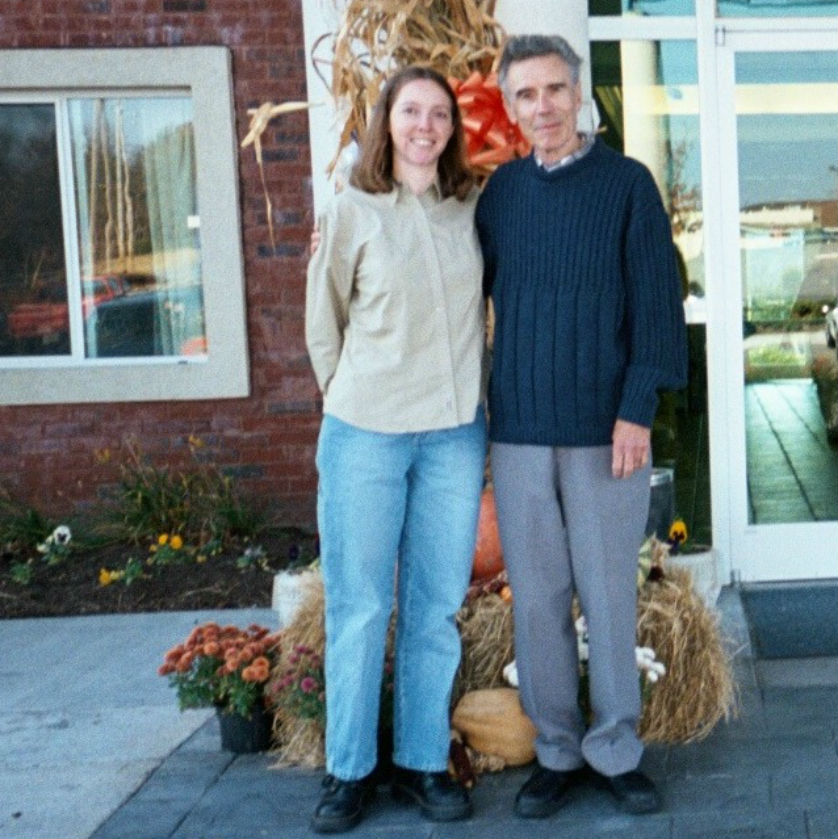
Posing with the bears outside of the Ruidoso Public Library, 2004.
My father died 13 years ago today. Having spent time recently going through the final batch of my father’s possessions, I feel his spirit even closer this year.
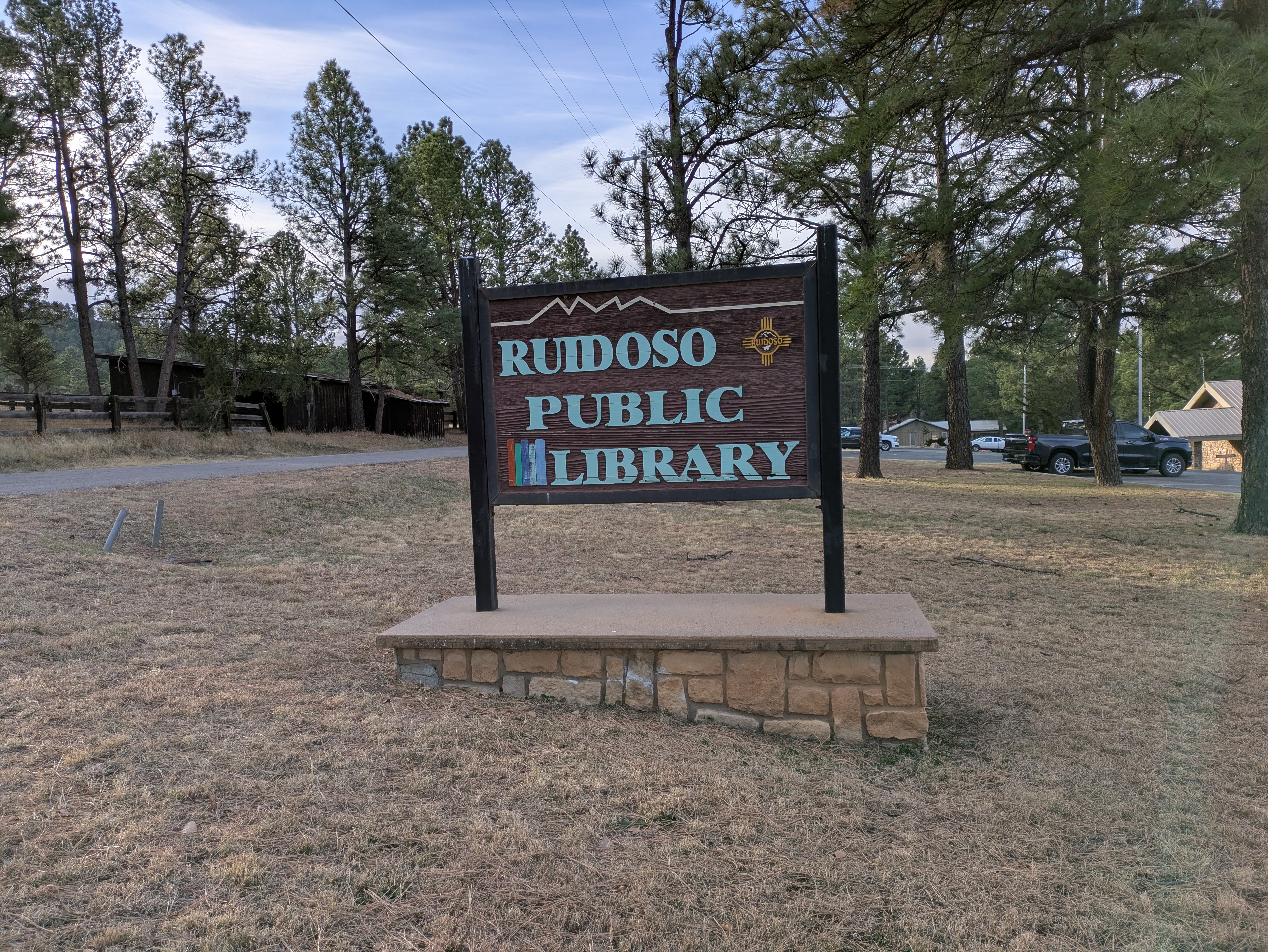
I didn’t have down time while I was cleaning out my parents’ condo, so I got up extra early on the day I was leaving to visit the library. I took a photo with one of the bear statues. It was too early for the library to be open but I was glad I squeezed in the time to take in the sights and sounds of nature along the picturesque walking trail to the library, as my father did so many times.
Posing with the bears again, Nov. 2024.
It was my father’s favorite spot. He spent countless hours there, and even as his dementia progressed and his reading skills diminished, he still made his way to the library out of habit.
I don’t visit libraries myself anymore, having adopted the convenience of e-books, but as I mentioned in my last blog post, libraries will always hold a special place in my heart.
Even though it’s been well over a decade since my father’s passing, marking the somber anniversary still does have an impact on my holiday spirit. For those who have experienced loss during the holiday season, allow yourself the space and self-compassion to adjust expectations.
Reflection and remembrance can take many forms, and your preferences may change over time. Be authentic and don’t try to force emotions.
I know this can be easier said than done when it comes to demands from others, who may not appreciate the complexities and individuality of the grieving process. My wish for you this holiday season is that others will be supportive and understanding.
This past week, I cleaned out my parents’ condo to prepare it for sale. It was a bittersweet experience. My parents enjoyed several happy, peaceful years there in retirement, but as their health declined, my memories of the place become more painful and complicated. That’s a reason why Thanksgiving and Christmas are tough holidays for me.
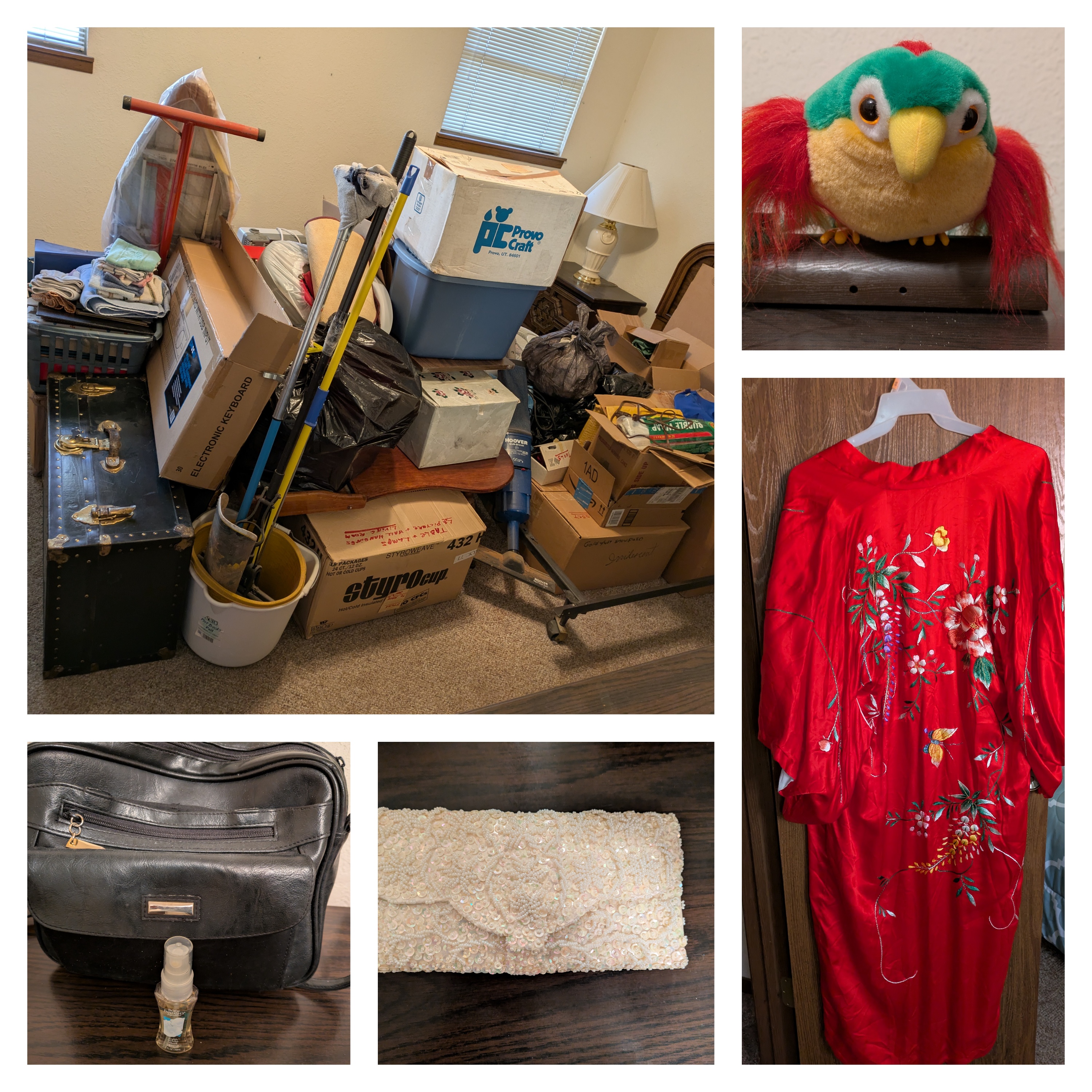
Even though I had spent time cleaning out upon each visit since my parents died, I was overwhelmed by the amount of stuff that remained. My parents weren’t hoarders; it was just an accumulation of two lifetimes, along with some of my stuff. I’m trying to downsize my own material possessions, so I had to be very disciplined on what I would bring with me. I consolidated down to two small boxes and a duffel bag. The rest would be donated.
It seemed like a lot of stuff to me as I sorted through it, but the donated items fit in one room.
It’s interesting what one chooses to keep and what one lets go in these situations. For example, I kept Polly the parrot, which brought much needed joy to my parents after my father developed dementia. I donated the beautiful kimono that my mother had received from a Navy mate. I kept my grandmother’s ice cream dishes (only 1 survived in shipping, alas) but let go my mother’s Navy footlocker. I would have loved to have kept it, but shipping it would have been too costly. I kept my mother’s makeup bag, but let go of my mother’s purse.
Heavy things like yearbooks I chose to scan selected pages instead of keep. Many yearbooks are available online now, if I should ever wish to wander down nostalgia lane. I spent a lot of time doing just that on this trip, so I think I will be good for awhile.
It was an overwhelming and exhausting experience. A myriad of emotions arose from some of these objects I hadn’t seen since my childhood. Choosing what to keep and what to let go was a challenge. Here are some tips to keep in mind if you find yourself faced with this daunting task.
It may be easier to start with the true junk, the items that no longer have any useful life. Consider this a warm-up task.
To stay organized and focused, create a plan. Maybe go room by room, or divide by type of items such as clothing, kitchenware, photos, etc.
Take breaks if possible. I was on a time limit but even stepping outside to get a breath of fresh air can help one reset.
Keep one, let the other go: When I had to sort multiples of items, I tried only to keep one. This can make it easier to make progress while maintaining items that have true meaning to you.
Remember, whatever you take with you, there will come a day when those items will have to be dealt with again. If you have children, be aware of the burden it can place on them to have to inherit so many items that may have limited meaning to them. Focus on the memories and heirlooms that help tell your family’s story.
Don’t feel like you are throwing your family’s mementos away. Many donated items can have a second life in someone else’s home or be repurposed and upcycled.
Finally, and this may be the most important takeaway from my experience: Don’t hide treasures away for special occasions! There were many items in my parents’ condo that had been sitting in boxes that were never used, like dishes. Don’t leave these items to collect dust in a closet. Go ahead and use the good china, wear the fancy clothing item, or display the creative project you are proud to have made. Your family treasures are meant to be enjoyed in the present.








![Pageflex Persona [document: PRS0000038_00069]](https://memoriesproject.files.wordpress.com/2014/02/reluctant-caregiver-cover.jpg)







 The Memories Project