Tag Archives: dementia

Holiday gift ideas for caregivers

Each year I consider a wide range of useful gifts for caregivers, everything from books to high-tech gadgets. No matter how amazing a gift is, I’ll always believe that personal time away from caregiving duties is the most precious gift of all. Respite comes in many forms, and can be as simple as an afternoon off to engage in self-care. For the family caregivers on your gift list this holiday season, think about how you can give them a bit of personal time back.

The good news is that in a year in which many are struggling financially, giving someone else time need not cost money, but only sacrificing some of your time. Offer to sit with a loved one to free up time for the caregiver. Volunteer to assist with a time-consuming task, like grocery shopping or making meals. Cleaning the house or tackling household repairs are other ways to give the gift of time.

Here are some other thoughtful gift ideas for caregivers:

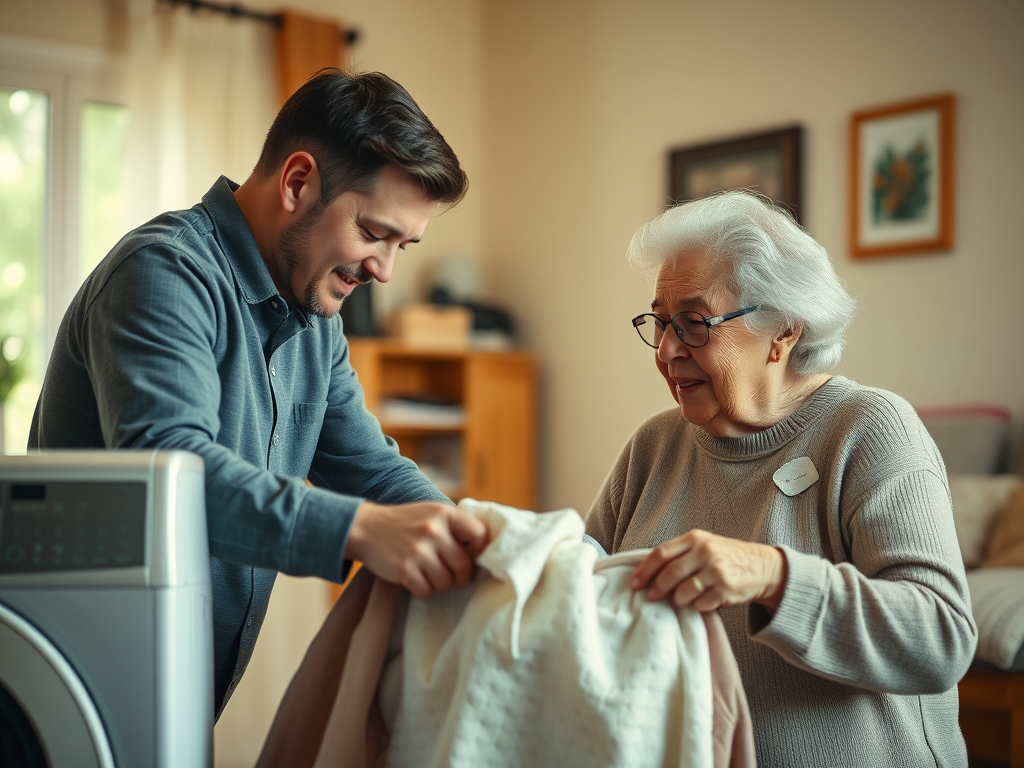
Joe & Bella: Dressing can become a time-consuming challenge for those with dementia. I love the line of adaptive clothing from Joe & Bella, which looks nice and includes clever additions, like magnetic closures and CareZips to save time and reduce frustration.

Happy Healthy Caregiver: Check out the digital gifts, such as a self-care journal and for something with a personal touch, create a Caregiver Jar filled with affirming and inspiring quotes.

Alzheimer’s Association Gift Guide: Thoughtful gift ideas for caregivers and people living with dementia. I like that the guide offers suggestions at different stages of the disease.

Of course, I will take a moment to recommend my book. Beginning Monday Dec. 8 through Jan. 1, Smashwords is running the 2025 End of Year Sale. You can get the e-book version of my award-winning personal essay collection, The Reluctant Caregiver, for half-off.

Happy holiday gift giving!

Image generated by Google Gemini.

Leave a comment

Filed under Awareness & Activism

Gen X caught in an extended ‘sandwich generation squeeze’

Every generation has its challenges, but Generation X finds itself in an extended “sandwich generation” role, raising children and taking care of aging parents who are living longer than ever, but not without their share of health issues.

In the recent Generations issue by the American Society on Aging, an article by Grace Macalino Schauf describes her overwhelming caregiver situation and how she had a breakthrough that helped her better manage her many caregiving duties. Schauf found herself caring for her 80-something parents, including her mother with vascular dementia and helping her young adult sons navigate college while also filling the childcare gaps left by her sister-in-law’s sudden death.

Schauf explained that in her Filipino culture, the eldest daughter is expected to fulfill the caregiver role in the family, yet she realized that she was being stretched beyond capacity. The breakthrough came when she developed a “caregiver identity integration.” The framework created boundaries and required an identity reset, to fully integrate the caregiver role into her life instead of trying to manage fragments of her identity that left her frustrated and bitter.

I definitely understand the feelings of resentment that can surface in the family caregiver role. It’s one of the reasons why I wrote The Reluctant Caregiver. I also shared my Gen X caregiver experience on the Rodger That podcast. People shouldn’t feel guilty about such negative feelings, but for their own emotional health and to be a better caregiver, it’s important to address these feelings, reach out for support and develop a caregiving plan that works better for you, much like Schauf did. The process can be painful and messy, much like caregiving itself. But as Schauf said, being present, not perfect, is the goal. Being present as a daughter is something I wish I had done more of, versus being worried about every aspect of my caregiver role.

This holiday season is a great time to assess your family caregiver situation and determine if changes need to be made.

Illustration created by ChatGPT.

Leave a comment

Filed under Awareness & Activism

‘Presence over perfection’ excellent advice from a dementia caregiver

A recent post on the Alzheimer’s Association website offers a message for those who may feel like they are struggling as a dementia caregiver.

Gemma O’Donnell, whose father has Alzheimer’s, is also a registered nurse, educator, researcher, and dementia care advocate. The disease has had an impact on her life both personally and professionally, O’Donnell said.

“The heart of caregiving is not perfection, but presence. What has stayed with me is how much the small moments matter—sharing a laugh, holding a hand, or simply sitting together when words are no longer possible.”

– Gemma O’Donnell, Desert Southwest Chapter volunteer

She shared another tip for a common issue that dementia caregivers experience, and one that my mother struggled with in caring for my father. “Over time, I learned that joining someone in their reality brings far more peace and connection,” O’Donnell said.

I also loved her quote encouraging caregivers to seek support: “Asking for help is an act of love, not failure.” I totally agree and that is why I created Respite Care Share. Don’t ignore the signs of caregiver burnout.

Image generated by Google Gemini.

Leave a comment

Filed under Awareness & Activism

Marking World Alzheimer’s Day

Today is World Alzheimer’s Day. This year will mark 14 years since my father’s death from complications of this terrible disease. There has been a great deal of promising research and the development of a few medications that may help slow the progress of the disease in some people, but pinpointing the exact cause of Alzheimer’s and a cure remain elusive.

While I appreciate all of the tireless work of researchers, scientists, and the Alzheimer’s advocacy organizations, I’m not that hopeful that a cure or even an effective treatment will be discovered in my lifetime. More likely, the treatments that are on the market now may be improved upon, delaying disease progression and preserving cognitive functioning for longer. Now that I’m in my 50s, with one copy of the APOE4 gene and the disease prolific on both sides of my family tree, I have to be realistic about my risk and do what I can to reduce that risk and plan financially and logistically for any future care needs.

I would love nothing more than to be proven wrong.

Here are resources from the Alzheimer’s Association to keep you up to date on the latest statistics on how Alzheimer’s impacts the US and recommendations on what we can do to protect brain health.

Image created by Google Gemini.

Leave a comment

Filed under Awareness & Activism

When routine care becomes a challenge, dementia training can help

Haircuts are a routine personal care task that many of us take for granted. Some of us may even enjoy a visit to the hair salon. But for those with dementia, what was once part of the grooming care routine may become a challenge. In this blog post from When Dementia Knocks, Elaine M. Eshbaugh, PhD explains why a visit to the barber shop or salon can be uncomfortable for those with dementia.

She also offers tips for family caregivers on how to make a haircut a less stressful event for all involved.

I love the idea mentioned in the blog of offering dementia training to barber shops and salons. I hope such training expands because with just a bit of awareness, we can all better accommodate those with dementia in our daily routine.

Image created by Google Gemini.

4 Comments

Filed under Awareness & Activism

A busy summer for Alzheimer’s research insights

There has been a lot of research on Alzheimer’s and dementia that has been released over the summer. I wrote about the POINTER study, which found that lifestyle interventions can have a positive impact on cognitive health.

A team from the Alzheimer’s Prevention Registry attended the 2025 Alzheimer’s Association International Conference in Toronto in July, where the POINTER findings were discussed among other promising research. The team shared their top takeaways from the conference.

One development that I’m excited about is blood biomarkers, which may facilitate the Alzheimer’s diagnostic process. Blood tests that can be performed on existing medical equipment and reduce the need for expensive and time-consuming PET scans could catch the disease in earlier stages, when current treatments on the market work the best.

Speaking of treatments, some researchers are taking seriously the increased risk of brain bleeds in the latest crop of Alzheimer’s drugs. Scientists are focusing on new technology that could deliver lower doses of drugs that can safely cross the blood-brain barrier. I’ve written about Leqembi, which has seen slow uptake despite being fully approved by the FDA. One of the concerning factors about the drug is the increased risk of brain swelling and bleeding. While the Alzheimer’s community is desperate for new and effective treatments, serious side effects shouldn’t be overlooked.

There’s also new research looking at the role of the immune system and gut microbiome in regards to Alzheimer’s risk. I will definitely be following developments in this area, as I believe that Alzheimer’s and other dementias are not merely brain diseases and require a holistic treatment approach.

Illustration created by Google Gemini.

Leave a comment

Filed under Awareness & Activism

You’re invited to the AlzAuthors Film Festival 2025

To celebrate their 10th anniversary, AlzAuthors is proud to announce the launch of their inaugural Film Festival. The best news is that it is virtual, meaning you can view the selected films from the comfort of your own home.

The AlzAuthors Film Festival will run from September to December. Each month, a new film will be showcased, and there will be a live Q&A with the filmmakers.

Register for the AlzAuthors Film Festival.

Here are the films that have been selected for the festival:

September

  • Planet A by Mary Crescenzo
  • No Country for Old People by Susie Singer Carter [I watched the entire documentary series and it was powerful and moving. Highly recommend.]

October

  • Lousy: Love in the Time of Dementia by Frank Silverstein

November

  • Wine, Women and Dementia by Kitty Norton [I loved this film and project, check out my review.]

December

  • The Present by C. Nathan Brown

Check out the blog post on AlzAuthors for the full details and registration form. Hope you will be able to attend, these are films that deserve to be seen by a wide audience.

Leave a comment

Filed under Awareness & Activism

Diving into the Caregiving in the US 2025 report

The National Alliance of Caregiving released a new report, Caregiving in the US, which offers insights on the latest trends in caregiving. This comprehensive 140-page report provides data on America’s family caregivers, including insights on who is providing care and what type of care, the financial impact and the ongoing challenges caregivers encounter when trying to access support and resources. In addition, the report takes a look at how caregiving affects a person’s emotional, physical, and mental health.

Key findings:

  • Approximately 1 in 4 American adults is a family caregiver.
  • The average age of a family caregiver is 51, which happens to be my current age. My parents were older when they had me, therefore I began the family caregiver journey sooner than some of my peers.
  • Women make up the majority (61 percent) of family caregivers.
  • Twenty percent of caregivers live in rural areas, which can complicate access to care resources and support.
  • 40 percent of caregivers live with their care recipient.
  • Family caregivers spend an average of 27 hours per week providing care; nearly a quarter provide 40 or more hours per week.
  • 7 in 10 caregivers also work, which can add to a caregiver’s daily stress of trying to juggle two demanding positions. For many caregivers, not working outside of caregiving is not an option, with almost half reporting at least one negative financial impact. Finding affordable care support services has also become more expensive.
  • It should come as no surprise that caregivers’ own health is negatively impacted. According to the report, 1 in 5 family caregivers rate their health as fair or poor and 64 percent experienced emotional strain.
  • Caregivers are performing a wide range of duties: two-thirds help with at least one activity of daily living (ADL) like bathing, dressing, toileting, feeding, and mobility assistance. 8 in 10 caregivers are handling multiple instrumental activities of daily living (IADLs)—such as shopping, managing finances, preparing meals, and arranging transportation.
  • An alarming statistic: more caregivers are performing complex medical or nursing tasks such as managing catheters, giving injections, or monitoring vital signs. While more than half (55 percent) perform complex tasks, only 22 percent received training. Learning medical tasks on the fly is common but definitely stressful. I wrote about this aspect of caregiving in The Reluctant Caregiver.

One statistic that stuck out to me due to my advocacy work in respite care is that few caregivers (just 13 percent) are utilizing respite resources, even though nearly 40 percent recognize that respite services would be helpful. This reluctance to use respite care and the barriers that prevent caregivers from seeking respite is one of the main reasons I started Respite Care Share. As the study points out, the low usage of respite care is not just due to lack of accessibility; for some caregivers, there are cultural connotations to accepting help that must be addressed in order to reduce the risk of caregiver burnout.

How caregivers want to be supported

According to the caregivers surveyed in the report, tax credits and direct payments were nearly equally cited as preferred sources of financial support. Paid leave also received support from a majority of caregivers.

In addition to financial support, caregivers requested services like respite care, emotional support, and health care training. As pointed out above, it’s not enough to just offer these services but find ways to break down barriers to make sure the services are truly accessible and designed to meet the diverse needs of communities throughout the country.

Leave a comment

Filed under Awareness & Activism

Alzheimer’s Association-U.S. Pointer trial finds lifestyle interventions can improve cognitive health in older adults

The Alzheimer’s Association recently released the results of a trial they funded, called the U.S. Study to Protect Brain Health Through Lifestyle Intervention to Reduce Risk (U.S. Pointer) which found that “Positive, everyday actions can make a difference in brain health, and when combined into a program that targets multiple factors like physical activity, improving nutrition, cognitive and social challenge and health monitoring, we now know it can have an even more powerful impact.”

Following a similar study that was conducted about a decade ago in Finland called the FINGER study, the Alzheimer’s Association wanted to see if that study’s findings of lifestyle changes positively impacting cognitive health could be replicated for the U.S. population. To conduct the study, participants aged 60-79 who did not exercise regularly and who were at increased risk for cognitive decline were recruited and followed for two years. Participants were located near one of the study’s site locations: Chicago, Houston, Providence, Sacramento, and Winston-Salem.

The participants were placed into one of two groups: structured lifestyle intervention and self-guided lifestyle intervention. The structured group attended nearly 40 meetings over a 2-year period while receiving a prescribed program for physical activity, diet, and cognitive training with goal setting and regular reviews and support. The self-guided group six peer team meetings and were encouraged to implement lifestyle changes that best suited them. General support was provided by staff, but no direct goal-setting or coaching was provided.

What surprised me the most about the study results is that both groups demonstrated an improvement in cognition. This is a key finding because it shows that such programs could offer benefits for those in rural, isolated areas where ongoing support services are limited or non-existent. Those in the structured program did exhibit further cognitive health benefits than the self-guided group.

Another positive finding in the study was that the benefits of the lifestyle intervention were not limited by sex, ethnicity, genetic risk or heart health status. I’ve seen studies where benefits may be more apparent in men vs. women, for example, so this is a key takeaway.

So what is the “recipe” of lifestyle interventions that was used for the study? The infographic at the top of the post captures the components:

  • Exercise: 30-35 minutes of moderate-to-intense aerobic activity four times a week, plus strength and flexibility exercises twice a week. (Strength and flexibility exercises are also critical in fall prevention for elders.)
  • Cognitive exercise: The study used a computer-based brain training program which participants used three times a week in 30-minute sessions. Regular engagement in intellectually challenging and social activities was encouraged. I’m not sure which brain training program was used, but I’m enrolled in an ongoing study which used a computer-based program to assess changes in cognitive performance. It involves activities like memory retention by recalling patterns.
  • Nutrition: The MIND diet was prescribed, which emphasizes dark leafy greens, berries, nuts, whole grains, olive oil and fish, and limits sugar and unhealthy fats.
  • Health monitoring: Regular vital check-ins on blood pressure, weight, and lab work.

Engaging in regular exercise, performing mentally stimulating activities and eating healthy is a common-sense approach for overall good health. One important follow-up to the study will be to see if people can stick with the lifestyle changes once they are no longer part of the study’s structured program. Another analysis that I’d like to see is how many of the study participants go on to form Alzheimer’s or another form of dementia. Do the lifestyle changes prolong cognitive health thereby delaying a dementia diagnosis or do they offer further protective effects? An extension of the study has been funded and may answer some of these key questions.

Infographic image courtesy of the Alzheimer’s Association.

1 Comment

Filed under Awareness & Activism

Analysis: Dementia caregivers more likely to report risk factors that increase their own risk for dementia

A new analysis conducted in part by the Alzheimer’s Association found that dementia caregivers are much more likely to report at least one modifiable risk factor that increases their own risk of developing dementia. According to the analysis conducted by two public health centers in the US, nearly 60% of dementia caregivers report having at least one modifiable risk factor and nearly 25% report having multiple risk factors.

The analysis was based on data collected from 47 states and focused on six modifiable risk factors for cognitive decline among individuals caring for someone with dementia: diabetes, obesity, physical inactivity, smoking, sleep, and hypertension.

Compared with the overall population, dementia caregivers were more likely to report five of the six risk factors examined. The differences were most significant for smoking (30% more likely), hypertension (27% more likely), and poor sleep (21% more likely). Dementia caregivers were also 12% more likely to have diabetes and 8% more likely to be obese.

Gender, age, and race played a role, according to the analysis findings. Male dementia caregivers were about 15% more likely to have at least one risk factor versus female dementia caregivers.

American Indian/Alaska Native dementia caregivers were the most vulnerable population according to the analysis, reporting at least one risk factor (77 percent). Black caregivers were close behind at 72 percent, followed by Hispanic (59 percent), White (58 percent) and Asian American (28 percent) caregivers.

Dementia caregivers under 45 were about 13% more likely to have at least one risk factor
compared to all adults under 45 and 40% more likely to have multiple risk factors.

“This analysis should be a wake-up call for public health to develop strategies that address caregiver health to help this at-risk population,” said Matthew Baumgart, senior vice president, Health Policy, Alzheimer’s Association.

According to the researchers, more than a quarter of dementia caregivers delay or do not do
things they should to maintain their health. My own mother delayed going to the doctor for her GI symptoms, and six months after my father’s death from dementia complications, she was diagnosed with colon cancer.

The goal of sharing such sobering statistics is that the health of dementia caregivers is being neglected by the healthcare system, and earlier interventions and greater resources are needed to turn around this trend. No one should see their health suffer because they are caring for a loved one.

Image generated by ChatGPT.

1 Comment

Filed under Awareness & Activism