Tag Archives: dementia

Guest article: Preparing for at-home care for a loved one with dementia

By Helen White, freelance writer

The decision to try at-home care for a parent or other close relative with dementia isn’t one that’s made lightly. It’s exhausting work, both mentally and physically, and it can be heart-rending for children of parents with dementia to see the changes that the disease brings. If you’ve made the decision, there’s a lot of preparation to be done, both in the home, to create a safe environment, and in the heart, to help you stay strong and able to cope with your new role as care-giver.

Simplifying the Home and Improving Safety

For someone with dementia, even the simplest everyday tasks and items can become fraught with difficulty. Simplifying the home, reducing clutter, and making spaces more accessible is hugely important to prevent over-stimulation and agitation, as well as accidents that may lead to physical harm.

  • Create “walking paths” so that there’s a direct and easy-to-follow path between each room. Remove or tack down any rugs on the floor.
  • Reduce household clutter, both to prevent accidents and to reduce the likelihood of over-stimulation caused by information overload.
  • Improve lighting to reduce dark spots and shadows, which can cause confusion and distress.
  • It may be helpful to label certain areas and items; for example a “bathroom” sign, and labels for kitchen drawers.
  • Add grab bars where applicable in bathrooms (e.g. for the bath, shower, or toilet) and add non-slip flooring or mats.
  • Consider child-proof locks for electrical devices and wall outlets.
  • Secure any rooms or items that are potentially dangerous or breakable—for example, the garage, basement, attic, or swimming pool, computer equipment, and machinery.
  • Add safety locks to any doors that lead outdoors, and install window devices to limit how far they can open.
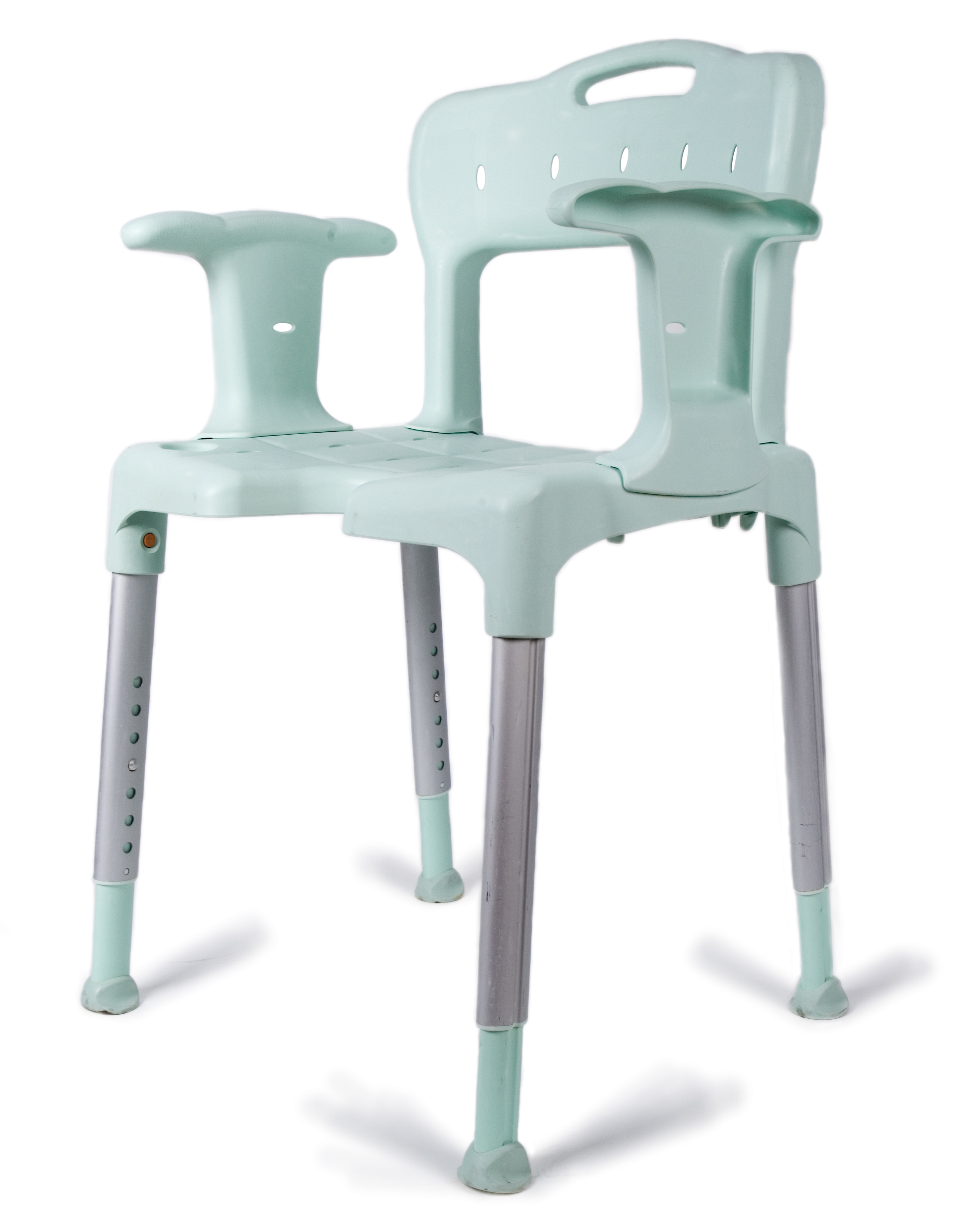
shower chair

Preparing the home is sometimes a matter of trial and error: you don’t know how your loved one will react to certain things until they’re with you on a daily basis. Initially at least, focus your efforts on safety, and over time you may find there are additional changes you can make to the home to make things more comfortable and calming.

Setting Up a Routine

For someone with dementia, routine is incredibly important. Having a routine helps them make better sense of a world that is increasingly confusing, and it’s important that your loved one knows there are certain things they can rely on, like a mid-morning snack at the same time every day, or a favorite television program each evening. In situations where their loved one has become agitated, having an established routine can also help a care-giver get things back on track and help their loved one calm down.

  • A routine doesn’t need to be strictly regimented and fill up an entire day; it should just provide the day with structure. For example, it might include:
  • Opening bedroom curtains at the same time every morning to signal the start of a new day
  • Meals and snacks, and medications, at scheduled times.
  • Daily activity time, visitors, outings.
  • Shower or bath time before bed.
  • Playing a relaxing piece of music at bedtime.

Don’t Neglect Your Own Self-Care

Caring for a person with dementia is both physically and mentally demanding, particularly for non-professional care-givers taking care of family members. It’s a situation that can lead to exhaustion, burn-out, and even depression on the part of the carer, so it’s vital that you’re able to take breaks on a regular basis, including days and evenings off. So, as part of preparing to bring your loved one home, try and set up a schedule of some kind, to make sure each person who is acting as carer has sufficient time off.

Having a good support system in place from the start is also very helpful. For example, joining a support group for care-giving families can provide a means of expressing emotions in a safe and non-judgmental environment. This is hugely important, because it’s natural for care-givers to feel negatively-perceived emotions like frustration, fear, and sadness, and they need a safe outlet in which to express them.

References

A Place for Mom (March 2013). “Maintaining Dignity for Dementia Patients.” Accessed January 12, 2015. Caring with kindness.

Carol B. Larkin (May 2012). “A Guide to Safe-Guarding Your Home for Alzheimer’s Patients.” Accessed January 12, 2015. Simplifying home and routine.

Aging Care. “Senior Care Products.” Accessed January 12, 2015. Products for at-home senior care.

Help Guide. “Dementia and Alzheimer’s Care: Planning and Preparing for the Road Ahead.” Accessed January 12, 2015. Preparing the home.

Phillips Lifeline (May 2014). “Proper Dementia Care Can Help Patients Remain at Home Longer.” Accessed January 12, 2015. Benefits of at-home care.

Psych Guides. “Living With: A Family Member With Dementia.” Accessed January 12, 2105. At-home care.

Visiting Angels. “Preparing the Home for Senior Care with Dementia or Alzheimer’s. Accessed January 12, 2015. Home preparation.
Leave a comment

Filed under Awareness & Activism

Book review: ‘Slow Dancing with a Stranger’

You know you are a caregiver or an Alzheimer’s awareness advocate when books like this appear on your Christmas wish list.

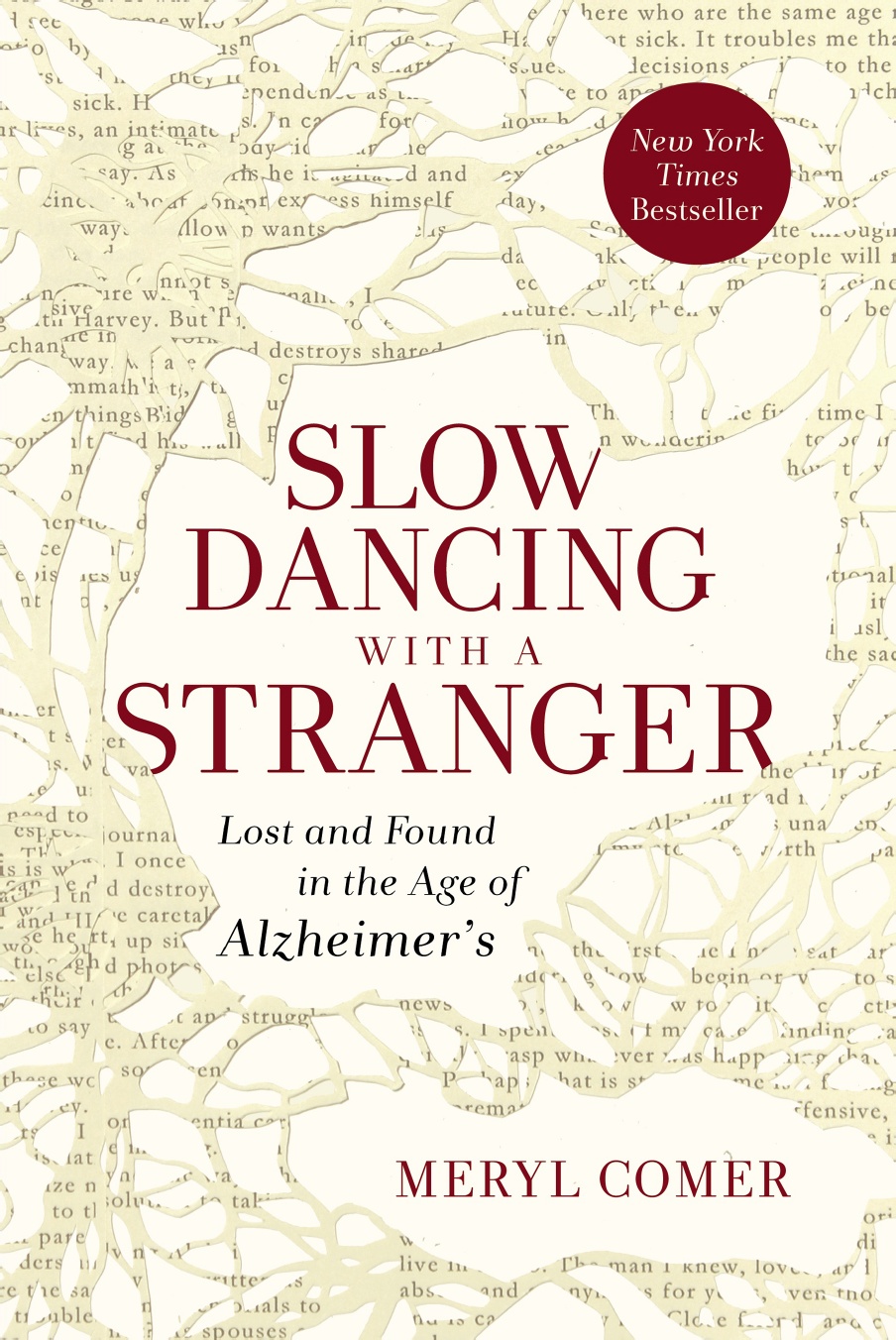
I had read positive reviews of the book, “Slow Dancing with a Stranger” by Meryl Comer, a former television journalist.

Courtesy: MerylComer.com

Courtesy: MerylComer.com

In this raw and honest memoir, Comer attempts to illustrate the “unvarnished reality” of Alzheimer’s while describing her life as the primary caregiver for her husband, a former esteemed NIH scientist who was diagnosed with early-onset Alzheimer’s in his late 50’s. He is still alive, 20 years later. Comer’s mother, who she’s always had a difficult relationship with, also has dementia and is still alive at age 94. The three live together, and a small group of dedicated caregivers work daily shifts to help with the care.

Comer tries placing her loved ones in facilities, but it is important for people to understand that not all Alzheimer’s patients are suitable for facility care, and that in fact, can be essentially “thrown out” if they are deemed a risk to themselves, staff, or other residents. Yet home care brings its own set of challenges, and neither road is an easy one to navigate.

I also think Comer does a good job of demonstrating that some people with Alzheimer’s don’t respond to the more positive therapy methods that are popular nowadays, such as music therapy, exercise, etc. Comer tries everything imaginable to reduce her husband’s anger and anxiety, but nothing seems to work. Comer’s husband has a form of Alzheimer’s that causes violent, physical outbursts, and both Comer’s husband and her mother were extremely manipulative, with her mother calling the police to claim she had been abandoned by her daughter.

I found beauty and awe in Comer’s resilience to take care of her loved ones in spite of all of the setbacks they faced together. Comer has given up her career and essentially her life to take care of her husband and mother. It’s a sacrifice that not everyone could make. To say this is a depressing book would be an understatement, but I hope it will help raise awareness of the debilitating emotional, physical and financial impact of this disease.

100 percent of the proceeds of the book will go towards Alzheimer’s research.

Leave a comment

Filed under Awareness & Activism

The beautiful and ugly world of Alzheimer’s

I read a lot of personal essays written by those who have been impacted by Alzheimer’s, but this one really moved me emotionally. It was published on Huffington Post and titled, “I Never Expected My Mother to Be Diagnosed with Alzheimer’s When I was 26.” Not only does the essay give us a glimpse into how the younger generations are being touched by this disease, it is beautifully written.

mirror person

In the essay, Rebecca Emily Darling discusses some of the upsides of her mother’s Alzheimer’s, such as a greater appreciation of ordinary things, and a nicer demeanor. Yet even these “benefits” are tinged with sadness, because they only illuminate how much the disease has changed the personality of her flawed but beloved mother.

The essay by Darling sums up the good and the bad of this disease so eloquently. If you have a chance to read it, let me know what you think.

1 Comment

Filed under Awareness & Activism

A sweet and simple connection

I watched a video that has been making the rounds on Facebook lately, and I thought it illustrated how we can still reach those in the latter stages of Alzheimer’s, we just have to be flexible in our approach.

Musician Joe Fraley’s mother has Alzheimer’s, and back in October, before she was moved to assisted living, Fraley recorded a video of him and his Mom sitting on the porch while he strummed a guitar and sang.

Clearly, the woman is confused and asks poignant questions like “Who are we?” Fraley’s approach is refreshing because he keeps things light and conversational, while still addressing her concerns and not being dismissive. The woman responds to the music, and you can see how it lights up her face, even if it is just temporarily.

Not only is it important for those with Alzheimer’s to still connect with their family members in small but meaningful ways like this, I believe it is equally important for the family caregivers. While the recorded moment is still tinged with sadness, Fraley was able to reach his mother through the cloud of dementia by their mutual love of music, and that is a memory to cherish.

2 Comments

Filed under Awareness & Activism

Fascinating study regarding cancer and Alzheimer’s

Because I had one parent who had Alzheimer’s and another parent who has battled cancer, I was intrigued by this study that explored the low rates of cancer in those with Alzheimer’s and vice versa.

maze

Researchers may have found a defect in a critical brain cell pathway that can lead to Alzheimer’s or cancer depending upon which way the imbalance of cell activity presents itself. This may help explain why Alzheimer’s patients have a lower risk of cancer and cancer patients are at less risk for Alzheimer’s.

Further studies will try to determine if activity can be boosted in the damaged cell pathways, which could potentially reduce the cognitive impairment in Alzheimer’s patients.

I always thought my dad was destined for cancer because of his smoking habit, yet he remained cancer-free, while my mom, who doesn’t have typical cancer risk factors ended up with colon cancer. While I’ve read of people who have had both diseases at the same time, it does seem pretty rare. Instead, we hear more about the cruel irony of the dementia patient who is otherwise physically healthy.

After all of the deaths and misery both of these diseases have caused, it would be wonderful to find an effective treatment for both of them.

Leave a comment

Filed under Awareness & Activism

‘Alive Inside’ and the power of music

I was able to go see the documentary, “Alive Inside” this weekend and it definitely met and exceeded my expectations.

As many of you probably know, the inspiring project at the center of the film is best known by a clip posted on YouTube of an elderly African-American man named Henry, who is in the latter stages of Alzheimer’s. He lives in a nursing home and his caregivers say he is barely verbal, usually keeping his head down all day long. Then they put the headphones on, and play the beloved music of his youth. Like a switch, Henry becomes alive, and most surprisingly, quite verbal and coherent. The effect is truly amazing. The video has gone viral, receiving millions of page views.

alive inside-poster

Dan Cohen, through his Music & Memory program, has a mission: he wants to bring personalized music to every nursing home resident in America. It sounds like a simple, clear-cut mission, but it turns out to be quite a challenge. Bottom line, there’s more profit to be made in the creation and marketing of ineffective medications than there is in Cohen’s proven grassroots program.

The benefits of music to those with dementia and other mental illnesses is astounding. Music has a greater impact on us than just making us tap our toes and fingers. Music touches the deepest parts of our emotional core, that usually remain intact even into the latter stages of Alzheimer’s.

Music has been part of my life for as long as I can remember. My dad would sing to me as a baby, I had a collection of Disney records as a little girl, and then I went on to develop my own eclectic taste in music as a teen and adult. Music can move me to tears or pump me up with energy. I can’t imagine life without music.

I wish I had understood the power of music better while my father was still alive, because I’m sure he would have loved to have heard Bing Crosby and Frank Sinatra.

Another point the documentary makes is how lonely and dehumanizing institutional life is for the residents. While music is not a substitute for human companionship, it can help fill a void.

“Alive Inside” is getting great reviews and I hope the buzz around the film will translate into donors who will help Cohen reach his worthy goal. If you have an iPod collecting dust, please consider donating it to this program.

1 Comment

Filed under Awareness & Activism

Dealing with dementia in an intimate relationship

Many of the people I follow on WordPress are dealing with a parent or grandparent with dementia. A few are dealing with a spouse, and with this, comes an entirely different and complex set of issues.

I finally got around to reading the memoir, “Jan’s Story,” by CBS correspondent Barry Petersen. The book has generated some controversy. Petersen’s wife, Jan, was diagnosed with early-onset Alzheimer’s at the age of 55. Petersen’s account of how Alzheimer’s impacted their relationship is frank and heartbreaking. After arranging for her care at home for several years, he finally places her in a residential facility as the disease progresses. Eventually, at the point where his wife barely remembers who he is, he begins a tentative new relationship with another woman.

jans-story-cvr

It’s the latter details that many find distasteful. Some of the couple’s friends turn against him, and some readers of his memoir feel he is selfish in his actions.

I certainly do not feel I am in the position to judge other caregivers, as there are many things I would do differently in dealing with my father’s dementia. I think hearing the male perspective is important when it comes to being a caregiver of a spouse with dementia. The breakdown of intimate relations is a side effect of dementia that many would rather not discuss. For Petersen, the loss of intimacy with his beloved partner is devastating. The transformation from lover to parent is traumatic. The difficult decision he makes are agonizing for him and I don’t believe were made on a whim.

The book brings up a host of interesting questions. Especially with early-onset Alzheimer’s, should the caregiver be left in relationship limbo when it may take a decade or more for the disease to finally cause physical death? As long as one provides good care for their spouse, is it acceptable to find affection outside of their relationship?

For some, “until death do you part” means just that, no exceptions. I respect that. But dementia has a way of turning the normal way of doing things upside down.

For those wondering, Jan died in 2013, a few years after the memoir was published.

3 Comments

Filed under Awareness & Activism

Showing appreciation for the dementia caregiver community

A big thank you to Neighbor Nancy and Ann Ahnemouse for nominating me for a Very Inspiring Blogger Award. Nancy I have had previous contact with but I don’t believe I have with Ann, so it was a pleasant surprise to hear she had been following my blog for quite some time. It is yet another reminder of the wonderful community of caregivers waiting to be found in the blogosphere.

The rules are simple:

Thank and link to the amazing person who nominated you.
List the rules and display the award.
Share seven facts about yourself.
Nominate 15 other amazing blogs and comment on their posts to let them know they have been nominated.
Proudly display the award logo on your blog and follow the blogger who nominated you.

7 facts about me:
– I have Celiac Disease, and have been on a gluten-free diet since 2005.
– I’m a cat lover.
– I like my coffee black, no sugar.
– I’m a bourbon aficionado.
– I was born and raised in California, but have no interest in returning.
– A big Greek salad is one of my favorite meals.
– Stephen King is one of my favorite authors.

Bloggers you should follow (For sake of time, I have less than 15 but will try to add more soon!)

My Neighbor Miss D Nancy is a devoted elder advocate, and has been the driving force in helping a neighbor in her building who has dementia return to her home after she suffered abuse from family members.
Ann Ahnemouse As I said, this is a new blog for me, but she’s been posting for a few years! Ann writes about her journey with her partner, and how his dementia impacts their lives.
terry1954 I’ve been following Terry’s blog for quite a while. Terry was the sole family caregiver of her brother, who had MSA. He died this year, and while the end of his suffering was indeed a blessing, there is a giant hole left behind when our loved ones depart, no matter the circumstances. Terry is a fearless writer who shares her thoughts on many topics.
Alzheimer’s Speaks: Lori La Bey is a tireless advocate for caregivers. She has a radio show as well!
SaveEveryStep: You should subscribe to this blog for the weekly “Joe’s Letter” post alone. The letters are from the blogger’s uncle from WWII and they are so fascinating! If you love nostalgia, you’ll love her blog, as she often writes about the fashions and music from her childhood and adolescence. But Helen Spencer founded the website, SaveEveryStep.com in memory of her mother. She is giving back to the world by allowing you to capture your own family’s memories and preserve them for free, a useful service to anyone, but especially for families touched by Alzheimer’s and dementia.
Hot Dogs and Marmalade: This blogger’s mother has Alzheimer’s and she writes both poignant and humorous accounts of her family’s life. You’ll have to read her blog to find out the reason for the unusual title of her blog!
My Demented Mom: Kathy Ritchie doesn’t sugarcoat one bit of her experiences caring for her mom, who has frontotemporal dementia. Kathy is in her 30s and is now a mother herself. Her blog is breathtaking in both its agony and in the way she expresses her love and dedication to her mother.
Quilt of Missing Memories: Talk about a family devastated by dementia. Jacquelyn’s father, mother and husband all have a form of dementia. Her father has passed, and late last year, so did Jacquelyn’s husband. I appreciate this blog because of the simple and joyous photos and short poems that are posted on a regular basis.
Lori’s Lane While not a caregiving blog in particular, the blogger did find herself in that role when her husband suffered a serious accident on the job. I love this blog for the insightful posts and the uplifting quote every Friday.

1 Comment

Filed under Awareness & Activism

Is unexplained weight loss an early symptom of Alzheimer’s?

I came across an interesting article about a piece of Alzheimer’s research I had not heard about before. Apparently, researchers at Weill Cornell’s Feil Family Brain and Mind Research Institute found a possible connection between the buildup of amyloid-beta peptides and weight loss. The peptides create the notorious plaques in the brain that is commonly associated with Alzheimer’s disease. The otherwise unexplained weight loss often occurred several years before symptoms of cognitive decline were diagnosed.

scale

According to the researchers, the amyloid-beta peptides interfere with the body’s ability to regulate its weight. If the research proves to be accurate, it is yet another cruel and devastating way Alzheimer’s destroys the body.

My dad was always on the lean side so it’s difficult to say if he suffered from weight loss early on in the disease. By the mid to late stages, my father was certainly wasting away, but up until the last couple of months of his life, he had a voracious appetite.

The more we learn about Alzheimer’s, the more we understand that this disease can manifest itself in ways we never imagined before. Alzheimer’s is not just about losing your memory; the disease attacks the brain in ways that can impact everything from swallowing to weight control.

Did you notice otherwise unexplained weight loss in your loved one before they were diagnosed with Alzheimer’s disease?

9 Comments

Filed under Awareness & Activism

Guest post: Diagnosing Alzheimer’s Disease: How Can Loved Ones Help?

A new case of Alzheimer’s disease is developed every 67 seconds. Meanwhile, the number of Alzheimer’s patients is on the rise, with the numbers expected to double or even triple by the year 2030. This degenerative brain disease affects millions of people around the world…and has no known cure. Over time, it impacts your memory function, mood, and even your independence. With so many life-altering symptoms related to the disease, early detection is key. Unfortunately, obtaining an Alzheimer’s diagnosis can be difficult.

Dr. David Tal of the Age Matters Clinic in Toronto.

Dr. David Tal of the Age Matters Clinic in Toronto.

Despite the fact that Alzheimer’s affects the lives of men and women across the country, diagnosis can take months or even years. Why is this the case? Early symptoms may appear to be signs of other diseases or may be dismissed as issues related to aging. This can prolong proper diagnosis, which in turn causes patients and loved ones to feel frustrated and powerless. Are you wondering what you can do to speed things up? Then you’ll need to understand how Alzheimer’s disease is diagnosed – and what to be on the lookout for.

Early diagnosis is important. For starters, it allows families to look at treatment options for symptoms related to the disease, like depression. It also gives patients and their loved ones the opportunity to focus on a healthy diet and lifestyle. This has been found to slow down the progression of the disease. In addition, early diagnosis gives family members more time to find appropriate care plans for the patient as the disease progresses. However, the reality is that Alzheimer’s disease cannot be diagnosed completely accurately until after death. That is why a proper diagnosis can be drawn out. Doctors use a process of elimination that has an accuracy of about 90%.

It starts by finding out more about the patients’ medical history. This allows doctors to determine whether there are other medical issues at play and how to come up with the best treatment plan for their needs. Some of the questions your loved one will be asked include: Are you taking any medications? Do you have a family history of dementia or Alzheimer’s disease? Are you dealing with any current illnesses? What type of issues or symptoms have you been experiencing? and so on. The answers to these questions will help the medical professional get a better understanding of the situation.

From there, the doctor will give a mental state exam to test the patients ability to problem solve, their memory skills, and attention span. This can reveal whether or not there has been a decrease in memory function. Next is the physical exam. This will let the doctor know more about their overall health and physical condition. It can also signal whether the patient has another medical problems that has similar symptoms to Alzheimer’s disease. X-Rays, blood tests, and brain imaging will likely be done as well to rule out any other potential health problems. The results of the questions, exams, and tests will help to pin point a diagnosis.

So, what can you do to help during this process? Show your support, take note of any changes in memory, mood, or behaviour, and ensure your loved one gets the proper medical attention they need. It is important to act quickly. The sooner your loved one is diagnosed, the better. If you feel unsure or overwhelmed, seek the help or advice of a professional.

Have you noticed a friend or family member showing signs of Alzheimer’s disease? Then help them take that first step towards diagnosis. It may seem scary at first – but receiving a medical assessment will lead to a plan of action. Whatever the outcome, remember: your love and support can make all the difference.

About the author: Dr. David Tal has more than twenty years of clinical experience. He manages the Age Matters Clinic in Toronto, Canada. He strongly believes that medical treatment can improve the life of Alzheimer’s and memory loss patients.

2 Comments

Filed under Memories