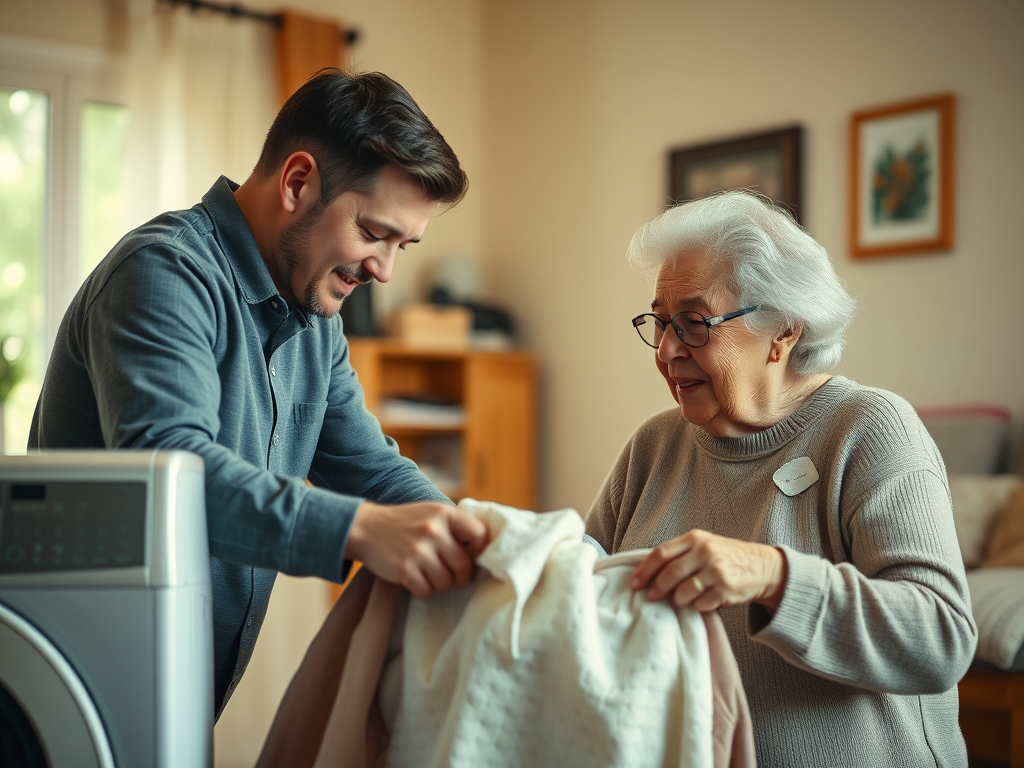
Each year I consider a wide range of useful gifts for caregivers, everything from books to high-tech gadgets. No matter how amazing a gift is, I’ll always believe that personal time away from caregiving duties is the most precious gift of all. Respite comes in many forms, and can be as simple as an afternoon off to engage in self-care. For the family caregivers on your gift list this holiday season, think about how you can give them a bit of personal time back.
The good news is that in a year in which many are struggling financially, giving someone else time need not cost money, but only sacrificing some of your time. Offer to sit with a loved one to free up time for the caregiver. Volunteer to assist with a time-consuming task, like grocery shopping or making meals. Cleaning the house or tackling household repairs are other ways to give the gift of time.
Here are some other thoughtful gift ideas for caregivers:
Joe & Bella: Dressing can become a time-consuming challenge for those with dementia. I love the line of adaptive clothing from Joe & Bella, which looks nice and includes clever additions, like magnetic closures and CareZips to save time and reduce frustration.
Happy Healthy Caregiver: Check out the digital gifts, such as a self-care journal and for something with a personal touch, create a Caregiver Jar filled with affirming and inspiring quotes.
Alzheimer’s Association Gift Guide: Thoughtful gift ideas for caregivers and people living with dementia. I like that the guide offers suggestions at different stages of the disease.
Of course, I will take a moment to recommend my book. Beginning Monday Dec. 8 through Jan. 1, Smashwords is running the 2025 End of Year Sale. You can get the e-book version of my award-winning personal essay collection, The Reluctant Caregiver, for half-off.
Every generation has its challenges, but Generation X finds itself in an extended “sandwich generation” role, raising children and taking care of aging parents who are living longer than ever, but not without their share of health issues.
In the recent Generations issue by the American Society on Aging, an article by Grace Macalino Schauf describes her overwhelming caregiver situation and how she had a breakthrough that helped her better manage her many caregiving duties. Schauf found herself caring for her 80-something parents, including her mother with vascular dementia and helping her young adult sons navigate college while also filling the childcare gaps left by her sister-in-law’s sudden death.
Schauf explained that in her Filipino culture, the eldest daughter is expected to fulfill the caregiver role in the family, yet she realized that she was being stretched beyond capacity. The breakthrough came when she developed a “caregiver identity integration.” The framework created boundaries and required an identity reset, to fully integrate the caregiver role into her life instead of trying to manage fragments of her identity that left her frustrated and bitter.
I definitely understand the feelings of resentment that can surface in the family caregiver role. It’s one of the reasons why I wrote The Reluctant Caregiver. I also shared my Gen X caregiver experience on the Rodger That podcast. People shouldn’t feel guilty about such negative feelings, but for their own emotional health and to be a better caregiver, it’s important to address these feelings, reach out for support and develop a caregiving plan that works better for you, much like Schauf did. The process can be painful and messy, much like caregiving itself. But as Schauf said, being present, not perfect, is the goal. Being present as a daughter is something I wish I had done more of, versus being worried about every aspect of my caregiver role.
This holiday season is a great time to assess your family caregiver situation and determine if changes need to be made.
The National Alliance of Caregiving released a new report, Caregiving in the US, which offers insights on the latest trends in caregiving. This comprehensive 140-page report provides data on America’s family caregivers, including insights on who is providing care and what type of care, the financial impact and the ongoing challenges caregivers encounter when trying to access support and resources. In addition, the report takes a look at how caregiving affects a person’s emotional, physical, and mental health.
Key findings:
Approximately 1 in 4 American adults is a family caregiver.
The average age of a family caregiver is 51, which happens to be my current age. My parents were older when they had me, therefore I began the family caregiver journey sooner than some of my peers.
Women make up the majority (61 percent) of family caregivers.
Twenty percent of caregivers live in rural areas, which can complicate access to care resources and support.
40 percent of caregivers live with their care recipient.
Family caregivers spend an average of 27 hours per week providing care; nearly a quarter provide 40 or more hours per week.
7 in 10 caregivers also work, which can add to a caregiver’s daily stress of trying to juggle two demanding positions. For many caregivers, not working outside of caregiving is not an option, with almost half reporting at least one negative financial impact. Finding affordable care support services has also become more expensive.
It should come as no surprise that caregivers’ own health is negatively impacted. According to the report, 1 in 5 family caregivers rate their health as fair or poor and 64 percent experienced emotional strain.
Caregivers are performing a wide range of duties: two-thirds help with at least one activity of daily living (ADL) like bathing, dressing, toileting, feeding, and mobility assistance. 8 in 10 caregivers are handling multiple instrumental activities of daily living (IADLs)—such as shopping, managing finances, preparing meals, and arranging transportation.
An alarming statistic: more caregivers are performing complex medical or nursing tasks such as managing catheters, giving injections, or monitoring vital signs. While more than half (55 percent) perform complex tasks, only 22 percent received training. Learning medical tasks on the fly is common but definitely stressful. I wrote about this aspect of caregiving in The Reluctant Caregiver.
One statistic that stuck out to me due to my advocacy work in respite care is that few caregivers (just 13 percent) are utilizing respite resources, even though nearly 40 percent recognize that respite services would be helpful. This reluctance to use respite care and the barriers that prevent caregivers from seeking respite is one of the main reasons I started Respite Care Share. As the study points out, the low usage of respite care is not just due to lack of accessibility; for some caregivers, there are cultural connotations to accepting help that must be addressed in order to reduce the risk of caregiver burnout.
How caregivers want to be supported
According to the caregivers surveyed in the report, tax credits and direct payments were nearly equally cited as preferred sources of financial support. Paid leave also received support from a majority of caregivers.
In addition to financial support, caregivers requested services like respite care, emotional support, and health care training. As pointed out above, it’s not enough to just offer these services but find ways to break down barriers to make sure the services are truly accessible and designed to meet the diverse needs of communities throughout the country.
The Alzheimer’s Association recently released the results of a trial they funded, called the U.S. Study to Protect Brain Health Through Lifestyle Intervention to Reduce Risk (U.S. Pointer) which found that “Positive, everyday actions can make a difference in brain health, and when combined into a program that targets multiple factors like physical activity, improving nutrition, cognitive and social challenge and health monitoring, we now know it can have an even more powerful impact.”
Following a similar study that was conducted about a decade ago in Finland called the FINGER study, the Alzheimer’s Association wanted to see if that study’s findings of lifestyle changes positively impacting cognitive health could be replicated for the U.S. population. To conduct the study, participants aged 60-79 who did not exercise regularly and who were at increased risk for cognitive decline were recruited and followed for two years. Participants were located near one of the study’s site locations: Chicago, Houston, Providence, Sacramento, and Winston-Salem.
The participants were placed into one of two groups: structured lifestyle intervention and self-guided lifestyle intervention. The structured group attended nearly 40 meetings over a 2-year period while receiving a prescribed program for physical activity, diet, and cognitive training with goal setting and regular reviews and support. The self-guided group six peer team meetings and were encouraged to implement lifestyle changes that best suited them. General support was provided by staff, but no direct goal-setting or coaching was provided.
What surprised me the most about the study results is that both groups demonstrated an improvement in cognition. This is a key finding because it shows that such programs could offer benefits for those in rural, isolated areas where ongoing support services are limited or non-existent. Those in the structured program did exhibit further cognitive health benefits than the self-guided group.
Another positive finding in the study was that the benefits of the lifestyle intervention were not limited by sex, ethnicity, genetic risk or heart health status. I’ve seen studies where benefits may be more apparent in men vs. women, for example, so this is a key takeaway.
So what is the “recipe” of lifestyle interventions that was used for the study? The infographic at the top of the post captures the components:
Exercise: 30-35 minutes of moderate-to-intense aerobic activity four times a week, plus strength and flexibility exercises twice a week. (Strength and flexibility exercises are also critical in fall prevention for elders.)
Cognitive exercise: The study used a computer-based brain training program which participants used three times a week in 30-minute sessions. Regular engagement in intellectually challenging and social activities was encouraged. I’m not sure which brain training program was used, but I’m enrolled in an ongoing study which used a computer-based program to assess changes in cognitive performance. It involves activities like memory retention by recalling patterns.
Nutrition: The MIND diet was prescribed, which emphasizes dark leafy greens, berries, nuts, whole grains, olive oil and fish, and limits sugar and unhealthy fats.
Health monitoring: Regular vital check-ins on blood pressure, weight, and lab work.
Engaging in regular exercise, performing mentally stimulating activities and eating healthy is a common-sense approach for overall good health. One important follow-up to the study will be to see if people can stick with the lifestyle changes once they are no longer part of the study’s structured program. Another analysis that I’d like to see is how many of the study participants go on to form Alzheimer’s or another form of dementia. Do the lifestyle changes prolong cognitive health thereby delaying a dementia diagnosis or do they offer further protective effects? An extension of the study has been funded and may answer some of these key questions.
Infographic image courtesy of the Alzheimer’s Association.
Today is my birthday. After last year’s leap of faith, I’m keeping it simple this year with a staycation. An at-home vacation gives one opportunities to indulge in self-care.
I’m a believer in self-care; my project Respite Care Share is all about helping caregivers take breaks from caregiving duties. (I’m wrapping up a refresh of that project, more to come soon.) There are numerous studies about caregiver burnout and the dangers it presents to caregivers and care recipients. Taking regular caregiving breaks is key to recharging and maintaining an identity outside of caregiving.
But reality check: self-care doesn’t happen by waving a magic wand. I wish it did! For solo caregivers and single folks, self-care is yet another task one has to perform on top of all of the other chores and duties necessary for a functional life. And at some point, caring for yourself can feel like a burden.
If you find yourself struggling with self-care, try connecting with resources that are meaningful and authentic. I listened to an episode of the Happy Healthy Caregiver podcast recently with two of my favorite people in the metro Atlanta caregiving community: Elizabeth Miller and Hope Cross. This was a down-to-earth discussion about the challenges of caregiving and taking care of oneself. You may remember I’ve written about Hope before, as she cared for her husband, Steve Dezember, who had ALS. She is now a licensed counselor with a practice focused on family caregivers.
If you are looking for ways to incorporate more self-care into your life (most of us need to!) the Happy Healthy Caregiver website is a good resource. From my own experience with Respite Care Share, it’s best to start small, with easy to manage and access respite activities, even if it’s just getting away for an hour and enjoying your favorite beverage at a local cafe or taking a walk in the park. Respite can be designed to fit the caregiver’s needs and caregiving situation. For some, it might mean a weekend away; for others an afternoon to recharge. What’s important about respite and self-care is not so much what you do, but how often you engage in caring for yourself.
Looking at old family photos is a favorite respite of mine. If you haven’t tried My Heritage’s new AI feature, Live Memory, consider giving it a spin. You get to try it for free. It brings motion to images. It added an extra sweet dimension to this beloved photo with my father.
Here’s hoping you can find a way to make self-care the gift it should be and not a burden in your life.
May is Mental Health Awareness Month, so it’s a good time to check in on the caregivers in your life, and if you are a caregiver, take what time you can for self-care.
According to Mental Health America, this month’s campaign is focused on “Back to Basics.” As we emerge from the pandemic, some people are realizing that while they physically survived the pandemic, their mental well-being may need tending. Caregivers who are feeling overwhelmed, stressed, depressed or anxious are encouraged to seek help. Not all areas of the U.S. have adequate mental health resources, so online resources may help fill some gaps.
While professional help is the best, don’t hesitate to reach out to family, friends and community resources. As difficult as it can be to talk about such subjects, it is imperative for one’s well-being to open up to a trusted person. Caregiving can leave one feeling very isolated, with few such resources. That’s where online communities can come in handy.
In addition to professional services, what caregivers need most to support their mental health is a break. Respite care is essential, but remains limited in availability and under-utilized. On my website, Respite Care Share, I have a list of respite care resources. Reach out to the public health agencies in your state to see what programs are available.