I have fond memories of Halloween as a child. My mom went out of her way to make it a fun holiday for me. One year my mom made me a homemade Planet of the Apes costume. I’m so sad there are no photos of my mother’s epic creation. Another year I got a Jaws game, where you fished items out of a plastic shark replica with a hook and tried to avoid the jaws shutting. It was one of my favorite games.
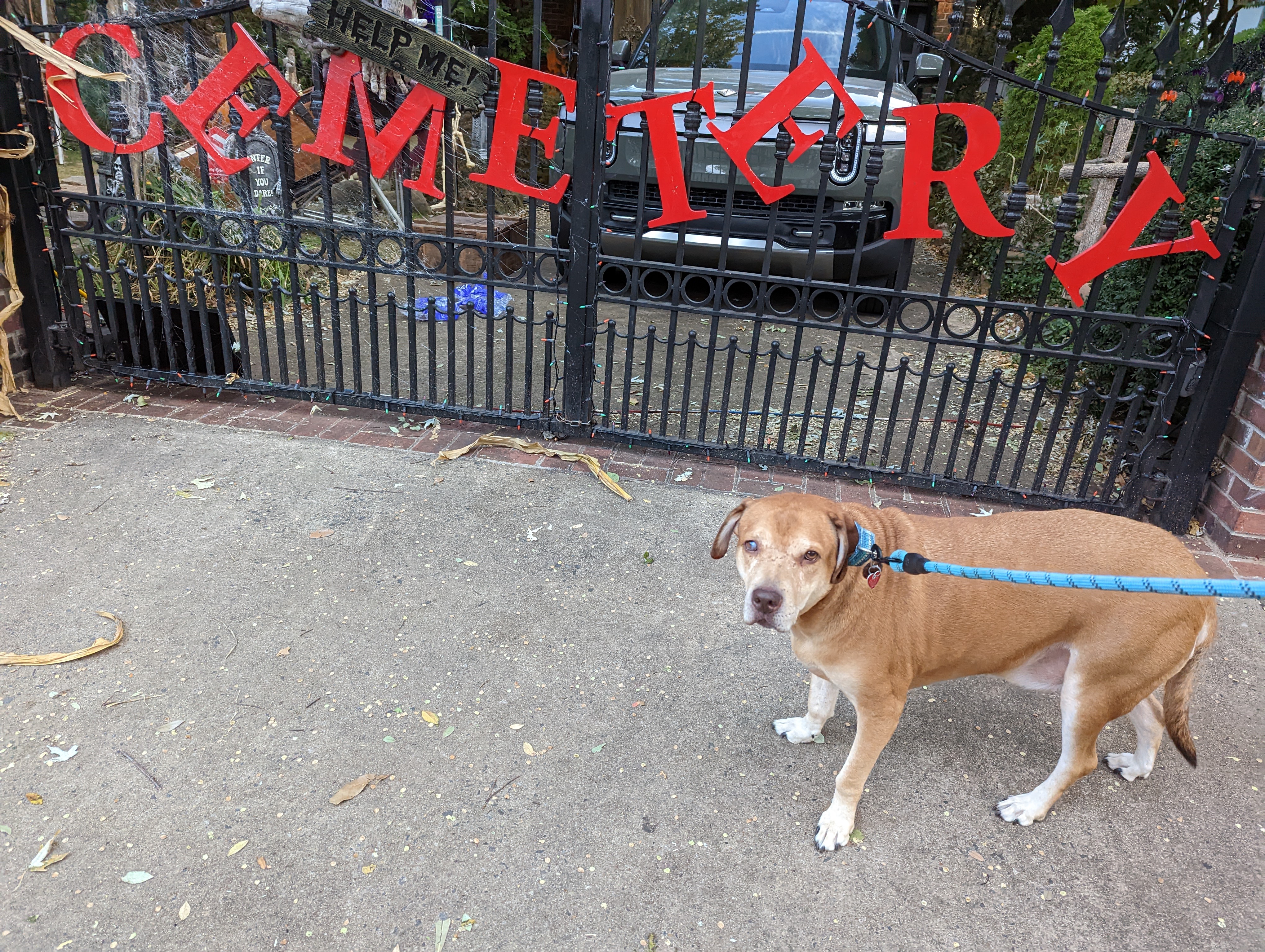
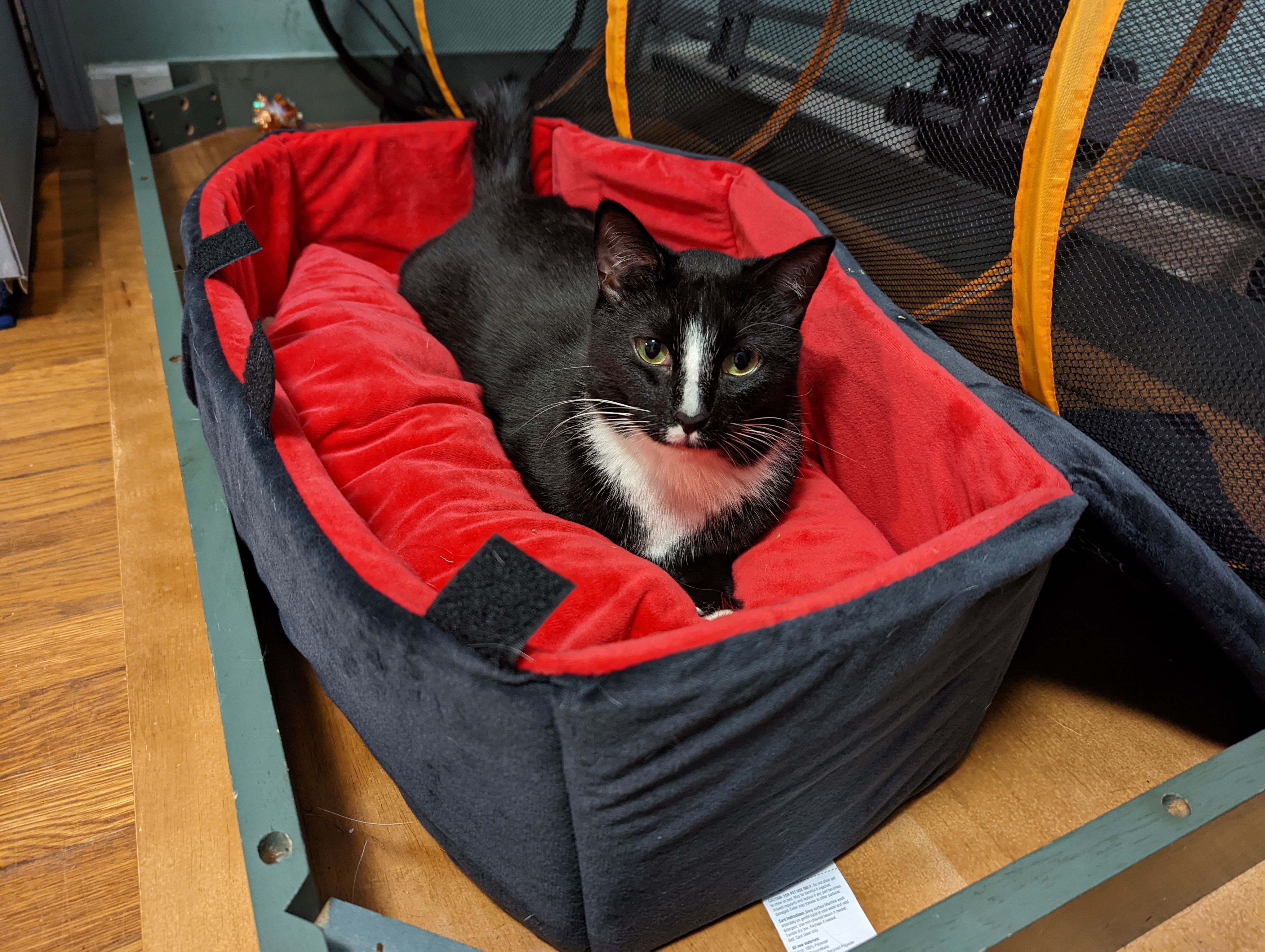
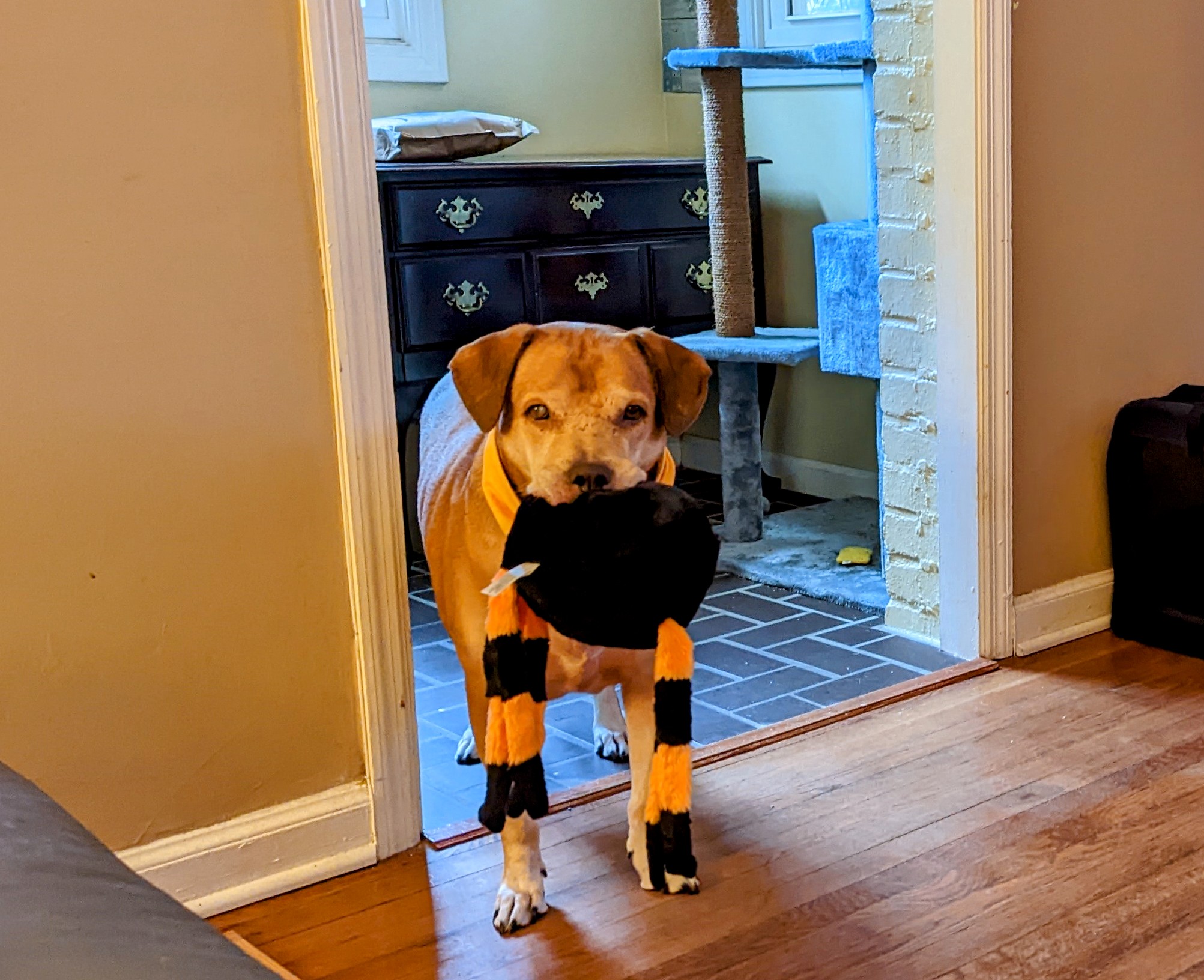
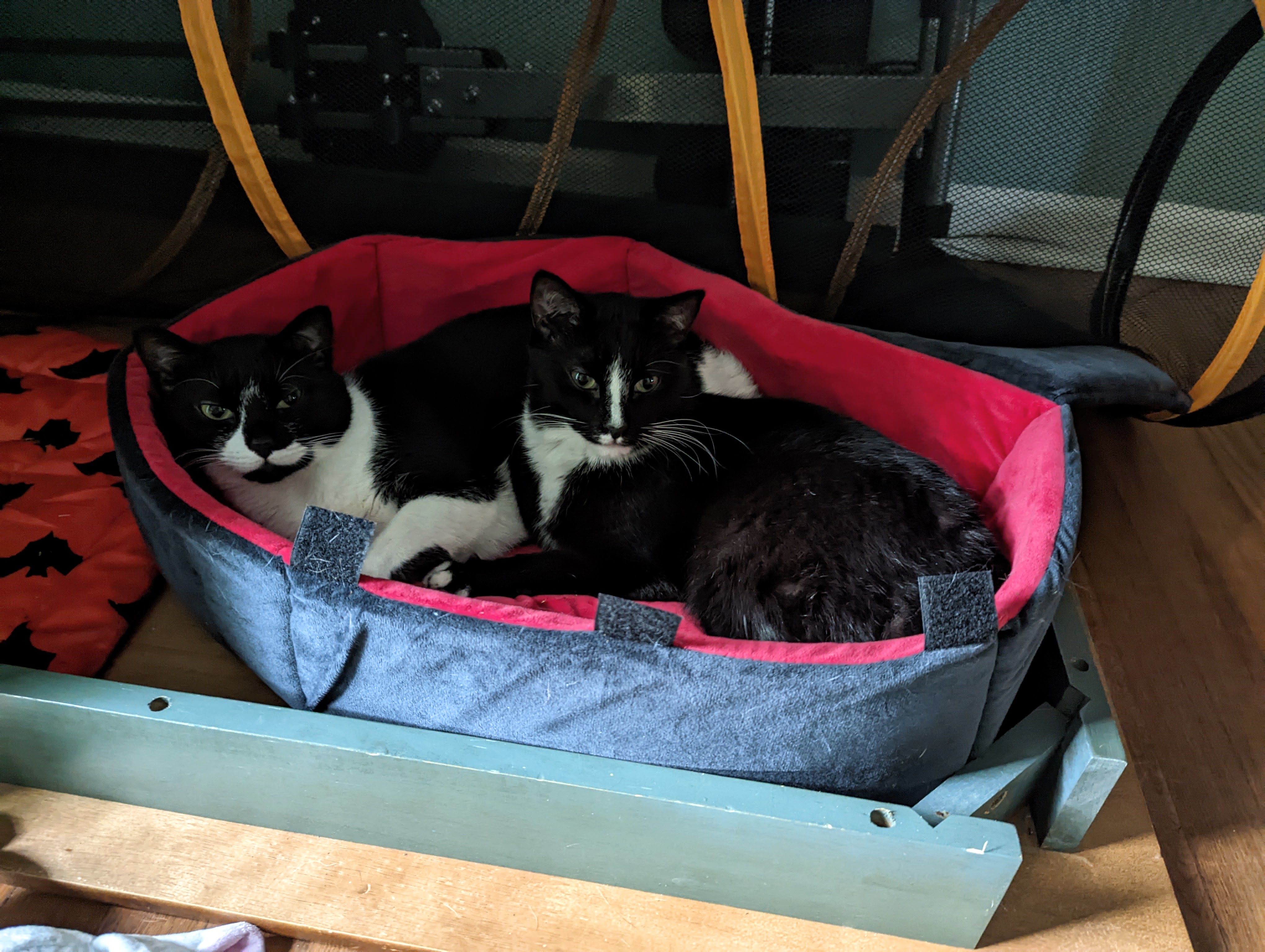
40-plus years later, I still enjoy Halloween: the spooky decorations, the scary movies and yes, the candy. Pets also make Halloween fun.
For those who celebrate, hope you get all treats and no tricks! If you need a last-minute Halloween gift, you can buy Slow Dog as an e-book.
While a cure or effective treatment for Alzheimer’s continues to remain elusive, there have been promising research developments this year. Recently, the results of a drug trial found that lecanemab helped to slow the progression of Alzheimer’s.
These breakthroughs wouldn’t happen without trial participants. It’s vital that researchers have access to a sufficient pool of volunteers. There are a variety of ways people can participate in Alzheimer’s research and you don’t have to have a specific diagnosis or be a certain age to participate in some programs. I take a battery of online brain tests and answer a health questionnaire a few times per year. Other areas of research may require in-person interviews, a blood draw, following a specific diet or taking medication.
Participating in a drug trial can come with risks, such as side effects from the medication. For example, aducanumab led to brain bleeding or swelling in 41 percent of clinical trial participants.
Study participants are closely monitored, so side effects are documented and treated quickly. Those willing to take this risk help determine a drug’s safety profile and whether a drug’s benefit outweighs its side effects.
Another important point to remember when it comes to drug trials is that there is typically a group receiving the trial drug and another group receiving a placebo, but “blind” trials don’t inform participants which one they are receiving.
If you are interested in learning more about participating in Alzheimer’s research, visit TrialMatch from the Alzheimer’s Association and the Brain Health Registry.
I recently bought a pair of shoes that left me frustrated. The soles were coated in a material that made them extremely slippery, especially on hardwood floors. I purchased them online, and I read the first page of reviews, which were mainly good. But starting on around page three, the warnings about slips and falls because of the slippery soles began. I wish I had researched a bit longer!
Both of my parents suffered from falls as they aged. My father’s dementia made him wander at night, a recipe for disaster. My mother broke her shoulder after falling off the toilet in the middle of the night. Her arm strength and range of motion decreased after that injury. But falls aren’t just a risk for older people. I myself fell at the park last year, slipping down a small slope covered in leaves. I had a sore back for days.
This odd pair of shoes made me think about how important mundane details are when it comes to caregiving, like what kind of shoes are your loved ones wearing? For loved ones who shop online, it’s worth assessing to make sure they are safe for walking on a variety of surfaces. From now on, I will pay closer attention to the soles of shoes!
Graphic courtesy of Administration for Community Living
In late September, the U.S. Department of Health and Human Services released its 2022 National Strategy to Support Family Caregivers. It’s the first time such a national strategy has been proposed. While it’s long overdue, addressing the needs of family caregivers in a coordinated national effort is a positive development.
“Supporting family caregivers is commonsense, since most people will at some point in their lives be a family caregiver, need a family caregiver, or both. Caregivers are sacrificing for their loved ones and often are standing in the health care gap by providing that care,” said Centers for Medicare & Medicaid Services (CMS) Administrator Chiquita Brooks-LaSure.
Your feedback is critical to the success of the strategy. The commenting period opened Oct. 1 and will be accepting comments for a 60-day period. The strategy will be updated every two years as required by law.
I recently had the privilege of sharing my caregiving experience as member of Generation X on the Rodger That podcast.
Every generation faces its own unique challenges when it comes to the family caregiving experience. It’s difficult no matter what age you are! My parents were older when they had me so I faced caregiving duties a bit younger than most in my generation. Women especially are vulnerable to being forced to leave the workforce to provide family care, which has a ripple effect not only on one’s current financial situation, but also for retirement savings. This is what I now have to contend with as I’m way behind in saving for retirement, while also facing a risk that the government will not continue to fund Social Security at its current levels by the time I reach eligibility. Gen Xers on the older end of the spectrum are also reaching an age where we will face more age discrimination in the workplace. So the ability to make up lost financial ground becomes even more of a challenge.
Millennials and Gen Z members also can find themselves facing an unexpected family care crisis that requires them to derail their life plans just as they are becoming independent young professionals. Long-term caregiving situations can cause one to postpone having children or making career changes. The pandemic has thrown a wrench into just about everyone’s life, with even more people taking on caregiving responsibilities with little to no experience.
There are also positive takeaways, as some members of younger generations are embracing aging issues. From intergenerational roommate services to apps and services being developed by younger people to help improve the quality of life of our elders, there is hope that our youth will continue to embrace these noble goals as they age. It indeed takes a village.
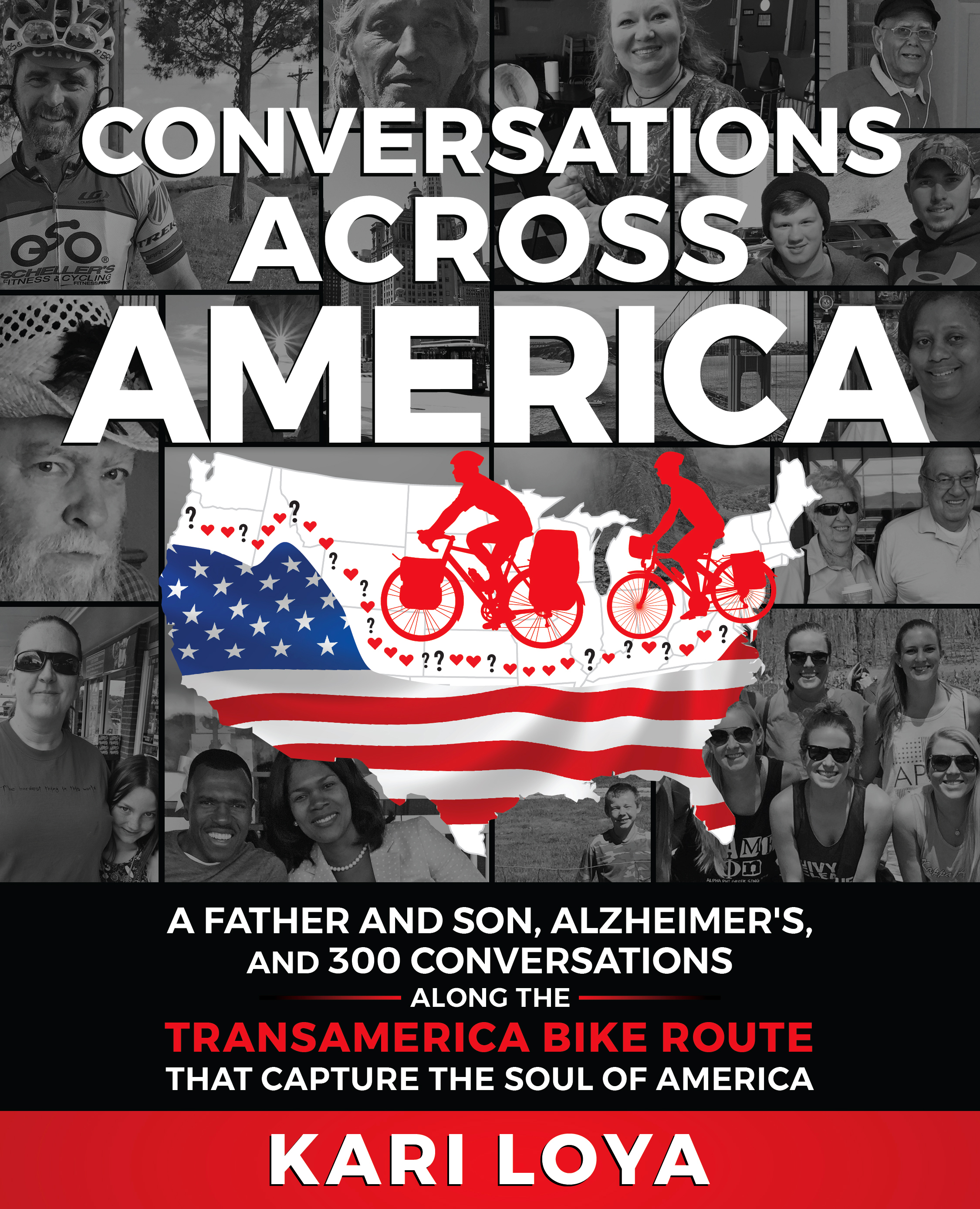
I had the recent pleasure of receiving a review copy of Conversations Across America by Kari Loya. It’s an insightful look not only at a father-son relationship dynamic after the father is diagnosed with Alzheimer’s, but also a visual and cultural snapshot of America.
There is much to find inspiring about the book. How many of us would be in good enough physical shape to bike across America? I know I wouldn’t and the fact that his father is able to do so while in the early stage of Alzheimer’s is admirable. The obstacles that the father and son duo face on their long journey mirrors the challenges one faces on the dementia caregiving journey. The open road facilitates difficult but necessary conversations between father and son.
The other component of the book offers photos and quotes from people Loya and his father meet along their journey. There is a diverse mix of voices and you likely will not agree with all of them, but it does offer some insight into how we ended up where we find ourselves now. Out on the road, random acts of kindness are not only welcome but necessary. Time and time again, strangers rise to the occasion.
Ultimately, Conversations Across Americais a love letter to his father, the natural beauty of the country and the helpfulness and resilience of those living in small towns. It’s a coffee table book with a conscience.
I’m excited to announce that I have written a children’s book, Slow Dog. I never expected to write a book for kids, but my rescue dog Murphy inspired me to take the leap.
Sometimes it’s rewarding to step outside of our comfort zone and look at life from a different perspective. When I adopted my senior mixed breed dog Murphy, I knew one of the challenges for me would be to adjust my fast-paced life to his decidedly slow-paced one. It was a deliberate choice as I knew it would benefit my overall well-being.
While Slow Dog doesn’t have any specific ties to dementia, it does celebrate moving at one’s own pace. That’s a helpful lesson for all caregivers.
With the passing of Queen Elizabeth and marking the 21st anniversary of 9/11 this weekend, I thought it would be a good time to discuss the complexities of the grieving and mourning process. As humans we often crave a blueprint for navigating difficult times. But as a recent article from Next Avenue points out, “Grief isn’t organized; it’s a mess and a natural human experience. There is no ‘normal’ way to grieve.”
I delved into the complicated relationships I had with my parents and how that impacted my grieving process in The Reluctant Caregiver. Diseases like dementia can also leave loved ones feeling conflicted; one may feel feel relief that their loved one is free of such a terrible disease yet still deeply mourn the person’s death.
Others may mean well but how one processes grief is an individualized process. What may seem “normal” for one person may be inappropriate for another. It’s also important to remember that there are many nontraditional family structures now and that we live in a time when people are more encouraged to share and process their family trauma.
For those who are grieving the loss of someone who they had a complicated relationship with, allow the feelings to flow naturally and try to ignore any societal expectations. If you would like help navigating the challenging journey, consult a therapist, grief counselor or grief support group.
While younger generations seem to be more open about discussing mental health issues and suicide, there doesn’t seem to be the same level of openness among older generations. According to the CDC, people aged 85 years and older have the highest rates of suicide. Middle-aged and older white men also are at increased risk of suicide.
For caregivers, suicide risk awareness not only applies to those one cares for but for the caregiver themselves. Older adults and their caregivers may be dealing with debilitating physical and mental health issues, which may cause them to also be socially isolated and lonely. As this report from Next Avenue points out, depression is not a normal part of aging. But older adults may be experiencing grief over the loss of loved ones, or worrying about financial issues or their own health problems. Loss of independence and cognitive decline can also factor into an increased risk for suicide among older adults.
Caregivers may suffer burnout while trying to care for older loved ones and raising their own families. Recent studies suggest that burnout can cause changes in the brain. Stress is linked to an increased risk of a variety of health issues. The report from Next Avenue includes a list of common depression symptoms.
This week is National Suicide Prevention Week. Below are some resources that you can use if you are in need of help or are trying to help someone else who is experiencing a crisis. I took some suicide prevention courses earlier this year and one of the main takeaways I learned was how important it was to be direct if you feel a loved one is experiencing suicidal thoughts. One should ask, “Are you thinking about suicide?” or a similar direct phrase. Being this direct can be challenging in certain cultures but with someone’s life potentially on the line, one needs to push through any social awkwardness.
The new national suicide prevention hotline number is 988.
We all know that exercise can offer a variety of health benefits, including supporting cognitive health. Sedentary behavior has been linked to an increased risk of dementia. But as we get older, we may have physical limitations that prevent us from engaging in the strenuous physical activity we may have enjoyed or done with relative ease when we were younger.
A new study suggests that low-impact workouts, including stretching and balance exercises, offer the same cognitive benefits in the area of executive functioning as aerobic activity. The study was performed on young adult subjects, so more testing will be needed, especially on older subjects. These findings could lead to the introduction of passive exercise programs at long term care and rehabilitation facilities.
Another recent study focused on sedentary adults who had been diagnosed with mild cognitive impairment. Again, the results were promising: cognitive function had not declined after one year of regular workouts, whether it was moderate aerobic exercise or range of motion exercise. A control group of adults with MCI did show a decline in cognitive functioning over the same time period, researchers said.
So the next time you or an older loved one worry you are not getting enough exercise, just remember, any kind of regular exercise can support cognitive health, along with offering a host of other benefits.










![Pageflex Persona [document: PRS0000038_00069]](https://memoriesproject.files.wordpress.com/2014/02/reluctant-caregiver-cover.jpg)






 The Memories Project