Spotlight on devastating diseases at the Oscars

I’ve heard a lot of criticism about this year’s Oscars regarding the lack of racial diversity of the top nominees. But from my perspective, there was quite a bit of diversity when it came to showcasing people living with debilitating diseases. For image-conscious Hollywood, and its obsession with being forever young and perfect, I think this was a big step in the right direction that is being overlooked.

Of course, with my main focus on Alzheimer’s, I was thrilled to see Glenn Campbell’s final song receive an Oscar nomination. I’m not a Tim McGraw fan, but he did a beautiful and sensitive rendition of the song. Gwyneth Paltrow introduced McGraw and talked about Alzheimer’s.

BSM Studio/Sony Pictures Classic

BSM Studio/Sony Pictures Classic

Julianne Moore, as expected, won best actress for her portrayal of a woman with early-onset Alzheimer’s in “Still Alice.” I was thrilled, as she is one of my favorite actresses. She researched and spent time with those who have Alzheimer’s so she could deliver an authentic performance. During her acceptance speech, Moore talked about making Alzheimer’s more visible to the general public so we can raise awareness.

But there was more than just Alzheimer’s represented at the Oscars. The equally devastating disease, ALS, was also in the spotlight. Not only did the best actor award go to Eddie Redmayne, who portrayed the famous physicist Stephen Hawking in “The Theory of Everything,” but Richard Glatzer, one of the directors of “Still Alice,” is living with ALS. In fact, Moore mentioned during her acceptance speech that his condition prevented him from being at the Oscars.

So to many, the Oscars may have been boring and lacking in diversity, but for those of who have been touched by one or both of these terrible diseases, it was a night to remember.

Leave a comment

Filed under Awareness & Activism

On being mortal, from a doctor’s perspective

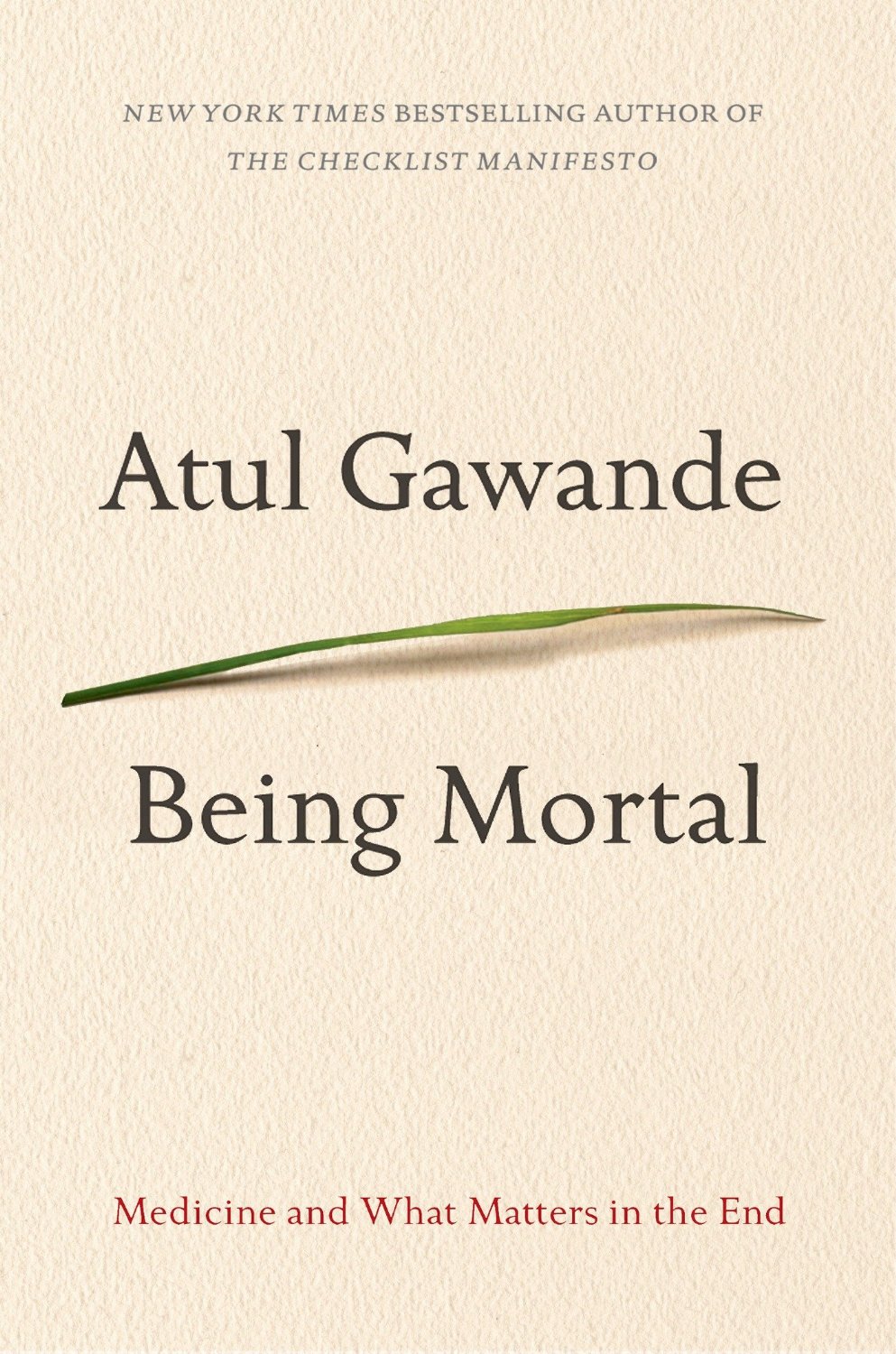
I watched an interesting Frontline special about end-of-life issues, from the perspective of a doctor treating terminally ill patients. The show featured Dr. Atul Gawande, who wrote the book, “Being Mortal: Medicine and What Matters in the End.” The book came out last fall, but I have not had the chance to read it yet. Another one added to my wish list, so many good books, so little time to read them!

being mortal cvr

In the program, Dr. Gawande tracks other doctors and interviews them about their approach to end-of-life care. Because of some negative experiences, I sometimes unfairly assume that the typical doctor’s main goal is to prolong life for as long as possible, quality of life be damned. But this documentary highlights the emotional turmoil that doctors experience when they are forced to tell their patients that medically speaking, there is nothing else to be done and it is time to transition to palliative care. The doctors feel like they’ve failed their patients when they cannot heal them.

Some patients accept the bad news with peaceful resignation, others go into denial, and still others fight the good fight for too long. One of the saddest stories was of a young woman about to give birth who was told she had stage IV lung cancer. She gave birth with a collapsed lung and immediately began a harsh and toxic treatment regimen. Of course one can understand why, she had so much to live for! But her husband now regrets the time she spent so ill from the treatment, which did nothing to extend her life. He wishes they had spent more quality time together as a family.

While somber in nature, the program offered a variety of takes on how to approach end-of-life care. It’s worth checking out. I watched in on the PBS channel on Roku.

3 Comments

Filed under Memories

Glen Campbell: I’ll Be Me

Excellent review. Looking forward to seeing this, as I have been following his journey with Alzheimer’s and his remarkable tour.

Ann Napoletan's avatarThe Long and Winding Road...

This week, I saw both I’ll Be Me and Still Alice. They were very different, but each was spectacular in its own unique way.

I think the Glen Campbell movie was the more difficult for me to watch for several reasons. The fact that it’s a true story makes it especially poignant, and for people of my generation it’s shocking to see an icon like Glen Campbell declining in this manner. As expected, there were also moments that reminded me very much of my mom.

I’ll Be Me is a documentary about Glen Campbell’s 2011-2012 farewell tour. The family decided to move forward with the tour despite the Alzheimer’s diagnosis Glen had received. Those closest to him didn’t expect the family to be on the road for more than five weeks; however, the superstar surprised everyone. The tour played more than 150 shows over the period of a year…

View original post 574 more words

1 Comment

Filed under Memories

Movie review: ‘Still Alice’ offers haunting, devastating look at Alzheimer’s disease

I read Lisa Genova’s fictional account of a professor diagnosed with early-onset Alzheimer’s disease quite a while ago, and was quite moved by the novel. I was excited to learn that Julianne Moore, one of my favorite actresses, was playing the lead role. It is rewarding to see the film receive so many positive reviews, and Moore collect many awards and accolades for her sensitive portrayal of the main character. The fact that one of Hollywood’s most respected actresses took on this role and is now receiving Oscar buzz will hopefully help raise awareness.

Some have questioned the focus on the familial form of early-onset Alzheimer’s disease, which is quite rare, but I think there is value in showing the general public that Alzheimer’s is not just an “old person’s” disease. The more readers and moviegoers can sense how profoundly this disease can destroy someone at the prime of their life, and the devastating impact the disease has on families, hopefully the more donations will come in for research and care funding.

BSM Studio/Sony Pictures Classic

BSM Studio/Sony Pictures Classic

It’s worth noting that one of the film’s directors, Richard Glatzer, has ALS, another disease that slowly robs one of their independence.

I went to see the movie on a Monday afternoon, and was pleasantly surprised to see about 30-40 other theater patrons. I expected only a handful. Let’s face it, the movie is not escapist, blockbuster entertainment.

I thought Julianne Moore offered a very sensitive and realistic performance. She spent a lot of time talking with those who have early-onset Alzheimer’s disease, as she was determined not to show anything in the film that was not accurate. The movie mainly follows the book, with some changes that I didn’t think hurt the story.

As for the rest of the cast, Kristen Stewart was well-cast as the youngest “black sheep” daughter. What I found most profound about the film was that Alice so wants her youngest daughter, who is an aspiring actress, to be like her other children (one’s a lawyer, the other in med school.) Before the disease, she cannot see how her own profession, as a linguistics professor, is more closely aligned to the theatre world than law or medicine. As the disease progresses, Alice and her youngest are able to bond over language, even as Alice is rapidly losing her ability to communicate.

I thought Alec Baldwin was miscast as the husband but he gave a surprisingly restrained performance (not easy for him!)

So definitely a must-see. Perhaps because I read the book and knew what was going to happen, I didn’t find it to be a total tear-jerker, but it did leave me profoundly moved.

1 Comment

Filed under Awareness & Activism

Another heart-stopping false alarm

So I finally was able to set my mom up with a personal care service, in addition to the home nurse visits. The personal care attendant was supposed to take my mom grocery shopping yesterday afternoon. Around noon, I was at work and received a call from a number that I did not recognize but with the same area code as where my mom lives.

I answered and it was the woman who runs the personal care agency. She said the attendant going to see my mom finished up a bit early with her previous call and she headed over to my mother’s house a bit early. But she knocked on the door multiple times and there was no response.

alarm bell

So of course I go into immediate panic mode in my head. Just like in those commercials, Mom’s fallen and she can’t get up!

I told the woman I would try calling her phone number and if she didn’t respond, there is a house key in a lockbox on the property.

I could feel my heart pounding with every ring on my mom’s line. Finally, Mom picked up. She sounded a little frazzled.

Turns out Mom was getting ready in the bathroom which has a loud heat vent. She couldn’t hear the knocking.

So Mom was okay, just a bit annoyed that the attendant was early … don’t mess with elderly people’s schedule! This is true also for those with dementia, any change of plans or a schedule can really upset them. It’s something many of us caregivers have learned the hard way.

It took a while for my heart rate to return to normal, but so grateful that it turned out to be a false alarm.

What kinds of false alarms have you experienced as a caregiver?

1 Comment

Filed under Memories

Interesting self-analysis of Alzheimer’s from Greg O’Brien

NPR recently featured an interview with Greg O’Brien, a journalist with early-onset Alzheimer’s.

I found O’Brien’s personal take on Alzheimer’s quite profound.

I like how visually he described the disease, saying, it is like “a plug in a loose socket” that you keep trying to plug in but eventually it stops working and the light goes out.

On Pluto by Greg O'Brien

On Pluto by Greg O’Brien

The one point that really struck home with me was when he describes how having Alzheimer’s disease forces you to find your own identity each and every day. He says the pieces of his self-identity, the who, what, when, where and how are like cards carefully arranged in a file cabinet.

“Then at night, someone comes in and they take all the files out and they throw them all over the floor. And then you wake up in the morning and say, “Oh my God, I have to put these files back before I realize my identity.”

I thought that was a very simple yet powerful way to sum up this disease.

O’Brien has written a memoir, “On Pluto: Inside the Mind of Alzheimer’s” and I plan on reading it soon.

If you have read the book, I would love to hear your thoughts.

1 Comment

Filed under Awareness & Activism

Guest article: Dealing with dementia: What caregivers need to know

By Jesse Waugh from Daughterly Care

Have you been given the rewarding yet challenging task of caring for a loved one with dementia?

Undoubtedly, caring for someone with the affliction can be very demanding both emotionally and physically.

An overall term to describe a dramatic decline in one’s mental ability, dementia can be severe enough to interfere with the patient’s day to day existence.

The following tips will help you care for a patient with dementia effectively, while helping them transition into another phase of their lives with less difficulty.

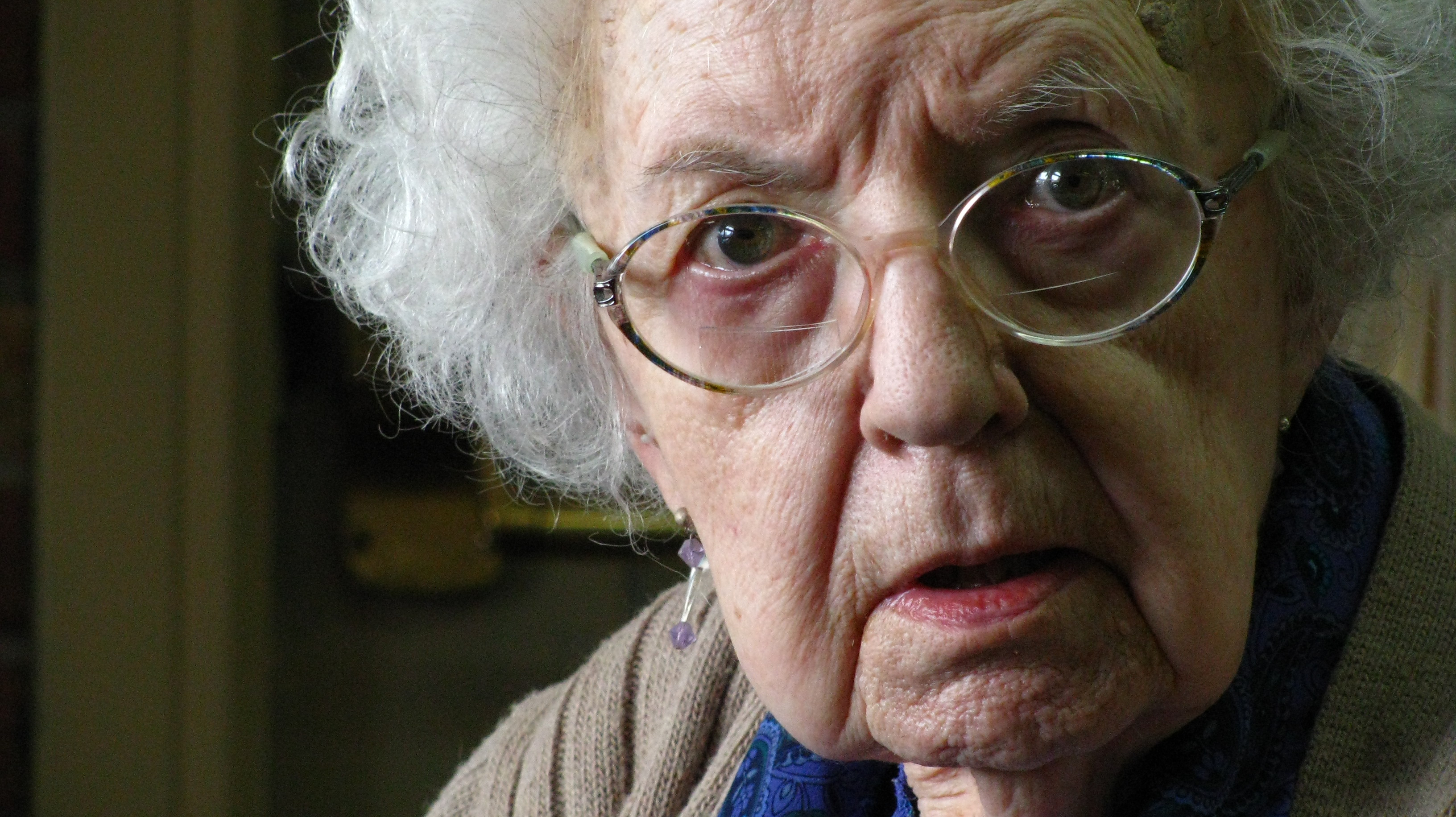
elderly_woman

Communication
In most cases, people with dementia will find communicating utterly demanding.

Chances are, they will find it difficult to verbalize, write and express their emotions in general.

In some instances, they have the tendency to also lose sight of conversation basics and might end up ignoring or interrupting you in the process.

Bridge the ‘communication gap’ by keeping in mind the following basics.

• Keep calm at all times and give them sufficient time to comprehend what you are trying to say and wait for them to respond to you.
• Make use of touch and other positive body language when communicating and make it a point to remain consistent in your approach.
• Always opt for simple and short sentences when trying to get your message across. Also, try not to argue and be condescending. Keep in mind that they still have emotions and feelings even if they might have difficulties understanding you.

Nutrition

Part and parcel of fitting elderly home care should involve carefully monitoring the patient’s drinking and eating habits.

There is a possibility for people with dementia to forget to eat and drink so keeping an eye on this key element should be considered vital.

Effectively manage their eating and other nutrition needs by taking the following pointers to heart.

• Ensure snacks and meals are offered on a regular basis. While not everyone has the same needs, 5-6 small meals a day is considered ideal.
• When possible, serve foods they are familiar with and patiently demonstrate chewing if the need calls for it.
• In most cases, patients tend to lose a lot of weight especially in the later stages of the disease. With this in mind, consider giving nutritional supplements. Consult a doctor or a dietitian so you will be given appropriate advice as to the supplements that might be helpful.

Aggression
While not true for all, there are instances when patients with dementia will exhibit some aggression tendencies.

Be on top of any possible outburst by practicing the following essentials.

• Inform friends, family and relevant health professionals if the patient displays any form of aggression.
• If fits happen repeatedly, try to observe so you can figure out what the triggers are. Once you identify what provokes the outbursts, it will be a lot easier for you to steer clear of those triggers.
• If the outbursts become frequent and unbearable, ask for professional advice so you will know how to manage it effectively.

While physically challenging and emotionally devastating, you can do much to help make dementia a bit more bearable for the patient. Equip yourself with all there is to know, seek the help and guidance of the right professionals, and you are on your way to managing dementia with ease.

Leave a comment

Filed under Awareness & Activism

Guest article: Preparing for at-home care for a loved one with dementia

By Helen White, freelance writer

The decision to try at-home care for a parent or other close relative with dementia isn’t one that’s made lightly. It’s exhausting work, both mentally and physically, and it can be heart-rending for children of parents with dementia to see the changes that the disease brings. If you’ve made the decision, there’s a lot of preparation to be done, both in the home, to create a safe environment, and in the heart, to help you stay strong and able to cope with your new role as care-giver.

Simplifying the Home and Improving Safety

For someone with dementia, even the simplest everyday tasks and items can become fraught with difficulty. Simplifying the home, reducing clutter, and making spaces more accessible is hugely important to prevent over-stimulation and agitation, as well as accidents that may lead to physical harm.

  • Create “walking paths” so that there’s a direct and easy-to-follow path between each room. Remove or tack down any rugs on the floor.
  • Reduce household clutter, both to prevent accidents and to reduce the likelihood of over-stimulation caused by information overload.
  • Improve lighting to reduce dark spots and shadows, which can cause confusion and distress.
  • It may be helpful to label certain areas and items; for example a “bathroom” sign, and labels for kitchen drawers.
  • Add grab bars where applicable in bathrooms (e.g. for the bath, shower, or toilet) and add non-slip flooring or mats.
  • Consider child-proof locks for electrical devices and wall outlets.
  • Secure any rooms or items that are potentially dangerous or breakable—for example, the garage, basement, attic, or swimming pool, computer equipment, and machinery.
  • Add safety locks to any doors that lead outdoors, and install window devices to limit how far they can open.

shower chair

Preparing the home is sometimes a matter of trial and error: you don’t know how your loved one will react to certain things until they’re with you on a daily basis. Initially at least, focus your efforts on safety, and over time you may find there are additional changes you can make to the home to make things more comfortable and calming.

Setting Up a Routine

For someone with dementia, routine is incredibly important. Having a routine helps them make better sense of a world that is increasingly confusing, and it’s important that your loved one knows there are certain things they can rely on, like a mid-morning snack at the same time every day, or a favorite television program each evening. In situations where their loved one has become agitated, having an established routine can also help a care-giver get things back on track and help their loved one calm down.

  • A routine doesn’t need to be strictly regimented and fill up an entire day; it should just provide the day with structure. For example, it might include:
  • Opening bedroom curtains at the same time every morning to signal the start of a new day
  • Meals and snacks, and medications, at scheduled times.
  • Daily activity time, visitors, outings.
  • Shower or bath time before bed.
  • Playing a relaxing piece of music at bedtime.

Don’t Neglect Your Own Self-Care

Caring for a person with dementia is both physically and mentally demanding, particularly for non-professional care-givers taking care of family members. It’s a situation that can lead to exhaustion, burn-out, and even depression on the part of the carer, so it’s vital that you’re able to take breaks on a regular basis, including days and evenings off. So, as part of preparing to bring your loved one home, try and set up a schedule of some kind, to make sure each person who is acting as carer has sufficient time off.

Having a good support system in place from the start is also very helpful. For example, joining a support group for care-giving families can provide a means of expressing emotions in a safe and non-judgmental environment. This is hugely important, because it’s natural for care-givers to feel negatively-perceived emotions like frustration, fear, and sadness, and they need a safe outlet in which to express them.

References

A Place for Mom (March 2013). “Maintaining Dignity for Dementia Patients.” Accessed January 12, 2015. Caring with kindness.

Carol B. Larkin (May 2012). “A Guide to Safe-Guarding Your Home for Alzheimer’s Patients.” Accessed January 12, 2015. Simplifying home and routine.

Aging Care. “Senior Care Products.” Accessed January 12, 2015. Products for at-home senior care.

Help Guide. “Dementia and Alzheimer’s Care: Planning and Preparing for the Road Ahead.” Accessed January 12, 2015. Preparing the home.

Phillips Lifeline (May 2014). “Proper Dementia Care Can Help Patients Remain at Home Longer.” Accessed January 12, 2015. Benefits of at-home care.

Psych Guides. “Living With: A Family Member With Dementia.” Accessed January 12, 2105. At-home care.

Visiting Angels. “Preparing the Home for Senior Care with Dementia or Alzheimer’s. Accessed January 12, 2015. Home preparation.

Leave a comment

Filed under Awareness & Activism

Book review: ‘Slow Dancing with a Stranger’

You know you are a caregiver or an Alzheimer’s awareness advocate when books like this appear on your Christmas wish list.

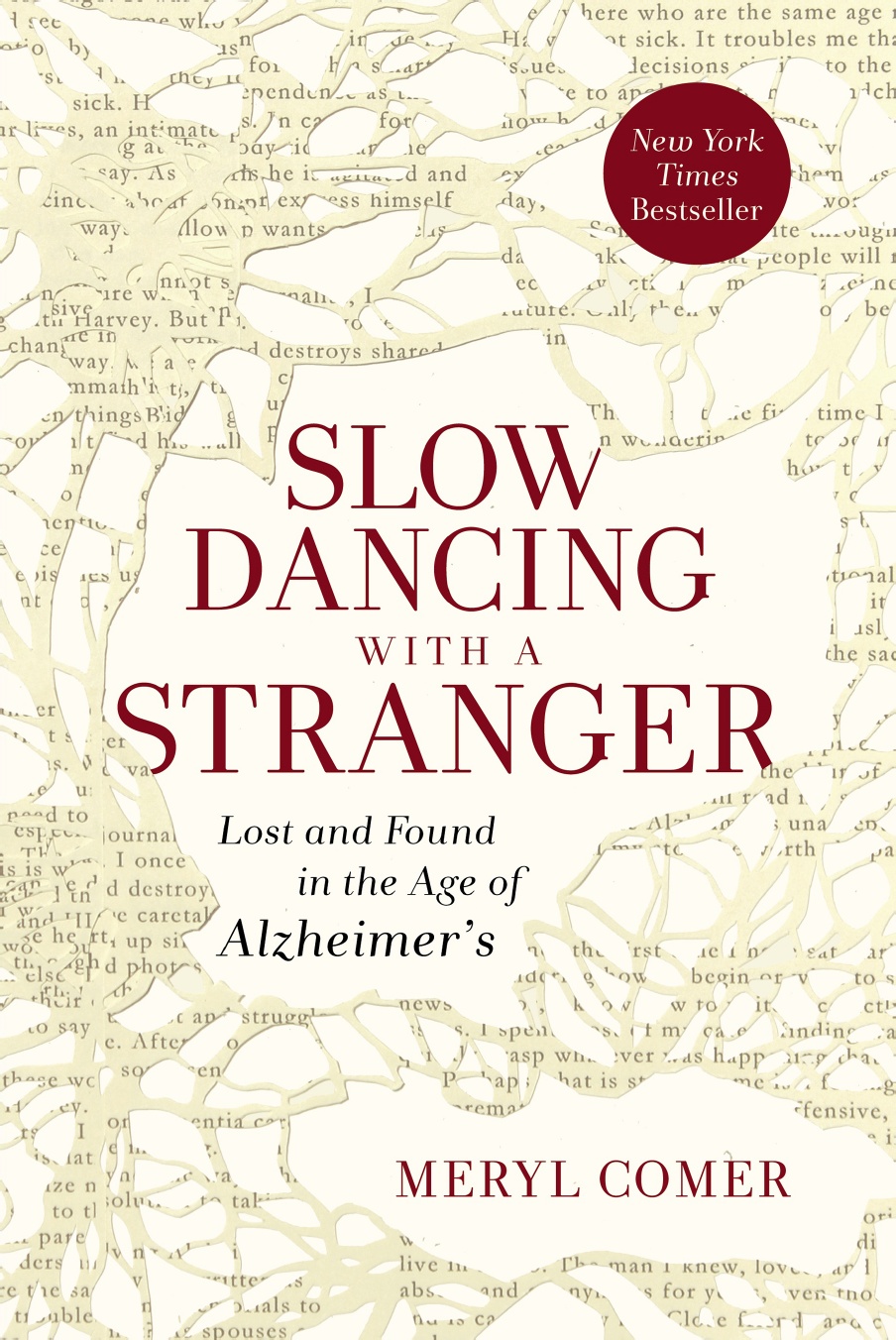
I had read positive reviews of the book, “Slow Dancing with a Stranger” by Meryl Comer, a former television journalist.

Courtesy: MerylComer.com

Courtesy: MerylComer.com

In this raw and honest memoir, Comer attempts to illustrate the “unvarnished reality” of Alzheimer’s while describing her life as the primary caregiver for her husband, a former esteemed NIH scientist who was diagnosed with early-onset Alzheimer’s in his late 50’s. He is still alive, 20 years later. Comer’s mother, who she’s always had a difficult relationship with, also has dementia and is still alive at age 94. The three live together, and a small group of dedicated caregivers work daily shifts to help with the care.

Comer tries placing her loved ones in facilities, but it is important for people to understand that not all Alzheimer’s patients are suitable for facility care, and that in fact, can be essentially “thrown out” if they are deemed a risk to themselves, staff, or other residents. Yet home care brings its own set of challenges, and neither road is an easy one to navigate.

I also think Comer does a good job of demonstrating that some people with Alzheimer’s don’t respond to the more positive therapy methods that are popular nowadays, such as music therapy, exercise, etc. Comer tries everything imaginable to reduce her husband’s anger and anxiety, but nothing seems to work. Comer’s husband has a form of Alzheimer’s that causes violent, physical outbursts, and both Comer’s husband and her mother were extremely manipulative, with her mother calling the police to claim she had been abandoned by her daughter.

I found beauty and awe in Comer’s resilience to take care of her loved ones in spite of all of the setbacks they faced together. Comer has given up her career and essentially her life to take care of her husband and mother. It’s a sacrifice that not everyone could make. To say this is a depressing book would be an understatement, but I hope it will help raise awareness of the debilitating emotional, physical and financial impact of this disease.

100 percent of the proceeds of the book will go towards Alzheimer’s research.

Leave a comment

Filed under Awareness & Activism

What’s important is what was in the middle

I stumbled across this blog via a Facebook post. I’m not a religious person, but this blog post by Rev. Katie Norris is particularly relevant to those of us long-distance caregivers who struggle with guilt.

We should focus on happier times with our loved ones, not the final moments.

We should focus on happier times with our loved ones, not the final moments.

Norris has had to make the decision whether to return home for her mother’s last days multiple times. Dying of course is not a nice and neat affair, and one can be slowly dying for years. Most of us would like to be there when our loved one passes, but Norris points out that we have to accept our lack of control in this situation and that our ideal ending may not happen.

Ultimately, we must focus not on the ending, but the middle, on that time spent with our loved ones during the bulk of our lives.

I thought this was such a simple but profound philosophy. It’s a lesson that really hits home with me, because I have struggled so much with not being there when my father died.

I wanted to pass along the message to those of you who may be struggling with guilt or regret.

1 Comment

Filed under Memories