Tag Archives: caregiving

Playing the symptoms game

Today is Mom’s 77th birthday. With all we’ve been through as a little family over the last several years, I now make it a point to visit her in person on each birthday. It sounds morbid but really, for any of us, we don’t know if this birthday will be the last.

Things have been going along pretty well over the last year, in regards to Mom’s health. Her colonoscopy at the end of 2013 brought good results — a couple of polyps removed, nothing otherwise suspicious spotted.

In March, her CEA level was up just the slightest bit. But with no other symptoms, the oncologist saw no reason for concern, saying it it continued to rise on the next visit in July, then he would order a scan.

mom-77-bday

Over the last couple of months, Mom’s had some issues with her GI system which had returned to a remarkable functioning state after her two surgeries in 2012. Most concerning is the tightness she feels in her abdominal area. She’s also had some dizzy spells and tends to get tired quicker. Her appetite is not quite as strong as it was either.

So I’ve been playing the symptoms game since that time, Googling her symptoms and various combinations of her symptoms. Her symptoms are similar to both the first time she got sick (colon cancer) and the second time (hernia). Obviously, we’d all take another hernia over another bout of cancer, but the symptoms game is long and drawn out.

It can throw you a loop and be something completely unexpected.

Her stomach looks a bit distended when she’s sitting or standing but not anywhere near the level it was when she was sick. I felt her stomach when she was stretched out on the bed and thankfully it felt pretty soft to me, so I don’t think she has another colon obstruction. Yet.

Her oncologist appointment is this Wednesday. Unless he can obviously feel a hernia, Mom will probably have to go for some sort of scan and then more waiting around for the results. So the symptoms game keeps going on …

I hate playing the symptoms game, but I hate even more when the symptoms game ends.

Then you are faced with the diagnosis.

1 Comment

Filed under Memories

To my mother, a wonderful caregiver

My mom and I don’t always see eye-to-eye, and sometimes she drives me crazy. But while these last several years have been difficult for our family, they have also highlighted my mom’s wonderful qualities.

mom-sketch

So on Mother’s Day, I want to honor my mom, who was such a tireless and loving caregiver for my dad. I took for granted all of the things she did for Dad. It was not until I became my mom’s caregiver that I appreciated all of the sacrifices she made.

This is a sketch of my mom done while she was in the Navy, in the early 1960’s. It was then burned/engraved into a wood canvas. It is really a unique work, and captures my mom’s cheerful spirit.

Leave a comment

Filed under Memories

5 required skills for the toughest job in the world | LinkedIn

I’ve been writing some articles on the LinkedIn platform. When I was brainstorming content ideas, it struck me how many common workplace skills are needed when serving as a family caregiver. Of course, there are many more new skills that you will be required to learn on the fly! In my LinkedIn piece, I highlight five skills I found invaluable while serving as a family caregiver and patient advocate.

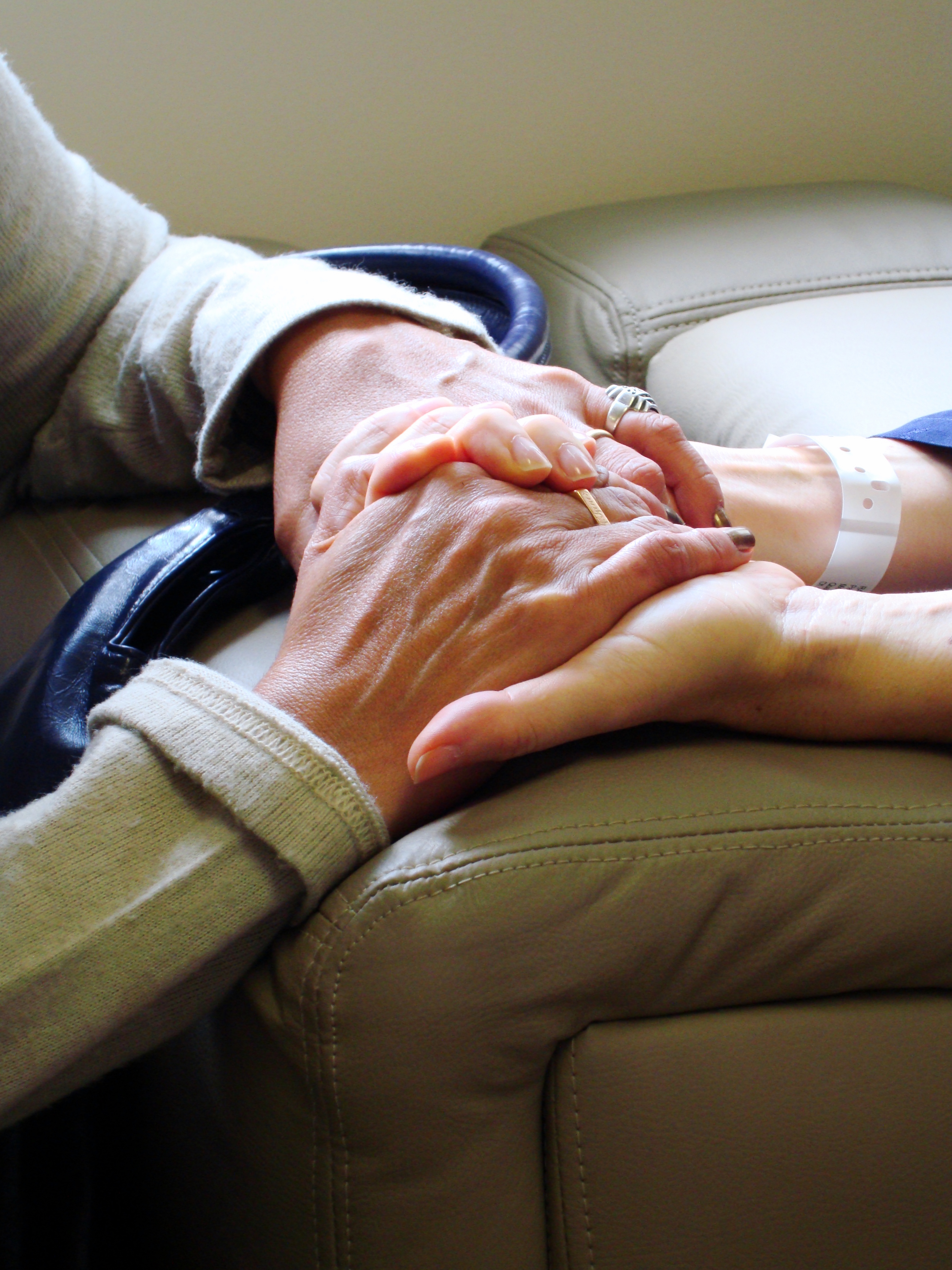
holding hands

You can check out my piece here:

5 required skills for the toughest job in the world | LinkedIn.

What skills do you find most helpful as you carry out your caregiving duties? What new skills were the most difficult to learn in order to be a successful caregiver?

2 Comments

Filed under Awareness & Activism

Reimagining the simplest things

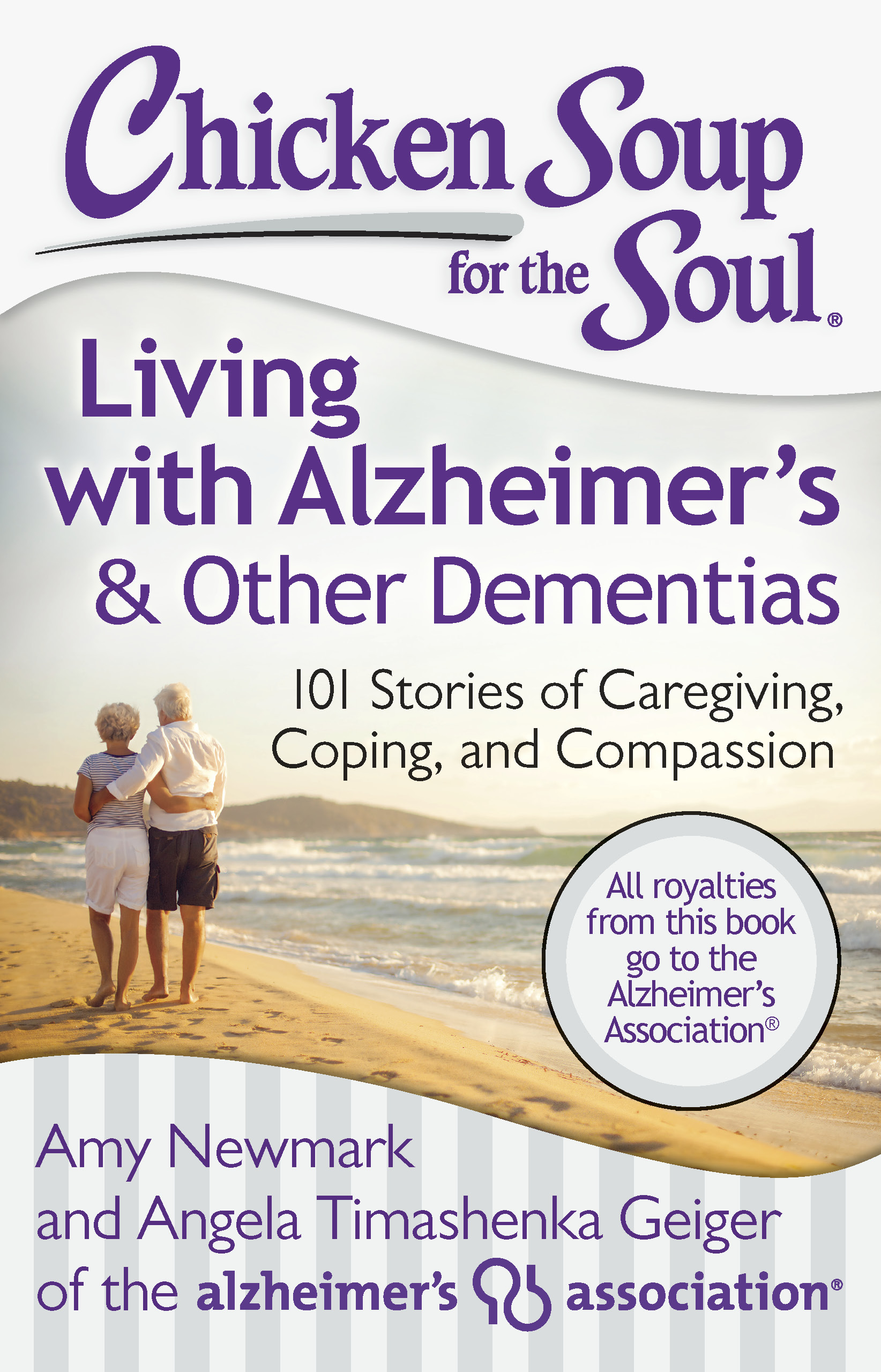
I’ve finished reading my advance copy of Chicken Soup for the Soul: Living with Alzheimer’s and Other Dementias and I am deeply moved by the brave and loving stories shared in this collection. As we approach the release date of April 22, 2014, I will be blogging about some of the stories that I found particularly touching.

CSS Living with Alzheimer's & Other Dementias

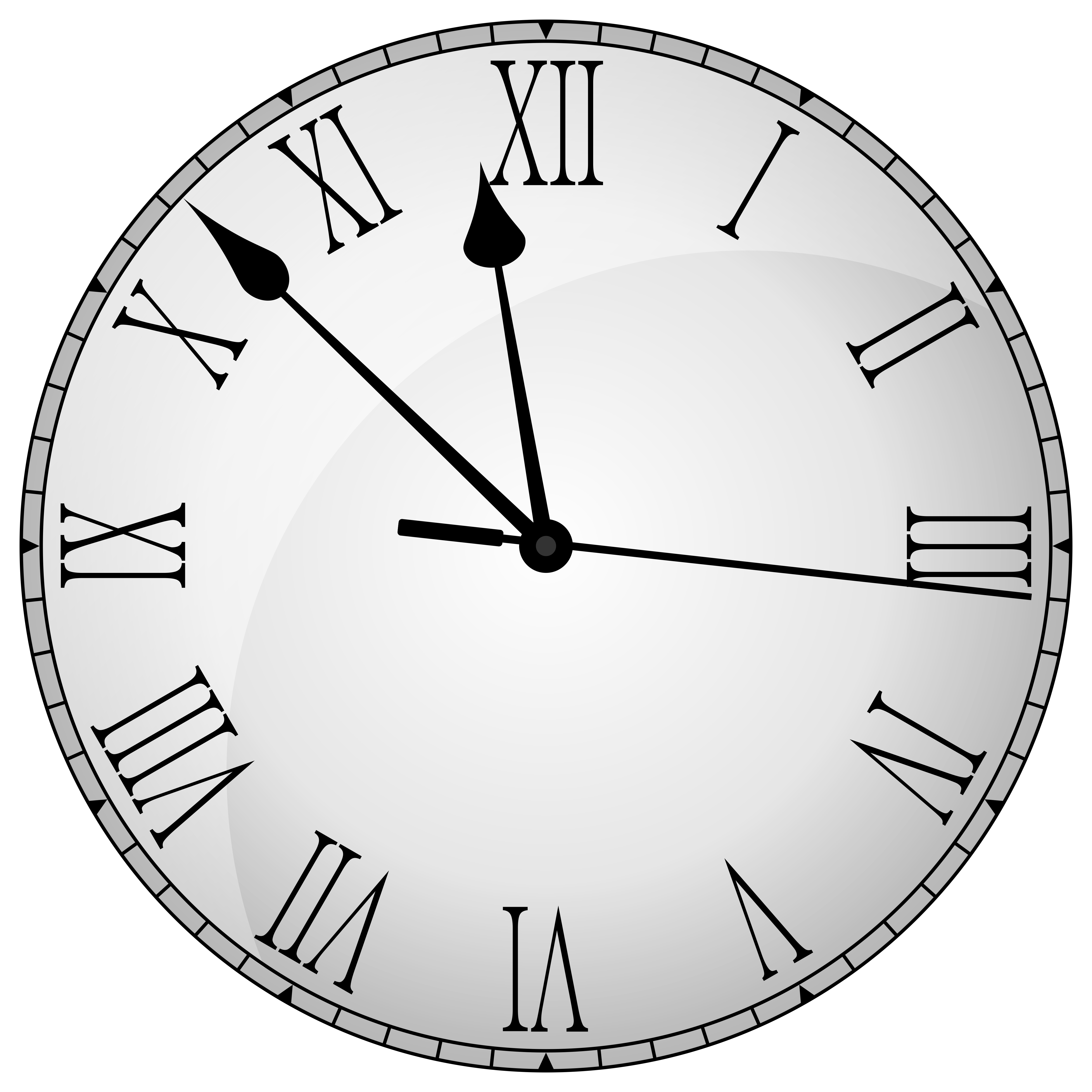
One such story was about a man who had been married for many, many years to the love of his life. Once his wife was diagnosed with Alzheimer’s, he tried his best to adapt their lives to deal with the disease. One area where his wife really struggled was with telling time. For those of us who have dealt with Alzheimer’s in our own family, we are all too familiar with the “clock test” and how that is used as one marker to determine a person’s cognitive functioning. My dad never took the test that I am aware of, but my mom did. My mom does not have dementia, but when she developed cancer, she was so ill that she stopped eating and her potassium levels dropped dangerously low. This can impact cognitive functioning, and boy, did it ever. I watched my mom struggle to draw that clock, and I thought my mom was facing the grim future of my father. Fortunately, her cognitive function was restored once her illness was treated.

clock

But back to the story. After the wife repeatedly asks the husband in the span of a short time when dinner is, the man puts on his thinking cap. Knowing that she cannot tell time now by a traditional clock, he sets out to recreate the tool we use to tell time. He removed the second hands and the minute hands, leaving only the hour hand moving. He then places a piece of tape above the hour they are going to eat. With the simplified version of his clock, his wife can now understand when their next meal will be, relieving a bit of stress for both of them.

Will there come a time when his wife will not be able to understand even the reconfigured clock? Probably. But the love and wisdom shown in the husband’s actions will definitely withstand the test of time.

Leave a comment

Filed under Awareness & Activism, Memories

Supporting a grieving friend

I want to take a moment to send my condolences and loving support to Terry Shepherd. While I have never met her in person, I feel I know her quite well, as I’ve been following her terry1954 blog for awhile.

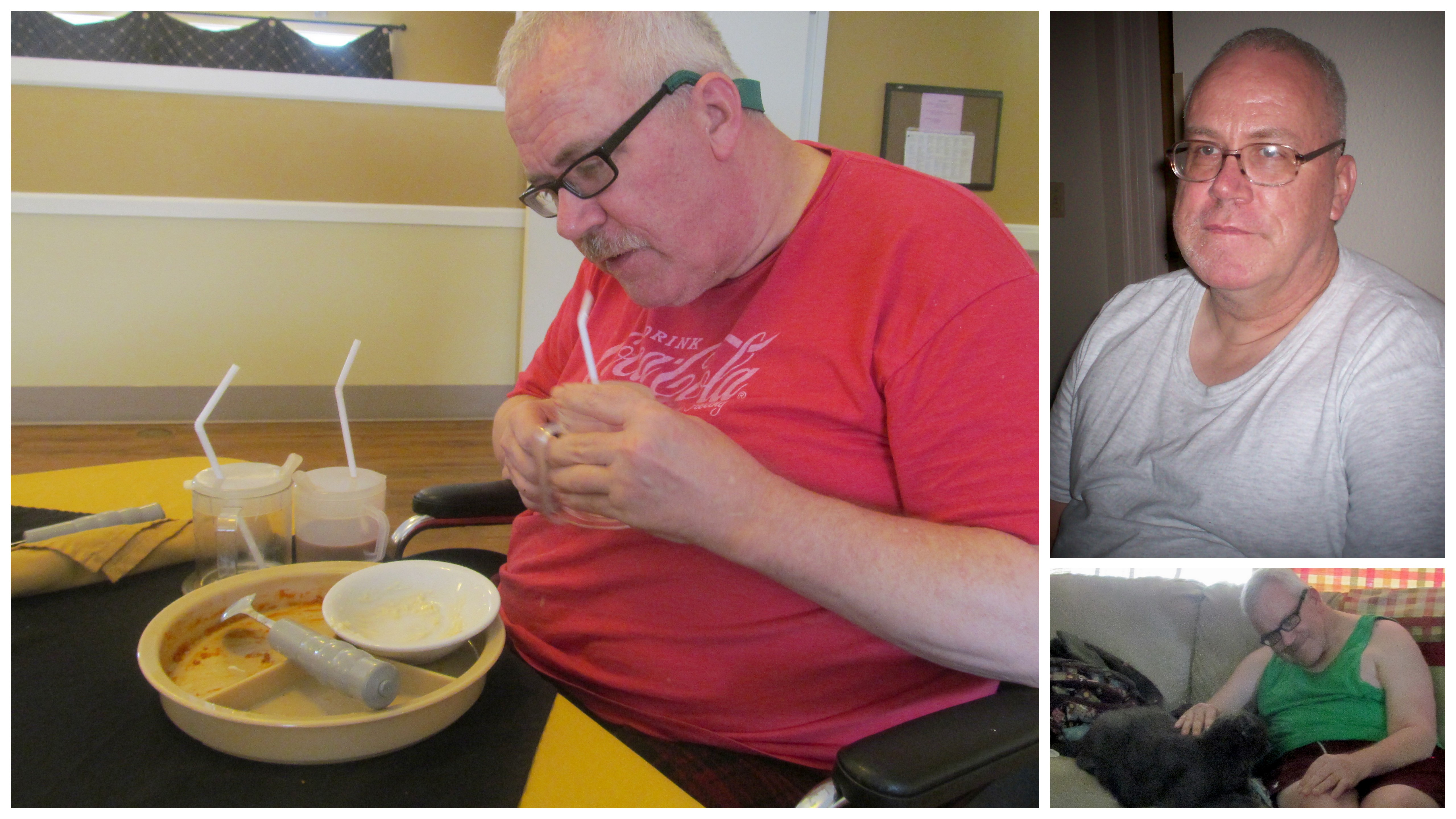
al-collage

Terry was the primary caregiver of her brother, Al, who had a terribly debilitating disease called Multiple System Atrophy. Al was mentally challenged as well, which complicates the caregiving situation. Over the last several months, poor Al has essentially been dying a slow death. While Terry had some home health help and a dear friend who would offer her moments of respite, Terry took care of most of Al’s needs, from feeding to bathing and changing his diaper. Terry bravely and beautifully documented her caregiving experiences on her blog. She has many blogger friends who like me, know what a special person she is and offered support and advice throughout the ordeal. On Monday, Terry wrote on her blog that the angels came.

Those of us who have experience the death of a loved one, especially when long suffering is involved, know that there is some level of relief that their loved one is free of pain and disease. But of course, the grief at the loss of someone you’ve been so close to and have taken care of is still so painful to bear. If you have any words of solace or support you would like to send along to Terry, you can do so on her blog.

I have learned so much from Terry. The patience, love and fighting spirit she had in caring for her brother is admirable and a great example for all of us to follow. She does not sugarcoat the caregiving experience: the loneliness and isolation, the frustration with care providers, the hopelessness and exhaustion. Terry bares her soul on her blog, and I can only hope that her blog followers offered her at least some solace through our support and prayers for her and Al.

Rest in peace, dear Al. I hope you are flying with the angels.

1 Comment

Filed under Awareness & Activism

The most difficult lessons of caregiving

I finally had the chance to read Jai Pausch’s memoir, “Dream New Dreams.” She was the wife of Randy Pausch, the professor who gave the moving “Last Lecture” that went viral a few years ago. As you may remember, Randy bravely battled pancreatic cancer, and Jai served as his primary family caregiver. The couple also had three young children at the time. The memoir covers all of the aspects of caregiving and the physical, mental and emotional impact being a caregiver has on an individual and a family. Jai Pausch writes with honesty and bravery. I highly recommend the book to other caregivers. There is a lot you no doubt will relate to in this book.

hands

One of the most poignant and enlightening moments of the memoir for me comes near the very end of Randy’s journey with cancer. Jai does not sugarcoat the impact that cancer had on their relationship as husband and wife, and how she often struggled to maintain the household, raise three young children essentially alone, and try to be a loving caregiver to Randy. In the last month of his life, they make one last trip together for an experimental cancer treatment. Jai admits that they were not getting along. In front of a social worker at the hospital, Randy said something about his wife that hurt her deeply.

“He said he felt I was unempathetic: doing a great job of all the things anyone could do, and a terrible job on the things only I could do.

Wow, what a devastating statement from a dying man. Jai was of course wounded by this accusation, as any family caregiver would be. Here she was, running the household, paying the bills, taking care of three kids under six years of age and being a caregiver for a cancer patient, and he had the nerve to complain? Jai really didn’t think she could do any more than she was already doing.

Jai recounts what their wise psychologist suggested when Jai told her the crushing words Randy had said: “He wants you to tell him you’re going to miss him when he’s dead.”

That is blunt advice to be sure, but it was a breakthrough moment for Jai as a caregiver. Jai was working so hard to maintain a stoic exterior, to not make Randy feel guilty about how much pain she was going to feel when he died that she was coming off as cold and uncaring to him. So on the doctor’s advice, she went to Randy and cried and expressed how much she was going to miss him. Jai says Randy was comforted.

I think this is a great lesson for all of us caregivers. We work so hard to be invincible that sometimes we forget we are human. While we may want to shield our sick loved ones from much of the pain, sadness and frustrations we feel, we should not do so at the expense of cutting off emotions altogether. Randy was right: almost anyone can perform the physical duties of caregiving, but the love you have for that person is unique and only something you can express. Take time to show how much you care.

1 Comment

Filed under Awareness & Activism

Caregiving like a labyrinth

I was reading an interview with Gail Sheehy in Today’s Caregiver magazine. In it, she talks about the caregiving journey being akin to navigating a labyrinth. When you make your way through a labyrinth, you must follow the path as it is presented to you, even it takes you forward and then suddenly reverses, taking you back several paces before veering off again. Sheehy talks about requiring patience and faith to reach the center. This can be spiritual faith or faith in nature, yourself, etc. Once you reach the center, think about the physical state of your loved one. Are they on the mend or are they declining? If it is the latter, Sheehy states that you need to accept that you and the loved one you are caring for are on two separate journeys. Their journey through the labyrinth will result in their departing this world soon, where as you must find the path back to your life. Sheehy warns of not sacrificing two lives for one, as she has seen many caregivers do who fail to take care of themselves during their caregiving period.

labyrinth

To me, the concept of a labyrinth perfectly describes the caregiving journey. We move forward, then a setback moves us backwards. We learn more the more time we spend on the caregiving journey. There are frustrations along with successful moves. Eventually, we all reach the same path that includes our exit from this world, but as caregivers we have to recognize that we can only go so far down that path with our loved ones.

Sheehy also discusses the crisis points that caregivers experience and how they can better manage these stages. Sheehy stresses that caregiving should never be a solitary journey; to protect your own health you need to form a circle of care to support you. Easier said than done for many of us, but I think Sheehy’s ideas should receive widespread adoption and community resources should be directed towards these concepts.

3 Comments

Filed under Awareness & Activism

The gift of guilt

I’ve been thinking a lot about guilt lately. I guess it started around Thanksgiving time. I reflected on this time last year, and how upset and frankly selfish I was, when I saw that Mom was sick again and knew I was going to be stuck in New Mexico performing Caregiving, Round 2 instead of being home with my family. I think I was just burnt out from the past several months, spending all summer and fall tending to Mom’s needs. By November of last year, I desperately wanted a return to normalcy, but I didn’t get it. It didn’t help that Mom felt lousy and was in a fighting mood.

gift

Fortunately for Mom, she has been able to wash all of these bad memories from her mind. Sometimes I resent her for not remembering all of the ugly things she said or did, but then I realize that it would do me good if I could also cleanse myself of these toxic thoughts. Mom has apologized and says often what an amazing daughter I am and how much she loves me, so our relationship is fine. It’s me that needs fixing now.

I also still harbor guilt about not coming to Mom’s aid sooner, the first time she was sick. I knew almost from the get-go that it was probably cancer. Mom was doing all of the right things, going to the doctors, but she lives in a small town and they were taking their sweet time in determining a diagnosis. In the meantime, I called Mom ever day, great, but she was getting sicker and weaker with every passing day. I had a new job that I wasn’t entirely thrilled with, so I didn’t even have work as an excuse. I just didn’t think I could handle another parent being sick so soon after Dad’s passing, which was just six months prior. So I waited three weeks before finally visiting her. I shudder to think if I had waited a week, even days longer.

If Mom’s cancer had been diagnosed sooner, her surgery may not have been as complex and she probably would have been treated in a hospital near her home versus being transferred over an hour away. I could have stayed at Mom’s condo for free instead of all of those nights in hotel rooms, so I wouldn’t be saddled with so much credit card debt now. Maybe she would have recovered quicker and I would not have had to quit my job (a year later and I still have not been able to find full-time employment again).

But then I think about the positives of the situation. First, if Mom had recovered quicker in the hospital, she may never have developed blood clots. It was an unfortunate complication, but if it hadn’t happened, I would not have taken seriously my 23 & Me genetic testing results that says I have a 60% higher risk of blood clots than the average person. Now if I land in the hospital for an extended amount of time, I will demand preventative measures to reduce my risk. This new found knowledge could potentially save my life! (As an aside, I think it is ridiculous that the FDA is trying to shut down 23 & Me’s genetic testing kits. All they offer is information, which they already indicate may not be 100% accurate. It is up to the user to decide how to proceed with that information.)

Another positive: If Mom had recovered quicker from her first surgery, her oncologist stated she would have started her on chemo. This would have been a disaster. When Mom was just starting to feel better and getting her strength back, she would have been knocked back down again. So far, she is doing well without the harsh followup treatment. (They found three polyps during her colonoscopy exam; results will be in on Monday.)

And yes, I’m still grappling with not being there for Dad during that last month of his life. I know all I can do is share my experiences and try to help others find the light as they make their way through the murky, treacherous swamp that caregivers must wade through.

How do you cope with caregiver’s guilt?

2 Comments

Filed under Memories

When friends develop Alzheimer’s

When we think of Alzheimer’s, most of think in terms of the impact on family. We think about family members being caregivers. But what about the friends of those with Alzheimer’s? Can simple human companionship still be relevant in the Alzheimer’s world?

I read this interesting and touching piece in the New York Times this week, about a group of women who have organized visits to a member of their circle of friends who has early-onset Alzheimer’s. These ladies gather on a regular basis for outings and chatting and noticed a difference in Sunny, who became unable to organize events for the group and had difficulty communicating. They talked to her family and when they found out the grim diagnosis, they did what good friends do: offered support.

So now the ladies arrange short, stress-free visits centered around themes their afflicted friend can still relate to. For now, these visits are happy and uplifting. The friends know that one day, these visits may not be possible any more, but they are focused on improving Sunny’s quality of life in the present. Her family is grateful for the break from caregiving and for the emotional boost it gives her.

Of course, not everyone has a circle of amazing friends like this, but they are telling their story in hopes of inspiring others. It’s not just family members that are impacted by an Alzheimer’s diagnosis. Everyone in that person’s life feels the pain yet can make a difference.

Hopefully, we can count on good friends like Sunny has, if we are faced with a dementia diagnosis.

Leave a comment

Filed under Awareness & Activism

One year later, trying to return home again

Mom’s surgery was a week ago and went amazingly well, according to the doctors. She was discharged early and has been home for a few days now. She’s doing well physically, but emotionally she is down. I am desperate once again to get home to my own family, thousands of miles away, who I’ve pretty much abandoned over the last six months.

So I’ve made plans to return home for Christmas. Just like I did last year, after my father’s death.

My plans didn’t work out so well last year. A freak snowstorm hit, and I was stranded in Roswell, NM alone for the holiday. Weather shouldn’t be an issue this time, but with the way this year has gone, I won’t believe it until I actually walk into my home.

Mom is understanding but obviously depressed, just like last year. If there was ever a time to clone myself, it would be now.

I found this post called Embracing the Caregiver Role quite accurate in the guilt and mixed emotions one has in caring for an ill parent and balancing family responsibilities.

The author writes, “To be there for my Mother I had to borrow from all of those areas at a cost.” This is so true, and I’m sure other caregivers can relate to this statement.

Also, this statement is telling: “Circumstance had converted our relationship.” This is so true as well, when adult children have to assume the parent role for their own parents. It is never an easy transition to make.

So I’m giving myself the gift of guilt this holiday season, just like last year. Of course, last year, I never would have predicted how much I would be sacrificing this year in order to take care of another ill parent. Perhaps karma paid me a visit? Hopefully by now, I’ve paid back any karma debts owed.

Hopefully, I will make it home.

Hopefully, Mom will be okay.

Leave a comment

Filed under Memories