Tag Archives: caregiving

Caregiver preparation tips for severe weather

Managing caregiving tasks can be difficult even on a normal day, let alone during a severe weather event.

This is my annual reminder to make sure you and your loved ones are prepared for severe weather events. Growing up in California, I learned about earthquake safety both at school and home. When my parents retired to Ruidoso, New Mexico, they learned about the threat of wildfires. In Georgia, I deal with flooding and power outages due to thunderstorms.

Being prepared and having a plan is critical. The American Red Cross offers good tips on preparing for severe weather events. The Alzheimer’s Association offers an emergency preparation resource for those caring for loved ones with dementia.

  • Keep a printout of important information, such as phone numbers, medical history, prescriptions, etc. in case you lose power and your devices die.
  • Create a well-stocked first aid kit, personalized for any specific medical needs
  • Maintain a power source. Keep extra batteries on hand for flashlights and emergency radios. I keep a mobile generator for short-term power outages so that at least I can keep my phone charged. I set a monthly reminder to charge it to make sure it’s fully charged in case of an emergency. It also came with solar panels as an alternative charging option. If you can afford it, a larger generator that can power medical devices could be a life-saving choice.
  • Create an evacuation plan for loved ones, taking into consideration their medical needs. Make note of local resources that may be able to assist with things like transportation, temporary housing, etc.
  • Don’t forget about the pets. Loved ones may be reluctant to leave their home if they think they will have to leave their pets behind. Research pet-friendly shelters and hotels.
  • Make sure everyone understands their role in a severe weather event, from care recipients, to hands-on caregivers to long distance caregivers. Communication is key.
  • Have a plan in place if your loved one’s home is destroyed by a severe weather event.
  • Make sure your loved one’s medical care wishes are documented.

Image generated by Microsoft Copilot.

3 Comments

Filed under Awareness & Activism

Embracing our loved one’s eccentricities

I recently had a poem about my mother’s infamous shopping lists published. You can read “Her Lists” at The Prose Poem.

My mother’s lists were like a look inside her busy bee brain. It may have seemed like an oxymoron, but my mother’s chaotic organization style worked for her. That was fine until I became her caregiver and then I was the one responsible for interpreting her wacky roadmap.

I wrote “Her Lists” during a poetry workshop a few years ago. I tinkered with it just a bit since then, but it mostly came out as is on first draft. If you’ve had challenging caregiving moments that you are trying to work through, engaging with them in a creative process may be helpful. Taking a look at such moments with a different lens may be healing and provide some sense of closure.

Feel free to share my dementia caregiver product recommendationsAs an Amazon Associate I earn from qualifying purchases.

2 Comments

Filed under Memories

Being an only child and caregiver to your parents

With my parents before my father moved into a memory care center.

The Wall Street Journal published an article recently about the beginning of an only child boom and its impact on caregiving. As an only child, I could relate all too well to the main subject of the article. I felt overwhelmed many times during my caregiving journey, and felt the crushing weight of making life or death medical decisions on my own.

On the other hand, every time I’ve mentioned the challenges of being an only child and caring for aging parents, I’ve heard from others who had siblings but still felt like only children because their siblings refused to help with caregiving duties for their parents. Or in other cases, siblings would squabble over making decisions in the care of their parents, leading to fractured relationships. So I understand how whether being a small or large family, caregiving comes with its challenges.

One of the people profiled in the article talked about having to make a life-or-death medical decision for their mother while being in another country several thousand miles away. In the comments section, someone inquired why distance would make the decision more difficult. I can speak personally to this, as I was 1,300 miles away when I got a call the morning of Black Friday, with a nurse in rapid-fire speak informing me my dad was crashing and should they engage in life-saving measures or not. The nurse had first tried to reach my mother, but she took sleeping pills and wore ear plugs when sleeping, so she didn’t answer the phone. Now the life and death decision was in my hands.

But it really wasn’t. Over 12 years later, I still struggle with the decision I was forced to make, which was tell the nurse to keep my father alive while I tried to reach my mother. If it had been solely up to me, I would have let my father go. But I couldn’t make that decision for my mother, and I knew she would never forgive me if I had. I eventually got hold of her and my father lived about another month before dying five days before Christmas.

One of the reasons I feel so strongly about paid leave is for those like myself who find all of the parental caregiving duties falling on their shoulders. No one should lose their job because they are caring for a loved one. It’s also why I feel so strongly about respite care, as only children may not have as robust of a support system that can come with larger families.

I enjoyed being an only child and don’t regret the lack of a larger family. But as the article mentions, only children need to be vigilant about building a support system so that when an older parent has a medical emergency, they will have resources in place to help them make informed decisions about medical care, finances, and to lean on for emotional support.

Leave a comment

Filed under Memories

Can robots help those with dementia engage with past and present?

Social robots have been met with an understandable level of skepticism by elder care advocates. Can generative AI take such technology to the next level? A recent Wired article highlighted interesting developments in this field. Instead of focusing on robots substituting for human companionship or serving as a virtual caretaker, a group of researchers are developing robots “for the soul.”

One group that is being targeted for this technology designed to spark sensations and experiences are those with dementia, with technology meeting them where they are, whether that is surreal or relived memories. One example cited in the article is a robot playing birdsong that prompts an introverted woman with dementia to mimic a bird and speak about her love of birds. Another product that has been created is a pillow with panels that can be personalized to one’s life experience. When a panel is touched, a familiar sound is played. For example, if I was programming this for my father I would include a rendition of Danny Boy, my father’s favorite song. I might include the sounds of a ship, because my father loved ships.

Most of the article focuses on the development of QT, a chatty robot being tested at a memory care center. The technology has a ways to go, but one of the interesting developments is how the robot can spark conversations between residents and visitors. Encouraging such interactions can have a positive impact on all involved.

While I don’t envision a flood of robots caring for the elder population anytime soon, assistive technology is rapidly developing. Fall detection products are commonplace now, and proved to be an essential tool when caring for my mother. Smart, connected devices like the Amazon Echo Show and the Alexa Emergency Assist service keep busy caregivers connected to their elder loved ones, allowing them to monitor virtually. These products provide long-distance caregivers like I was with some peace of mind.

As an Amazon Associate I earn from qualifying purchases.

1 Comment

Filed under Awareness & Activism

New year, new opportunities for caregivers

Happy New Year! I hope you and your loved ones had a good holiday season. While we enter another year fraught with tension on many fronts, one way to harness anxiety is by focusing on positive actions you can take to make a difference.

Such actions can come in many forms. Maybe this is the year you finally join a caregiver support group. It’s an election year so perhaps you join forces with a group like Caring Across Generations and their campaign for paid leave for family caregivers. Have you thought about your end-of-life care wishes and do you know the wishes of your loved ones? Make it a priority this year to document these choices in a form that’s legal where you reside.

Perhaps you or a family member have been diagnosed with Alzheimer’s disease or another form of dementia and you are seeking trusted information. Consider an excellent community resource like AlzAuthors, where you can read books from dementia caregivers, medical professionals, and those who are living with dementia. That includes my award-winning book, The Reluctant Caregiver.

If you’d like to get involved in Alzheimer’s research, explore the Alzheimer’s Association TrialMatch. On that note, the Center for Information and Study on Clinical Research Participation (CISCRP) is seeking individuals age 65+ living in the U.S. diagnosed with mild Alzheimer’s and/or their caregivers to participate in a virtual interview project. Note that CISCRP is not recruiting volunteers for a clinical trial, but rather to learn from patients how to best create a clinical trial that addresses the unique needs of individuals with Alzheimer’s. For more information about the interview project, please contact research associate Madeline Heaney at mheaney@ciscrp.org or call 617-725-2750 ext. 416.

Leave a comment

Filed under Awareness & Activism

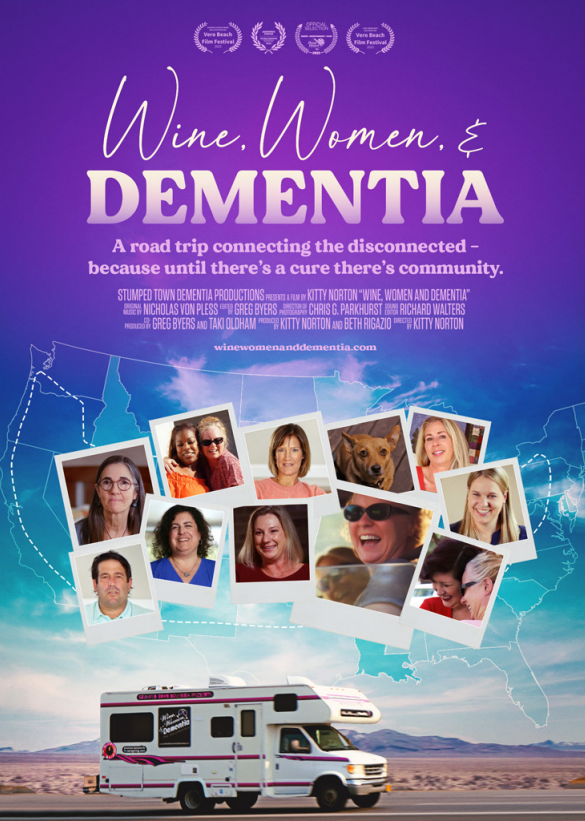
Wine, Women, and Dementia a candid and moving caregiver documentary

Recently I had the chance to see the documentary, “Wine, Women, and Dementia.” The film was made by Kitty Norton, who quit her job to care of her mother who had dementia. Norton documented the roller coaster ride of family caregiving with her sister, creating a popular blog, Stumped Town Dementia, and sharing videos of the sometimes hilarious, sometimes tragic moments involved in being a dementia caregiver.

Through her blog, Norton built an online community which offered each other support and advice as they experienced their own caregiving journeys. In the documentary, Norton travels across the country to visit these caregivers and learn more about them. The result is a brutally honest, moving and in certain moments, hilarious documentary.

The candid tone of the documentary aligns with my own experience and approach to caregiving, as I captured in my book, The Reluctant Caregiver and as I share here on The Memories Project. If you’ve seen the film and would like to check out my book, you can grab a free copy through December 15, 2023 via this Prolific Works giveaway.

By not shying away from the difficult moments, we better prepare caregivers for the future. I also appreciate the value of online communities that the film highlights. While the internet can seem overloaded with toxic behavior, if you look in the right places, you can find good people like those included in this film who have build a supportive caregiver community.

You can visit the Wine, Women, and Dementia website for details on upcoming screenings.

3 Comments

Filed under Awareness & Activism

Being grateful in difficult times

For those facing difficult family situations, the holiday season is often met with dread. As we get older, losses can mount and make the holidays a reminder of those who are no longer with us. I grapple with this each holiday season, as my father died five days before Christmas 2011. Every holiday season since then has been tinged with grief.

It can feel impossible to feel gratitude as a family caregiver who may feel hopeless and trapped in their situations. I often felt resentment when I came across those pushing messages of gratitude during the holiday season. Now that I’ve had the space of several years since caring for my parents, I feel that a gratitude practice can be a useful self-care tool but only if one is genuine and not trying to force the issue.

Gratitude doesn’t have to be a list overflowing with positivity. It can be a testament to what makes your life worth living.

I hope your holidays will come with good family moments. Those happy memories can provide immense comfort during tougher times.

If you are looking for more reading material this holiday season, I’m participating in a giveaway via Prolific Works. You can get a copy of my award-winning personal essay collection, The Reluctant Caregiver, for free through December 15, 2023.

Image by Deborah Hudson from Pixabay.

Leave a comment

Filed under Awareness & Activism

Remembering Rosalynn Carter, dedicated caregiver advocate

Embed from Getty Images

Former first lady Rosalynn Carter died Sunday at the age of 96.

Carter was well-known for her caregiver advocacy work. One of her most famous quotes sums up the universal importance of caregiving:

“There are only four kinds of people in the world—those who have been caregivers, those who are currently caregivers, those who will be caregivers, and those who will need caregivers.”

Rosalynn Carter,
Former First Lady of the United States

Carter, much like her husband, former President Jimmy Carter, didn’t just deliver speeches or donate money to caregiving causes. The Rosalynn Carter Institute for Caregivers was established in 1987. The Institute conducts important research on the impacts of caregiving and has launched programs like Working While Caring, which partners with employers to address the needs of their caregiver employees. The Institute also has programs dedicated to dementia and military caregivers.

The Carters were married for 77 years, a union that was a true and loving partnership.

For more on Carter’s long life dedicated to giving back to others, visit her tribute page.

The best way to honor her memory is to continue her mission, to create a society in which caregivers are supported and have the resources they need to thrive.

Leave a comment

Filed under Awareness & Activism

Understanding a caregiver’s ‘quiet rage’

The New York Times published an article recently that shines a light on an important caregiving topic that is close to my heart.

The Quiet Rage of Caregivers features the stories of caregivers who faced difficult caregiving experiences. One caregiver profiled is writer Ann Brenoff, who wrote “Caregivers Are Mad as Hell! Rants From the Wife of the Very Sick Man in Room 5029.” I consider her a kindred spirit, having written about my own challenging caregiving experiences in my personal essay collection, “The Reluctant Caregiver.”

While anger and frustration are normal emotions to feel as a caregiver, society doesn’t tend to support caregivers expressing negative emotions. Instead, caregivers are judged for being selfish and not loving the ones they care for enough. This is especially true for female caregivers, who are expected to sacrifice career and other pursuits to embrace a role that they have historically been expected to fulfill.

Jennifer Levin, who runs a Facebook support group for millennial caregivers, summed up the conflicting emotions of caregivers: “A lot of caregivers are afraid to express their anger, because they feel guilty.”

I definitely experienced that uncomfortable mix of emotions when caring for my parents. Exhaustion of juggling a full-time job with caregiving duties, resentment, guilt for feeling resentful, frustration at the lack of support … and then I was expected to show gratitude and spin the experience into a positive?

I am grateful for Brenoff and others like myself who are speaking out for those still in the caregiving trenches, who feel powerless and in despair of what seems like a hopeless situation. The best way we can support caregivers is by making sure they have the resources they need so that caregiving becomes a manageable situation, not one in which the person feels like they are drowning each and every day.

Photo by Annie Spratt on Unsplash.

2 Comments

Filed under Awareness & Activism

Marking National Family Caregivers Month and National Alzheimer’s Month

November is both National Family Caregivers Month and National Alzheimer’s Month. The National Family Caregivers Month theme for 2023 per Caregiver Action Network is is #CaregiversConnect. Visit the CAN website for resources on how you can connect with other caregivers and caregiver support services.

In honor of National Alzheimer’s Month, I’d like to share a giveaway from AlzAuthors. During the month of November, while supplies last, you can receive a free audiobook, “Alzheimer’s and Dementia Caregiving Stories: 58 authors share their inspiring personal experiences” to those in the US and UK and a free copy of the e-book version, which is available to readers around the world. Visit the AlzAuthors website for more details.

I’d like to share this message from AlzAuthors in support of all caregivers. I know I struggled as a family caregiver by constantly being in doing mode. Respite can be difficult to secure and self-care is often relegated to a low priority, but even moments of pause can make a difference.

Leave a comment

Filed under Awareness & Activism