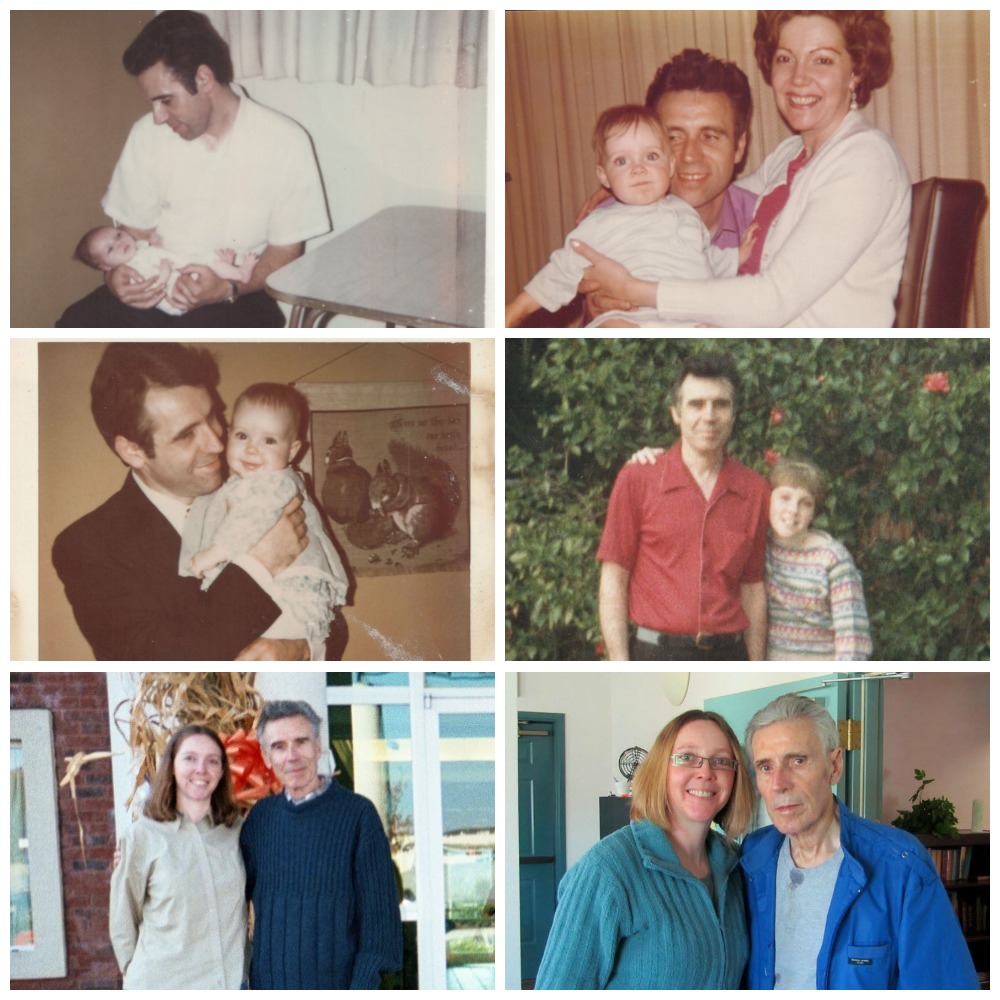
Reflecting upon 10 years since my father’s death

It has been 10 years since my father’s death. So much has happened in the past decade, but I’ll never forget where I was when my mother called with the worst news of my life, in the middle of the newsroom at the Atlanta Journal-Constitution. I had been waiting for that awful call for quite some time, and some part of me wished for it, because it pained me so much to see my father suffering in the late stages of dementia. But of course there was no immediate sense of relief upon my father’s passing, just sadness and regret.

I do still carry feelings of regret and guilt to this very day, and probably always will. I discuss this at length in The Reluctant Caregiver, and urge others not to judge themselves too harshly. In that spirit, I am taking a look back on what my father inspired me to do over the last decade.

  • I began this blog, The Memories Project. What began as a way to document memories of my father and process my grief has become the foundation of my dementia and caregiver advocacy platform. I have also met so many fellow caregivers through the blog and am grateful for their wisdom and their support.
  • I wrote a book, which was a life goal of mine. My collection of personal essays on family caregiving, The Reluctant Caregiver, won a gold medal at the IPPY Awards. An essay from that collection won the Rick Bragg Prize for Nonfiction from the Atlanta Writers Club. A story I wrote about my father, “French Toast,” was included in the Chicken Soup for the Soul: Living with Alzheimer’s and Other Dementias collection. I know my dad, a lifelong lover of books, would be proud.
  • I finally made it to Ireland and visited my father’s hometown of Belfast, Northern Ireland. This was at the top of my bucket list and has been one of the best experiences of my life.
  • The privilege of sharing my father’s story through a variety of outlets, including NPR, AlzAuthors, Caring Across Generations and the Aging in America conference.

The decade since my father’s death has been the most difficult of my life, but also the most rewarding. I hope that you can take time this holiday season to recognize and reflect upon the highs amidst the lows of your own caregiving journey. Give yourself the grace that you deserve.


Leave a comment

Filed under Memories

How pandemic helped motivate interest in ‘virtual assisted living’ technology

One aspect of the pandemic that could be seen as a benefit to family caregivers is the embrace and expansion of technology that assists with basic tasks in our daily lives. While some of us were already utilizing such services before the pandemic, many others learned the convenience of having groceries delivered to their home, for example.

A sandwich caregiver interviewed by MarketWatch recounted what a major benefit it was to have groceries delivered. She used to spend a good chunk of her day off taking her elder parents to the grocery store. When the pandemic struck, she shifted to grocery delivery and signed up her own family as well. Sometimes it is the simple things that can make all the difference. A caregiver reclaiming a few hours of her life each week can have a major impact on her wellbeing and those in her care.

Of course, there is always a price to pay for that convenience, and I never forget the fact that there is a human being who is picking out my groceries and delivering them, putting their own lives at risk to complete a chore for me. I always make sure to tip well.

Zoom and other video calling tools also exploded in popularity during the pandemic. While some are understandably suffering from Zoom fatigue at this point, for those families who were able to get their elder loved ones comfortable with the technology, video calls served as an important lifeline for those separated during the pandemic. Being able to check in on an elder loved one from afar with a simple video call helped put a family caregiver’s mind at ease. Of course it’s not the same as being able to hug and socialize in person, but for elders who otherwise may have been completely isolated, video calls kept the connection to family intact.

Remote tools, whether for working, socializing, or caregiving, are now receiving greater public interest, which is sparking investments from major technology companies like Amazon, who has developed a caregiving hub called Alexa Together. While there are security, privacy, and ethical concerns when it comes to monitoring technology, overall I think these tools can be helpful for the long-distance caregiver.

From my experience, I found tools such as a cellphone designed for older people, fall-sensing technology, and automated shipping of supplies to be of great help as a long-distance caregiver. As I wrote in my book, The Reluctant Caregiver, I was able to convince my mother, long skeptical of high-tech gadgets, to embrace these tools to help keep her living at home safely, versus having to enter assisted living.

As I grow older, I will be watching this growing field of technology with interest.

Leave a comment

Filed under Awareness & Activism

New research finds potential cause of Alzheimer’s disease

A recent study from researchers at UC Riverside offers intriguing data that could lead to a better understanding of what causes Alzheimer’s disease.

Plaques and tangles in the brain have been a focus of Alzheimer’s researchers and some believe ridding the brain of the buildup will help in treating the disease. Approximately 20 percent of people have plaques detected in the brain, but do not develop dementia, prompting researchers to do a deeper investigation of the tau protein. Their results suggest that a specific presentation of the protein was linked to the development of dementia. The body has an automatic mechanism called autophagy to clear defective proteins from cells, but that process slows as we age, especially for those over the age of 65.

The researchers described the defective tau protein as “trying to put a right-handed glove on your left hand.”

If their preliminary research proves to be correct, there are drugs being tested to improve the autophagy process, which could potentially be used to treat Alzheimer’s disease.

Leave a comment

Filed under Awareness & Activism

Gifting with a purpose this holiday season

Photo by Rob Laughter/Unsplash

I hope that you are having a wonderful holiday weekend with loved ones and appreciating the simple joys of being together, something that many had to sacrifice over the last two years.

Black Friday has earned a sordid reputation as displaying the worst of consumerism, but there is another notable day happening soon that may be worthy of participation: Giving Tuesday. If you have nonprofits and charities that you donate to or volunteer with, you probably are aware of the upcoming Nov. 30th event.

Giving Tuesday is a relatively new movement, beginning in 2012 as a way to simply designate a day to encourage people to do good. The movement has now spread globally. It’s easy to participate, and giving support to our elder community is one of the movement’s areas of focus. It can be as simple as checking in on a neighbor, writing a letter to an elder in a nursing home, supporting a local fundraiser, or donating your time and skills virtually or in-person.

Whether it’s Tuesday or any other day this holiday season, let’s find our own unique way to support the elders in our families and communities.

Leave a comment

Filed under Awareness & Activism

When aging in place becomes stuck in place

A new AARP survey found that older Americans continue to have a strong preference to staying in their homes as they age, even if they have found themselves stuck at home for long stretches of time during the COVID-19 pandemic. Over three-quarters of those age 50 and over (77 percent) prefer to remain in their home as they age, according to the survey results. That statistic has remained steady for over a decade, according to AARP.

However, there is another way in which older people get stuck in a living situation that doesn’t meet their needs as they age. A third of survey participants said they’d need to modify their homes in order to accommodate a physical limitation. These modifications can be pricey and not feasible for those on fixed incomes. The same financial challenges apply to moving into a more aging-friendly home or moving into a senior living facility.

When my father landed in the hospital for emergency surgery, he had a difficult recovery due to his mid-stage dementia and could no longer walk. The condo that my parents had was not safe for him to return to, so the hospital would not release him home. One had to access a staircase to get to the entrance and the rear entrance was wooded land that was not safe for unsteady gaits. Any modifications would have to be approved by the HOA, a lengthy process. Instead my father got transferred to a skilled nursing facility and then, a memory care facility an hour and a half away from home.

Another solution to these housing challenges was met with support from survey participants. Sixty percent of those polled said they would consider living in an accessory dwelling unit (ADU), sometimes referred to as a “granny pad” or a tiny house. These affordable, small-footprint homes can be built adjacent to a primary home (depending upon local permitting) and allow independence and privacy while also benefitting from having loved ones nearby for help with daily chores and activities and for companionship.

According to the AARP survey, “access to clean water, healthy foods, quality health care and safe outdoor spaces” were important considerations when it came to what communities offer those aging in place. High-speed internet service was also deemed important. Developers and city planners should take note as they build communities and offer flexible, adjustable housing options that can meet the needs of an aging population.

Leave a comment

Filed under Awareness & Activism

AlzAuthors Caregiver Appreciation Month Book Sale and Giveaway

As many of you know, I am a member of the AlzAuthors group, which has grown over the years to include a diverse and impressive membership. I love how the AlzAuthors library represents so many varied genres, from memoirs to self-help to children’s books. We have non-fiction and fiction books that focus on Alzheimer’s and other dementias. We have books for those living with dementia and books for their caregivers and other family members, such as grandchildren. Much gratitude to the organization’s leadership, who have tirelessly worked to encourage the group to grow in membership and outreach.

In honor of Caregiver Appreciation Month, AlzAuthors is hosting a book sale and giveaway. The promotion runs through Nov. 17. It’s a good time to stock up on books that are heavily discounted, some even offered for free. These books can make thoughtful gift ideas for the caregiver in your life.

You can get the digital version of my award-winning collection of personal essays, The Reluctant Caregiver, for just 99 cents.

Please share the giveaway information with fellow caregivers.

Leave a comment

Filed under Awareness & Activism

How your caregiving experience can be a gift to others

My father and Aunt Peggy on her wedding day, 1956.

I received a letter from my Uncle Jim this week, updating me on how my Aunt Peggy is doing. She is my father’s youngest sister and has dementia. My father’s side of the family has been decimated by the disease and Peggy has been living with the disease for years. Jim has been an amazing caregiver to her and patient in navigating the choppy waves the disease presents. She is doing as well as can be expected, and is able to take advantage of resources offered by Australia’s stellar healthcare system.

A few years ago, I sent Jim a copy of Chicken Soup for the Soul: Living with Alzheimer’s and other Dementias. A story of mine about my father, French Toast, is included in the collection, but I also thought Jim might appreciate the wealth of information that was shared by the dozens of dementia caregivers who contributed to the collection. In his recent letter, he mentioned the book and the information I shared about my father’s struggles with swallowing in the end stage of the disease. He thanked me for sharing the information and how it had been helpful while caring for Peggy.

Caregiving can feel very isolating. When caring for someone with dementia, that isolation can feel even greater, as friends and sometimes even other family members maintain a distance, not sure how to help or struggling to accept the diagnosis. But in those moments you might be learning something that, when shared with others, can make their caregiving lives easier.

Don’t be afraid to share the lessons you have learned on your caregiving journey. Knowledge is a precious gift and what we learn from fellow caregivers can be more meaningful than what we learn in books.

Leave a comment

Filed under Memories

What’s really scary this Halloween

For those who celebrate, I hope Halloween festivities offer you a bit of respite from what has been another challenging year. I have many fond memories of Halloween, and appreciate my mother’s efforts in making it special for me as a child. If your health permits, indulge in a piece of candy or sweet treat. It’s amazing what a simple gesture can do for the spirit.

But I cannot let this weekend go by without mentioning how disappointed I am that paid leave has not made the cut so far in the painfully negotiated Build Back Better bill that has paralyzed Congress over the last couple of months. While I’m relieved that home care will receive new funding, America is one of the only countries in the world that does not have some form of paid leave. It’s popular according to surveys, yet moderates are more concerned about the effect on small businesses and the country’s debt, instead of the major sacrifices of individual citizens. In my book, The Reluctant Caregiver, I outline the devastating financial costs that I suffered when as an only child, I found myself being a caregiver for my parents. Six years after my mother’s death, I’ve finally paid off my credit card debt, but I’m hopelessly behind in retirement savings.

The truth is that caregivers who end up in massive personal debt have a negative impact upon the country’s financial stability. Bankruptcies, foreclosures, and credit default can lead to higher interest rates for all, along with tightening mortgage eligibility. Either way, we’re going to have to pay. And that is just the financial cost. Those who do not have access to paid leave often suffer from more health issues, placing a burden on our healthcare system. Being proactive makes more sense than just shrugging one’s shoulders and shirking one’s responsibility to provide practical solutions for fellow citizens.

I am heartened to see so many caregivers sharing their personal caregiving stories. We are no longer an invisible workforce, and we must hold those accountable who continue to ignore the issue.

Leave a comment

Filed under Awareness & Activism

Preserving Memories With a Loved One—Questions to Ask Before it’s Too Late — The Diary of An Alzheimer’s Caregiver

Most of us think we have more time than we actually do … So many times, after my mom passed, I wished I’d asked her about this person or that event. – Stacy Monson

So true! The Memories Project began as a way to honor my father and the further I went in documenting my father’s stories, the more I realized I was missing important details. That is why I urge everyone to ask your loved ones to recount their life stories and anything else they want to share. It’s so easy now, literally a tap on a smartphone button, and you can record these precious memories.

Read the blog post along with a great list of questions to get you started by clicking the link below:

Preserving Memories With a Loved One—Questions to Ask Before it’s Too Late — The Diary of An Alzheimer’s Caregiver

2 Comments

Filed under Awareness & Activism

How America’s opioid crisis punishes those with chronic pain

There is a new miniseries on Hulu called “Dopesick” that explores the origins of the opioid epidemic that continues to devastate America. The actions of the Sackler family and Purdue Pharma in the marketing of their supposed “miraculous” pain medication Oxycontin, which they claimed was non-addictive, is generating a great deal of outrage on social media. Legal wrangling over a proposed settlement continues to play out in court.

There is another group who is expressing outrage: those who suffer from chronic pain conditions. I learned a lot about how brutal and devastating intractable pain can be by watching my mother die of cancer. The last several months of her life were torture because new laws designed to curb opioid usage made it difficult for my mother to procure the level of pain medication she needed. While health experts are quick to point out that the laws weren’t meant to target terminal cancer patients, my mother is proof that in fact they did. First was the burden of having to come into the office and see the doctor instead of being able to request a refill over the phone. Then there was the reduction in the amount prescribed and finally a battle in getting an opioid prescription filled at all. Her doctor mistakenly thought my mother wasn’t dying, but just addicted to opioids. When I tried to follow up, I was also treated with doubt and suspicion. The final battle came with trying to get my mother enrolled in hospice, so she could get access to the morphine that she so desperately needed. My mother only received morphine for about two weeks before she died, and I never felt like I was able to get her pain under control because it had been left unchecked for so long.

Unfortunately the addiction epidemic unleashed by Oxycontin has impacted those who actually need such pain medication to function. Beyond terminal conditions like cancer, there are incurable conditions that cause excruciating pain. Ehlers-Danlos syndromes (EDS) is one such condition, which affects the joints and can cause nerve pain and dislocations among other excruciating symptoms. These victims of the opioid epidemic are often forgotten or made to feel like they are addicts for wanting access to effective treatment. They get told to try acupuncture or yoga, or change their diet, or try cannabis, etc. Most of these people have tried a variety of treatments and are frustrated that because of the addiction stigma, they are being denied access to what was the only treatment that worked for them.

Because of my mother’s experience with pain, I have compassion for and am not dismissive of those who are living with conditions that cause extreme pain. The medical community needs to do better to provide effective pain relief for those who truly need it.

Leave a comment

Filed under Awareness & Activism