Delivering Bad News in Dementialand (Or Do I Tell Mom Her Sister Died?)

This is such an important topic, and one that I know some readers of The Memories Project have had to deal with in their families. How much bad news do we deliver to our loved ones with dementia, and how many times do we repeat the information?

Thanks Elaine for the thoughtful response.

Source: Delivering Bad News in Dementialand (Or Do I Tell Mom Her Sister Died?)

Leave a comment

Filed under Memories

My top takeaways from the Aging in America conference

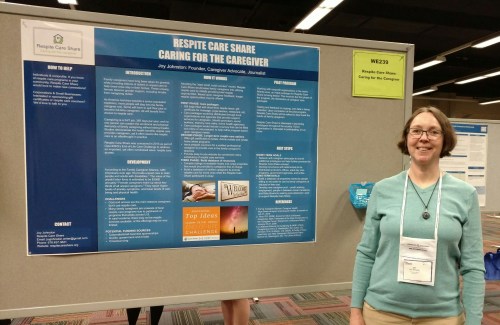
Respite Care Share AIA 2017

I’ve been at the Aging in America conference all week and it has been sobering and inspiring to be surrounded by so many smart, compassionate, and determined people. There are many battles to fight when it comes to issues surrounding aging and caregiving, but we have an army of advocates ready to fight for those who have been ignored by society and by government for too long.

There were recurring themes that came up at every session I attended. Here are some of the main areas of concern:

  • Health care: While it may be a political issue to those in Congress and to some voters, for those who work with seniors, the disabled, and the poor, health insurance is truly a do or die decision. The concerns about the current administration and the Republican’s proposed ACA repeal plan were explained through data and powerful anecdotal evidence. However you may feel about the ACA, and certainly it is not perfect, with some people hit with skyrocketing premiums and limited choice, there were millions of people who were able to get the treatment they desperately needed, mainly because of the ACA’s expansion of Medicaid. Don’t think you’ll need Medicaid? As one expert put it, with long-term care so expensive and not covered by Medicare, many of us will end up on Medicaid at some point, if we live long enough.
  • Diversity: While diversity can sometimes be an empty buzzword, I found that the attendees of the Aging in America conference take diversity issues very seriously. From how a doctor discusses Alzheimer’s care to a Latino family versus a Caucasian family to senior housing that welcomes the LGBT community, our aging policy must reflect the diversity of our country.
  • Help for caregivers: The issue that I’m most passionate about was also a major topic of discussion at the conference. There are many individuals and organizations dedicated to offering relief to caregivers, in the form of grants and other financial assistance, better training and support, and through respite care. I received positive feedback about my Respite Care Share concept, and I hope through the networking made at the conference, I can help take the concept to the next level.

The conference wraps up Friday, and I hope that the brainstorming that took place in Chicago this week will lead to positive impact in your communities.


1 Comment

Filed under Awareness & Activism

Aging in America: Crisis and opportunity

old-couple-1316755-1279x849

Photo credit: Pierre Amerlynck/Freeimages

Next week, I’m headed to Chicago for the Aging in America conference.

I look forward to attending sessions and meeting other advocates who are addressing the needs of America’s rapidly aging population. My Respite Care Share concept will be presented as part of the poster sessions. I know I will come away with a lot of takeaways, which I will share here upon my return.

When I think about aging in America in the big picture sense, I see crisis and opportunity. There are multiple crisis points that must be addressed, but each of those crisis points is also an opportunity. And while grassroots efforts can’t solve all of the problems surrounding aging, they can make a real difference.

Some of the major aging issues I care about include:

  • Health care: The affordability and quality of health care for seniors must be addressed. There is much Medicare doesn’t cover, such as residential care for those with Alzheimer’s. The outrageous residential care expenses can quickly bankrupt a middle-class family. Many Medicaid programs are overwhelmed, and facilities accepting Medicaid often have long wait lists and sometimes are of substandard quality.
  • Aging in place: One way to avoid the high costs of residential care is to care for aging loved ones at home. However, that comes with its own costs, such as renovating a home to make is safer and more accessible for seniors, and adult children being forced to leave the workforce or reducing their work hours to take care of aging loved ones. This not only has an affect on the caregiver’s current income and health insurance benefits, but their family budget and retirement outlook as well. The mental and physical toll of caregiving that must be considered as well. Community programs can assist with some of these issues.
  • Professional caregiver shortage: As America’s population rapidly ages, the need for professional caregivers to fill in the gap that families cannot cover is also rapidly growing. Because these jobs pay so little, there is a shortage of quality people for these roles. While spending their days caring for others, many professional caregivers cannot afford health insurance for their own families. My mother’s personal caregiver ended up quitting the field because she couldn’t afford to put gas in her car. If we value caregivers more in the job market, we can fill the staffing shortage and reduce unemployment.
  • Alzheimer’s & other dementias research: I care about supporting the research into all major diseases that claim the lives of Americans. My mother lost her life to colon cancer. But my father’s battle with Alzheimer’s illustrated to me the cruel particulars of this condition, and how the entire family is mentally, emotionally and financially impacted. It’s important that we keep funding research efforts and participating whenever we can in trials and other studies that can help find effective treatment.
  • Family caregivers: Last, but certainly not least, I am a strong advocate for more support for family caregivers. Greater financial support is a must, but at the community level, encouraging caregivers to use respite and simply being a good listener for a caregiver who needs to vent are just as vitally important.

What aging issues are most important to you?

4 Comments

Filed under Awareness & Activism

Caring for the vulnerable

With so much legislative and political uncertainty swirling throughout the U.S. and the rest of the world, we as a society will have to step up and help the vulnerable members of our population. The good news is that there are people already doing just that.

Many of you probably heard about Chris Salvatore, who scored viral fame for taking care of Norma, his 89-year-old neighbor with leukemia. He became her primary caregiver as the woman had no relatives to care for her. Norma died in February, but she was surrounded by the love of her neighbor and many fans on social media.

Another story that received less attention involves a man with dementia who was living alone in Kentucky. Sergeant Jon Sterling did regular wellness checks on the man, and discovered that it was time for the man to be moved into a secure facility. While the man was a veteran and had social security benefits to offset the monthly charge of the facility, moving costs prompted the police officer to start an online fundraiser. The $5,000 goal was reached within 24 hours.

Two men from very different worlds reached out to help a vulnerable member of their community. Compassion is part of the human spirit just as much as some of our more negative attributes. I hope that people will be inspired by these examples to help those in need.

3 Comments

Filed under Awareness & Activism

Shedding light on sexual abuse in nursing homes

Whatever your opinion of CNN, I give them kudos for the investigative report, “Sick, Dying and Raped in America’s Nursing Homes.” This is a subject few want to discuss, but it is happening more often than one realizes. I am grateful for the network for shining a spotlight on these crimes that have often been swept under the rug.

The accounts are harrowing and sickening, but I encourage anyone who has a loved one in a nursing facility or is caring for an aging relative to read this report. Armed with knowledge of the despicable acts that have occurred at these places, you will better be able to protect your loved one from such crimes.

Don’t expect the facility management or even law enforcement to be much help. Nursing homes are reluctant to admit wrongdoing, as it can open the company up to lawsuits and cause them to lose precious Medicaid and Medicare funding. Law enforcement claims their hands are tied, as residents with dementia make unreliable witnesses. (To this latter defense, I counter, what about infants and toddlers? They can’t provide detailed accounts of abuse either, yet those cases more often result in charges and convictions.)

Be vigilant, and don’t be afraid to demand an investigation if you suspect abuse of any sort. While I am a strong caregiver advocate, I have no sympathy for those who prey upon the elderly. Yes, the pay is low and the job is grueling, but there is absolutely no excuse for abuse of any sort. Can you imagine how frightening it would be, to be bedridden, perhaps losing your mind to dementia, and then find yourself attacked in the middle of the night by a caretaker? I’m even more glad now that I quit my job so that I could visit my mother each day while she recovered in the skilled nursing facility. But not everyone can do that, nor should we have to.

We must demand better protections and more accountability for nursing home residents. As one heartbroken daughter said, the nursing home worker who raped her 83-year-old mother with dementia stole her last shred of dignity. He received an 8-year prison sentence after pleading guilty to third-degree sexual assault. While that was a longer sentence than some of the other rapists discussed in the CNN report, he had been accused of similar crimes before, but was never charged. That’s why it’s so important to fight for the protection of our loved ones, because we may be able to prevent future crimes against one of our most vulnerable populations.



3 Comments

Filed under Awareness & Activism

A time to listen

img_20170215_173017795

In the post-caregiving phase of life, we can feel pulled in opposite directions. There is often a natural response to retreat from the outer world and try to process all that we’ve been through. As time marches on, we may feel the call to help other caregivers, and that means opening ourselves up to listening to other people’s experiences.

Over the last several years, I have followed many other caregivers via blogs and have been a virtual witness to their highs and lows. I am a member of a caregiver Facebook group and admittedly sometimes I scroll past the heartbreaking posts because there is only so much I can take. I would love to be able to help each and every one, but of course that’s impossible.

Recently, I had the opportunity to attend an in-person support group at Amy’s Place for dementia caregivers, and it was a moving experience. I was there in part to hand out caregiver gift bags that are part of my Respite Care Share project, but my most important action that night was simply listening.

It was disheartening to hear that many of the issues I encountered with my father’s care are still going on today, five years later. Some of the caregiver’s stories brought back painful memories. But there was a power in sharing stories, exchanging tips and advice, and offering moral support.

Family caregivers take on so much, but often find few opportunities to vent. Whether you attend a formal support group or just offer a sympathetic ear to a friend or family member, make an effort to be a listener on a regular basis. It can mean the world of difference to those going through difficult times.


1 Comment

Filed under Awareness & Activism, Memories Project notes

Advocating for aging issues in the midst of political turmoil

Embed from Getty Images

Aging is a bipartisan issue. Whether you’re a Republican, Democrat, Independent, a member of another political party or reject all such labels, all of us will experience the consequences of aging, save for those who meet a premature death. Even those who don’t experience old age themselves may have dealt with aging issues when caring for a loved one.

As Washington deals with political upheaval, the lives of seniors hangs in the balance. The work to address senior and caregiving issues must continue, no matter who resides in the White House. I subscribe to the Alzheimer’s Impact Movement newsletter, and their January update provided a list of Congressional members who play an important role in committees that address Alzheimer’s and aging issues.

In addition to your local representatives, reaching out to the Senate Committee on Aging is a good place to begin. The bipartisan leadership includes:

  • Chair: Sen. Susan Collins (R-ME)
  • Ranking Member: Sen. Bob Casey (D-PA)

Their contact information can be found on the committee’s website, along with an online submission form.

According to AIM, just this past week, 12 senators sent President Trump a letter to encourage greater investment in Alzheimer’s research and introduced a resolution to make address Alzheimer’s issues an “urgent national priority.”

So call your representatives, email them, write letters, reach out to them on social media … make your concerns known. I do believe personal stories make a difference, and can help fuel greater legislative effort.

Leave a comment

Filed under Awareness & Activism

Learning the language of Alzheimer’s

I’m reposting this excellent piece from Marie Marley on how to effectively communicate with those who have Alzheimer’s. It’s really all about being in the moment with that person, and not worrying about right or wrong, truths or untruths. Learning a new communication style is so important because many people with dementia still crave human interaction.

“Adopt the pace of nature: her secret is patience.” Ralph Waldo Emerson Today we welcome award winning author Marie Marley to The Purple Jacket. Yesterday afternoon I walked into Mary’s spacious room. Mary is a woman who has few visitors and who I’ve volunteered to spend a little time with every week. I greeted her, […]

via 5 Tips for Talking With a Person Who Has Alzheimer’s — The Purple Jacket

Leave a comment

Filed under Awareness & Activism

‘Alzheimer’s: Every Minute Counts’ a tender yet sobering documentary

I strongly believe that to reach people about an issue they are unfamiliar with, presenting them with experiences from real folks is the way to go. The new PBS documentary, Alzheimer’s: Every Minute Counts, does just that, highlighting the emotional toll the disease takes on caregivers, while also demonstrating the physical and financial consequences associated with the disease.

The documentary doesn’t sugarcoat the situation. It uses the term, “families in crisis” and how our government and society are largely failing to meet their needs. As those of us who have personally been touched by dementia likely know but the general public may be less aware, Alzheimer’s doesn’t discriminate based upon race. The Duartes in Springfield, Missouri are one of the families highlighted in the documentary. Daisy takes care of her mother, Sonia, who was diagnosed with early-onset familial Alzheimer’s at the age of 57.

Families like the Duartes are fighting back, by participating in clinical trials and telling their story to lawmakers. Daisy spoke to members of Congress, who gave a sympathetic ear and related their own tales of family members with Alzheimer’s. Right now, our government is in turmoil, but we must keep the momentum going in the battle against Alzheimer’s and in our campaign to better support caregivers.

The documentary also highlights Rick in Florida, who is overwhelmed by the high cost of residential Alzheimer’s care, when his mother’s condition prevents her from staying in her home. Rick is also saddled with guilt and remorse, because Phyllis is adamant about staying in her own home. This is a heartbreaking decision that so many families face.

I highly recommend this documentary. While it is tough to watch families struggle with this disease, there are people out there dedicating their lives to finding effective treatment and supporting caregivers. Hopefully this film will inspire others to join the fight.

Leave a comment

Filed under Awareness & Activism

Recognizing caregiver depression, isolation

Excellent article that outlines common symptoms of depression that caregivers might experience, and what to do about it. Caregiving can be isolating by its very nature, and loneliness and depression are common, yet many caregivers ignore their own symptoms because they are focused on taking care of others.

Stop Saying I Should Get Over It: Loneliness and Depression in Caregiving

via Loneliness and Depression in Caregiving — The Purple Jacket

Leave a comment

Filed under Awareness & Activism