Category Archives: Awareness & Activism

Heat waves a hot topic when caring for older loved ones

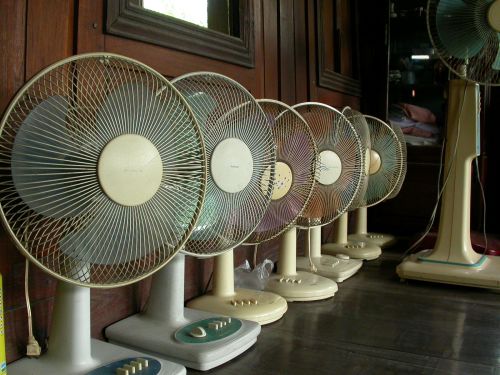
fans

Photo by komgrit/Morguefile

Whether or not you believe in global warming, every year there are deadly heat waves across the U.S. Many of those who succumb to the heat are seniors. Some cities have annual initiatives to make sure low-income seniors have fans in their homes and some cities offer cooling centers, air-conditioned venues that are open during the day free of charge for people who want to escape the heat.

No one should die from the heat because they can’t afford a fan, air conditioning, or are afraid of running up their electricity bills on a fixed budget. But a HealthCentral article I read by Carol Bursack pointed out another reason that is not often discussed.

Bursack told a story about her mother-in-law, who turned off the air conditioning she had in her condo every day after Bursack would visit and turn it on to a low setting just to keep the air circulating. This was in the middle of a heat wave, and Bursack would discover every window shut, the A/C turned off and it would be sweltering inside. When she discovered her mother-in-law suffering serious disorientation symptoms from the heat, she knew her days of independent living were coming to an end.

Bursack’s story reminded me of my mother. In her case, it was the heat during winter. My parents retired to a mountain town that usually receives a decent amount of snow and the temperatures often drop into the 20s and 30s overnight in the winter. Mom would insist on turning off the heat every night before going to bed, then getting up in the middle of the night, shivering, to turn it back on for a few minutes, then turning it off again until the morning. This was totally nuts to me. Mom thought she was saving energy (and perhaps Bursack’s mother thought the same thing) but keeping a home at a steady, moderate temperature is most efficient. So yes, by all means, turn down the heat when you will be bundled under the covers overnight, but don’t turn it off!

Mom also insisted, even on the most frigid of nights, in leaving the windows in the living room and bedrooms open a crack, because she thought she’d suffocate or die of carbon monoxide poisoning if she closed everything. Of course, this caused the furnace to have to work more and threw the whole energy-efficient argument out the window.

As a caregiver, I had to pick my battles. I never convinced Mom to close the windows, but by using a bit of reverse psychology, one night, she mentioned that it might be nice to just keep the heat on through the night, and I told her that was an excellent idea. From then on, she didn’t turn off the heat overnight.

The point here is that even if your elder loved one has access to fans or air conditioning, check to make sure they are actually using them. Whether they are just set in their ways or are beginning to develop dementia, we cannot take the use of such things for granted.

[Addendum: Just after I wrote this post, I went to stay at what was my parents’ condo for 2 weeks. The condo doesn’t have air conditioning, because it’s located in a mountain town where the average temperature this time of year is around 80. Not this year … it’s been in the 90s and hit 93 yesterday. I’m dealing with a summer cold on top of the heat, with only fans to offer relief, and it’s pretty miserable. I’ll be fine, but I’m 42. In 20-30 years, this situation might be more of a health risk.]

3 Comments

Filed under Awareness & Activism

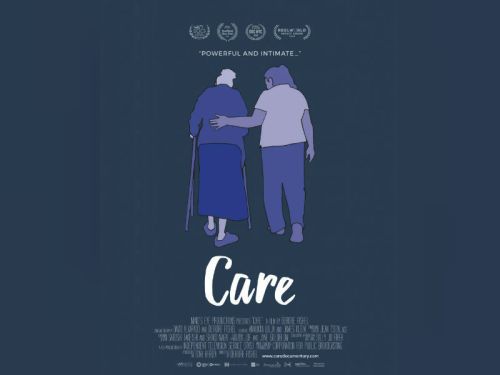
Don’t miss “Care,” a powerful documentary about home care

care poster custom

Courtesy of Care.

A frustrated caregiver recently posted on social media: “We need more than awareness, we need action.”

I totally agree, and while raising awareness of conditions like Alzheimer’s and the sacrifices that family caregivers make is important to push these issues into the mainstream, at some point, messages of support are not enough. Action, from community involvement all the way to federal funding is essential to truly make a difference.

That’s why I’m excited about a new documentary, Care, that examines the hard, often thankless and definitely underpaid work that home-based caregivers perform and offers a call to action on how we can better support these caregivers and families. Caring Across Generations is hosting screenings across the country.  In addition to in-person screenings, the documentary will become available via streaming options later this year.

The documentary profiles caregivers from different ethnic backgrounds and from different regions of the U.S., spotlighting challenges but also providing a testament as to why some people feel called to provide care to those in need. The documentary doesn’t shy away from the harsh realities of caregiving, showing in detail the difficult physical and emotional work involved. Family members discuss the difficulties of caring for someone at home and those receiving care talk about the loss of independence that often accompanies disease and aging.

For anyone in the metro Atlanta area, I will be participating in a Care screening and panel discussion at Amy’s Place in Roswell on June 7 starting at 6:30 p.m. As I’ve mentioned before, Amy’s Place is a memory care cafe that hosts wonderful community events for those with dementia and their caregivers.

MORE INFO: CARE poster_Roswell Screening

Caring Across Generations is also looking for people just like you, current and former caregivers, who are willing to share their stories. If interested, you can reach out to me via email at joyjohnston.writer@gmail.com.

Check out the trailer below:


1 Comment

Filed under Awareness & Activism

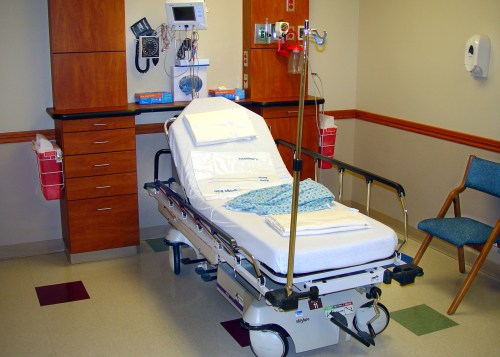
‘Senior ER’ designed to reduce stress for dementia patients

emergency room

Photo by Kenn W. Kiser

One of the most frightening calls I received when Dad was in memory care was that he had been taken to the emergency room. Unfortunately, I received several similar calls over the course of the year Dad was in residential care.

The emergency room visits were usually prompted by falls. Even if Dad seemed OK, regulations required the memory care staff to send Dad to the hospital to be checked out. The worst part was that no staff member accompanied Dad. I can’t imagine the confusion Dad must have experienced, on top of his dementia, with the chaos that accompanies an emergency room visit.

Even for a person without dementia, the emergency room is a daunting experience. I’ve only been to the ER  once as a patient, in high school, and it was an exhausting, fruitless experience. I’ve been to the ER several times with others having medical issues, and it is always a nightmarish experience. Why do medical emergencies seem to always happen in the middle of the night? Really though, it doesn’t matter if it is high noon, emergency rooms and hospitals in general seem to be caught in a time warp where it always feels like it’s 3 a.m.

There is so much hurry up and wait. People rushing in and out. Poking, prodding, medications being shoved in your face, or pumped into a vein. So many questions that have to be answered rapidly, and repeatedly. It’s enough to rattle a mentally sound person.

That’s why I am optimistic that some hospitals are reinventing the ER experience for those with dementia. Lutheran Medical Center in Denver was recently profiled for its Senior ER program. They’ve taken half of their emergency room space and retrofitted it to make it a more soothing, less chaotic experience. Everything from mattress thickness to lighting and noise level has been moderated to prevent the onset of delirium, which can hasten death.

The Senior ER has been such a success that people of all ages are asking to be admitted to that wing.


2 Comments

Filed under Awareness & Activism

Caregiving model could be good for all

Embed from Getty Images

Innovative social integration programs that pair retirement home residents with university students are growing in popularity. Students get free or reduced rate housing and meals, and seniors enjoy the health benefits of socializing with younger generations. They also share life stories and experiences, an invaluable perk of the program.

A program sponsored by USC’s gerontology school and a Los Angeles retirement home was spotlighted in a recent STAT article. The program has been around for 30 years, so there has been plenty of time to collect data on how the program has benefited elder residents and medical school students.

There’s a practical reason for the program from the school’s point of view: it’s difficult to attract candidates to the geriatrics specialty. Lower pay and the lack of “sexy” factor are a couple of reasons why it’s a challenge to recruit young doctors to the field of gerontology.

The program sounds like a success, and the colorful anecdotes from residents and students make it a delightful read. One remark in particular caught my eye. A student who had been through the program said one of the benefits was that senior residents would share more things about their health than in a 20-minute doctor’s appointment. “It’s kind of like being an undercover police officer,” the medical student said.

Another medical student said of the USC program that you don’t really think about the challenges older people deal with until you experience it with them in daily life.

In a social and political environment that is so polarizing, we could all benefit from programs that push us out of our comfort zones and encourage us to have a conversation with those from different generations, races, cultures, etc. So many of us are living inside bubbles, but we have much to learn from each other, even if we cannot relate to or agree on every issue. (The new Heineken ad, “Worlds Apart,” also captures this sentiment, even if it is a bit of a contrived experiment.)

I hope these programs continue to grow in popularity. Sounds like a win-win for society.


Leave a comment

Filed under Awareness & Activism

Beware of scams targeting older people’s homes

for-sale-sign-1445308

Photo: Aaron Murphy/Freeimages

I’ve read multiple articles recently about scams targeting older people, especially those who are in poor health and who are struggling financially. Criminals are getting savvy, implementing complex schemes to steal one of the most precious possessions: one’ s home.

Aging in place is a popular concept nowadays, but there are many older people struggling to stay in their homes. The housing market crash and economic instability has left older generations struggling to hang on to the place they’ve called home for most of their lives. This makes them vulnerable to scam artists, who set up phony agencies and organizations that pretend to help people keep their homes. As one aging immigrant learned, he had actually signed his home away to strangers.

Those in the early stages of dementia are no doubt prime targets for such scams. That’s why it’s so important to stay involved with your aging relatives’ lives, even if you don’t live near them. Call them regularly, or write letters, but keep an open line of communication. If something seems amiss, it probably is, and should be investigated.

Mom managed the family finances, which was a relief as Dad developed dementia, because we didn’t have to worry about taking away the checkbook from him.  After Dad died and as she was recovering from cancer, I was concerned about Mom getting sucked into some kind of scam, because she loved to talk to people and was generally a trusting person. By that point, I was helping Mom pay bills and routinely monitored for any anomalies. Thankfully, there were none.

I can’t imagine how terrible it must feel to be in your 70s or 80s, in poor health, and receive an eviction notice for a home you owned for decades. The old adage, “if it sounds too good to be true, it probably is,” applies now more than ever. Preventing such predatory transactions is key, because it can be difficult to fight in court once the paperwork is signed. Stay vigilant in protecting your aging loved one’s assets.


2 Comments

Filed under Awareness & Activism

Book review: Fractured Memories by Emily Page

fractured memories

I’ve been following artist and family caregiver Emily Page’s blog, The Perks of Being an Artist, for quite some time now. Her blog documents her father’s battle with frontotemporal dementia (FTD) and her experiences as a younger caregiver as well as being a place for her to share the amazing art she creates.

Page often injects humor into her musings, which I appreciate as she documents the difficulty of the dementia caregiving experience, which I could relate to all too well. I was sad to hear of her father’s passing, but also understood the sense that he was free from such a cruel disease.

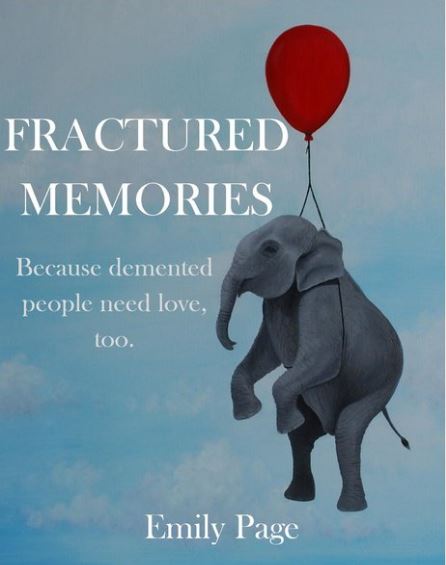
Page has written a book about her family’s experience with dementia, titled, Fractured Memories. [Also available on Amazon.] In it, you’ll learn her family’s story, why her father was so special to her, and heartfelt journal entries that document the highs and lows of family caregiving. You’ll also get to view selections of Emily’s artwork, and why the symbol of the elephant is so important.

I highly recommend the book, especially to those who are or who have gone through the dementia experience with a loved one. There are many things caregivers will be able to relate to in the book, from the difficulties in managing those with dementia at home, to the frustration of the sometimes poor care received at expensive memory care facilities. Page accurately documents the range of wild emotions one experiences as a family caregiver to someone with dementia. Of course, everyone’s journey has unique situations, but I think most dementia caregivers will nod in sympathy with the experiences of the Page family.

While there are heartbreaking moments, there is quite a bit of humor, and most importantly, the love Page has for her father shines throughout the book. I love the symbolism of the elephant and how Page was able to use her artistic talent to express various stages of disease and caregiving. I hope you’ll consider reading Fractured Memories and recommending it to other dementia caregivers.

2 Comments

Filed under Awareness & Activism

My top takeaways from the Aging in America conference

Respite Care Share AIA 2017

I’ve been at the Aging in America conference all week and it has been sobering and inspiring to be surrounded by so many smart, compassionate, and determined people. There are many battles to fight when it comes to issues surrounding aging and caregiving, but we have an army of advocates ready to fight for those who have been ignored by society and by government for too long.

There were recurring themes that came up at every session I attended. Here are some of the main areas of concern:

  • Health care: While it may be a political issue to those in Congress and to some voters, for those who work with seniors, the disabled, and the poor, health insurance is truly a do or die decision. The concerns about the current administration and the Republican’s proposed ACA repeal plan were explained through data and powerful anecdotal evidence. However you may feel about the ACA, and certainly it is not perfect, with some people hit with skyrocketing premiums and limited choice, there were millions of people who were able to get the treatment they desperately needed, mainly because of the ACA’s expansion of Medicaid. Don’t think you’ll need Medicaid? As one expert put it, with long-term care so expensive and not covered by Medicare, many of us will end up on Medicaid at some point, if we live long enough.
  • Diversity: While diversity can sometimes be an empty buzzword, I found that the attendees of the Aging in America conference take diversity issues very seriously. From how a doctor discusses Alzheimer’s care to a Latino family versus a Caucasian family to senior housing that welcomes the LGBT community, our aging policy must reflect the diversity of our country.
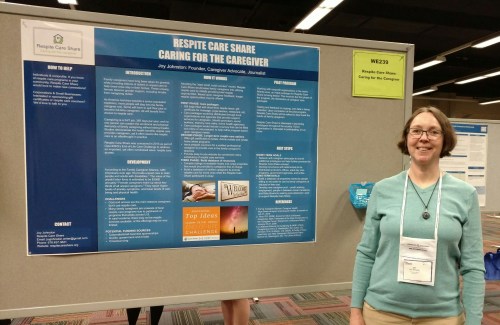
  • Help for caregivers: The issue that I’m most passionate about was also a major topic of discussion at the conference. There are many individuals and organizations dedicated to offering relief to caregivers, in the form of grants and other financial assistance, better training and support, and through respite care. I received positive feedback about my Respite Care Share concept, and I hope through the networking made at the conference, I can help take the concept to the next level.

The conference wraps up Friday, and I hope that the brainstorming that took place in Chicago this week will lead to positive impact in your communities.


1 Comment

Filed under Awareness & Activism

Aging in America: Crisis and opportunity

old-couple-1316755-1279x849

Photo credit: Pierre Amerlynck/Freeimages

Next week, I’m headed to Chicago for the Aging in America conference.

I look forward to attending sessions and meeting other advocates who are addressing the needs of America’s rapidly aging population. My Respite Care Share concept will be presented as part of the poster sessions. I know I will come away with a lot of takeaways, which I will share here upon my return.

When I think about aging in America in the big picture sense, I see crisis and opportunity. There are multiple crisis points that must be addressed, but each of those crisis points is also an opportunity. And while grassroots efforts can’t solve all of the problems surrounding aging, they can make a real difference.

Some of the major aging issues I care about include:

  • Health care: The affordability and quality of health care for seniors must be addressed. There is much Medicare doesn’t cover, such as residential care for those with Alzheimer’s. The outrageous residential care expenses can quickly bankrupt a middle-class family. Many Medicaid programs are overwhelmed, and facilities accepting Medicaid often have long wait lists and sometimes are of substandard quality.
  • Aging in place: One way to avoid the high costs of residential care is to care for aging loved ones at home. However, that comes with its own costs, such as renovating a home to make is safer and more accessible for seniors, and adult children being forced to leave the workforce or reducing their work hours to take care of aging loved ones. This not only has an affect on the caregiver’s current income and health insurance benefits, but their family budget and retirement outlook as well. The mental and physical toll of caregiving that must be considered as well. Community programs can assist with some of these issues.
  • Professional caregiver shortage: As America’s population rapidly ages, the need for professional caregivers to fill in the gap that families cannot cover is also rapidly growing. Because these jobs pay so little, there is a shortage of quality people for these roles. While spending their days caring for others, many professional caregivers cannot afford health insurance for their own families. My mother’s personal caregiver ended up quitting the field because she couldn’t afford to put gas in her car. If we value caregivers more in the job market, we can fill the staffing shortage and reduce unemployment.
  • Alzheimer’s & other dementias research: I care about supporting the research into all major diseases that claim the lives of Americans. My mother lost her life to colon cancer. But my father’s battle with Alzheimer’s illustrated to me the cruel particulars of this condition, and how the entire family is mentally, emotionally and financially impacted. It’s important that we keep funding research efforts and participating whenever we can in trials and other studies that can help find effective treatment.
  • Family caregivers: Last, but certainly not least, I am a strong advocate for more support for family caregivers. Greater financial support is a must, but at the community level, encouraging caregivers to use respite and simply being a good listener for a caregiver who needs to vent are just as vitally important.

What aging issues are most important to you?

4 Comments

Filed under Awareness & Activism

Caring for the vulnerable

With so much legislative and political uncertainty swirling throughout the U.S. and the rest of the world, we as a society will have to step up and help the vulnerable members of our population. The good news is that there are people already doing just that.

Many of you probably heard about Chris Salvatore, who scored viral fame for taking care of Norma, his 89-year-old neighbor with leukemia. He became her primary caregiver as the woman had no relatives to care for her. Norma died in February, but she was surrounded by the love of her neighbor and many fans on social media.

Another story that received less attention involves a man with dementia who was living alone in Kentucky. Sergeant Jon Sterling did regular wellness checks on the man, and discovered that it was time for the man to be moved into a secure facility. While the man was a veteran and had social security benefits to offset the monthly charge of the facility, moving costs prompted the police officer to start an online fundraiser. The $5,000 goal was reached within 24 hours.

Two men from very different worlds reached out to help a vulnerable member of their community. Compassion is part of the human spirit just as much as some of our more negative attributes. I hope that people will be inspired by these examples to help those in need.

3 Comments

Filed under Awareness & Activism

Shedding light on sexual abuse in nursing homes

Whatever your opinion of CNN, I give them kudos for the investigative report, “Sick, Dying and Raped in America’s Nursing Homes.” This is a subject few want to discuss, but it is happening more often than one realizes. I am grateful for the network for shining a spotlight on these crimes that have often been swept under the rug.

The accounts are harrowing and sickening, but I encourage anyone who has a loved one in a nursing facility or is caring for an aging relative to read this report. Armed with knowledge of the despicable acts that have occurred at these places, you will better be able to protect your loved one from such crimes.

Don’t expect the facility management or even law enforcement to be much help. Nursing homes are reluctant to admit wrongdoing, as it can open the company up to lawsuits and cause them to lose precious Medicaid and Medicare funding. Law enforcement claims their hands are tied, as residents with dementia make unreliable witnesses. (To this latter defense, I counter, what about infants and toddlers? They can’t provide detailed accounts of abuse either, yet those cases more often result in charges and convictions.)

Be vigilant, and don’t be afraid to demand an investigation if you suspect abuse of any sort. While I am a strong caregiver advocate, I have no sympathy for those who prey upon the elderly. Yes, the pay is low and the job is grueling, but there is absolutely no excuse for abuse of any sort. Can you imagine how frightening it would be, to be bedridden, perhaps losing your mind to dementia, and then find yourself attacked in the middle of the night by a caretaker? I’m even more glad now that I quit my job so that I could visit my mother each day while she recovered in the skilled nursing facility. But not everyone can do that, nor should we have to.

We must demand better protections and more accountability for nursing home residents. As one heartbroken daughter said, the nursing home worker who raped her 83-year-old mother with dementia stole her last shred of dignity. He received an 8-year prison sentence after pleading guilty to third-degree sexual assault. While that was a longer sentence than some of the other rapists discussed in the CNN report, he had been accused of similar crimes before, but was never charged. That’s why it’s so important to fight for the protection of our loved ones, because we may be able to prevent future crimes against one of our most vulnerable populations.


3 Comments

Filed under Awareness & Activism