This Father’s Day weekend, I hope you will be able to celebrate the fathers, father figures and male caregivers who have made a difference in your life.
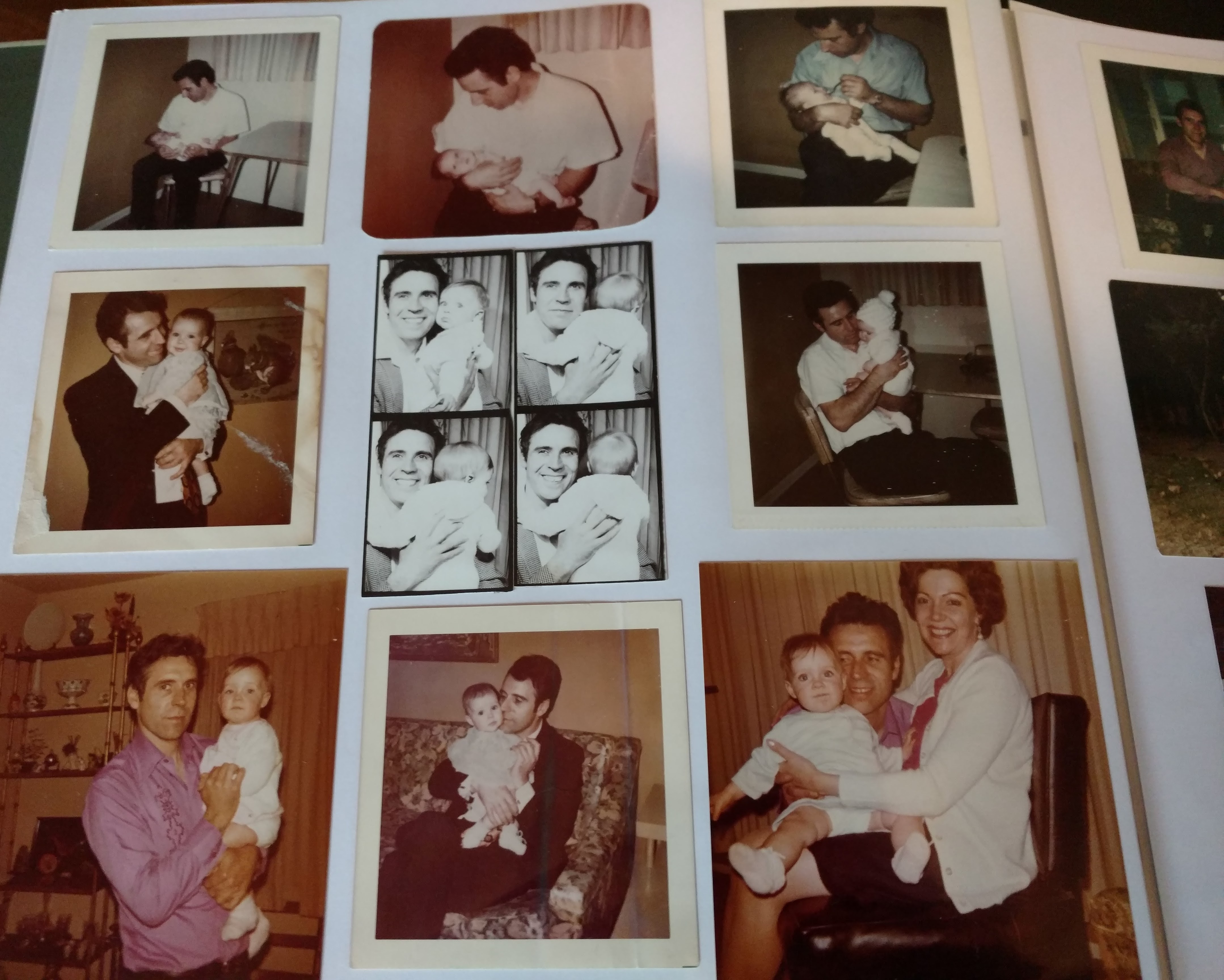
My father adored me as a baby and while we grew apart a bit as I grew older, I always knew he loved me. I only wish I could have returned the favor more at the end of his life, but even through the fog of dementia, we were able to communicate with one another and demonstrate the strong father-daughter bond that had been there all along.
As this past year has taught us so painfully, we can never take moments to express our love for granted. Happy Father’s Day to all who provide care for others.
Alzheimer’s was in the spotlight this week due to the FDA’s controversial decision to approve the drug aducanumab for treatment of the disease. I’ve closely followed the debate and can understand why some hope this is the breakthrough drug we’ve all been waiting for while also agreeing with critics who question the FDA approval process for this drug due to the limited evidence of its effectiveness in trials. There’s also the hefty price tag to consider.
Choosing whether to take a medication or undergo a treatment is a personal decision that should be made with the consult of family and trusted physicians familiar with the individual’s case. Below I’ll go over some general takeaways to consider. If you know of someone who was in the trial I’d love to hear about their experience.
Target treatment group: Aducanumab has so far only been studied in people living with early Alzheimer’s disease and mild cognitive impairment (MCI) due to Alzheimer’s. The FDA approval will allow it to be prescribed to those at any stage of the disease.
How it works: Aducanumab targets the amyloid beta plaque in the brain with the goal of reducing the plaque buildup and slow the rate of cognitive and functional decline.
How effective is it? This is where the main controversy arises. Biogen, the maker of aducanumab, was only able to provide very modest evidence that the drug offers a tangible benefit. “The average degree of improvement on a 0-18 point cognitive scale was just 0.39 points relative to placebo, far smaller than the 1 or 2 point threshold typically used to define a clinically important difference,” according to the two physicians who wrote this Washington Post opinion piece. Trials of the drug were halted in 2019 because an analysis concluded the trials were unlikely to be successful in hitting their goals at completion. But months later, after analyzing a wider set of data and discovering the nominal improvement, Biogen announced it was seeking FDA approval of aducanumab, CNN reported. After an FDA panel voted overwhelmingly to not recommended that drug approval move forward, the FDA eventually greenlighted aducanumab.
The drug was granted Fast Track designation and approved using the accelerated approval pathway, which only requires a “reasonably likely to predict a clinical benefit to patients” and also requires a post-approval trial to verify that the “drug provides the expected clinical benefit.”
What are the side effects? The most common side effects of aducanumab were “headache, fall, diarrhea, and confusion/delirium/altered mental status/disorientation,” according to the FDA. Brain swelling was also reported by some trial participants.
How expensive is it? Very expensive. The drug is expected to cost $56,000 per year. Part of the expense is in how the drug must be delivered, via infusion every four weeks. There may also be expensive imaging tests required to begin treatment. While insurance companies are expected to pay for some of the cost, it is unclear how much Medicare will reimburse, CNN reported.
What are the general expectations? Those who take aducanumab may see modest improvements in cognitive functioning or see a reduction in the speed of decline in cognitive functioning. It’s important to note that while the drug may remove amyloid plaque from the brain, that doesn’t guarantee an improvement in cognitive functioning. Advocates see it as a treatment with potential, but not a cure. Aducanumab is the first drug to treat Alzheimer’s disease that the FDA has approved since 2003. It has been a long wait, and that is why the drug’s approval has been met with a mixture of hope and skepticism.
There are so many excellent documentaries about caregiving that have been released over the last few years and I’d like to highlight a recent entry, “Duty Free.” It’s about a woman named Rebecca who gets fired from her job at age 75 and is facing a dire housing and economic situation while caring for a son with mental health issues. Her other son, a young filmmaker, uses the challenging moment as an opportunity to help his mother complete a bucket list of adventures and experiences she never got to enjoy as a single immigrant mother raising two children. What transpires are moments of joy and heartbreak as Rebecca forges a new path for herself while addressing her past.
I found this documentary to be very moving while spotlighting an issue that more and more elders find themselves facing. Retirement is becoming less of a certainty as rising economic insecurity means more and more older people will continue to work their entire lives. Rebecca immigrated to this country when she was young and worked hard all of her life in the hotel industry, working her way up to a supervisor position in the housekeeping department before being fired at age 75. Her housing arrangement was also nullified as the result of her job termination, so Rebecca was facing dual hardships. We know from studies that starting around age 50, women in particular find it much harder to secure employment or move forward in their careers. At Rebecca’s age, though she is still vibrant and physically active, the job search is even more grim.
The film also is about caregiving, as Rebecca financially supports her son who has schizophrenia and is unable to work. So many older people find themselves supporting their adult children for a variety of reasons, and that adds to their own economic insecurity. Her other son, Sian-Pierre, is limited in financial resources but does offer something priceless, which is encouraging his mother to do all of the things she never had time to do while raising children and documenting his mother’s story for the world to see.
I encourage you to watch this film and share with others. If you have seen it, I’d love to hear your thoughts.
I hope you and your loved ones are able to reconnect in person this Memorial Day weekend. More opportunities to spend time with our elders abound with Father’s Day and July the 4th. Enjoy these special moments together, but also put this time to good use by having “the talk” about your loved one’s health care wishes.
Recently the University of Michigan published results of a poll that found COVID-19 had not prompted a significant increase in family discussions about what to do if one is struck with a severe illness or facing end-of-life care. If a deadly pandemic doesn’t prompt such discussions, then what can?
I understand how difficult these conversations can be. In my book, The Reluctant Caregiver, I discuss the challenges I had in initiating these discussions with my own parents. But I also talk about how my parents’ reluctance to make end-of-life care choices came with significant consequences for our family when they became ill. That is why I champion so passionately for everyone to have these talks and make these important health care decisions so your loved one’s wishes (and your own wishes) can be honored.
If you need assistance getting started, refer to the helpful resources section at the end of the University of Michigan Health Lab article. I also recommend Five Wishes. For those who have successfully had “the talk” with their loved ones, I’d love to hear your approach.
Today marks six years since my mother’s death. I have to say that Mom had an uncanny sense of timing for her departure from this earth. The world has faced a series of challenges over the last several years that has left a path of death, destruction, and fractured relations that I’m glad my mother did not have to live through.
Now many of us find ourselves teetering between anticipation about establishing a new normal while mourning the losses that have piled up. And of course there are those like myself, mourning pre-pandemic losses of loved ones. It’s an odd mix of emotions; one may feel guilty about experiencing the joy of reunions while others have yet to bid a formal farewell to their loved ones while the pandemic rages on in India and other parts of the world.
My mother was the eternal optimist, to a fault in some cases, as I write about in The Reluctant Caregiver. I am more of a realist with pessimistic tendencies, but I do believe that the best antidote to the last several years of chaos and upheaval is by embracing whatever brings us joy. Give yourself grace and let go of whatever pain you can. My mother and I had a difficult relationship in ways because of our contrasting personalities. With the passage of time, I now can better focus on her positive attributes, including those I embrace in my life, such as her love of animals and nature, her sense of humor, and being kind to those in the service industry.
I hope you are able to find some sense of peace during this unusual period of grief and renewal.
A recent study found that the spread of a key marker for Alzheimer’s develops in four distinct patterns, each presenting with a specific set of symptoms. The findings could help provide more targeted treatment for Alzheimer’s in the future.
An article in Genetic Engineering & Biotechnology News offers a good overview of the study. Researchers focused on the spread of the tau protein in the brain, which has long been a key marker for Alzheimer’s. Studying the PET scans of approximately 1,600 individuals in relation to tau pathology, researchers found four distinct patterns:
Variant one: Found in 33 percent of cases and primarily affects the memory. The tau spread was mainly found in the temporal lobe.
Variant two: Found in 18 percent of cases and targets executive functioning. Tau spread was in the rest of the cerebral cortex.
Variant three: Occurring in 30 percent of cases, this variant targets the visual cortex, leading to a variety of visual processing issues.
Variant four: Found in 19 percent of cases, this variant spreads in the left hemisphere, leading to issues with one’s language ability.
I thought these were intriguing findings. Of course more research is needed in this area to confirm the findings of this study and learn more about the variants. But these finding could eventually lead to better, more targeted treatment for the specific variants of Alzheimer’s disease.
The COVID-19 pandemic has left thousands of Americans motherless this year. One model shared in a study published in JAMA Pediatrics suggested the number of children who lost a parent due to the pandemic could be as high as 40,000, a staggering amount in just a year’s time span. On the other end of the spectrum, adult children grieve their elder mothers who died during the pandemic, some who must grapple with the extra pain of not being able to properly say goodbye.
Having lost both of my parents, I do find that Mother’s Day is harder for me emotionally than Father’s Day. I believe this is because my mother died in the month of May, just a couple of weeks after the holiday. My last memories of her before she became bedridden was reading her Mother’s Day card and admiring the fresh flowers I bought for her. Even though this year will mark six years since her passing, those bittersweet memories are still the first to surface when I’m reminded of Mother’s Day via the endless online ads and TV commercials.
I found this essay by Carol Smith on grief and the myth of closure to be compelling and moving.
For those whose mothers are still alive and perhaps will be seeing in-person for the first time in months due to the pandemic restrictions, I am so thrilled for you and I hope you have a wonderful reunion. We know now more than ever that each moment with loved ones is precious.
If you have a friend who may be grieving the loss of their mother, reach out and offer support in whatever way is meaningful to them. It can be a lonely holiday for those whose mothers are no longer alive, and acknowledgment from caring souls can mean so much.
May has arrived, and with it, a swirl of varied emotions. The world is beginning to open back up, which of course is a good thing. Now that I’m vaccinated against COVID-19, I’m also beginning to venture back out. There’s a strange mix of novelty in doing the most mundane of tasks, but humans are resilient and adaptable and a “new normal” will be established.
There is hope in the air, but May is also a month of loss for me. It will be six years since my mother died, and my beloved cat Nod crossed the Rainbow Bridge last May. Watching the Kentucky Derby yesterday made me think of my mother. Watching the race was the last happy moment we had together.
Many families are experiencing bittersweet reunions with their loved ones who have been isolated in nursing homes during the pandemic. Of course they are thrilled to visit their family members in person, and some can now hug and hold hands with their loved ones. But the toll the past year has taken cannot be denied. This moving New York Times photo essay captures the raw mix of emotions sparked during these long-awaited reunions.
Best wishes to those of you reuniting with your loved ones. If we’ve learned anything over this last year, it’s how precious those moments are and how we can never take them for granted again.
I had a strange experience this week that reminded me of one of my favorite stories in Chicken Soup for the Soul: Living with Alzheimer’s & Other Dementias. This collection also includes a story I wrote about my father called “French Toast.” The story that I find so delightful is “The Bird,” about a woman with Alzheimer’s who is living with her adult daughter. One late night the mother wakes her daughter up and announces that there is a bird in the house. The daughter is skeptical, as most dementia caregivers would be, because hallucinations and other visual disturbances are not uncommon. But it turns out that the woman with dementia is correct and there is a real bird fluttering around the house!
I’ve been hearing strange noises coming from the house alarm system. It was intermittent, maybe every few months or so, but the noise sounded somewhat like chirps or squeaks. Sometimes I wondered if I was imagining things, and felt silly for thinking about a creature being inside the alarm system. When the pandemic struck, I had a hole on the roof where rats got in repaired. Even after the rats were gone, I still heard the occasional weird noise from the alarm system. The alarm system continued to work fine, so I didn’t consider it a priority to fix, especially during the pandemic lockdown.
This week the security system had to be upgraded because it was using old 3G technology that is being phased out. I was on the fence about mentioning the sounds to the technician, on account he might think I’d lost my mind. I was shutting the back door on his request and about to mention the sounds when he removed the alarm console cover. He announced, “You’ve got lizards!”
Mystery solved! I’m still not sure how they got in from the outside but they were likely attracted to the warmth of the circuit board. The one in the photo was the larger one and a smaller companion slithered out as well. I’d be happy to let them back outside but haven’t seen them since the ordeal. My cat will probably spot them before I do. On the rare occasion I’ve seen one in the house prior to this incident, the cats would surround it but thankfully were more curious than in hunter mode.
Other than an amusing story, what I’m taking away from this is the same moral from the Chicken Soup for the Soul story. The daughter said how enlightening it was to put herself in her mother’s shoes, and imagine how it would feel to not be believed. I wondered if I was imagining things as well, and there is a relief when one receives validation. To be less automatically dismissive is a good lesson for all of us, especially when interacting with those with dementia.
UPDATE: The officers involved in the arrest of Karen Garner have been charged and arrested.
NEW: The two former Loveland Police officers involved in the arrest of Karen Garner have turned themselves in — both facing charges for the takedown of the 73-year-old woman with dementia & failing to report the use of excessive force. Follow @DillonMThomas for more updates. https://t.co/M8mLrk8i23
A second video in this case has been released, showing the police reaction back at the station. It is almost equally as disturbing. In my opinion, this isn’t a case of “gallows humor” used as a coping mechanism by those in law enforcement, health care, etc. who face daily traumas. As a journalist, I often find that dark humor in private exchanges can help buffer the pain of covering a terrible crime story. But laughing and boasting about injuring an older woman’s shoulder while making “pop” sound effects displays an utter lack of humanity and should make one unfit to serve in any role involving the public. Would any of these officers want their elder relatives treated and mocked in such a way? It also reinforces the urgent need for better training and accountability.
Case is even worse than first reported: After violently arresting woman, 73, with dementia, police laughed about it, video shows: ‘We crushed it’ https://t.co/jaYdedZfTE
A case in Colorado involving the arrest of a 73-year-old woman with dementia for attempted shoplifting grabbed national headlines this week. It disturbed me personally because my father was in a similar situation. I believe many dementia caregivers fear this situation for their loved ones and we must do better as a community to protect those with dementia from ending up in this heartbreaking situation.
Karen Garner, 73, filed a lawsuit this week against the city of Loveland and its police officers. The incident took place in June 2020. Garner is accused of attempting to walk out of a Walmart with $14 worth of merchandise without paying. Walmart employees stopped her and were able to retrieve all items. According to the lawsuit, she offered to pay for the items at that point but the store declined, instead calling police to report the incident and offer the location in which Garner began walking. Store employees told police that the store had suffered no loss, according to the lawsuit and video of the arrest.
You can watch for yourself what happens next, as a police officer tracks down Garner. Warning: It is disturbing.
Garner is 5 feet tall and weighs 80 pounds. According to the lawsuit, her shoulder was dislocated during the arrest and she now requires assistance with daily tasks like bathing. She didn’t receive medical care until several hours later, though she complained of pain during the arrest. The criminal case against her was dropped by the district attorney’s office, while no disciplinary actions were taken against the officers until this week, when the lawsuit was filed and the video of the arrest went viral.
There is so much wrong here, and it starts way before the officers arrived. First and foremost is that America does a poor job in how it interacts with those who are mentally ill in the public sphere. I don’t know if Walmart has a blanket policy on calling police when minor incidents like this one happen in which a shoplifting attempt is thwarted, but this could have all been avoided if they had handled the situation internally. Ask if a family member can be called to pick her up and speak to them. Ban her from the store. Take a photo of her and post it in employee areas so staff know to be aware.
Police departments need better training in interacting with those with dementia and with mental health challenges in general. This arrest of Garner was a waste of law enforcement time and resources, and demonstrates the urgent need for engaged community policing.
And of course we need better resources for those with dementia. We don’t know Garner’s personal situation, if she was still attempting to live alone without regular supervision or if she wandered away. Both are common scenarios, and leave family members fearful for their loved one’s safety. With many adult day programs shut down due to COVID-19, there is likely an increase of those with dementia who feel bored and restless. While there are privacy concerns, offering identification that one has dementia could be helpful. The officer looked through Garner’s wallet about midway through the arrest. If there had been a card that said, “I have dementia. Please call this number for assistance,” the officers may have responded differently.
I thought about a similar incident with my father. I talk about the “burrito incident” in my book, The Reluctant Caregiver, and how it became a turning point in our family. He was at the stage of Alzheimer’s where his symptoms were becoming more apparent, but he still wanted to be independent. My mother sent him on an errand to pick up some items at a nearby convenience store, where they were regular customers. He picked up a couple of burritos and tried to walk out without paying. The clerk stopped him and my father got verbally agitated. Fortunately my mother was called instead of the cops and she hurried down to handle things. I believe my father would have ended up like Garner if the police had been called. Perhaps even worse.
None of this is easy. Police officers are not mental health experts, nor are store clerks. The pandemic has disrupted funding and access to community services. But it is clear in this particular case that no justice was served. I hope this case can demonstrate how broken our community services are for those with dementia and other mental health challenges and inspire solutions that are based in common sense and compassion.







![Pageflex Persona [document: PRS0000038_00069]](https://memoriesproject.files.wordpress.com/2014/02/reluctant-caregiver-cover.jpg)







 The Memories Project