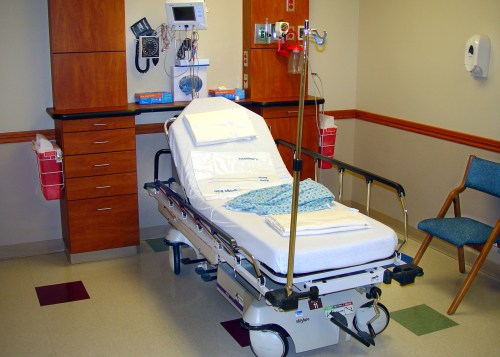
‘Senior ER’ designed to reduce stress for dementia patients

emergency room

Photo by Kenn W. Kiser

One of the most frightening calls I received when Dad was in memory care was that he had been taken to the emergency room. Unfortunately, I received several similar calls over the course of the year Dad was in residential care.

The emergency room visits were usually prompted by falls. Even if Dad seemed OK, regulations required the memory care staff to send Dad to the hospital to be checked out. The worst part was that no staff member accompanied Dad. I can’t imagine the confusion Dad must have experienced, on top of his dementia, with the chaos that accompanies an emergency room visit.

Even for a person without dementia, the emergency room is a daunting experience. I’ve only been to the ER  once as a patient, in high school, and it was an exhausting, fruitless experience. I’ve been to the ER several times with others having medical issues, and it is always a nightmarish experience. Why do medical emergencies seem to always happen in the middle of the night? Really though, it doesn’t matter if it is high noon, emergency rooms and hospitals in general seem to be caught in a time warp where it always feels like it’s 3 a.m.

There is so much hurry up and wait. People rushing in and out. Poking, prodding, medications being shoved in your face, or pumped into a vein. So many questions that have to be answered rapidly, and repeatedly. It’s enough to rattle a mentally sound person.

That’s why I am optimistic that some hospitals are reinventing the ER experience for those with dementia. Lutheran Medical Center in Denver was recently profiled for its Senior ER program. They’ve taken half of their emergency room space and retrofitted it to make it a more soothing, less chaotic experience. Everything from mattress thickness to lighting and noise level has been moderated to prevent the onset of delirium, which can hasten death.

The Senior ER has been such a success that people of all ages are asking to be admitted to that wing.



2 Comments

Filed under Awareness & Activism

Caregiving model could be good for all

Embed from Getty Images

Innovative social integration programs that pair retirement home residents with university students are growing in popularity. Students get free or reduced rate housing and meals, and seniors enjoy the health benefits of socializing with younger generations. They also share life stories and experiences, an invaluable perk of the program.

A program sponsored by USC’s gerontology school and a Los Angeles retirement home was spotlighted in a recent STAT article. The program has been around for 30 years, so there has been plenty of time to collect data on how the program has benefited elder residents and medical school students.

There’s a practical reason for the program from the school’s point of view: it’s difficult to attract candidates to the geriatrics specialty. Lower pay and the lack of “sexy” factor are a couple of reasons why it’s a challenge to recruit young doctors to the field of gerontology.

The program sounds like a success, and the colorful anecdotes from residents and students make it a delightful read. One remark in particular caught my eye. A student who had been through the program said one of the benefits was that senior residents would share more things about their health than in a 20-minute doctor’s appointment. “It’s kind of like being an undercover police officer,” the medical student said.

Another medical student said of the USC program that you don’t really think about the challenges older people deal with until you experience it with them in daily life.

In a social and political environment that is so polarizing, we could all benefit from programs that push us out of our comfort zones and encourage us to have a conversation with those from different generations, races, cultures, etc. So many of us are living inside bubbles, but we have much to learn from each other, even if we cannot relate to or agree on every issue. (The new Heineken ad, “Worlds Apart,” also captures this sentiment, even if it is a bit of a contrived experiment.)

I hope these programs continue to grow in popularity. Sounds like a win-win for society.


Leave a comment

Filed under Awareness & Activism

Beware of scams targeting older people’s homes

for-sale-sign-1445308

Photo: Aaron Murphy/Freeimages

I’ve read multiple articles recently about scams targeting older people, especially those who are in poor health and who are struggling financially. Criminals are getting savvy, implementing complex schemes to steal one of the most precious possessions: one’ s home.

Aging in place is a popular concept nowadays, but there are many older people struggling to stay in their homes. The housing market crash and economic instability has left older generations struggling to hang on to the place they’ve called home for most of their lives. This makes them vulnerable to scam artists, who set up phony agencies and organizations that pretend to help people keep their homes. As one aging immigrant learned, he had actually signed his home away to strangers.

Those in the early stages of dementia are no doubt prime targets for such scams. That’s why it’s so important to stay involved with your aging relatives’ lives, even if you don’t live near them. Call them regularly, or write letters, but keep an open line of communication. If something seems amiss, it probably is, and should be investigated.

Mom managed the family finances, which was a relief as Dad developed dementia, because we didn’t have to worry about taking away the checkbook from him.  After Dad died and as she was recovering from cancer, I was concerned about Mom getting sucked into some kind of scam, because she loved to talk to people and was generally a trusting person. By that point, I was helping Mom pay bills and routinely monitored for any anomalies. Thankfully, there were none.

I can’t imagine how terrible it must feel to be in your 70s or 80s, in poor health, and receive an eviction notice for a home you owned for decades. The old adage, “if it sounds too good to be true, it probably is,” applies now more than ever. Preventing such predatory transactions is key, because it can be difficult to fight in court once the paperwork is signed. Stay vigilant in protecting your aging loved one’s assets.


2 Comments

Filed under Awareness & Activism

A Sad Good Bye To An Amazing Woman Shifting Dementia Care and Cure

This is such sad news, and quite a shock, as her death was sudden. Trish was a very active advocate for those with Alzheimer’s and their families. Her legacy will live on and her dedication is an inspiration to all of us.

Alzheimer's Speaks's avatarAlzheimer's Speaks Blog

A Sad Good Bye To An Amazing Woman Shifting Dementia Care and Cure

trish V usagainst alz head shot (2)

Trish Vradenburg

May Trish’s  family and friends feel the love and support the world is sending them

Trish’s Deep-Rooted and Unflinching Passion to Fight Alzheimer’s Creates Admirable and Aspirational Legacy

UsAgainstAlzheimer’s Co-Founder and Vice-Chair Trish Vradenburg’s unflinching spirit – her creativity and imagination, quick-witted humor, empathy, generosity and her exceptional tenacity to stop the suffering of others – was captured in her every action. It is with immense sadness that UsAgainstAlzheimer’s announces her passing, and it is with the utmost gratitude that the organization cherishes her legacy and forges ahead in her memory.

Trish’s life was an inspiring portrait of creativity and versatility, employing her gifts of writing and storytelling throughout a successful professional career. She began her career as a speechwriter in the U.S. Senate. She wrote for various television shows, including Designing Women, Family Ties…

View original post 556 more words

1 Comment

Filed under Memories

Missing the milestones

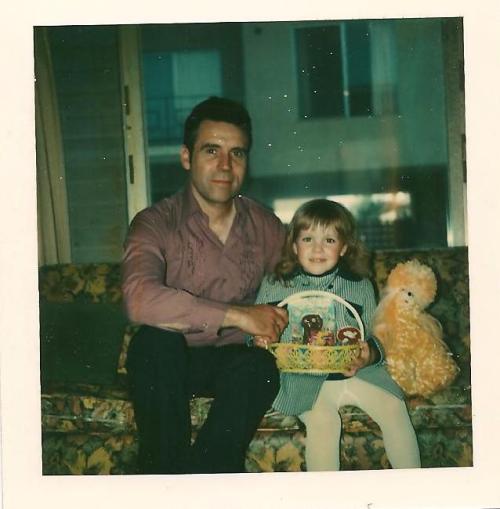
dad-easter

My dad would have turned 85 on Monday. It’s been several years now since his death, and the milestones are starting to become less likely to imagine.

My father has one sister who has lived into her 80s, but most of his family died in their 70s or younger. His immediate family survived the brutalities of WWII so they’re a hardy bunch for sure. Dad made it to 79, and was just 4 months shy of his 80th birthday.

But it’s difficult to imagine my dad at 85. A smoker since his teens, who was diagnosed with COPD and emphysema, those conditions would likely have taken a great toll on him by now, and perhaps he’d be tied to an oxygen machine. He definitely would have hated that. And would he have become so frail as to need a wheelchair? That’s another thing he would’ve loathed. The man loved to walk in a long, fast, striding gait. This was a major problem when he developed dementia, because of his tendency to wander.

So all in all, I’m at peace with the fact that Dad’s not around to be an octogenarian. If I’ve learned anything over the last several years, life isn’t about reaching a certain age but the quality of your day-to-day living.

Since Dad’s birthday is close to Easter this year, I thought it was appropriate to include the one Easter photo I have of us together.


2 Comments

Filed under Memories

Book review: Fractured Memories by Emily Page

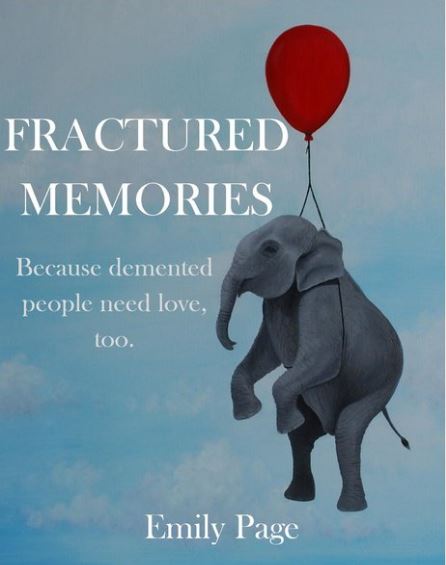
fractured memories

I’ve been following artist and family caregiver Emily Page’s blog, The Perks of Being an Artist, for quite some time now. Her blog documents her father’s battle with frontotemporal dementia (FTD) and her experiences as a younger caregiver as well as being a place for her to share the amazing art she creates.

Page often injects humor into her musings, which I appreciate as she documents the difficulty of the dementia caregiving experience, which I could relate to all too well. I was sad to hear of her father’s passing, but also understood the sense that he was free from such a cruel disease.

Page has written a book about her family’s experience with dementia, titled, Fractured Memories. [Also available on Amazon.] In it, you’ll learn her family’s story, why her father was so special to her, and heartfelt journal entries that document the highs and lows of family caregiving. You’ll also get to view selections of Emily’s artwork, and why the symbol of the elephant is so important.

I highly recommend the book, especially to those who are or who have gone through the dementia experience with a loved one. There are many things caregivers will be able to relate to in the book, from the difficulties in managing those with dementia at home, to the frustration of the sometimes poor care received at expensive memory care facilities. Page accurately documents the range of wild emotions one experiences as a family caregiver to someone with dementia. Of course, everyone’s journey has unique situations, but I think most dementia caregivers will nod in sympathy with the experiences of the Page family.

While there are heartbreaking moments, there is quite a bit of humor, and most importantly, the love Page has for her father shines throughout the book. I love the symbolism of the elephant and how Page was able to use her artistic talent to express various stages of disease and caregiving. I hope you’ll consider reading Fractured Memories and recommending it to other dementia caregivers.

2 Comments

Filed under Awareness & Activism

Delivering Bad News in Dementialand (Or Do I Tell Mom Her Sister Died?)

This is such an important topic, and one that I know some readers of The Memories Project have had to deal with in their families. How much bad news do we deliver to our loved ones with dementia, and how many times do we repeat the information?

Thanks Elaine for the thoughtful response.

Source: Delivering Bad News in Dementialand (Or Do I Tell Mom Her Sister Died?)

Leave a comment

Filed under Memories

My top takeaways from the Aging in America conference

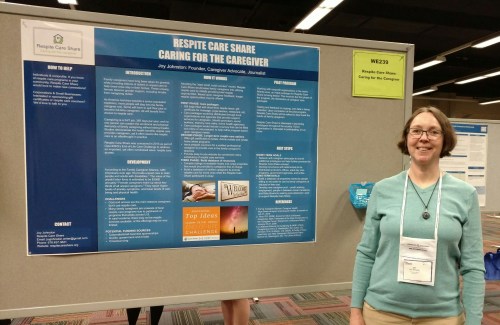
Respite Care Share AIA 2017

I’ve been at the Aging in America conference all week and it has been sobering and inspiring to be surrounded by so many smart, compassionate, and determined people. There are many battles to fight when it comes to issues surrounding aging and caregiving, but we have an army of advocates ready to fight for those who have been ignored by society and by government for too long.

There were recurring themes that came up at every session I attended. Here are some of the main areas of concern:

  • Health care: While it may be a political issue to those in Congress and to some voters, for those who work with seniors, the disabled, and the poor, health insurance is truly a do or die decision. The concerns about the current administration and the Republican’s proposed ACA repeal plan were explained through data and powerful anecdotal evidence. However you may feel about the ACA, and certainly it is not perfect, with some people hit with skyrocketing premiums and limited choice, there were millions of people who were able to get the treatment they desperately needed, mainly because of the ACA’s expansion of Medicaid. Don’t think you’ll need Medicaid? As one expert put it, with long-term care so expensive and not covered by Medicare, many of us will end up on Medicaid at some point, if we live long enough.
  • Diversity: While diversity can sometimes be an empty buzzword, I found that the attendees of the Aging in America conference take diversity issues very seriously. From how a doctor discusses Alzheimer’s care to a Latino family versus a Caucasian family to senior housing that welcomes the LGBT community, our aging policy must reflect the diversity of our country.
  • Help for caregivers: The issue that I’m most passionate about was also a major topic of discussion at the conference. There are many individuals and organizations dedicated to offering relief to caregivers, in the form of grants and other financial assistance, better training and support, and through respite care. I received positive feedback about my Respite Care Share concept, and I hope through the networking made at the conference, I can help take the concept to the next level.

The conference wraps up Friday, and I hope that the brainstorming that took place in Chicago this week will lead to positive impact in your communities.


1 Comment

Filed under Awareness & Activism

Aging in America: Crisis and opportunity

old-couple-1316755-1279x849

Photo credit: Pierre Amerlynck/Freeimages

Next week, I’m headed to Chicago for the Aging in America conference.

I look forward to attending sessions and meeting other advocates who are addressing the needs of America’s rapidly aging population. My Respite Care Share concept will be presented as part of the poster sessions. I know I will come away with a lot of takeaways, which I will share here upon my return.

When I think about aging in America in the big picture sense, I see crisis and opportunity. There are multiple crisis points that must be addressed, but each of those crisis points is also an opportunity. And while grassroots efforts can’t solve all of the problems surrounding aging, they can make a real difference.

Some of the major aging issues I care about include:

  • Health care: The affordability and quality of health care for seniors must be addressed. There is much Medicare doesn’t cover, such as residential care for those with Alzheimer’s. The outrageous residential care expenses can quickly bankrupt a middle-class family. Many Medicaid programs are overwhelmed, and facilities accepting Medicaid often have long wait lists and sometimes are of substandard quality.
  • Aging in place: One way to avoid the high costs of residential care is to care for aging loved ones at home. However, that comes with its own costs, such as renovating a home to make is safer and more accessible for seniors, and adult children being forced to leave the workforce or reducing their work hours to take care of aging loved ones. This not only has an affect on the caregiver’s current income and health insurance benefits, but their family budget and retirement outlook as well. The mental and physical toll of caregiving that must be considered as well. Community programs can assist with some of these issues.
  • Professional caregiver shortage: As America’s population rapidly ages, the need for professional caregivers to fill in the gap that families cannot cover is also rapidly growing. Because these jobs pay so little, there is a shortage of quality people for these roles. While spending their days caring for others, many professional caregivers cannot afford health insurance for their own families. My mother’s personal caregiver ended up quitting the field because she couldn’t afford to put gas in her car. If we value caregivers more in the job market, we can fill the staffing shortage and reduce unemployment.
  • Alzheimer’s & other dementias research: I care about supporting the research into all major diseases that claim the lives of Americans. My mother lost her life to colon cancer. But my father’s battle with Alzheimer’s illustrated to me the cruel particulars of this condition, and how the entire family is mentally, emotionally and financially impacted. It’s important that we keep funding research efforts and participating whenever we can in trials and other studies that can help find effective treatment.
  • Family caregivers: Last, but certainly not least, I am a strong advocate for more support for family caregivers. Greater financial support is a must, but at the community level, encouraging caregivers to use respite and simply being a good listener for a caregiver who needs to vent are just as vitally important.

What aging issues are most important to you?

4 Comments

Filed under Awareness & Activism

Caring for the vulnerable

With so much legislative and political uncertainty swirling throughout the U.S. and the rest of the world, we as a society will have to step up and help the vulnerable members of our population. The good news is that there are people already doing just that.

Many of you probably heard about Chris Salvatore, who scored viral fame for taking care of Norma, his 89-year-old neighbor with leukemia. He became her primary caregiver as the woman had no relatives to care for her. Norma died in February, but she was surrounded by the love of her neighbor and many fans on social media.

Another story that received less attention involves a man with dementia who was living alone in Kentucky. Sergeant Jon Sterling did regular wellness checks on the man, and discovered that it was time for the man to be moved into a secure facility. While the man was a veteran and had social security benefits to offset the monthly charge of the facility, moving costs prompted the police officer to start an online fundraiser. The $5,000 goal was reached within 24 hours.

Two men from very different worlds reached out to help a vulnerable member of their community. Compassion is part of the human spirit just as much as some of our more negative attributes. I hope that people will be inspired by these examples to help those in need.

3 Comments

Filed under Awareness & Activism