Tag Archives: caregivers

Guest article: Preparing for at-home care for a loved one with dementia

By Helen White, freelance writer

The decision to try at-home care for a parent or other close relative with dementia isn’t one that’s made lightly. It’s exhausting work, both mentally and physically, and it can be heart-rending for children of parents with dementia to see the changes that the disease brings. If you’ve made the decision, there’s a lot of preparation to be done, both in the home, to create a safe environment, and in the heart, to help you stay strong and able to cope with your new role as care-giver.

Simplifying the Home and Improving Safety

For someone with dementia, even the simplest everyday tasks and items can become fraught with difficulty. Simplifying the home, reducing clutter, and making spaces more accessible is hugely important to prevent over-stimulation and agitation, as well as accidents that may lead to physical harm.

  • Create “walking paths” so that there’s a direct and easy-to-follow path between each room. Remove or tack down any rugs on the floor.
  • Reduce household clutter, both to prevent accidents and to reduce the likelihood of over-stimulation caused by information overload.
  • Improve lighting to reduce dark spots and shadows, which can cause confusion and distress.
  • It may be helpful to label certain areas and items; for example a “bathroom” sign, and labels for kitchen drawers.
  • Add grab bars where applicable in bathrooms (e.g. for the bath, shower, or toilet) and add non-slip flooring or mats.
  • Consider child-proof locks for electrical devices and wall outlets.
  • Secure any rooms or items that are potentially dangerous or breakable—for example, the garage, basement, attic, or swimming pool, computer equipment, and machinery.
  • Add safety locks to any doors that lead outdoors, and install window devices to limit how far they can open.
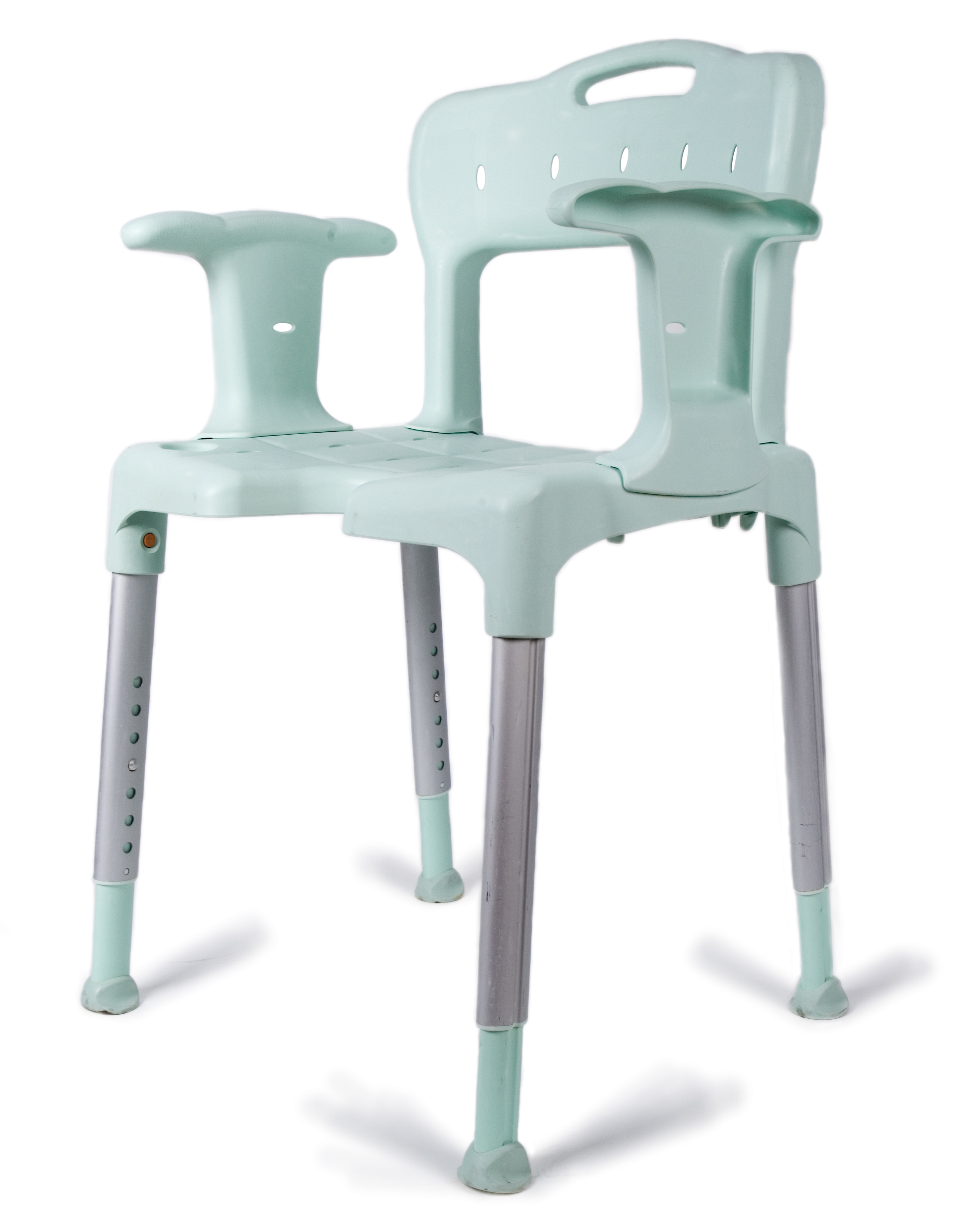
shower chair

Preparing the home is sometimes a matter of trial and error: you don’t know how your loved one will react to certain things until they’re with you on a daily basis. Initially at least, focus your efforts on safety, and over time you may find there are additional changes you can make to the home to make things more comfortable and calming.

Setting Up a Routine

For someone with dementia, routine is incredibly important. Having a routine helps them make better sense of a world that is increasingly confusing, and it’s important that your loved one knows there are certain things they can rely on, like a mid-morning snack at the same time every day, or a favorite television program each evening. In situations where their loved one has become agitated, having an established routine can also help a care-giver get things back on track and help their loved one calm down.

  • A routine doesn’t need to be strictly regimented and fill up an entire day; it should just provide the day with structure. For example, it might include:
  • Opening bedroom curtains at the same time every morning to signal the start of a new day
  • Meals and snacks, and medications, at scheduled times.
  • Daily activity time, visitors, outings.
  • Shower or bath time before bed.
  • Playing a relaxing piece of music at bedtime.

Don’t Neglect Your Own Self-Care

Caring for a person with dementia is both physically and mentally demanding, particularly for non-professional care-givers taking care of family members. It’s a situation that can lead to exhaustion, burn-out, and even depression on the part of the carer, so it’s vital that you’re able to take breaks on a regular basis, including days and evenings off. So, as part of preparing to bring your loved one home, try and set up a schedule of some kind, to make sure each person who is acting as carer has sufficient time off.

Having a good support system in place from the start is also very helpful. For example, joining a support group for care-giving families can provide a means of expressing emotions in a safe and non-judgmental environment. This is hugely important, because it’s natural for care-givers to feel negatively-perceived emotions like frustration, fear, and sadness, and they need a safe outlet in which to express them.

References

A Place for Mom (March 2013). “Maintaining Dignity for Dementia Patients.” Accessed January 12, 2015. Caring with kindness.

Carol B. Larkin (May 2012). “A Guide to Safe-Guarding Your Home for Alzheimer’s Patients.” Accessed January 12, 2015. Simplifying home and routine.

Aging Care. “Senior Care Products.” Accessed January 12, 2015. Products for at-home senior care.

Help Guide. “Dementia and Alzheimer’s Care: Planning and Preparing for the Road Ahead.” Accessed January 12, 2015. Preparing the home.

Phillips Lifeline (May 2014). “Proper Dementia Care Can Help Patients Remain at Home Longer.” Accessed January 12, 2015. Benefits of at-home care.

Psych Guides. “Living With: A Family Member With Dementia.” Accessed January 12, 2105. At-home care.

Visiting Angels. “Preparing the Home for Senior Care with Dementia or Alzheimer’s. Accessed January 12, 2015. Home preparation.

Leave a comment

Filed under Awareness & Activism

Book review: ‘Slow Dancing with a Stranger’

You know you are a caregiver or an Alzheimer’s awareness advocate when books like this appear on your Christmas wish list.

I had read positive reviews of the book, “Slow Dancing with a Stranger” by Meryl Comer, a former television journalist.

Courtesy: MerylComer.com

Courtesy: MerylComer.com

In this raw and honest memoir, Comer attempts to illustrate the “unvarnished reality” of Alzheimer’s while describing her life as the primary caregiver for her husband, a former esteemed NIH scientist who was diagnosed with early-onset Alzheimer’s in his late 50’s. He is still alive, 20 years later. Comer’s mother, who she’s always had a difficult relationship with, also has dementia and is still alive at age 94. The three live together, and a small group of dedicated caregivers work daily shifts to help with the care.

Comer tries placing her loved ones in facilities, but it is important for people to understand that not all Alzheimer’s patients are suitable for facility care, and that in fact, can be essentially “thrown out” if they are deemed a risk to themselves, staff, or other residents. Yet home care brings its own set of challenges, and neither road is an easy one to navigate.

I also think Comer does a good job of demonstrating that some people with Alzheimer’s don’t respond to the more positive therapy methods that are popular nowadays, such as music therapy, exercise, etc. Comer tries everything imaginable to reduce her husband’s anger and anxiety, but nothing seems to work. Comer’s husband has a form of Alzheimer’s that causes violent, physical outbursts, and both Comer’s husband and her mother were extremely manipulative, with her mother calling the police to claim she had been abandoned by her daughter.

I found beauty and awe in Comer’s resilience to take care of her loved ones in spite of all of the setbacks they faced together. Comer has given up her career and essentially her life to take care of her husband and mother. It’s a sacrifice that not everyone could make. To say this is a depressing book would be an understatement, but I hope it will help raise awareness of the debilitating emotional, physical and financial impact of this disease.

100 percent of the proceeds of the book will go towards Alzheimer’s research.

Leave a comment

Filed under Awareness & Activism

Hopes for a new year

It’s that time of year where we analyze the current year ending, and create new goals for the next year.

I’ve never been big on making resolutions but the start of a new year does give us all a good opportunity to introduce new goals. Of course, as caregivers there are many things beyond our control, so those fall into the hoping and wishing category.

2014 has not been a bad year for me. I finally was able to reestablish full-time employment and I’m very happy with my job. The ability to work remotely from wherever I want is a huge burden off of me, in case I do need to leave my home city for an extended period to take care of Mom again.

mom-joy-nov2014

I had a story published in “Chicken Soup for the Soul: Living with Alzheimer’s and Other Dementias.” That was an exciting accomplishment.

I was able to begin chipping away the debt I accrued while taking care of Mom. While I haven’t reduced my debt to nearly the point I want to, I know it can’t happen overnight, and am thankful that my job allows me to pay off significant chunks each month. Slowly but surely on this goal is the only way I will succeed. (Or winning the lottery, haha.)

Mom’s health has been a bit of a roller coaster ride this year, especially the last half of the year. Today she is supposed to finally meet with the surgeon, but there is a snowstorm in her area and I don’t know if she will make the appointment. The delays in securing a diagnosis is frustrating. I can only hope that we figure out what is wrong and get her the treatment she needs soon. I’ve helped stabilize her financial situation by picking up most of her bills to pay myself, but I hope she can continue to live independently so we can avoid another financial crisis.

I’m taking a writing class in January, a weekend workshop kind of thing. I’m finally starting to pull together a plan for a book idea. We’ll see what comes of it, but it is definitely a goal of mine this year to continue writing, and that includes blogging!

Thanks to all of you who read my posts and take the time to comment, it is greatly appreciated. I hope 2015 is good to you and your family.

2 Comments

Filed under Memories

National Caregiver Month: Honor a caregiver

In addition to being National Alzheimer’s Disease Awareness Month, November is National Caregiver Month. It’s only fitting for those of us who have cared for a loved one with dementia that these two recognition events occur in the same month.

While caregiving, both family and professional, needs much more recognition than just a designated month, this is a good time to get the conversation started about how important caregiving is to our society.

My mom, who was a wonderful caregiver for my father who had Alzheimer's.

My mom, who was a wonderful caregiver for my father who had Alzheimer’s.

The Alzheimer’s Association is marking the month by allowing people to write a personal tribute on their website.

I’m marking the month by making a visit to my mother, who has been dealing with some recent health setbacks. Caregiving in action!

To all of you in the blogosphere who have shared your caregiving stories, thank you. Together we can raise awareness and help each other through this challenging journey that is always full of surprises.

Leave a comment

Filed under Awareness & Activism

Being in the moment

As caregivers, it’s not just our bodies that are put to the test, it’s our minds as well.

I find that I spend very little time in the moment. Part of my mind is always mulling over the latest brewing health crisis or fragile financial state.

2014-11-03 14.59.09-1

2014-11-03 14.59.12-1

Today I decided to go for a long walk in the park. After a raw and cold weekend, today was sunny and beautiful. I was near the end of my walk when I came upon a man feeding the ducks and geese by the park’s lake.

In the middle of the quacking flock, a young blue heron stood stock-still. It seemed very focused on the water, and while completely still, ready to spring into motion.

The man feeding the birds said that the young one had not learned how to hunt yet, but was practicing by stalking prey in the water below.

I allowed myself to just absorb the scene for several minutes.

My patience paid off. Eventually the young bird took flight.

An hour’s respite turned out to be more rewarding than I could have imagined. Sometimes it is the simplest things that can make the biggest difference in our daily routine.

How do you spend precious solitary moments away from caregiving duties?

2 Comments

Filed under Memories

Long-distance caregiving sucks

Mom has had a mysterious health setback, despite getting good results on all of her tests.

Trying to manage a health crisis from over a thousand miles away is beyond stressful. I know many of you understand.

Mom is tougher than she looks!

Mom is tougher than she looks!

On Labor Day, Mom called me to tell me she was calling 911. The pain in her back was just too much for her to endure any longer. After several stressful hours, I called the hospital and they said they were sending her home, that she just had a lumbar sprain and constipation.

Frankly, I didn’t believe their diagnosis then and I still don’t. Mom continues to feel lousy, though her back is a bit better. Her digestive problems continue, and I fear there is something going on with the colostomy reversal.

The next step will be more invasive tests, like a colonoscopy (ugh, she just had one done in December) or an endoscopy.

These tests usually require someone to be present with the patient. So now I’m looking at a last-minute plane ticket close to $1000 and who knows if the test will get us any closer to a true diagnosis, when the other battery of tests didn’t show anything? By no means am I saying that spending the money isn’t worth it if I can help Mom get the treatment she needs. It is just another sober truth of caregiving from afar. It is costly, both in the financial and emotional sense.

I know patient advocates exist but in my mom’s area, they seem to work mainly in the hospital setting, answering questions and dealing with paperwork. I wish there was a service where I could hire a professionally trained caregiver to actually go with my mom to the hospital, and be there with her during tests and procedures. The advocate would ask pertinent questions and then be able to report back to me what is going on.

In an ideal world, I would be there with my mom in all of these situations. But we don’t live in a perfect world, and I know there are many other seniors living independently who do not have family members or relatives living close to them. With our rapidly aging population, I feel this will become an even greater issue.

Every time these situations arise, someone always asks, “Why don’t you just move your mom in with you?” or “Why don’t you move closer to your mother?” These people mean well, but these are huge, life-changing decisions to make, and frankly sometimes it is simply not feasible. That being said, feelings of guilt and doubt linger.

One thing I am immensely grateful for: my new job can be done completely remotely, and my boss has given his blessings that I can work wherever and however I need to if I need to go care for my mom.

If you’ve had experience with long-distance caregiving, what resources did you find most helpful?

4 Comments

Filed under Awareness & Activism, Memories

Showing appreciation for the dementia caregiver community

A big thank you to Neighbor Nancy and Ann Ahnemouse for nominating me for a Very Inspiring Blogger Award. Nancy I have had previous contact with but I don’t believe I have with Ann, so it was a pleasant surprise to hear she had been following my blog for quite some time. It is yet another reminder of the wonderful community of caregivers waiting to be found in the blogosphere.

The rules are simple:

Thank and link to the amazing person who nominated you.
List the rules and display the award.
Share seven facts about yourself.
Nominate 15 other amazing blogs and comment on their posts to let them know they have been nominated.
Proudly display the award logo on your blog and follow the blogger who nominated you.

7 facts about me:
– I have Celiac Disease, and have been on a gluten-free diet since 2005.
– I’m a cat lover.
– I like my coffee black, no sugar.
– I’m a bourbon aficionado.
– I was born and raised in California, but have no interest in returning.
– A big Greek salad is one of my favorite meals.
– Stephen King is one of my favorite authors.

Bloggers you should follow (For sake of time, I have less than 15 but will try to add more soon!)

My Neighbor Miss D Nancy is a devoted elder advocate, and has been the driving force in helping a neighbor in her building who has dementia return to her home after she suffered abuse from family members.
Ann Ahnemouse As I said, this is a new blog for me, but she’s been posting for a few years! Ann writes about her journey with her partner, and how his dementia impacts their lives.
terry1954 I’ve been following Terry’s blog for quite a while. Terry was the sole family caregiver of her brother, who had MSA. He died this year, and while the end of his suffering was indeed a blessing, there is a giant hole left behind when our loved ones depart, no matter the circumstances. Terry is a fearless writer who shares her thoughts on many topics.
Alzheimer’s Speaks: Lori La Bey is a tireless advocate for caregivers. She has a radio show as well!
SaveEveryStep: You should subscribe to this blog for the weekly “Joe’s Letter” post alone. The letters are from the blogger’s uncle from WWII and they are so fascinating! If you love nostalgia, you’ll love her blog, as she often writes about the fashions and music from her childhood and adolescence. But Helen Spencer founded the website, SaveEveryStep.com in memory of her mother. She is giving back to the world by allowing you to capture your own family’s memories and preserve them for free, a useful service to anyone, but especially for families touched by Alzheimer’s and dementia.
Hot Dogs and Marmalade: This blogger’s mother has Alzheimer’s and she writes both poignant and humorous accounts of her family’s life. You’ll have to read her blog to find out the reason for the unusual title of her blog!
My Demented Mom: Kathy Ritchie doesn’t sugarcoat one bit of her experiences caring for her mom, who has frontotemporal dementia. Kathy is in her 30s and is now a mother herself. Her blog is breathtaking in both its agony and in the way she expresses her love and dedication to her mother.
Quilt of Missing Memories: Talk about a family devastated by dementia. Jacquelyn’s father, mother and husband all have a form of dementia. Her father has passed, and late last year, so did Jacquelyn’s husband. I appreciate this blog because of the simple and joyous photos and short poems that are posted on a regular basis.
Lori’s Lane While not a caregiving blog in particular, the blogger did find herself in that role when her husband suffered a serious accident on the job. I love this blog for the insightful posts and the uplifting quote every Friday.

1 Comment

Filed under Awareness & Activism

All dressed up for Easter

Easter makes me reflect on pleasant childhood memories. I wasn’t big on dressing up, but I guess Mom managed to finagle a dress on me for some Easter photos. I’m glad that she did, because I do love this photo.

dad-easter

Easter makes me think of lovely springtime weather, and plastic eggs filled with jelly beans. I can still remember the scent they had. I remember racing through grass looking for hidden eggs at hunts at the local park.

Happy Easter for those who celebrate, both religious and secular versions of the holiday. I know that this is a holiday of hope and renewal for many. Those are two concepts we don’t often associate with Alzheimer’s and dementia. But as caregivers and family members of those with dementia, we need all of the hope we can muster.

2 Comments

Filed under Memories

A lesson on perception

I will return to this month’s theme of exploring the memories of others found in my favorite memoirs in my next post. I just have to share an experience that I had this week, because I think it can be useful to all of us in a caregiver role. Most family caregivers have no formal training before they jump right in as a hands-on caregiver. We can’t expect perfection, but I think we tend to beat ourselves up when we shouldn’t. Because caregiving is such an emotionally sensitive role, it is easy to let one small failure ruin one’s day or trigger a major guilt trip.

Stop beating yourself up!

Stop beating yourself up!

As I mentioned in an earlier post, I had a job interview this week. Despite my confidence in my work abilities, my introverted personality shudders at the thought of talking about myself for an hour in a room full of strangers. No matter how many tips I read and how much I practice and prepare, a good old-fashioned case of the nerves usually attacks me during interviews. It never causes a full-blown disaster, and obviously I’ve managed to stay employed in some form or another since I was 16, but still, I hate this weakness on my part.

So this week, after going over my interview notes I head to the interview. Unfortunately, it was also the coldest morning in Atlanta ever recorded, bottoming out at about 6 degrees F. The area where the interview was to take place was a disaster, due to construction and weather-related snafus. The building had suffered issues due to the weather as well, so I had to enter through an unmarked entrance. All of this left me unsettled to say the least.

There were three interviewers, one who I have worked with a bit previously. I brought a water bottle with me because I get dry mouth in interviews but don’t want to have to navigate a cup in case my hands shake. Well, silly of me to worry about spilling water. I opened the bottle just as the first question was asked and it appeared the bottle was overfilled because it sprayed all over my sweater and pants. Internally I cringed but outwardly I kept that smile pasted on my face and tried to arrange my arms to cover the wet spot.

Afterwards, I definitely felt like it was not my strongest interview. I would have given myself a B-. I felt like I talked too fast and rambled too much, earning the familiar “deer in the headlights” look from the interviewers. I went home feeling depressed, because this was the best job opportunity to come along in awhile. I spent the rest of the day doing a “should have said this” routine in my head.

I sent out thank you emails to all of the interviewers. The guy who I’ve worked with previously replied back and his response blew me away. He said, “You did great in the interview. I wish I could interview like that.”

What???!!!

So that’s my lesson to all of you. How you perceive yourself may be quite different than how others see you. You probably judge yourself much harsher than others do. Be confident that you are doing the best you can and don’t create a failure before the results are even recorded.

For the record, I did get offered one of the positions!

1 Comment

Filed under Awareness & Activism, Memories

Lessons learned from an Alzheimer’s caregiver

This insightful essay was posted on Maria Shriver’s website earlier this month. It is written by a neurologist who became a caregiver for his father when he was diagnosed with Alzheimer’s. The piece outlines 10 lessons that the author learned as he helped guide his father on this journey that no one wishes to take. Most of the points are well-known to those who are Alzheimer’s caregivers, but the simplest and most obvious advice can easily get buried as you struggle to deal with the emotional impact of the disease. We all know that we need to stay positive, live in the moment, keep our sense of humor and stop sweating the small stuff. While all of that is easier said than done, the author does a good job of giving examples of how this sage advice helped his dad live the best quality of life possible, despite the grim diagnosis.

hands

The last lesson is perhaps the most important of all but one many of us may struggle with the most: put away resentment and regret.

What lessons have you learned from being an Alzheimer’s caregiver that you think are the most important to share with others?

Leave a comment

Filed under Awareness & Activism