Tag Archives: caregiving

Dealing with a natural disaster as a caregiver

Embed from Getty Images

As a caregiver, every day may seem filled with disasters, both small and large. Caregivers constantly are dodging landmines, whether it’s working with a difficult patient, controlling pain, managing new symptoms or handling finances. That’s one reason why I referenced the metaphor in my new collection of caregiving essays, “The Reluctant Caregiver: Missives from the Caregiving Minefields.”

Back-to-back major hurricanes in the U.S. revealed another area where caregivers must be prepared: natural disasters. Most of you probably saw the heartbreaking photo of nursing home residents sitting in floodwaters in Texas during Hurricane Harvey. Fortunately, they were all saved, and staff risked their lives to stay with them all night long.

https://twitter.com/DoHoBOB/status/901862603395301376

Still, I couldn’t help but wonder what, if any, were the evacuation plans for the nursing home? From what I read, it was located near a bayou, so the flood risk was real.

As people prepared for Hurricane Irma this weekend, I heard multiple reports about care facilities, including those for Alzheimer’s care, making the decision not to evacuate. It may seem like a no-brainer but there were complications. Gov. Scott of Florida implored for more nurses to step forward to volunteer in special needs shelters. At the time, they were understaffed, making some care facility managers leery of evacuating and not having a safe space for those with complex care needs.

Dementia caregivers know how any disruption to the normal routine, along with a chaotic atmosphere, can exacerbate symptoms. Can you imagine trying to deal with wandering patients in the chaos of a shelter? I’m not trying to judge those who made the decision to stay, but I do think it is a good reminder for anyone who is caring for a loved one right now to make an emergency plan.

If a natural disaster strikes your area, are you prepared to evacuate with your loved one? Do you know where you will go? How will your loved one’s medical needs be met? Do you have friends or other family members that would be willing to take you in temporarily? If you make the decision to stay behind, do you have a safe, accessible place in your home that will offer protection?

My parents never had to evacuate, but a wildfire did get pretty close to their neighborhood at one point, and I remember my parents being uneasy about the thought of evacuating. Fortunately, they were both in good health at the time and the fire was brought under control. I can’t imagine trying to keep track of my father at a shelter once he developed dementia, because he wandered. When my mother was recovering from colon cancer surgery, trying to change a colostomy bag in the very public realm of a busy shelter would have been a challenge.

While the images that have come out of Texas and Florida over the last couple of weeks have been heartbreaking, it is a good time for the rest of us to make sure we are prepared when Mother Nature’s fury comes our way.  Sometimes, the worst moments can bring out the best in us, as when this man at Lowe’s gave up his generator to a woman who needed it for her father who requires an oxygen tank.

Consider giving to a hurricane relief fund established by Caring Across Generations. All proceeds will go directly to local organizations in Texas and Florida who assist caregivers.


Leave a comment

Filed under Awareness & Activism

Coping with the difficult emotions of caregiving

love-1471183-639x380

Photo by John Meyer/Freeimages

Caregiving is a tough task, both physically and emotionally. There are many emotions that can arise while one is a caregiver, and many are not pleasant. However, it is important to recognize, acknowledge and process these feelings. Caring.com offers an excellent article, The 7 Deadly Emotions of Caregiving: How to Cope.

The 7 emotions the article focuses on includes:

  • Guilt
  • Resentment
  • Anger
  • Worry
  • Loneliness
  • Grief
  • Defensiveness

The article explains how these emotions arise while caregiving, the risks that come with these feelings and most importantly, what you can do about it. Many caregivers will find the above list familiar; some of us will experience one emotion more than another. For my mother, it was loneliness and worry; for me, it was worry, guilt and resentment.

I think it is important as caregivers to acknowledge what we feel, and equally as important to figure out how to best process these emotions so we don’t damage our own physical and mental well-being.

What caregiving emotions do you feel most consumed by, and how do you cope?

7 Comments

Filed under Awareness & Activism

Breaking the news to someone with Alzheimer’s that their spouse has died

waiting-71011_1280

Photo credit: Pixabay

Of all the things families have to deal with when their loved one has Alzheimer’s, explaining that a loved one has died is one of the most heartbreaking and difficult issues to handle. Guest author Michael Longsdon of ElderFreedom offers tips on how to approach this sensitive subject, and how caregiver should prepare for the moment.

How do you tell your loved one with Alzheimer’s that their spouse has died? It’s a tricky proposition – one that people with aging parents dread. It would be a lie to say it’s a easy process, but it can be manageable. Here are some tips.

Pick the right time

This is a judgment call, but some common strategies for having this tough conversation include making sure the person is in a safe, comfortable environment, trying to pick a more lucid moment to break the news, and trying to have only one person deal with the news as to minimize possible confusion.

Be straightforward

Every surviving spouse has the right to know that their loved one has died – no matter their condition. When having the first conversation (of many, to be sure), you must be as straightforward as possible. Speak slowly and calmly and tell them that their spouse has died. Avoid euphemistic phrases like they passed away or they are going to be gone for a while. You don’t have to get into the details, and you should stick to the basics if you can. If they ask for details, however, you should be honest.

Offer to go through the deceased’s belongings with them

The practical reason for doing this is that following any death, the surviving loved ones must go through the deceased’s belongings and decide what to keep, what to pass on to loved ones, and what to throw away. For someone with Alzheimer’s this process is vital because you don’t want them to have to do it themselves, plus you don’t want them to have to stumble upon troves of their dead spouse’s belongings, triggering confusion or agitation.

But it can be even more important in the immediate aftermath of the death. Going through old clothes, photos, jewelry, and keepsakes can help ground your loved one to the situation, and in some cases this methodical sorting through possessions can be cathartic. Your loved one may want to hold onto a particular item, which may give them comfort. Let them.

Don’t mistake forgetfulness for denial

“When dementia is severe, people aren’t just in denial. They truly have not been able to form the new memory that lets them remember their beloved family member or friend has died,” says caregiver Carol Bursack.

You’re going to be faced with times that your loved one simply doesn’t seem to be on the right page about their deceased spouse. They may think they’ve gone on a trip, or that they’ve left them. They may ask where they are, even hours after you told them about the death. Don’t think of this as denial. It’s simply a product of their Alzheimer’s. When it comes to what you do in these situations, it’s up to you. Judge the situation and determine whether it’s better to reinform them, or whether you should “punt” and either work around the truth or redirect them with something else. There’s really no right answer here –  it all depends on your loved one’s state at that very moment. It can change from day to day.

You may have to “break the news” to your loved one with Alzheimer’s more than once. How you choose to handle these situations is up to you. Most professionals believe, however, that the initial conversation is a must – both for ethical and practical reasons. Try to find a good time to have the conversation, remember to be straightforward, respect their reaction, and never try to limit their grief.


2 Comments

Filed under Awareness & Activism

‘Fragile Storm’ a short film that delivers a powerful message

fragile storm

Image courtesy of Fragile Storm.

If you have not watched the short film, “Fragile Storm,” I highly encourage you to do so.

The film stars Lance Henriksen and is winning awards at film festivals.

I do not want to give anything away, other than to say push through the first half and stick it out through the ending. It’s a powerful, visceral experience.

The short is not available for viewing as of March 2022, but should be re-released sometime this year as part of The Edge of Her Mind Anthology.

1 Comment

Filed under Awareness & Activism

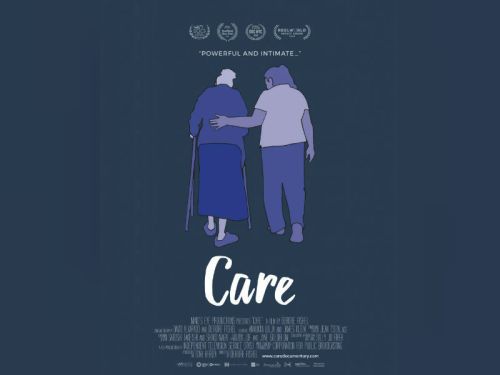
Don’t miss “Care,” a powerful documentary about home care

care poster custom

Courtesy of Care.

A frustrated caregiver recently posted on social media: “We need more than awareness, we need action.”

I totally agree, and while raising awareness of conditions like Alzheimer’s and the sacrifices that family caregivers make is important to push these issues into the mainstream, at some point, messages of support are not enough. Action, from community involvement all the way to federal funding is essential to truly make a difference.

That’s why I’m excited about a new documentary, Care, that examines the hard, often thankless and definitely underpaid work that home-based caregivers perform and offers a call to action on how we can better support these caregivers and families. Caring Across Generations is hosting screenings across the country.  In addition to in-person screenings, the documentary will become available via streaming options later this year.

The documentary profiles caregivers from different ethnic backgrounds and from different regions of the U.S., spotlighting challenges but also providing a testament as to why some people feel called to provide care to those in need. The documentary doesn’t shy away from the harsh realities of caregiving, showing in detail the difficult physical and emotional work involved. Family members discuss the difficulties of caring for someone at home and those receiving care talk about the loss of independence that often accompanies disease and aging.

For anyone in the metro Atlanta area, I will be participating in a Care screening and panel discussion at Amy’s Place in Roswell on June 7 starting at 6:30 p.m. As I’ve mentioned before, Amy’s Place is a memory care cafe that hosts wonderful community events for those with dementia and their caregivers.

MORE INFO: CARE poster_Roswell Screening

Caring Across Generations is also looking for people just like you, current and former caregivers, who are willing to share their stories. If interested, you can reach out to me via email at joyjohnston.writer@gmail.com.

Check out the trailer below:


1 Comment

Filed under Awareness & Activism

Thinking of Mom

joy-mom-lamirada

Mom and I at the library, before taking a stroll through the park.

Happy Mother’s Day to all of the wonderful, patient and loving mothers out there, both living and departed.

Even though it is easy to roll one’s eyes at this “Hallmark holiday,” it is a good opportunity to remember those who have cared for you and those you love. Mothering comes in many forms, from traditional to caregiving to caring for pets. A simple thank you, a sympathetic ear, a helping hand, all of these go a long way to honoring the mother(-s) in your lives.

Mother’s Day is extra difficult for me because once I get past today, the anniversary of my mom’s death looms on May 21. It’s a double gut-punch of a month now.

I’ll remember Mom today by doing some birdwatching in the backyard (our birdfeeder has become quite the hotspot) and taking a walk to appreciate other wonders of nature that my mother loved. One of Mom’s best qualities was always “stopping to smell the roses.” She appreciated every flower, every bird, all of nature’s offerings. It’s a good reminder for me to take time to enjoy nature as well and seek a healthier balance between work and other demands of modern life.

Leave a comment

Filed under Memories

Caregiving model could be good for all

Embed from Getty Images

Innovative social integration programs that pair retirement home residents with university students are growing in popularity. Students get free or reduced rate housing and meals, and seniors enjoy the health benefits of socializing with younger generations. They also share life stories and experiences, an invaluable perk of the program.

A program sponsored by USC’s gerontology school and a Los Angeles retirement home was spotlighted in a recent STAT article. The program has been around for 30 years, so there has been plenty of time to collect data on how the program has benefited elder residents and medical school students.

There’s a practical reason for the program from the school’s point of view: it’s difficult to attract candidates to the geriatrics specialty. Lower pay and the lack of “sexy” factor are a couple of reasons why it’s a challenge to recruit young doctors to the field of gerontology.

The program sounds like a success, and the colorful anecdotes from residents and students make it a delightful read. One remark in particular caught my eye. A student who had been through the program said one of the benefits was that senior residents would share more things about their health than in a 20-minute doctor’s appointment. “It’s kind of like being an undercover police officer,” the medical student said.

Another medical student said of the USC program that you don’t really think about the challenges older people deal with until you experience it with them in daily life.

In a social and political environment that is so polarizing, we could all benefit from programs that push us out of our comfort zones and encourage us to have a conversation with those from different generations, races, cultures, etc. So many of us are living inside bubbles, but we have much to learn from each other, even if we cannot relate to or agree on every issue. (The new Heineken ad, “Worlds Apart,” also captures this sentiment, even if it is a bit of a contrived experiment.)

I hope these programs continue to grow in popularity. Sounds like a win-win for society.


Leave a comment

Filed under Awareness & Activism

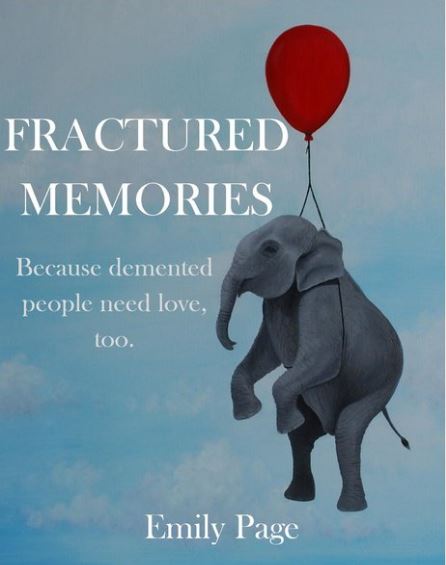
Book review: Fractured Memories by Emily Page

fractured memories

I’ve been following artist and family caregiver Emily Page’s blog, The Perks of Being an Artist, for quite some time now. Her blog documents her father’s battle with frontotemporal dementia (FTD) and her experiences as a younger caregiver as well as being a place for her to share the amazing art she creates.

Page often injects humor into her musings, which I appreciate as she documents the difficulty of the dementia caregiving experience, which I could relate to all too well. I was sad to hear of her father’s passing, but also understood the sense that he was free from such a cruel disease.

Page has written a book about her family’s experience with dementia, titled, Fractured Memories. [Also available on Amazon.] In it, you’ll learn her family’s story, why her father was so special to her, and heartfelt journal entries that document the highs and lows of family caregiving. You’ll also get to view selections of Emily’s artwork, and why the symbol of the elephant is so important.

I highly recommend the book, especially to those who are or who have gone through the dementia experience with a loved one. There are many things caregivers will be able to relate to in the book, from the difficulties in managing those with dementia at home, to the frustration of the sometimes poor care received at expensive memory care facilities. Page accurately documents the range of wild emotions one experiences as a family caregiver to someone with dementia. Of course, everyone’s journey has unique situations, but I think most dementia caregivers will nod in sympathy with the experiences of the Page family.

While there are heartbreaking moments, there is quite a bit of humor, and most importantly, the love Page has for her father shines throughout the book. I love the symbolism of the elephant and how Page was able to use her artistic talent to express various stages of disease and caregiving. I hope you’ll consider reading Fractured Memories and recommending it to other dementia caregivers.

2 Comments

Filed under Awareness & Activism

Aging in America: Crisis and opportunity

old-couple-1316755-1279x849

Photo credit: Pierre Amerlynck/Freeimages

Next week, I’m headed to Chicago for the Aging in America conference.

I look forward to attending sessions and meeting other advocates who are addressing the needs of America’s rapidly aging population. My Respite Care Share concept will be presented as part of the poster sessions. I know I will come away with a lot of takeaways, which I will share here upon my return.

When I think about aging in America in the big picture sense, I see crisis and opportunity. There are multiple crisis points that must be addressed, but each of those crisis points is also an opportunity. And while grassroots efforts can’t solve all of the problems surrounding aging, they can make a real difference.

Some of the major aging issues I care about include:

  • Health care: The affordability and quality of health care for seniors must be addressed. There is much Medicare doesn’t cover, such as residential care for those with Alzheimer’s. The outrageous residential care expenses can quickly bankrupt a middle-class family. Many Medicaid programs are overwhelmed, and facilities accepting Medicaid often have long wait lists and sometimes are of substandard quality.
  • Aging in place: One way to avoid the high costs of residential care is to care for aging loved ones at home. However, that comes with its own costs, such as renovating a home to make is safer and more accessible for seniors, and adult children being forced to leave the workforce or reducing their work hours to take care of aging loved ones. This not only has an affect on the caregiver’s current income and health insurance benefits, but their family budget and retirement outlook as well. The mental and physical toll of caregiving that must be considered as well. Community programs can assist with some of these issues.
  • Professional caregiver shortage: As America’s population rapidly ages, the need for professional caregivers to fill in the gap that families cannot cover is also rapidly growing. Because these jobs pay so little, there is a shortage of quality people for these roles. While spending their days caring for others, many professional caregivers cannot afford health insurance for their own families. My mother’s personal caregiver ended up quitting the field because she couldn’t afford to put gas in her car. If we value caregivers more in the job market, we can fill the staffing shortage and reduce unemployment.
  • Alzheimer’s & other dementias research: I care about supporting the research into all major diseases that claim the lives of Americans. My mother lost her life to colon cancer. But my father’s battle with Alzheimer’s illustrated to me the cruel particulars of this condition, and how the entire family is mentally, emotionally and financially impacted. It’s important that we keep funding research efforts and participating whenever we can in trials and other studies that can help find effective treatment.
  • Family caregivers: Last, but certainly not least, I am a strong advocate for more support for family caregivers. Greater financial support is a must, but at the community level, encouraging caregivers to use respite and simply being a good listener for a caregiver who needs to vent are just as vitally important.

What aging issues are most important to you?

4 Comments

Filed under Awareness & Activism

Caring for the vulnerable

With so much legislative and political uncertainty swirling throughout the U.S. and the rest of the world, we as a society will have to step up and help the vulnerable members of our population. The good news is that there are people already doing just that.

Many of you probably heard about Chris Salvatore, who scored viral fame for taking care of Norma, his 89-year-old neighbor with leukemia. He became her primary caregiver as the woman had no relatives to care for her. Norma died in February, but she was surrounded by the love of her neighbor and many fans on social media.

Another story that received less attention involves a man with dementia who was living alone in Kentucky. Sergeant Jon Sterling did regular wellness checks on the man, and discovered that it was time for the man to be moved into a secure facility. While the man was a veteran and had social security benefits to offset the monthly charge of the facility, moving costs prompted the police officer to start an online fundraiser. The $5,000 goal was reached within 24 hours.

Two men from very different worlds reached out to help a vulnerable member of their community. Compassion is part of the human spirit just as much as some of our more negative attributes. I hope that people will be inspired by these examples to help those in need.

3 Comments

Filed under Awareness & Activism