Breaking the news to someone with Alzheimer’s that their spouse has died

waiting-71011_1280

Photo credit: Pixabay

Of all the things families have to deal with when their loved one has Alzheimer’s, explaining that a loved one has died is one of the most heartbreaking and difficult issues to handle. Guest author Michael Longsdon of ElderFreedom offers tips on how to approach this sensitive subject, and how caregiver should prepare for the moment.

How do you tell your loved one with Alzheimer’s that their spouse has died? It’s a tricky proposition – one that people with aging parents dread. It would be a lie to say it’s a easy process, but it can be manageable. Here are some tips.

Pick the right time

This is a judgment call, but some common strategies for having this tough conversation include making sure the person is in a safe, comfortable environment, trying to pick a more lucid moment to break the news, and trying to have only one person deal with the news as to minimize possible confusion.

Be straightforward

Every surviving spouse has the right to know that their loved one has died – no matter their condition. When having the first conversation (of many, to be sure), you must be as straightforward as possible. Speak slowly and calmly and tell them that their spouse has died. Avoid euphemistic phrases like they passed away or they are going to be gone for a while. You don’t have to get into the details, and you should stick to the basics if you can. If they ask for details, however, you should be honest.

Offer to go through the deceased’s belongings with them

The practical reason for doing this is that following any death, the surviving loved ones must go through the deceased’s belongings and decide what to keep, what to pass on to loved ones, and what to throw away. For someone with Alzheimer’s this process is vital because you don’t want them to have to do it themselves, plus you don’t want them to have to stumble upon troves of their dead spouse’s belongings, triggering confusion or agitation.

But it can be even more important in the immediate aftermath of the death. Going through old clothes, photos, jewelry, and keepsakes can help ground your loved one to the situation, and in some cases this methodical sorting through possessions can be cathartic. Your loved one may want to hold onto a particular item, which may give them comfort. Let them.

Don’t mistake forgetfulness for denial

“When dementia is severe, people aren’t just in denial. They truly have not been able to form the new memory that lets them remember their beloved family member or friend has died,” says caregiver Carol Bursack.

You’re going to be faced with times that your loved one simply doesn’t seem to be on the right page about their deceased spouse. They may think they’ve gone on a trip, or that they’ve left them. They may ask where they are, even hours after you told them about the death. Don’t think of this as denial. It’s simply a product of their Alzheimer’s. When it comes to what you do in these situations, it’s up to you. Judge the situation and determine whether it’s better to reinform them, or whether you should “punt” and either work around the truth or redirect them with something else. There’s really no right answer here –  it all depends on your loved one’s state at that very moment. It can change from day to day.

You may have to “break the news” to your loved one with Alzheimer’s more than once. How you choose to handle these situations is up to you. Most professionals believe, however, that the initial conversation is a must – both for ethical and practical reasons. Try to find a good time to have the conversation, remember to be straightforward, respect their reaction, and never try to limit their grief.

 

2 Comments

Filed under Awareness & Activism

Power of animals to offer brief respite for caregivers

IMG_20170719_111210635_HDR

I visited a local cat cafe for my birthday, and it’s a nice way to spend an hour surrounded by cats with a good cup of coffee. It made me think about how spending time with animals offers the harried family caregiver a convenient, affordable respite from the drudgery and stress of daily duties.

I’m always on the lookout for ways caregivers can slip away for an hour or two and recharge, while their loved one is at adult day care or being cared for by someone else.

For those who love cats, watching them can be relaxing and entertaining. Just observing a cat sleeping is calming, and kittens offer plenty of entertaining hijinks during play time. Petting a purring cat has been shown to have a calming effect.

Dog lovers can visit animal shelters or rescue organizations. Many times, volunteers are needed to walk dogs or just socialize with dogs waiting for a forever home.

Owning a pet may be overwhelming if you are a caregiver, so these options allow you to still connect with the joy animals offer without adding to your workload.

Another thing I love to do is visit butterfly habitats. I found that to be such a soothing, surreal experience, walking through an area filled with fluttering butterflies.

Some may have zoos or other wildlife retreats near them that they enjoy visiting.

Anything that gets you outside of your head for a brief period of time, and focused on something delightful is a worthwhile respite. (It would be nice if caregivers could enjoy a week-long getaway of their choice, but we know that’s difficult to do in many cases.)

We also know that animals can have a positive impact on those with dementia and other diseases. I remember visiting a cat cafe in Montreal, and the daughter had brought her mother, who appeared to have dementia. They both enjoyed their visit.

For more respite care resources, visit Respite Care Share.

2 Comments

Filed under Awareness & Activism

Envoy America expanding operations, offering safe rides for seniors

Embed from Getty Images

If you’ve read my blog for any length of time, you know one of my biggest concerns is transportation options for seniors. The ability to get safely to appointments and run errands can mean the difference between independent living and assisted living. If we as a society are embracing the concept of living at home until we die, we need to address these issues.

Uber, Lyft and other rideshare services have been a godsend for me, who otherwise uses public transportation to get around Atlanta. But using these services requires downloading a smartphone app, and not every older person has such a device or is interested in learning how to use one.

While Medicaid covers transportation expenses for medical appointments, Medicare does not, leaving middle class families like mine scrambling to make transportation arrangements. When I was my mother’s caregiver, it was one of my biggest challenges. My mother also had a difficult commute to visit my father in the memory care center. More safe, trustworthy transit options are needed.

Envoy America has expanded to the Houston area, after starting operations in Arizona in 2015. The door-to-door transit service, targeted to the older population, offers features like waiting with a person at a doctor’s appointment, and multiple stops.  They’ll also push the cart and get hard-to-reach items at the grocery store. Drivers receive background checks and are specially-trained to work with older clients, including those with memory issues.

The rides aren’t necessarily cheap, but they do offer many more amenities. The service essentially combines a ride share company with a personal care aide. Envoy America charges by the hour instead of distance. In Houston, the average rate is $40 per hour, according to KHOU.

Envoy America has partnered with organizations like the American Cancer Society, the Mayo Clinic and religious organizations.

My Mom would have loved such a service!

The company is expanding gradually which makes sense, and it may be a long time, if ever, that rural populations are served. I hope the concept catches on, because I think there’s a huge, underserved market waiting for just such a service.


2 Comments

Filed under Awareness & Activism

Marking Mom’s 80th birthday without her

Mom me portrait

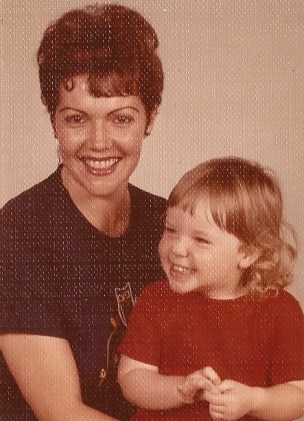
Today my mother would have been 80 years old.

I wish she was still around to mark the milestone, but only if she was in a healthy state.

My mother and I were total opposites and we clashed plenty, especially during the time I was my mother’s caregiver. Much of those battles, some humorous, some painful, are captured in a series of essays that I hope to publish later this year. (It’s in the final edit phase now.)

But today is a day of celebration, and even though my mom could drive me crazy, she had many wonderful qualities that she tried to pass on to me. In honor of her 80th, here are 8 ways that I remember my mother and try to carry on her legacy.

  • Her sense of humor: Yes, it was corny as could be, but my mother loved to laugh. Even as she faced cancer, she still found ways to sneak in a bit of levity to the situation. We were all better for it. I have a much snarkier, darker sense of humor, but it’s there, and it did help me cope with the difficulties of caregiving.
  • Her love of family: Sometimes I found it smothering, but I know my mother truly loved me. In a world where children can be treated so cruelly, I know I’m fortunate to have had good, kind parents. Everyone has their faults, but even when Mom drove me nuts, she was doing it out of a place of love and concern.
  • Being a caregiver for my father: I may not have agreed with all of the decisions Mom made for Dad near the end of his life, but she earned the right to call the shots after taking care of him on her own for years. I helped where I could, but Mom was the one hands-on with Dad 24/7, as he lost his grip on reality thanks to dementia. Mom made the grueling Greyhound trips to see Dad at the memory care center, while she nursed a broken shoulder. Six months after his death, Mom was diagnosed with cancer. I think she paid the ultimate price with her health, but I know she would do it all over again.
  • Love of nature: My mother loved nature, whether it was animals or scenery. She even loved the blustery mountain winds that whipped around her condo in New Mexico, saying everything had its place. She may have been right, but those winds are brutal! But I do share her love of animals and an appreciation for the natural wonders of our world. I probably don’t stop enough to “smell the roses” but I make sure our birdfeeder stays full, in memory of Mom.
  • Appreciation for the little things: Mom could find delight in the smallest things, whether it was a good cup of coffee or a sunny day. It’s easy to take such things for granted, as I often do, but I try to channel Mom a bit and appreciate those small daily doses of wonder.
  • An interest in others: Mom loved to talk, but she also loved connecting with others. She didn’t discriminate in who she conversed with, and she certainly didn’t think she was better than others. The interest she showed in the lives of service workers who took care of her while she was at the bank, at the grocery store, or at the salon was admirable. I could tell by their reaction that many people treat service workers as if they were invisible. I’m not the chatty type, but I do make sure to make eye contact, smile and thank the person assisting me, to honor Mom’s legacy.
  • Her interest in the world around her: Mom maintained a keen interest in news until she died. She cared about world issues and was troubled by war and famine. She read the newspaper voraciously, and even though rehashing week-old news could test my patience, I admired her vested interest in the world around her. As a journalist, caring about these issues is my job, but it’s also my passion.
  • Her love of music: Mom loved the classic country and classic pop music of her youth, which included Elvis, Patsy Cline, Buddy Holly, Hank Williams, Willie Nelson and many more legends. I’ve had a love of music since my youth, and while I enjoy music from many genres, I gravitate towards these classic country artists, as well as some new ones who are channeling their outlaw spirit.

2 Comments

Filed under Memories

‘Fragile Storm’ a short film that delivers a powerful message

fragile storm

Image courtesy of Fragile Storm.

If you have not watched the short film, “Fragile Storm,” I highly encourage you to do so.

The film stars Lance Henriksen and is winning awards at film festivals.

I do not want to give anything away, other than to say push through the first half and stick it out through the ending. It’s a powerful, visceral experience.

The short is not available for viewing as of March 2022, but should be re-released sometime this year as part of The Edge of Her Mind Anthology.

1 Comment

Filed under Awareness & Activism

‘Driving Miss Norma’ teaches valuable lessons on aging, caregiving, dying

I haven’t been shy about my professed loved and admiration for “Miss Norma” Bauerschmidt, who at 90, became an internet sensation when, instead of undergoing grueling treatment for uterine cancer while dealing with the recent death of her husband, she told her doctor, “I’m hitting the road.”

Driving Miss Norma: One Family’s Journey Saying “Yes” to Living, a book about the final, amazing year of Norma’s life, is now available, and I highly recommend it.

Norma joined her son and daughter-in-law in a motor home for an epic trip around the U.S., where she was welcomed like a celebrity everywhere she stopped. While Norma’s symptoms were managed quite well on the road, her cancer progressed and she died on September 30, 2016.

Her story has touched millions around the world, and I couldn’t be happier about that.

Norma’s story touches upon many topics that are near and dear to my heart. First, the “treatment without question” mentality that pervades the American health care system got turned on its head here. The doctor was taken aback by Norma’s reaction at first, but admitted that his own treatment recommendation would have set up Norma on a long road of recovery that she may not have survived. Instead of spending months in a skilled nursing facility recovering from major surgery and being sick from chemotherapy, Norma chose quality over quantity for the remainder of her life.

The highs and lows of caregiving are poignantly and honestly discussed in this book. Norma’s son and daughter-in-law don’t shy away from the challenges that family caregiving poses, which are only complicated when mixed with an unpredictable life on the road. Norma’s son and daughter-in-law weren’t experienced caregivers before taking on Norma, and their “nomadic by choice” lifestyle had to be adapted to Norma’s abilities and health challenges. Ultimately it was an experience that they wouldn’t trade for all the world, but I appreciate their openness in discussing their caregiving experience.

What was most surprising to me was how, according to her son, Norma was not known as the “wild gal” that we saw on Facebook who would make funny faces for the camera or who took delight in quirky tourist spots. Norma, a quiet, stable presence in the family, had been content to live in her husband’s shadow. But once on the road, a new side of Norma emerged. This may be the most important lesson of all in the book. It is never too late to find oneself.

By late summer, it became apparent that Norma’s trip through this life would be coming to a close soon. Being on the road presented some unique challenges, but Norma passed on as comfortably as is possible, surrounded by love and fulfilled in a year’s worth of joyous sights and experiences. For everyone seeking that elusive “good death,” I think after reading this book you will conclude that Norma had a good one.

Obviously, not all of us have adult children who could accommodate such an epic life’s end journey. What we can take from the book is that when faced with what could have been an overwhelmingly depressing moment in her life, coping with the death of her husband and a cancer diagnosis, Norma chose to embrace optimism. Norma chose adventure, to let go of any old grievances and open her heart to new people and experiences. One of the catchphrases for Norma’s journey is, “Say yes to living.”

That’s a lesson we could all take to heart.

3 Comments

Filed under Awareness & Activism

A bookmark from the past

My dad loved books, but he hated bookmarks.

Even though the library included free ones in every book, Dad insisted upon “dog earing” pages. My mother would nag him about it, saying the books were the library’s property and they probably didn’t appreciate him returning books with creased page corners. But Dad continued to do it, and to be fair, I never heard him getting chewed out at the library about it. Certainly he wasn’t the only person who dog eared books.

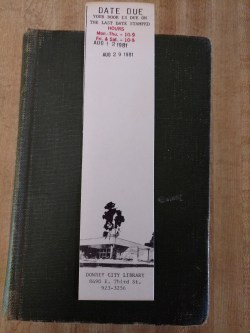
bookmark

As I was going through some books and sorting them for donations, I came across one of those library bookmarks. The bookmarks served dual purposes: marking your place in the book and reminding you when the book was due.

The bookmarks, with the sketch of the Downey City Library at the bottom, are so ingrained in my memory, having checked out hundreds of books from the library during my childhood.

The due date on this one was Aug. 29, 1981. I would have just turned 6 the month before. It would’ve almost been time for school to start, as we started just after Labor Day. I would’ve been entering first grade.

What’s even more interesting is that I found the bookmark in an old, worn copy of East and West, a collection of short stories by Somerset Maugham. That book is from the New Orleans Public Library and had a due date of Sept. 2, 1959. (Dad lived for a brief period in the Big Easy.) The next time I visit I may return the book just to see the reaction of the librarian!

Sorting through Dad’s book collection was the ideal task to mark Father’s Day.

1 Comment

Filed under Memories

Heat waves a hot topic when caring for older loved ones

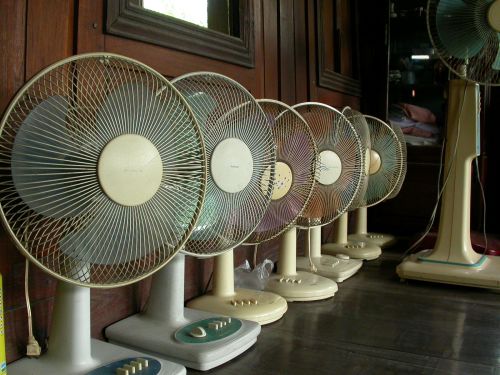
fans

Photo by komgrit/Morguefile

Whether or not you believe in global warming, every year there are deadly heat waves across the U.S. Many of those who succumb to the heat are seniors. Some cities have annual initiatives to make sure low-income seniors have fans in their homes and some cities offer cooling centers, air-conditioned venues that are open during the day free of charge for people who want to escape the heat.

No one should die from the heat because they can’t afford a fan, air conditioning, or are afraid of running up their electricity bills on a fixed budget. But a HealthCentral article I read by Carol Bursack pointed out another reason that is not often discussed.

Bursack told a story about her mother-in-law, who turned off the air conditioning she had in her condo every day after Bursack would visit and turn it on to a low setting just to keep the air circulating. This was in the middle of a heat wave, and Bursack would discover every window shut, the A/C turned off and it would be sweltering inside. When she discovered her mother-in-law suffering serious disorientation symptoms from the heat, she knew her days of independent living were coming to an end.

Bursack’s story reminded me of my mother. In her case, it was the heat during winter. My parents retired to a mountain town that usually receives a decent amount of snow and the temperatures often drop into the 20s and 30s overnight in the winter. Mom would insist on turning off the heat every night before going to bed, then getting up in the middle of the night, shivering, to turn it back on for a few minutes, then turning it off again until the morning. This was totally nuts to me. Mom thought she was saving energy (and perhaps Bursack’s mother thought the same thing) but keeping a home at a steady, moderate temperature is most efficient. So yes, by all means, turn down the heat when you will be bundled under the covers overnight, but don’t turn it off!

Mom also insisted, even on the most frigid of nights, in leaving the windows in the living room and bedrooms open a crack, because she thought she’d suffocate or die of carbon monoxide poisoning if she closed everything. Of course, this caused the furnace to have to work more and threw the whole energy-efficient argument out the window.

As a caregiver, I had to pick my battles. I never convinced Mom to close the windows, but by using a bit of reverse psychology, one night, she mentioned that it might be nice to just keep the heat on through the night, and I told her that was an excellent idea. From then on, she didn’t turn off the heat overnight.

The point here is that even if your elder loved one has access to fans or air conditioning, check to make sure they are actually using them. Whether they are just set in their ways or are beginning to develop dementia, we cannot take the use of such things for granted.

[Addendum: Just after I wrote this post, I went to stay at what was my parents’ condo for 2 weeks. The condo doesn’t have air conditioning, because it’s located in a mountain town where the average temperature this time of year is around 80. Not this year … it’s been in the 90s and hit 93 yesterday. I’m dealing with a summer cold on top of the heat, with only fans to offer relief, and it’s pretty miserable. I’ll be fine, but I’m 42. In 20-30 years, this situation might be more of a health risk.]

3 Comments

Filed under Awareness & Activism

Is dying at home best for everyone?

bed

Photo by Lillian Nelson/Freeimages

In recent years, a growing movement has embraced the concept of dying at home, versus a hospital or nursing home. In general, I support the idea, after my father had a difficult death in a skilled nursing facility while I was 1,300 miles away. But having experienced the challenges of being a primary caregiver for my mother, who died at home, I also understand just how traumatic such a death can be for family members. The latter is a viewpoint that is not often discussed.

Ann Brenoff, who covers aging topics for Huffington Post, interviewed me last week to discuss the potential consequences for the family caregiver when a loved one chooses to die at home. The article, When Loved Ones Die At Home, Family Caregivers Pay The Price, offers an important perspective on the subject. The article references my 2015 essay, Why dying at home is not all it’s cracked up to be. Brenoff discusses how financial concerns are behind the government’s desire for people to die at home. While it’s cheaper for people to die at home, caregivers pay the ultimate price.

In many cases, family caregivers shoulder the burden of care duties. Some have to quit their jobs or reduce work hours, impacting their financial status. Chronic stress can affect their own health. The emotional toll can be devastating.

To achieve a good death at home standard, we must offer greater support to family caregivers.

There are pros and cons to everything, including dying at home. The more we learn about each other’s caregiving experiences, the better informed we will be when we face a family health crisis or end-of-life care situation.


2 Comments

Filed under Memories

Don’t miss “Care,” a powerful documentary about home care

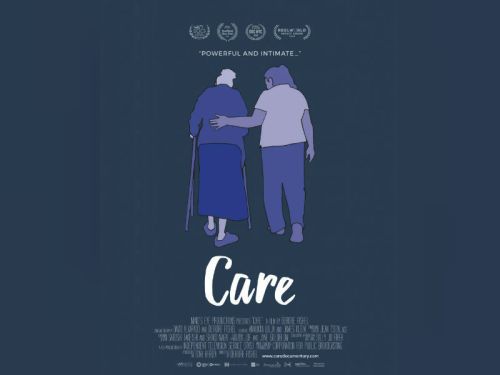
care poster custom

Courtesy of Care.

A frustrated caregiver recently posted on social media: “We need more than awareness, we need action.”

I totally agree, and while raising awareness of conditions like Alzheimer’s and the sacrifices that family caregivers make is important to push these issues into the mainstream, at some point, messages of support are not enough. Action, from community involvement all the way to federal funding is essential to truly make a difference.

That’s why I’m excited about a new documentary, Care, that examines the hard, often thankless and definitely underpaid work that home-based caregivers perform and offers a call to action on how we can better support these caregivers and families. Caring Across Generations is hosting screenings across the country.  In addition to in-person screenings, the documentary will become available via streaming options later this year.

The documentary profiles caregivers from different ethnic backgrounds and from different regions of the U.S., spotlighting challenges but also providing a testament as to why some people feel called to provide care to those in need. The documentary doesn’t shy away from the harsh realities of caregiving, showing in detail the difficult physical and emotional work involved. Family members discuss the difficulties of caring for someone at home and those receiving care talk about the loss of independence that often accompanies disease and aging.

For anyone in the metro Atlanta area, I will be participating in a Care screening and panel discussion at Amy’s Place in Roswell on June 7 starting at 6:30 p.m. As I’ve mentioned before, Amy’s Place is a memory care cafe that hosts wonderful community events for those with dementia and their caregivers.

MORE INFO: CARE poster_Roswell Screening

Caring Across Generations is also looking for people just like you, current and former caregivers, who are willing to share their stories. If interested, you can reach out to me via email at joyjohnston.writer@gmail.com.

Check out the trailer below:


1 Comment

Filed under Awareness & Activism